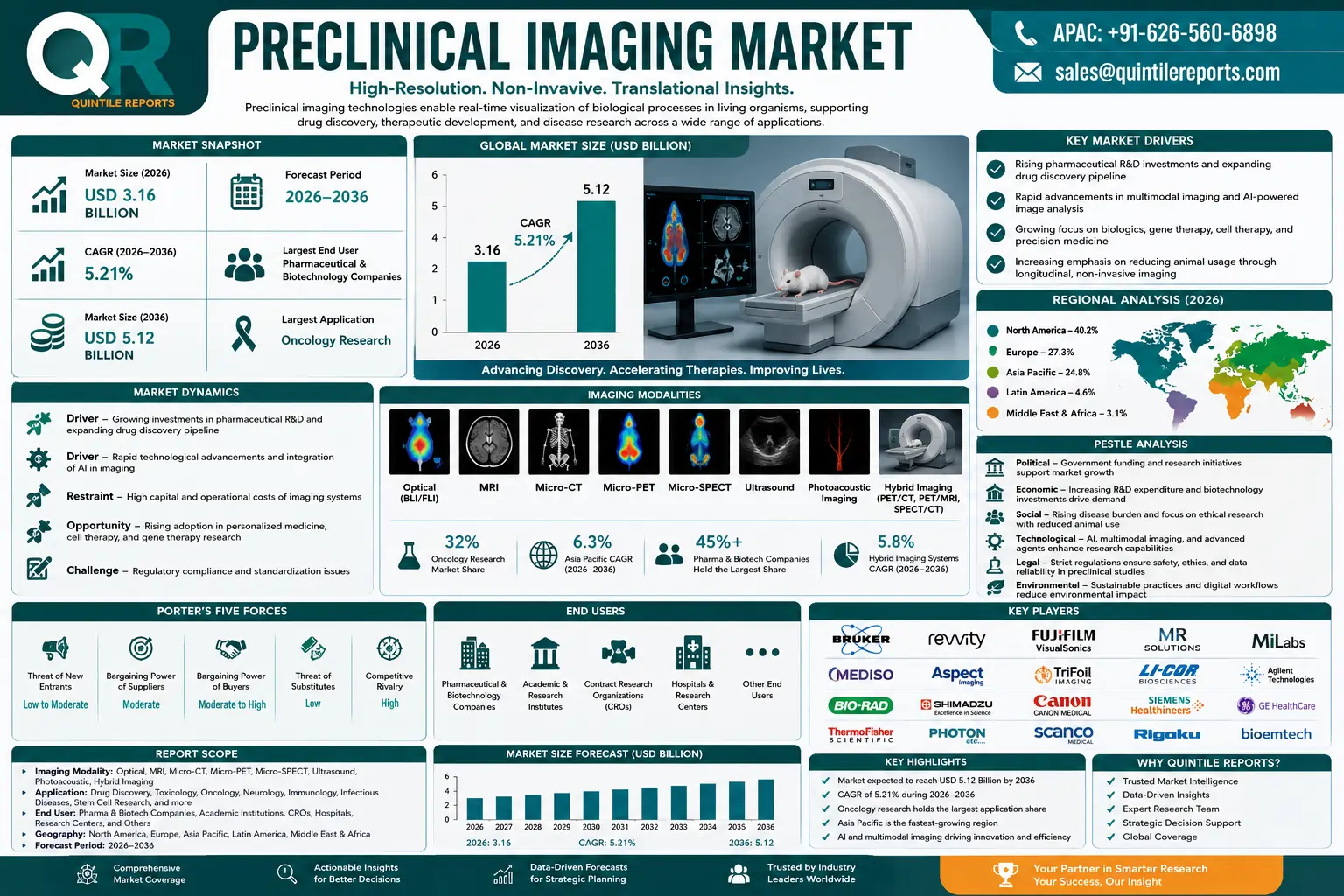
The global Preclinical Imaging Market has become an integral part of modern biomedical research, enabling scientists to visualize biological processes in living organisms before therapies advance to human clinical trials. Preclinical imaging technologies provide high-resolution, non-invasive insights into disease progression before therapies advance to human clinical trials and complement innovations across the broader Medical Imaging Market, where advanced diagnostic imaging technologies continue to evolve. These systems have become indispensable across oncology, neurology, cardiology, immunology, infectious disease research, and regenerative medicine, where real-time imaging plays a critical role in understanding disease mechanisms and validating therapeutic candidates.
The global Preclinical Imaging Market, valued at USD 3.16 billion in 2026, is projected to reach USD 5.12 billion by 2036, expanding at a CAGR of 5.21% during the forecast period. Growth is being supported by increasing investments in pharmaceutical R&D, rising demand for personalized medicine, expanding biologics and cell & gene therapy pipelines, and the growing adoption of advanced imaging modalities capable of delivering quantitative and multimodal data.
The pharmaceutical and biotechnology industries continue to invest heavily in preclinical research as drug development becomes increasingly complex. Before a therapeutic candidate enters clinical evaluation, researchers require accurate tools to assess biodistribution, pharmacokinetics, efficacy, and safety. Advanced imaging technologies such as magnetic resonance imaging (MRI), positron emission tomography (PET), computed tomography (CT), optical imaging, ultrasound, and photoacoustic imaging enable repeated, longitudinal assessments without sacrificing laboratory animals, improving both research efficiency and ethical compliance.
Technological advancements are reshaping the market landscape. Hybrid imaging platforms combining PET/CT, PET/MRI, and SPECT/CT provide comprehensive anatomical, functional, and molecular information within a single scan. Artificial intelligence and machine learning are increasingly integrated into image reconstruction, automated analysis, and quantitative interpretation, reflecting broader advancements across the AI in Medical Imaging Market, allowing researchers to generate more reliable datasets while reducing manual analysis time. Cloud-based data management and advanced visualization software further improve collaboration among research teams operating across multiple locations.
Oncology remains the largest application area, driven by the continuous development of targeted therapies, immunotherapies, antibody-drug conjugates, and precision oncology programs. At the same time, neuroscience research is expanding rapidly as pharmaceutical companies intensify efforts to develop treatments for Alzheimer's disease, Parkinson's disease, multiple sclerosis, and other neurodegenerative disorders. Cardiovascular, inflammatory, metabolic, and infectious disease research also continues to contribute significantly to demand for sophisticated preclinical imaging platforms.
North America maintains the leading market position due to its strong pharmaceutical ecosystem, substantial research funding, advanced academic infrastructure, and early adoption of innovative imaging technologies. Europe remains a mature market supported by government-funded biomedical research initiatives, while Asia Pacific is expected to witness the fastest growth owing to expanding biotechnology industries, increasing clinical research activities, improving healthcare infrastructure, and rising investments in life science research across China, India, Japan, and South Korea.
Looking ahead, the market is expected to benefit from continuous innovation in molecular imaging agents, AI-enabled image analytics, multimodal imaging systems, and automation technologies. As pharmaceutical companies seek faster, more predictive, and cost-effective drug development workflows, preclinical imaging will remain a foundational technology supporting translational research and the development of next-generation therapeutics.
The increasing complexity of modern drug development is driving sustained demand for advanced preclinical imaging technologies. Pharmaceutical and biotechnology companies are investing heavily in novel therapeutics, including biologics, gene therapies, RNA-based medicines, immunotherapies, and precision medicine. These therapies require accurate visualization of biological responses during early-stage research, making non-invasive imaging indispensable for evaluating efficacy, safety, biodistribution, and pharmacokinetics. The ability to generate longitudinal data from the same animal model improves research quality while reducing development timelines and costs.
Continuous innovation in imaging hardware and software is significantly enhancing research capabilities. Hybrid imaging platforms combining PET, CT, MRI, and SPECT deliver comprehensive structural, functional, and molecular information within a single examination. Simultaneously, artificial intelligence is improving image reconstruction, segmentation, automated quantification, and predictive analytics, enabling researchers to obtain faster and more reproducible results. These technological advancements are encouraging wider adoption across both academic and commercial research organizations.
Despite strong technological progress, the high cost of acquiring and maintaining sophisticated imaging systems remains a significant challenge, particularly for smaller research laboratories and emerging biotechnology companies. Installation, maintenance, software upgrades, imaging reagents, and the need for highly trained personnel substantially increase the total cost of ownership. Budget constraints may delay purchasing decisions, especially in developing economies where research funding remains limited.
The rapid expansion of precision medicine is creating substantial growth opportunities for the preclinical imaging market. Researchers increasingly require advanced imaging techniques to monitor gene expression, cellular therapies, immune responses, and targeted drug delivery in vivo. As regenerative medicine, CAR-T therapies, and RNA-based therapeutics continue to advance, demand for high-resolution molecular imaging and multimodal visualization technologies is expected to grow significantly, opening new revenue opportunities for imaging system manufacturers and software providers.
Preclinical imaging studies must comply with stringent regulatory and ethical guidelines governing laboratory animal research, imaging protocols, and data reproducibility. Variations in imaging methodologies, equipment calibration, and image analysis across research institutions can affect study consistency and comparability. Manufacturers and research organizations continue to focus on standardized imaging protocols, validated software solutions, and quality assurance practices to improve reproducibility and facilitate regulatory acceptance of preclinical findings.
Government funding for biomedical research, precision medicine initiatives, and life sciences innovation continues to support the adoption of preclinical imaging technologies. Public investments in cancer research, neuroscience, and infectious disease programs, along with favorable policies promoting translational research, encourage pharmaceutical companies and academic institutions to expand their preclinical imaging capabilities. International collaborations and research grants further strengthen market development.
Increasing global pharmaceutical R&D expenditure, expanding biotechnology investments, and growing venture capital funding are driving demand for advanced preclinical imaging systems. Although high equipment costs and maintenance expenses may limit adoption among smaller research organizations, rising outsourcing to contract research organizations (CROs) and increasing drug development activities continue to create stable market opportunities.
The growing global burden of chronic diseases, including cancer, neurological disorders, cardiovascular diseases, and autoimmune conditions, has increased the need for faster and more effective drug discovery. Public awareness of personalized medicine and demand for innovative therapies are encouraging greater investment in biomedical research. At the same time, there is increasing emphasis on reducing animal usage through non-invasive longitudinal imaging techniques, supporting ethical research practices.
Rapid advancements in multimodal imaging platforms, artificial intelligence, molecular imaging agents, cloud-based image management, and automated image analysis are transforming preclinical research. Hybrid systems such as PET/CT, PET/MRI, and SPECT/CT provide comprehensive anatomical and functional imaging, while AI-driven software improves image reconstruction, quantification, and data interpretation. Continuous innovation is improving research efficiency, accuracy, and reproducibility.
The market operates under strict regulations governing laboratory animal welfare, imaging device safety, research ethics, and pharmaceutical development. Compliance with Good Laboratory Practice (GLP), institutional animal care guidelines, and regulatory requirements established by organizations such as the FDA, EMA, and other national authorities is essential. Intellectual property protection and regulatory approvals also influence technology commercialization.
Research institutions and manufacturers are increasingly adopting environmentally responsible laboratory practices by improving energy efficiency, reducing hazardous chemical waste, and implementing sustainable manufacturing processes. Digital imaging workflows and cloud-based data storage also help minimize paper consumption and improve operational sustainability across research facilities.
Entering the preclinical imaging market requires substantial capital investment, advanced engineering expertise, strong intellectual property portfolios, regulatory compliance, and established distribution networks. High development costs and long product validation cycles create significant entry barriers, although technological innovation and specialized niche solutions provide opportunities for emerging companies.
Suppliers of high-performance detectors, imaging sensors, superconducting magnets, precision optics, contrast agents, and specialized software play an important role in the value chain. While certain advanced components are sourced from a limited number of manufacturers, leading imaging companies generally maintain diversified supplier relationships, reducing excessive dependence on individual vendors.
Major buyers, including pharmaceutical companies, biotechnology firms, academic institutions, and contract research organizations, often make high-value purchases and evaluate vendors based on technology performance, imaging accuracy, software capabilities, service quality, and long-term support. The availability of multiple established manufacturers increases buyer negotiating power, particularly for large institutional procurement projects.
Although alternative laboratory techniques such as histopathology, molecular biology assays, and in vitro cell-based models remain important in biomedical research, they cannot fully replace the real-time, non-invasive, longitudinal insights offered by preclinical imaging technologies. As a result, substitution risk remains relatively low, especially for complex drug discovery and translational research applications.
The market is highly competitive, with global manufacturers continuously investing in product innovation, multimodal imaging technologies, artificial intelligence integration, advanced visualization software, and strategic collaborations. Competition is driven by imaging performance, system reliability, software functionality, service capabilities, pricing strategies, and research partnerships. Continuous technological advancement and expanding pharmaceutical R&D pipelines are expected to sustain intense competitive rivalry throughout the forecast period.
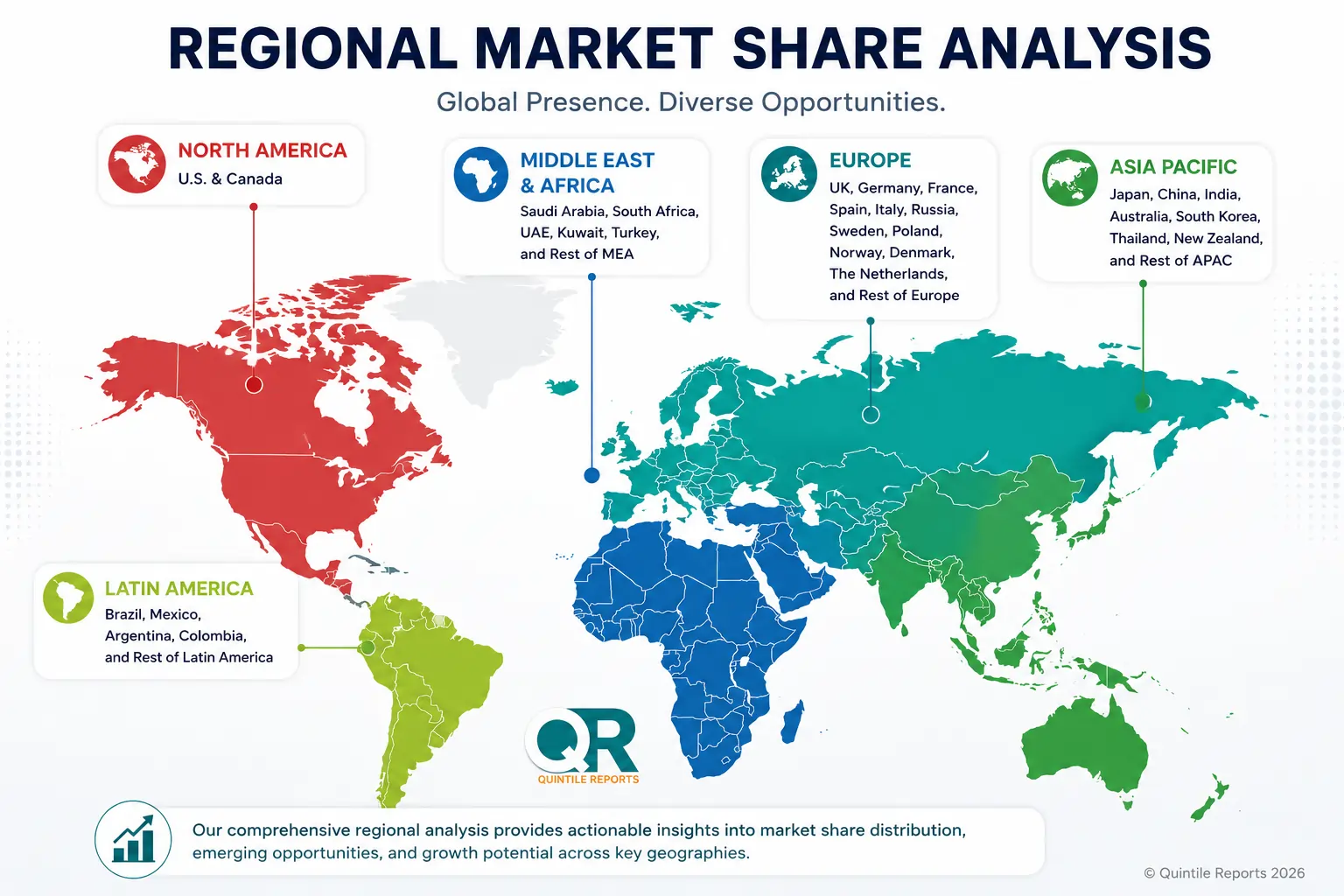
North America dominates the global preclinical imaging market and is expected to maintain its leadership throughout the forecast period. The region benefits from a well-established pharmaceutical and biotechnology ecosystem, substantial investments in biomedical research, and widespread adoption of advanced imaging technologies. The United States accounts for the largest regional share due to the presence of leading pharmaceutical companies, world-renowned research universities, and major imaging system manufacturers. Continuous funding from government agencies and private organizations for oncology, neuroscience, and rare disease research further supports market expansion. The growing adoption of artificial intelligence-enabled imaging platforms, multimodal imaging systems, and molecular imaging techniques is strengthening North America's competitive position.
Europe represents the second-largest market, supported by strong government funding for life science research, advanced healthcare infrastructure, and an extensive network of academic and clinical research institutions. Countries including Germany, the United Kingdom, France, Italy, and the Netherlands continue to invest in precision medicine, translational research, and pharmaceutical innovation. The region also benefits from increasing collaborations between universities, biotechnology companies, and contract research organizations. Rising demand for non-invasive imaging technologies, combined with growing investments in molecular imaging and regenerative medicine, continues to drive steady market growth across Europe.
Asia Pacific is projected to register the fastest growth during the forecast period. Rapid expansion of the pharmaceutical and biotechnology industries, increasing government support for biomedical research, and rising healthcare investments are creating significant opportunities across the region. China, Japan, India, and South Korea are witnessing substantial growth in drug discovery activities, translational research, and contract research services. International pharmaceutical companies are increasingly establishing research partnerships and outsourcing preclinical studies to Asia Pacific because of its skilled scientific workforce and cost-efficient research capabilities. Improvements in research infrastructure and the adoption of advanced imaging technologies are expected to further accelerate regional market growth.
Latin America is gradually emerging as a promising market for preclinical imaging, driven by expanding pharmaceutical research, increasing healthcare investments, and growing participation in international clinical and preclinical research programs. Brazil remains the largest contributor due to its expanding biotechnology sector and improving research infrastructure, while Argentina and Mexico are also strengthening their biomedical research capabilities. Although budget limitations and slower technology adoption remain challenges, rising public and private investments in life sciences are expected to support long-term market development.
The Middle East & Africa market is expected to experience steady growth, supported by increasing investments in healthcare modernization, biomedical research, and pharmaceutical manufacturing. Gulf Cooperation Council (GCC) countries, particularly Saudi Arabia and the United Arab Emirates, are investing heavily in research infrastructure, innovation centers, and precision medicine initiatives as part of their long-term healthcare diversification strategies. South Africa continues to play an important role in academic and biomedical research across the African continent. While the region currently represents a relatively smaller share of the global market, expanding government initiatives, international research collaborations, and improving laboratory infrastructure are expected to create new opportunities for preclinical imaging vendors over the coming years.
Strategic collaborations with pharmaceutical companies, biotechnology firms, academic institutions, and contract research organizations (CROs) have become a key growth strategy. Growing partnerships with CROs and specialized service providers are also increasing demand for outsourced imaging workflows, creating synergies with the Medical Imaging Outsourcing Market. These partnerships accelerate product validation, expand research applications, and support the commercialization of next-generation imaging technologies. In addition, manufacturers are enhancing their global presence by strengthening distributor networks, establishing regional service centers, and expanding into emerging markets across Asia Pacific and Latin America.
Manufacturers are increasingly focused on expanding their product portfolios through the development of hybrid imaging systems such as PET/CT, PET/MRI, and SPECT/CT, enabling researchers to obtain comprehensive imaging data from a single platform. Companies are also investing in high-resolution detectors, molecular imaging agents, automated image reconstruction, and advanced visualization software to strengthen their competitive positioning.
Competition is also influenced by continuous investments in research and development, regulatory compliance, customized imaging solutions, and comprehensive after-sales support. As demand for precision medicine, biologics, cell therapies, and translational research continues to grow, companies are expected to prioritize innovation, strategic acquisitions, and digital imaging solutions to maintain their market leadership.
| Year | Company | Strategic Development | Market Impact |
| 2025 | Revvity, Inc. | Expanded its life sciences and preclinical imaging portfolio through continued investments and strategic business integration following the PerkinElmer rebranding. | Strengthened its leadership in molecular imaging, in vivo imaging systems, and drug discovery solutions. |
| 2024 | Bruker Corporation | Expanded its preclinical imaging capabilities through strategic acquisitions and investments in advanced MRI and multimodal imaging technologies. | Enhanced its product portfolio and reinforced its position in high-resolution preclinical imaging. |
| 2024 | MR Solutions Ltd. | Strengthened global commercialization through strategic collaborations focused on cryogen-free MRI and multimodal imaging platforms. | Improved access to next-generation MRI systems for pharmaceutical companies and research institutes. |
| 2023 | FUJIFILM VisualSonics | Expanded partnerships with leading research institutions to enhance its Vevo preclinical ultrasound imaging platform and AI-enabled imaging capabilities. | Accelerated innovation in high-frequency ultrasound imaging for translational and biomedical research. |
| 2023 | MILabs B.V. | Strengthened its molecular imaging portfolio through collaborations focused on advanced PET/SPECT/CT imaging technologies. | Expanded multimodal imaging solutions for oncology, neurology, and pharmaceutical research applications. |
| 2022 | Bruker Corporation | Completed the acquisition of Evident's Scientific Camera Business (formerly Olympus Scientific Camera Business). | Broadened its scientific imaging capabilities and strengthened its life sciences and biomedical imaging portfolio. |
| Report Scope | Details |
| Report Version | 2026 |
| Growth Rate | CAGR of 5.21 % from 2026 to 2036 |
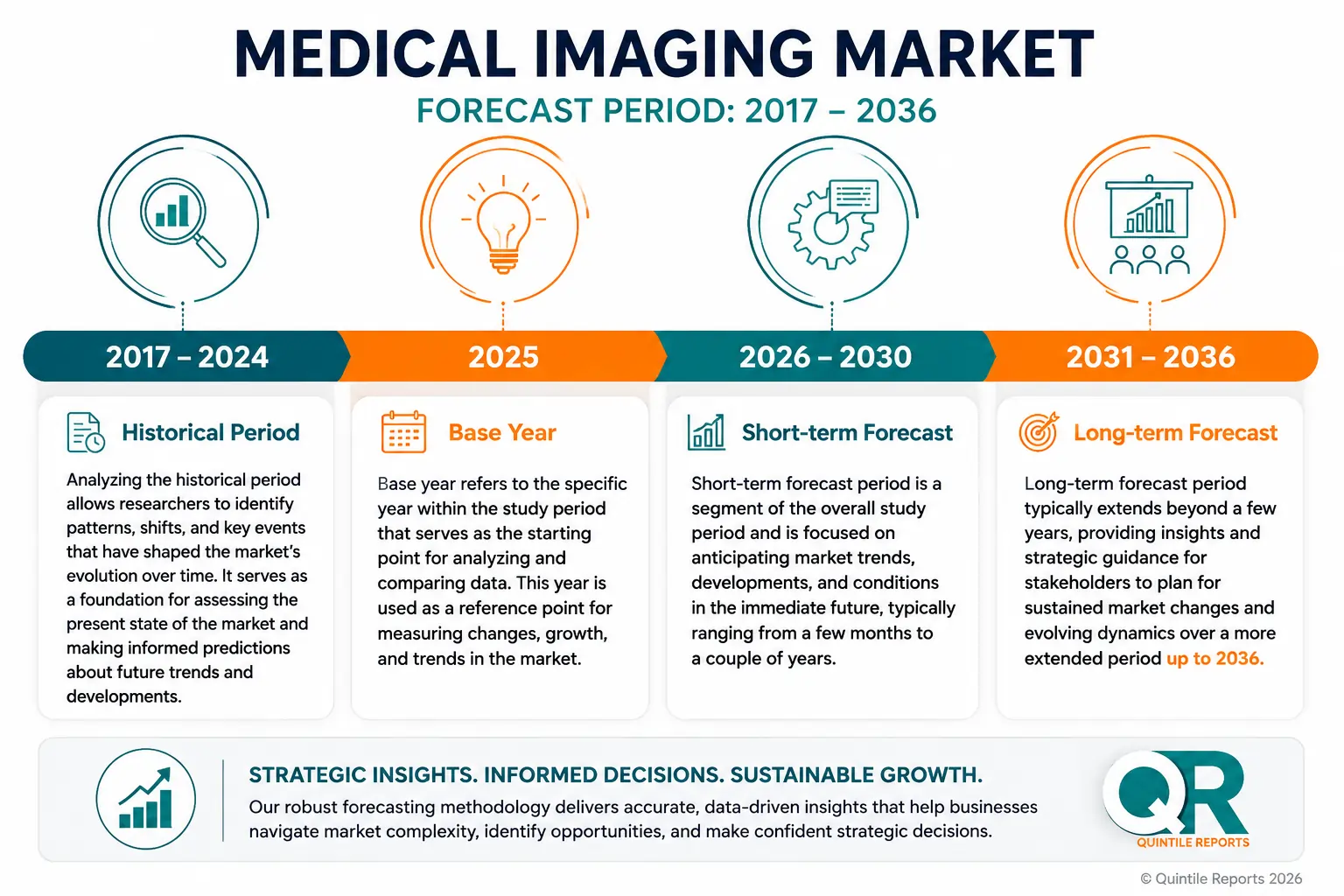
| Base Year | 2025 |
| Actual Estimates / Historical Data | 2017 - 2024 |
| Forecast Period | 2026 - 2036 |
| Quantitative Units | Revenue in USD million/billion & CAGR from 2026 to 2036 |
| Country Scope | North America (U.S., Canada), Europe (UK, Germany, France, Italy, Spain, Russia, Sweden, Denmark, Norway, Rest of Europe), Asia Pacific (Japan, China, India, Australia, South Korea, Thailand, Rest of Asia Pacific), Latin America (Brazil, Mexico, Argentina, Colombia, Rest of Latin America), Middle East & Africa (South Africa, Saudi Arabia, UAE, Kuwait, Rest of Middle East & Africa). |
| The Segment Covered by Imaging Modality |
|
| The Segment Covered by Application |
|
| Companies Covered |
|
| Report Coverage | Revenue forecast, company share, competitive landscape, growth factors, technology trends, and regional analysis |
| Free Customization Scope (Equivalent to 5 Analyst Working Days) | If you require additional insights beyond the current scope, our analysts can customize the report to meet your specific business needs. |
At Quintile Reports, we are committed to delivering high-quality, data-driven market intelligence that enables organizations to make informed strategic decisions with confidence. Our Preclinical Imaging Market research is built on a rigorous methodology that combines extensive primary interviews, in-depth secondary research, and advanced analytical models to provide accurate insights into current market dynamics, competitive developments, and future growth opportunities.
Our experienced team of healthcare and life sciences analysts continuously monitors technological innovations, pharmaceutical R&D investments, regulatory developments, industry collaborations, and emerging market trends that shape the global preclinical imaging industry. Every report undergoes a comprehensive multi-level editorial and quality assurance process to ensure the accuracy, reliability, and consistency of the information presented.
By integrating validated industry data, expert perspectives, and robust quantitative forecasting techniques, Quintile Reports delivers actionable market intelligence that supports business expansion, investment planning, product development, competitive benchmarking, and long-term strategic decision-making. Our commitment to research excellence, transparency, and client-centric analysis has established Quintile Reports as a trusted market research partner for pharmaceutical companies, biotechnology firms, healthcare organizations, investors, research institutions, and decision-makers worldwide.
At Quintile Reports, our research on the Global Preclinical Imaging Market is built on a comprehensive and systematic methodology designed to provide accurate, reliable, and actionable market intelligence. Every report is developed through a combination of extensive primary research, in-depth secondary research, and advanced analytical techniques to ensure a balanced view of current market conditions and future growth potential. Our objective is to help businesses, investors, healthcare organizations, and research institutions make informed strategic decisions based on validated data and industry insights.
The research process begins with an extensive review of publicly available information from trusted industry sources, including company annual reports, financial statements, investor presentations, regulatory publications, scientific journals, patent databases, government statistics, healthcare organizations, and industry associations. This stage helps establish a clear understanding of market trends, technological developments, regulatory frameworks, competitive activities, and emerging opportunities within the preclinical imaging ecosystem.
To complement secondary findings, our analysts conduct primary research through interviews and discussions with key industry participants. These include executives from pharmaceutical and biotechnology companies, preclinical imaging system manufacturers, contract research organizations (CROs), academic researchers, laboratory professionals, distributors, and independent industry experts. These conversations provide valuable insights into technology adoption, purchasing trends, research priorities, product innovation, pricing strategies, and future investment plans. Feedback collected during primary research is carefully compared with secondary data to ensure consistency and eliminate information gaps.
Market size estimation is performed using both top-down and bottom-up analytical approaches. Historical market performance, product demand, research funding, pharmaceutical R&D expenditure, technological advancements, macroeconomic indicators, and regional growth patterns are evaluated to estimate current market values and forecast future growth. Multiple data validation techniques and triangulation methods are applied throughout the research process to improve the accuracy and reliability of the final market estimates.
The report also includes a detailed evaluation of the competitive landscape by analyzing leading market participants based on their product portfolios, technological capabilities, strategic partnerships, research and development initiatives, mergers and acquisitions, geographic presence, and recent business developments. Additional analytical frameworks such as PESTLE analysis, Porter's Five Forces analysis, value chain assessment, and market attractiveness analysis are incorporated to provide a comprehensive understanding of the industry's competitive environment.
Before publication, every report undergoes a rigorous editorial and quality review process. Senior analysts verify market estimates, forecast assumptions, segmentation, statistical models, and qualitative insights to ensure consistency, credibility, and factual accuracy. This disciplined research approach enables Quintile Reports to deliver dependable market intelligence that supports strategic planning, investment decisions, product development, and long-term business growth in the global preclinical imaging market.
| Review Information | Details |
| Prepared By | Healthcare & Life Sciences Research Team, Quintile Insights |
| Reviewed By | Shivani Singh |
| Research Team | Healthcare & Life Sciences |
| Industry Expertise | Healthcare, Life Sciences, Biotechnology, Pharmaceutical Research, Medical Devices, Diagnostics, and Preclinical Imaging |
| Research Methodology | Primary interviews, secondary research, market modeling, data triangulation, and multi-level validation techniques. |
| Last Updated | July 2026 |
| Review Cycle | Quarterly |
| Data Validation | Validated through a three-phase quality assurance process using primary interviews and secondary research. |
| Quality Assurance | Each report undergoes multiple editorial reviews, statistical verification, and consistency checks to ensure accuracy, reliability, and research integrity before publication. |
| Report Coverage | Global, regional, and country-level market analysis covering market size, forecasts, segmentation, competitive landscape, technological developments, mergers & acquisitions, and strategic insights. |
Table 1 List of Abbreviation and Acronyms
Table 2 List of Sources
Table 3 North America Preclinical Imaging Market, by Segment Analysis, (USD Million) 2017-2036
Table 4 North America Preclinical Imaging Market, by Region, (USD Million) 2017-2036
Table 5 U.S. Preclinical Imaging Market, by Segment Analysis, (USD Million) 2017-2036
Table 6 Canada Preclinical Imaging Market, by Segment Analysis, (USD Million) 2017-2036
Table 7 Europe Preclinical Imaging Market, by Segment Analysis, (USD Million) 2017-2036
Table 8 Europe Preclinical Imaging Market, by Region, (USD Million) 2017-2036
Table 9 Germany Preclinical Imaging Market, by Segment Analysis, (USD Million) 2017-2036
Table 10 U.K. Preclinical Imaging Market, by Segment Analysis, (USD Million) 2017-2036
Table 11 France Preclinical Imaging Market, by Segment Analysis, (USD Million) 2017-2036
Table 12 Italy Preclinical Imaging Market, by Segment Analysis, (USD Million) 2017-2036
Table 13 Spain Preclinical Imaging Market, by Segment Analysis, (USD Million) 2017-2036
Table 14 Sweden Preclinical Imaging Market, by Segment Analysis, (USD Million) 2017-2036
Table 15 Denmark Preclinical Imaging Market, by Segment Analysis, (USD Million) 2017-2036
Table 16 Norway Preclinical Imaging Market, by Segment Analysis, (USD Million) 2017-2036
Table 17 The Netherlands Preclinical Imaging Market, by Segment Analysis, (USD Million) 2017-2036
Table 18 Russia Preclinical Imaging Market, by Segment Analysis, (USD Million) 2017-2036
Table 19 Asia Pacific Global Market, by Segment Analysis, (USD Million) 2017-2036
Table 20 Asia Pacific Preclinical Imaging Market, by Region, (USD Million) 2017-2036
Table 21 China Preclinical Imaging Market, by Segment Analysis, (USD Million) 2017-2036
Table 22 Japan Preclinical Imaging Market, by Segment Analysis, (USD Million) 2017-2036
Table 23 India Preclinical Imaging Market, by Segment Analysis, (USD Million) 2017-2036
Table 24 Australia Preclinical Imaging Market, by Segment Analysis, (USD Million) 2017-2036
Table 25 South Korea Preclinical Imaging Market, by Segment Analysis, (USD Million) 2017-2036
Table 26 Thailand Preclinical Imaging Market, by Segment Analysis, (USD Million) 2017-2036
Table 27 Latin America Preclinical Imaging Market, by Segment Analysis, (USD Million) 2017-2036
Table 28 Latin America Preclinical Imaging Market, by Region, (USD Million) 2017-2036
Table 29 Brazil Preclinical Imaging Market, by Segment Analysis, (USD Million) 2017-2036
Table 30 Mexico Preclinical Imaging Market, by Segment Analysis, (USD Million) 2017-2036
Table 31 Argentina Preclinical Imaging Market, by Segment Analysis, (USD Million) 2017-2036
Table 32 Middle East and Africa Preclinical Imaging Market, by Segment Analysis, (USD Million) 2017-2036
Table 33 Middle East and Africa Preclinical Imaging Market, by Region, (USD Million) 2017-2036
Table 34 South Africa Preclinical Imaging Market, by Segment Analysis, (USD Million) 2017-2036
Table 35 Saudi Arabia Preclinical Imaging Market, by Segment Analysis, (USD Million) 2017-2036
Table 36 UAE Preclinical Imaging Market, by Segment Analysis, (USD Million) 2017-2036
Table 37 Kuwait Preclinical Imaging Market, by Segment Analysis, (USD Million) 2017-2036
Table 38 Turkey Preclinical Imaging Market, by Segment Analysis, (USD Million) 2017-2036
Fig.1 Market Research Process
Fig.2 Market Research Approaches
Fig.3 Global Preclinical Imaging Market: Market Scenario
Fig.4 Global Preclinical Imaging Market Competitive Outlook
Fig.5 Global Preclinical Imaging Market Driver Analysis
Fig.6 Global Preclinical Imaging Market Restraint Analysis
Fig.7 Global Preclinical Imaging Market Opportunity Analysis
Fig.8 Global Preclinical Imaging Market Trends Analysis
Fig.9 Global Preclinical Imaging Market: Segment Analysis (Based on the Scope)
Fig.10 Global Preclinical Imaging Market: Regional Analysis
Fig.11 Global Market Shares and Leading Market Players
Fig.12 North America Market Share and Leading Players
Fig.13 Europe Market Share and Leading Players
Fig.14 Asia Pacific Market Share and Leading Players
Fig.15 Latin America Market Share and Leading Players
Fig.16 Middle East & Africa Market Share and Leading Players
Fig.17 North America, by Country
Fig.18 North America
Fig.19 North America Market Estimates and Forecast, 2017-2036
Fig.20 U.S.
Fig.21 Canada
Fig.22 Europe
Fig.23 Europe Market Estimates and Forecast, 2017-2036
Fig.24 U.K.
Fig.25 Germany
Fig.26 France
Fig.27 Italy
Fig.28 Spain
Fig.29 Sweden
Fig.30 Denmark
Fig.31 Norway
Fig.32 The Netherlands
Fig.33 Russia
Fig.34 Asia Pacific
Fig.35 Asia Pacific Market Estimates and Forecast, 2017-2036
Fig.36 China
Fig.37 Japan
Fig.38 India
Fig.39 Australia
Fig.40 South Korea
Fig.41 Thailand
Fig.42 Latin America
Fig.43 Latin America Market Estimates and Forecast, 2017-2036
Fig.44 Brazil
Fig.45 Mexico
Fig.46 Argentina
Fig.47 Colombia
Fig.48 Middle East and Africa
Fig.49 Middle East and Africa Market Estimates and Forecast, 2017-2036
Fig.50 Saudi Arabia
Fig.51 South Africa
Fig.52 UAE
Fig.53 Kuwait
Fig.54 Turkey
Table 1 List of Abbreviation and Acronyms
Table 2 List of Sources
Table 3 North America Preclinical Imaging Market, by Segment Analysis, (USD Million) 2017-2036
Table 4 North America Preclinical Imaging Market, by Region, (USD Million) 2017-2036
Table 5 U.S. Preclinical Imaging Market, by Segment Analysis, (USD Million) 2017-2036
Table 6 Canada Preclinical Imaging Market, by Segment Analysis, (USD Million) 2017-2036
Table 7 Europe Preclinical Imaging Market, by Segment Analysis, (USD Million) 2017-2036
Table 8 Europe Preclinical Imaging Market, by Region, (USD Million) 2017-2036
Table 9 Germany Preclinical Imaging Market, by Segment Analysis, (USD Million) 2017-2036
Table 10 U.K. Preclinical Imaging Market, by Segment Analysis, (USD Million) 2017-2036
Table 11 France Preclinical Imaging Market, by Segment Analysis, (USD Million) 2017-2036
Table 12 Italy Preclinical Imaging Market, by Segment Analysis, (USD Million) 2017-2036
Table 13 Spain Preclinical Imaging Market, by Segment Analysis, (USD Million) 2017-2036
Table 14 Sweden Preclinical Imaging Market, by Segment Analysis, (USD Million) 2017-2036
Table 15 Denmark Preclinical Imaging Market, by Segment Analysis, (USD Million) 2017-2036
Table 16 Norway Preclinical Imaging Market, by Segment Analysis, (USD Million) 2017-2036
Table 17 The Netherlands Preclinical Imaging Market, by Segment Analysis, (USD Million) 2017-2036
Table 18 Russia Preclinical Imaging Market, by Segment Analysis, (USD Million) 2017-2036
Table 19 Asia Pacific Global Market, by Segment Analysis, (USD Million) 2017-2036
Table 20 Asia Pacific Preclinical Imaging Market, by Region, (USD Million) 2017-2036
Table 21 China Preclinical Imaging Market, by Segment Analysis, (USD Million) 2017-2036
Table 22 Japan Preclinical Imaging Market, by Segment Analysis, (USD Million) 2017-2036
Table 23 India Preclinical Imaging Market, by Segment Analysis, (USD Million) 2017-2036
Table 24 Australia Preclinical Imaging Market, by Segment Analysis, (USD Million) 2017-2036
Table 25 South Korea Preclinical Imaging Market, by Segment Analysis, (USD Million) 2017-2036
Table 26 Thailand Preclinical Imaging Market, by Segment Analysis, (USD Million) 2017-2036
Table 27 Latin America Preclinical Imaging Market, by Segment Analysis, (USD Million) 2017-2036
Table 28 Latin America Preclinical Imaging Market, by Region, (USD Million) 2017-2036
Table 29 Brazil Preclinical Imaging Market, by Segment Analysis, (USD Million) 2017-2036
Table 30 Mexico Preclinical Imaging Market, by Segment Analysis, (USD Million) 2017-2036
Table 31 Argentina Preclinical Imaging Market, by Segment Analysis, (USD Million) 2017-2036
Table 32 Middle East and Africa Preclinical Imaging Market, by Segment Analysis, (USD Million) 2017-2036
Table 33 Middle East and Africa Preclinical Imaging Market, by Region, (USD Million) 2017-2036
Table 34 South Africa Preclinical Imaging Market, by Segment Analysis, (USD Million) 2017-2036
Table 35 Saudi Arabia Preclinical Imaging Market, by Segment Analysis, (USD Million) 2017-2036
Table 36 UAE Preclinical Imaging Market, by Segment Analysis, (USD Million) 2017-2036
Table 37 Kuwait Preclinical Imaging Market, by Segment Analysis, (USD Million) 2017-2036
Table 38 Turkey Preclinical Imaging Market, by Segment Analysis, (USD Million) 2017-2036
Fig.1 Market Research Process
Fig.2 Market Research Approaches
Fig.3 Global Preclinical Imaging Market: Market Scenario
Fig.4 Global Preclinical Imaging Market Competitive Outlook
Fig.5 Global Preclinical Imaging Market Driver Analysis
Fig.6 Global Preclinical Imaging Market Restraint Analysis
Fig.7 Global Preclinical Imaging Market Opportunity Analysis
Fig.8 Global Preclinical Imaging Market Trends Analysis
Fig.9 Global Preclinical Imaging Market: Segment Analysis (Based on the Scope)
Fig.10 Global Preclinical Imaging Market: Regional Analysis
Fig.11 Global Market Shares and Leading Market Players
Fig.12 North America Market Share and Leading Players
Fig.13 Europe Market Share and Leading Players
Fig.14 Asia Pacific Market Share and Leading Players
Fig.15 Latin America Market Share and Leading Players
Fig.16 Middle East & Africa Market Share and Leading Players
Fig.17 North America, by Country
Fig.18 North America
Fig.19 North America Market Estimates and Forecast, 2017-2036
Fig.20 U.S.
Fig.21 Canada
Fig.22 Europe
Fig.23 Europe Market Estimates and Forecast, 2017-2036
Fig.24 U.K.
Fig.25 Germany
Fig.26 France
Fig.27 Italy
Fig.28 Spain
Fig.29 Sweden
Fig.30 Denmark
Fig.31 Norway
Fig.32 The Netherlands
Fig.33 Russia
Fig.34 Asia Pacific
Fig.35 Asia Pacific Market Estimates and Forecast, 2017-2036
Fig.36 China
Fig.37 Japan
Fig.38 India
Fig.39 Australia
Fig.40 South Korea
Fig.41 Thailand
Fig.42 Latin America
Fig.43 Latin America Market Estimates and Forecast, 2017-2036
Fig.44 Brazil
Fig.45 Mexico
Fig.46 Argentina
Fig.47 Colombia
Fig.48 Middle East and Africa
Fig.49 Middle East and Africa Market Estimates and Forecast, 2017-2036
Fig.50 Saudi Arabia
Fig.51 South Africa
Fig.52 UAE
Fig.53 Kuwait
Fig.54 Turkey
The global Preclinical Imaging Market was valued at USD 3.16 billion in 2026 and is projected to reach USD 5.12 billion by 2036, growing at a CAGR of 5.21% during the forecast period.
The market is primarily driven by increasing pharmaceutical and biotechnology R&D investments, rising drug discovery activities, growing adoption of personalized medicine, technological advancements in multimodal imaging systems, and the integration of artificial intelligence (AI) into imaging analysis and workflow automation.
The market includes Optical Imaging (BLI/FLI), Magnetic Resonance Imaging (MRI), Micro-CT, Micro-PET, Micro-SPECT, Ultrasound Imaging, Photoacoustic Imaging (PAI), and Hybrid Imaging Systems such as PET/CT, PET/MRI, and SPECT/CT.
Oncology research holds the largest market share due to increasing investments in targeted therapies, immunotherapies, precision oncology, and cancer drug development.
The primary end users include pharmaceutical and biotechnology companies, academic and research institutes, contract research organizations (CROs), hospitals and research centers, and other life sciences organizations.
North America leads the market owing to strong pharmaceutical R&D investments, advanced research infrastructure, government funding, and the early adoption of innovative imaging technologies. Asia Pacific is expected to register the fastest growth during the forecast period.
Key companies include Bruker Corporation, Revvity, Inc., FUJIFILM VisualSonics Inc., MR Solutions Ltd., MILabs B.V., Mediso Ltd., Aspect Imaging Ltd., TriFoil Imaging, LI-COR Biosciences, Agilent Technologies, Bio-Rad Laboratories, Shimadzu Corporation, Canon Medical Systems, Siemens Healthineers, GE HealthCare Technologies, Thermo Fisher Scientific, Photon etc., Scanco Medical AG, Rigaku Holdings Corporation, and Bioemtech.
Significant growth opportunities exist in AI-powered image analysis, molecular imaging technologies, multimodal imaging systems, precision medicine, cell and gene therapy research, regenerative medicine, and expanding pharmaceutical outsourcing activities across emerging economies.
The global Preclinical Imaging Market has become an integral part of modern biomedical research, enabling scientists to visualize biological processes in living organisms before therapies advance to human clinical trials. Preclinical imaging technologies provide high-resolution, non-invasive insights into disease progression before therapies advance to human clinical trials and complement innovations across the broader Medical Imaging Market, where advanced diagnostic imaging technologies continue to evolve. These systems have become indispensable across oncology, neurology, cardiology, immunology, infectious disease research, and regenerative medicine, where real-time imaging plays a critical role in understanding disease mechanisms and validating therapeutic candidates.
The global Preclinical Imaging Market, valued at USD 3.16 billion in 2026, is projected to reach USD 5.12 billion by 2036, expanding at a CAGR of 5.21% during the forecast period. Growth is being supported by increasing investments in pharmaceutical R&D, rising demand for personalized medicine, expanding biologics and cell & gene therapy pipelines, and the growing adoption of advanced imaging modalities capable of delivering quantitative and multimodal data.
The pharmaceutical and biotechnology industries continue to invest heavily in preclinical research as drug development becomes increasingly complex. Before a therapeutic candidate enters clinical evaluation, researchers require accurate tools to assess biodistribution, pharmacokinetics, efficacy, and safety. Advanced imaging technologies such as magnetic resonance imaging (MRI), positron emission tomography (PET), computed tomography (CT), optical imaging, ultrasound, and photoacoustic imaging enable repeated, longitudinal assessments without sacrificing laboratory animals, improving both research efficiency and ethical compliance.
Technological advancements are reshaping the market landscape. Hybrid imaging platforms combining PET/CT, PET/MRI, and SPECT/CT provide comprehensive anatomical, functional, and molecular information within a single scan. Artificial intelligence and machine learning are increasingly integrated into image reconstruction, automated analysis, and quantitative interpretation, reflecting broader advancements across the AI in Medical Imaging Market, allowing researchers to generate more reliable datasets while reducing manual analysis time. Cloud-based data management and advanced visualization software further improve collaboration among research teams operating across multiple locations.
Oncology remains the largest application area, driven by the continuous development of targeted therapies, immunotherapies, antibody-drug conjugates, and precision oncology programs. At the same time, neuroscience research is expanding rapidly as pharmaceutical companies intensify efforts to develop treatments for Alzheimer's disease, Parkinson's disease, multiple sclerosis, and other neurodegenerative disorders. Cardiovascular, inflammatory, metabolic, and infectious disease research also continues to contribute significantly to demand for sophisticated preclinical imaging platforms.
North America maintains the leading market position due to its strong pharmaceutical ecosystem, substantial research funding, advanced academic infrastructure, and early adoption of innovative imaging technologies. Europe remains a mature market supported by government-funded biomedical research initiatives, while Asia Pacific is expected to witness the fastest growth owing to expanding biotechnology industries, increasing clinical research activities, improving healthcare infrastructure, and rising investments in life science research across China, India, Japan, and South Korea.
Looking ahead, the market is expected to benefit from continuous innovation in molecular imaging agents, AI-enabled image analytics, multimodal imaging systems, and automation technologies. As pharmaceutical companies seek faster, more predictive, and cost-effective drug development workflows, preclinical imaging will remain a foundational technology supporting translational research and the development of next-generation therapeutics.
The increasing complexity of modern drug development is driving sustained demand for advanced preclinical imaging technologies. Pharmaceutical and biotechnology companies are investing heavily in novel therapeutics, including biologics, gene therapies, RNA-based medicines, immunotherapies, and precision medicine. These therapies require accurate visualization of biological responses during early-stage research, making non-invasive imaging indispensable for evaluating efficacy, safety, biodistribution, and pharmacokinetics. The ability to generate longitudinal data from the same animal model improves research quality while reducing development timelines and costs.
Continuous innovation in imaging hardware and software is significantly enhancing research capabilities. Hybrid imaging platforms combining PET, CT, MRI, and SPECT deliver comprehensive structural, functional, and molecular information within a single examination. Simultaneously, artificial intelligence is improving image reconstruction, segmentation, automated quantification, and predictive analytics, enabling researchers to obtain faster and more reproducible results. These technological advancements are encouraging wider adoption across both academic and commercial research organizations.
Despite strong technological progress, the high cost of acquiring and maintaining sophisticated imaging systems remains a significant challenge, particularly for smaller research laboratories and emerging biotechnology companies. Installation, maintenance, software upgrades, imaging reagents, and the need for highly trained personnel substantially increase the total cost of ownership. Budget constraints may delay purchasing decisions, especially in developing economies where research funding remains limited.
The rapid expansion of precision medicine is creating substantial growth opportunities for the preclinical imaging market. Researchers increasingly require advanced imaging techniques to monitor gene expression, cellular therapies, immune responses, and targeted drug delivery in vivo. As regenerative medicine, CAR-T therapies, and RNA-based therapeutics continue to advance, demand for high-resolution molecular imaging and multimodal visualization technologies is expected to grow significantly, opening new revenue opportunities for imaging system manufacturers and software providers.
Preclinical imaging studies must comply with stringent regulatory and ethical guidelines governing laboratory animal research, imaging protocols, and data reproducibility. Variations in imaging methodologies, equipment calibration, and image analysis across research institutions can affect study consistency and comparability. Manufacturers and research organizations continue to focus on standardized imaging protocols, validated software solutions, and quality assurance practices to improve reproducibility and facilitate regulatory acceptance of preclinical findings.
Government funding for biomedical research, precision medicine initiatives, and life sciences innovation continues to support the adoption of preclinical imaging technologies. Public investments in cancer research, neuroscience, and infectious disease programs, along with favorable policies promoting translational research, encourage pharmaceutical companies and academic institutions to expand their preclinical imaging capabilities. International collaborations and research grants further strengthen market development.
Increasing global pharmaceutical R&D expenditure, expanding biotechnology investments, and growing venture capital funding are driving demand for advanced preclinical imaging systems. Although high equipment costs and maintenance expenses may limit adoption among smaller research organizations, rising outsourcing to contract research organizations (CROs) and increasing drug development activities continue to create stable market opportunities.
The growing global burden of chronic diseases, including cancer, neurological disorders, cardiovascular diseases, and autoimmune conditions, has increased the need for faster and more effective drug discovery. Public awareness of personalized medicine and demand for innovative therapies are encouraging greater investment in biomedical research. At the same time, there is increasing emphasis on reducing animal usage through non-invasive longitudinal imaging techniques, supporting ethical research practices.
Rapid advancements in multimodal imaging platforms, artificial intelligence, molecular imaging agents, cloud-based image management, and automated image analysis are transforming preclinical research. Hybrid systems such as PET/CT, PET/MRI, and SPECT/CT provide comprehensive anatomical and functional imaging, while AI-driven software improves image reconstruction, quantification, and data interpretation. Continuous innovation is improving research efficiency, accuracy, and reproducibility.
The market operates under strict regulations governing laboratory animal welfare, imaging device safety, research ethics, and pharmaceutical development. Compliance with Good Laboratory Practice (GLP), institutional animal care guidelines, and regulatory requirements established by organizations such as the FDA, EMA, and other national authorities is essential. Intellectual property protection and regulatory approvals also influence technology commercialization.
Research institutions and manufacturers are increasingly adopting environmentally responsible laboratory practices by improving energy efficiency, reducing hazardous chemical waste, and implementing sustainable manufacturing processes. Digital imaging workflows and cloud-based data storage also help minimize paper consumption and improve operational sustainability across research facilities.
Entering the preclinical imaging market requires substantial capital investment, advanced engineering expertise, strong intellectual property portfolios, regulatory compliance, and established distribution networks. High development costs and long product validation cycles create significant entry barriers, although technological innovation and specialized niche solutions provide opportunities for emerging companies.
Suppliers of high-performance detectors, imaging sensors, superconducting magnets, precision optics, contrast agents, and specialized software play an important role in the value chain. While certain advanced components are sourced from a limited number of manufacturers, leading imaging companies generally maintain diversified supplier relationships, reducing excessive dependence on individual vendors.
Major buyers, including pharmaceutical companies, biotechnology firms, academic institutions, and contract research organizations, often make high-value purchases and evaluate vendors based on technology performance, imaging accuracy, software capabilities, service quality, and long-term support. The availability of multiple established manufacturers increases buyer negotiating power, particularly for large institutional procurement projects.
Although alternative laboratory techniques such as histopathology, molecular biology assays, and in vitro cell-based models remain important in biomedical research, they cannot fully replace the real-time, non-invasive, longitudinal insights offered by preclinical imaging technologies. As a result, substitution risk remains relatively low, especially for complex drug discovery and translational research applications.
The market is highly competitive, with global manufacturers continuously investing in product innovation, multimodal imaging technologies, artificial intelligence integration, advanced visualization software, and strategic collaborations. Competition is driven by imaging performance, system reliability, software functionality, service capabilities, pricing strategies, and research partnerships. Continuous technological advancement and expanding pharmaceutical R&D pipelines are expected to sustain intense competitive rivalry throughout the forecast period.
North America dominates the global preclinical imaging market and is expected to maintain its leadership throughout the forecast period. The region benefits from a well-established pharmaceutical and biotechnology ecosystem, substantial investments in biomedical research, and widespread adoption of advanced imaging technologies. The United States accounts for the largest regional share due to the presence of leading pharmaceutical companies, world-renowned research universities, and major imaging system manufacturers. Continuous funding from government agencies and private organizations for oncology, neuroscience, and rare disease research further supports market expansion. The growing adoption of artificial intelligence-enabled imaging platforms, multimodal imaging systems, and molecular imaging techniques is strengthening North America's competitive position.
Europe represents the second-largest market, supported by strong government funding for life science research, advanced healthcare infrastructure, and an extensive network of academic and clinical research institutions. Countries including Germany, the United Kingdom, France, Italy, and the Netherlands continue to invest in precision medicine, translational research, and pharmaceutical innovation. The region also benefits from increasing collaborations between universities, biotechnology companies, and contract research organizations. Rising demand for non-invasive imaging technologies, combined with growing investments in molecular imaging and regenerative medicine, continues to drive steady market growth across Europe.
Asia Pacific is projected to register the fastest growth during the forecast period. Rapid expansion of the pharmaceutical and biotechnology industries, increasing government support for biomedical research, and rising healthcare investments are creating significant opportunities across the region. China, Japan, India, and South Korea are witnessing substantial growth in drug discovery activities, translational research, and contract research services. International pharmaceutical companies are increasingly establishing research partnerships and outsourcing preclinical studies to Asia Pacific because of its skilled scientific workforce and cost-efficient research capabilities. Improvements in research infrastructure and the adoption of advanced imaging technologies are expected to further accelerate regional market growth.
Latin America is gradually emerging as a promising market for preclinical imaging, driven by expanding pharmaceutical research, increasing healthcare investments, and growing participation in international clinical and preclinical research programs. Brazil remains the largest contributor due to its expanding biotechnology sector and improving research infrastructure, while Argentina and Mexico are also strengthening their biomedical research capabilities. Although budget limitations and slower technology adoption remain challenges, rising public and private investments in life sciences are expected to support long-term market development.
The Middle East & Africa market is expected to experience steady growth, supported by increasing investments in healthcare modernization, biomedical research, and pharmaceutical manufacturing. Gulf Cooperation Council (GCC) countries, particularly Saudi Arabia and the United Arab Emirates, are investing heavily in research infrastructure, innovation centers, and precision medicine initiatives as part of their long-term healthcare diversification strategies. South Africa continues to play an important role in academic and biomedical research across the African continent. While the region currently represents a relatively smaller share of the global market, expanding government initiatives, international research collaborations, and improving laboratory infrastructure are expected to create new opportunities for preclinical imaging vendors over the coming years.
Strategic collaborations with pharmaceutical companies, biotechnology firms, academic institutions, and contract research organizations (CROs) have become a key growth strategy. Growing partnerships with CROs and specialized service providers are also increasing demand for outsourced imaging workflows, creating synergies with the Medical Imaging Outsourcing Market. These partnerships accelerate product validation, expand research applications, and support the commercialization of next-generation imaging technologies. In addition, manufacturers are enhancing their global presence by strengthening distributor networks, establishing regional service centers, and expanding into emerging markets across Asia Pacific and Latin America.
Manufacturers are increasingly focused on expanding their product portfolios through the development of hybrid imaging systems such as PET/CT, PET/MRI, and SPECT/CT, enabling researchers to obtain comprehensive imaging data from a single platform. Companies are also investing in high-resolution detectors, molecular imaging agents, automated image reconstruction, and advanced visualization software to strengthen their competitive positioning.
Competition is also influenced by continuous investments in research and development, regulatory compliance, customized imaging solutions, and comprehensive after-sales support. As demand for precision medicine, biologics, cell therapies, and translational research continues to grow, companies are expected to prioritize innovation, strategic acquisitions, and digital imaging solutions to maintain their market leadership.
| Year | Company | Strategic Development | Market Impact |
| 2025 | Revvity, Inc. | Expanded its life sciences and preclinical imaging portfolio through continued investments and strategic business integration following the PerkinElmer rebranding. | Strengthened its leadership in molecular imaging, in vivo imaging systems, and drug discovery solutions. |
| 2024 | Bruker Corporation | Expanded its preclinical imaging capabilities through strategic acquisitions and investments in advanced MRI and multimodal imaging technologies. | Enhanced its product portfolio and reinforced its position in high-resolution preclinical imaging. |
| 2024 | MR Solutions Ltd. | Strengthened global commercialization through strategic collaborations focused on cryogen-free MRI and multimodal imaging platforms. | Improved access to next-generation MRI systems for pharmaceutical companies and research institutes. |
| 2023 | FUJIFILM VisualSonics | Expanded partnerships with leading research institutions to enhance its Vevo preclinical ultrasound imaging platform and AI-enabled imaging capabilities. | Accelerated innovation in high-frequency ultrasound imaging for translational and biomedical research. |
| 2023 | MILabs B.V. | Strengthened its molecular imaging portfolio through collaborations focused on advanced PET/SPECT/CT imaging technologies. | Expanded multimodal imaging solutions for oncology, neurology, and pharmaceutical research applications. |
| 2022 | Bruker Corporation | Completed the acquisition of Evident's Scientific Camera Business (formerly Olympus Scientific Camera Business). | Broadened its scientific imaging capabilities and strengthened its life sciences and biomedical imaging portfolio. |
| Report Scope | Details |
| Report Version | 2026 |
| Growth Rate | CAGR of 5.21 % from 2026 to 2036 |
| Base Year | 2025 |
| Actual Estimates / Historical Data | 2017 - 2024 |
| Forecast Period | 2026 - 2036 |
| Quantitative Units | Revenue in USD million/billion & CAGR from 2026 to 2036 |
| Country Scope | North America (U.S., Canada), Europe (UK, Germany, France, Italy, Spain, Russia, Sweden, Denmark, Norway, Rest of Europe), Asia Pacific (Japan, China, India, Australia, South Korea, Thailand, Rest of Asia Pacific), Latin America (Brazil, Mexico, Argentina, Colombia, Rest of Latin America), Middle East & Africa (South Africa, Saudi Arabia, UAE, Kuwait, Rest of Middle East & Africa). |
| The Segment Covered by Imaging Modality |
|
| The Segment Covered by Application |
|
| Companies Covered |
|
| Report Coverage | Revenue forecast, company share, competitive landscape, growth factors, technology trends, and regional analysis |
| Free Customization Scope (Equivalent to 5 Analyst Working Days) | If you require additional insights beyond the current scope, our analysts can customize the report to meet your specific business needs. |
At Quintile Reports, we are committed to delivering high-quality, data-driven market intelligence that enables organizations to make informed strategic decisions with confidence. Our Preclinical Imaging Market research is built on a rigorous methodology that combines extensive primary interviews, in-depth secondary research, and advanced analytical models to provide accurate insights into current market dynamics, competitive developments, and future growth opportunities.
Our experienced team of healthcare and life sciences analysts continuously monitors technological innovations, pharmaceutical R&D investments, regulatory developments, industry collaborations, and emerging market trends that shape the global preclinical imaging industry. Every report undergoes a comprehensive multi-level editorial and quality assurance process to ensure the accuracy, reliability, and consistency of the information presented.
By integrating validated industry data, expert perspectives, and robust quantitative forecasting techniques, Quintile Reports delivers actionable market intelligence that supports business expansion, investment planning, product development, competitive benchmarking, and long-term strategic decision-making. Our commitment to research excellence, transparency, and client-centric analysis has established Quintile Reports as a trusted market research partner for pharmaceutical companies, biotechnology firms, healthcare organizations, investors, research institutions, and decision-makers worldwide.
At Quintile Reports, our research on the Global Preclinical Imaging Market is built on a comprehensive and systematic methodology designed to provide accurate, reliable, and actionable market intelligence. Every report is developed through a combination of extensive primary research, in-depth secondary research, and advanced analytical techniques to ensure a balanced view of current market conditions and future growth potential. Our objective is to help businesses, investors, healthcare organizations, and research institutions make informed strategic decisions based on validated data and industry insights.
The research process begins with an extensive review of publicly available information from trusted industry sources, including company annual reports, financial statements, investor presentations, regulatory publications, scientific journals, patent databases, government statistics, healthcare organizations, and industry associations. This stage helps establish a clear understanding of market trends, technological developments, regulatory frameworks, competitive activities, and emerging opportunities within the preclinical imaging ecosystem.
To complement secondary findings, our analysts conduct primary research through interviews and discussions with key industry participants. These include executives from pharmaceutical and biotechnology companies, preclinical imaging system manufacturers, contract research organizations (CROs), academic researchers, laboratory professionals, distributors, and independent industry experts. These conversations provide valuable insights into technology adoption, purchasing trends, research priorities, product innovation, pricing strategies, and future investment plans. Feedback collected during primary research is carefully compared with secondary data to ensure consistency and eliminate information gaps.
Market size estimation is performed using both top-down and bottom-up analytical approaches. Historical market performance, product demand, research funding, pharmaceutical R&D expenditure, technological advancements, macroeconomic indicators, and regional growth patterns are evaluated to estimate current market values and forecast future growth. Multiple data validation techniques and triangulation methods are applied throughout the research process to improve the accuracy and reliability of the final market estimates.
The report also includes a detailed evaluation of the competitive landscape by analyzing leading market participants based on their product portfolios, technological capabilities, strategic partnerships, research and development initiatives, mergers and acquisitions, geographic presence, and recent business developments. Additional analytical frameworks such as PESTLE analysis, Porter's Five Forces analysis, value chain assessment, and market attractiveness analysis are incorporated to provide a comprehensive understanding of the industry's competitive environment.
Before publication, every report undergoes a rigorous editorial and quality review process. Senior analysts verify market estimates, forecast assumptions, segmentation, statistical models, and qualitative insights to ensure consistency, credibility, and factual accuracy. This disciplined research approach enables Quintile Reports to deliver dependable market intelligence that supports strategic planning, investment decisions, product development, and long-term business growth in the global preclinical imaging market.
| Review Information | Details |
| Prepared By | Healthcare & Life Sciences Research Team, Quintile Insights |
| Reviewed By | Shivani Singh |
| Research Team | Healthcare & Life Sciences |
| Industry Expertise | Healthcare, Life Sciences, Biotechnology, Pharmaceutical Research, Medical Devices, Diagnostics, and Preclinical Imaging |
| Research Methodology | Primary interviews, secondary research, market modeling, data triangulation, and multi-level validation techniques. |
| Last Updated | July 2026 |
| Review Cycle | Quarterly |
| Data Validation | Validated through a three-phase quality assurance process using primary interviews and secondary research. |
| Quality Assurance | Each report undergoes multiple editorial reviews, statistical verification, and consistency checks to ensure accuracy, reliability, and research integrity before publication. |
| Report Coverage | Global, regional, and country-level market analysis covering market size, forecasts, segmentation, competitive landscape, technological developments, mergers & acquisitions, and strategic insights. |
Table 1 List of Abbreviation and Acronyms
Table 2 List of Sources
Table 3 North America Preclinical Imaging Market, by Segment Analysis, (USD Million) 2017-2036
Table 4 North America Preclinical Imaging Market, by Region, (USD Million) 2017-2036
Table 5 U.S. Preclinical Imaging Market, by Segment Analysis, (USD Million) 2017-2036
Table 6 Canada Preclinical Imaging Market, by Segment Analysis, (USD Million) 2017-2036
Table 7 Europe Preclinical Imaging Market, by Segment Analysis, (USD Million) 2017-2036
Table 8 Europe Preclinical Imaging Market, by Region, (USD Million) 2017-2036
Table 9 Germany Preclinical Imaging Market, by Segment Analysis, (USD Million) 2017-2036
Table 10 U.K. Preclinical Imaging Market, by Segment Analysis, (USD Million) 2017-2036
Table 11 France Preclinical Imaging Market, by Segment Analysis, (USD Million) 2017-2036
Table 12 Italy Preclinical Imaging Market, by Segment Analysis, (USD Million) 2017-2036
Table 13 Spain Preclinical Imaging Market, by Segment Analysis, (USD Million) 2017-2036
Table 14 Sweden Preclinical Imaging Market, by Segment Analysis, (USD Million) 2017-2036
Table 15 Denmark Preclinical Imaging Market, by Segment Analysis, (USD Million) 2017-2036
Table 16 Norway Preclinical Imaging Market, by Segment Analysis, (USD Million) 2017-2036
Table 17 The Netherlands Preclinical Imaging Market, by Segment Analysis, (USD Million) 2017-2036
Table 18 Russia Preclinical Imaging Market, by Segment Analysis, (USD Million) 2017-2036
Table 19 Asia Pacific Global Market, by Segment Analysis, (USD Million) 2017-2036
Table 20 Asia Pacific Preclinical Imaging Market, by Region, (USD Million) 2017-2036
Table 21 China Preclinical Imaging Market, by Segment Analysis, (USD Million) 2017-2036
Table 22 Japan Preclinical Imaging Market, by Segment Analysis, (USD Million) 2017-2036
Table 23 India Preclinical Imaging Market, by Segment Analysis, (USD Million) 2017-2036
Table 24 Australia Preclinical Imaging Market, by Segment Analysis, (USD Million) 2017-2036
Table 25 South Korea Preclinical Imaging Market, by Segment Analysis, (USD Million) 2017-2036
Table 26 Thailand Preclinical Imaging Market, by Segment Analysis, (USD Million) 2017-2036
Table 27 Latin America Preclinical Imaging Market, by Segment Analysis, (USD Million) 2017-2036
Table 28 Latin America Preclinical Imaging Market, by Region, (USD Million) 2017-2036
Table 29 Brazil Preclinical Imaging Market, by Segment Analysis, (USD Million) 2017-2036
Table 30 Mexico Preclinical Imaging Market, by Segment Analysis, (USD Million) 2017-2036
Table 31 Argentina Preclinical Imaging Market, by Segment Analysis, (USD Million) 2017-2036
Table 32 Middle East and Africa Preclinical Imaging Market, by Segment Analysis, (USD Million) 2017-2036
Table 33 Middle East and Africa Preclinical Imaging Market, by Region, (USD Million) 2017-2036
Table 34 South Africa Preclinical Imaging Market, by Segment Analysis, (USD Million) 2017-2036
Table 35 Saudi Arabia Preclinical Imaging Market, by Segment Analysis, (USD Million) 2017-2036
Table 36 UAE Preclinical Imaging Market, by Segment Analysis, (USD Million) 2017-2036
Table 37 Kuwait Preclinical Imaging Market, by Segment Analysis, (USD Million) 2017-2036
Table 38 Turkey Preclinical Imaging Market, by Segment Analysis, (USD Million) 2017-2036
Fig.1 Market Research Process
Fig.2 Market Research Approaches
Fig.3 Global Preclinical Imaging Market: Market Scenario
Fig.4 Global Preclinical Imaging Market Competitive Outlook
Fig.5 Global Preclinical Imaging Market Driver Analysis
Fig.6 Global Preclinical Imaging Market Restraint Analysis
Fig.7 Global Preclinical Imaging Market Opportunity Analysis
Fig.8 Global Preclinical Imaging Market Trends Analysis
Fig.9 Global Preclinical Imaging Market: Segment Analysis (Based on the Scope)
Fig.10 Global Preclinical Imaging Market: Regional Analysis
Fig.11 Global Market Shares and Leading Market Players
Fig.12 North America Market Share and Leading Players
Fig.13 Europe Market Share and Leading Players
Fig.14 Asia Pacific Market Share and Leading Players
Fig.15 Latin America Market Share and Leading Players
Fig.16 Middle East & Africa Market Share and Leading Players
Fig.17 North America, by Country
Fig.18 North America
Fig.19 North America Market Estimates and Forecast, 2017-2036
Fig.20 U.S.
Fig.21 Canada
Fig.22 Europe
Fig.23 Europe Market Estimates and Forecast, 2017-2036
Fig.24 U.K.
Fig.25 Germany
Fig.26 France
Fig.27 Italy
Fig.28 Spain
Fig.29 Sweden
Fig.30 Denmark
Fig.31 Norway
Fig.32 The Netherlands
Fig.33 Russia
Fig.34 Asia Pacific
Fig.35 Asia Pacific Market Estimates and Forecast, 2017-2036
Fig.36 China
Fig.37 Japan
Fig.38 India
Fig.39 Australia
Fig.40 South Korea
Fig.41 Thailand
Fig.42 Latin America
Fig.43 Latin America Market Estimates and Forecast, 2017-2036
Fig.44 Brazil
Fig.45 Mexico
Fig.46 Argentina
Fig.47 Colombia
Fig.48 Middle East and Africa
Fig.49 Middle East and Africa Market Estimates and Forecast, 2017-2036
Fig.50 Saudi Arabia
Fig.51 South Africa
Fig.52 UAE
Fig.53 Kuwait
Fig.54 Turkey
Table 1 List of Abbreviation and Acronyms
Table 2 List of Sources
Table 3 North America Preclinical Imaging Market, by Segment Analysis, (USD Million) 2017-2036
Table 4 North America Preclinical Imaging Market, by Region, (USD Million) 2017-2036
Table 5 U.S. Preclinical Imaging Market, by Segment Analysis, (USD Million) 2017-2036
Table 6 Canada Preclinical Imaging Market, by Segment Analysis, (USD Million) 2017-2036
Table 7 Europe Preclinical Imaging Market, by Segment Analysis, (USD Million) 2017-2036
Table 8 Europe Preclinical Imaging Market, by Region, (USD Million) 2017-2036
Table 9 Germany Preclinical Imaging Market, by Segment Analysis, (USD Million) 2017-2036
Table 10 U.K. Preclinical Imaging Market, by Segment Analysis, (USD Million) 2017-2036
Table 11 France Preclinical Imaging Market, by Segment Analysis, (USD Million) 2017-2036
Table 12 Italy Preclinical Imaging Market, by Segment Analysis, (USD Million) 2017-2036
Table 13 Spain Preclinical Imaging Market, by Segment Analysis, (USD Million) 2017-2036
Table 14 Sweden Preclinical Imaging Market, by Segment Analysis, (USD Million) 2017-2036
Table 15 Denmark Preclinical Imaging Market, by Segment Analysis, (USD Million) 2017-2036
Table 16 Norway Preclinical Imaging Market, by Segment Analysis, (USD Million) 2017-2036
Table 17 The Netherlands Preclinical Imaging Market, by Segment Analysis, (USD Million) 2017-2036
Table 18 Russia Preclinical Imaging Market, by Segment Analysis, (USD Million) 2017-2036
Table 19 Asia Pacific Global Market, by Segment Analysis, (USD Million) 2017-2036
Table 20 Asia Pacific Preclinical Imaging Market, by Region, (USD Million) 2017-2036
Table 21 China Preclinical Imaging Market, by Segment Analysis, (USD Million) 2017-2036
Table 22 Japan Preclinical Imaging Market, by Segment Analysis, (USD Million) 2017-2036
Table 23 India Preclinical Imaging Market, by Segment Analysis, (USD Million) 2017-2036
Table 24 Australia Preclinical Imaging Market, by Segment Analysis, (USD Million) 2017-2036
Table 25 South Korea Preclinical Imaging Market, by Segment Analysis, (USD Million) 2017-2036
Table 26 Thailand Preclinical Imaging Market, by Segment Analysis, (USD Million) 2017-2036
Table 27 Latin America Preclinical Imaging Market, by Segment Analysis, (USD Million) 2017-2036
Table 28 Latin America Preclinical Imaging Market, by Region, (USD Million) 2017-2036
Table 29 Brazil Preclinical Imaging Market, by Segment Analysis, (USD Million) 2017-2036
Table 30 Mexico Preclinical Imaging Market, by Segment Analysis, (USD Million) 2017-2036
Table 31 Argentina Preclinical Imaging Market, by Segment Analysis, (USD Million) 2017-2036
Table 32 Middle East and Africa Preclinical Imaging Market, by Segment Analysis, (USD Million) 2017-2036
Table 33 Middle East and Africa Preclinical Imaging Market, by Region, (USD Million) 2017-2036
Table 34 South Africa Preclinical Imaging Market, by Segment Analysis, (USD Million) 2017-2036
Table 35 Saudi Arabia Preclinical Imaging Market, by Segment Analysis, (USD Million) 2017-2036
Table 36 UAE Preclinical Imaging Market, by Segment Analysis, (USD Million) 2017-2036
Table 37 Kuwait Preclinical Imaging Market, by Segment Analysis, (USD Million) 2017-2036
Table 38 Turkey Preclinical Imaging Market, by Segment Analysis, (USD Million) 2017-2036
Fig.1 Market Research Process
Fig.2 Market Research Approaches
Fig.3 Global Preclinical Imaging Market: Market Scenario
Fig.4 Global Preclinical Imaging Market Competitive Outlook
Fig.5 Global Preclinical Imaging Market Driver Analysis
Fig.6 Global Preclinical Imaging Market Restraint Analysis
Fig.7 Global Preclinical Imaging Market Opportunity Analysis
Fig.8 Global Preclinical Imaging Market Trends Analysis
Fig.9 Global Preclinical Imaging Market: Segment Analysis (Based on the Scope)
Fig.10 Global Preclinical Imaging Market: Regional Analysis
Fig.11 Global Market Shares and Leading Market Players
Fig.12 North America Market Share and Leading Players
Fig.13 Europe Market Share and Leading Players
Fig.14 Asia Pacific Market Share and Leading Players
Fig.15 Latin America Market Share and Leading Players
Fig.16 Middle East & Africa Market Share and Leading Players
Fig.17 North America, by Country
Fig.18 North America
Fig.19 North America Market Estimates and Forecast, 2017-2036
Fig.20 U.S.
Fig.21 Canada
Fig.22 Europe
Fig.23 Europe Market Estimates and Forecast, 2017-2036
Fig.24 U.K.
Fig.25 Germany
Fig.26 France
Fig.27 Italy
Fig.28 Spain
Fig.29 Sweden
Fig.30 Denmark
Fig.31 Norway
Fig.32 The Netherlands
Fig.33 Russia
Fig.34 Asia Pacific
Fig.35 Asia Pacific Market Estimates and Forecast, 2017-2036
Fig.36 China
Fig.37 Japan
Fig.38 India
Fig.39 Australia
Fig.40 South Korea
Fig.41 Thailand
Fig.42 Latin America
Fig.43 Latin America Market Estimates and Forecast, 2017-2036
Fig.44 Brazil
Fig.45 Mexico
Fig.46 Argentina
Fig.47 Colombia
Fig.48 Middle East and Africa
Fig.49 Middle East and Africa Market Estimates and Forecast, 2017-2036
Fig.50 Saudi Arabia
Fig.51 South Africa
Fig.52 UAE
Fig.53 Kuwait
Fig.54 Turkey

A license granted to one user. Rules or conditions might be applied for e.g. the use of electric files (PDFs) or printings, depending on product.
A license granted to multiple users.
A license granted to a single business site/establishment.
A license granted to all employees within organisation access to the product.
Immediate / Within 24-48 hours - Working days
Online Payments with PayPal and CCavenue
You can order a report by picking any of the payment methods which is bank wire or online payment through any Debit/Credit card or PayPal.
Hard Copy
Radiology Information System (RIS) Market Overview The global Radiology Information System (RIS) Mar
Read MoreTeleradiology Market Overview Report Description The global Teleradiology Market was valued at USD 7
Read MoreMagnetic Resonance Imaging (MRI) Market Overview The global Magnetic Resonance Imaging (MRI) Market,
Read More