The global Teleradiology Market was valued at USD 7.86 billion in 2026 and is projected to reach USD 31.01 billion by 2036, expanding at a CAGR of 14.45% during the forecast period. Teleradiology has become an increasingly important component of modern diagnostic imaging, enabling radiologists to securely review and interpret medical images from locations outside the facility where the images are generated. Growing Diagnostic Imaging volumes, uneven distribution of radiology specialists, and the need for faster reporting are encouraging hospitals, diagnostic centers, and healthcare networks to adopt remote radiology services. The broader expansion of diagnostic imaging across hospitals and imaging centers is also supporting demand for connected interpretation and reporting workflows..
The expansion of the Teleradiology Market is closely linked to the growing volume of diagnostic imaging procedures and the operational pressure faced by radiology departments. Hospitals are increasingly required to provide timely interpretation for emergency, inpatient, outpatient, and specialty imaging studies, while maintaining access to qualified radiologists across different shifts and locations. Teleradiology allows imaging studies to be routed to available specialists, helping healthcare organizations manage reporting workloads, extend coverage hours, and access subspecialty expertise without requiring every facility to maintain a full in-house radiology team.
Technology development is further improving the practicality of remote radiology services. Integration with Picture Archiving and Communication Systems (PACS), Radiology Information Systems (RIS), cloud-based image platforms, and secure communication infrastructure is supporting faster movement of imaging data between facilities and reporting teams. The growing use of digital workflows also allows healthcare networks to coordinate workloads across multiple sites, making remote reporting particularly valuable for organizations operating centralized or distributed imaging services.
Another important factor shaping market demand is the uneven availability of radiology expertise. Smaller hospitals, rural facilities, emergency care providers, and imaging centers may not have access to specialists for every modality or clinical indication. Teleradiology helps bridge this gap by connecting facilities with radiologists who can provide interpretation remotely. This model is particularly relevant for time-sensitive examinations, including trauma, stroke, and emergency CT imaging, where delays in reporting can affect clinical decision-making.
The market is also moving beyond its traditional role as an after-hours reporting solution. Healthcare providers are increasingly using remote radiology services for routine reporting, overflow management, subspecialty interpretation, second opinions, and continuous coverage. This shift is creating opportunities for service providers that can combine reliable reporting capacity with secure technology, efficient workflow management, quality assurance, and access to specialized radiologists.
At the same time, the adoption of teleradiology requires healthcare organizations to address data security, patient privacy, regulatory compliance, interoperability, and integration with existing clinical systems. The transmission of diagnostic images and patient information across networks makes cybersecurity and controlled access important considerations when selecting technology platforms and service providers. Providers that can demonstrate strong security practices, dependable infrastructure, regulatory alignment, and consistent reporting quality are therefore better positioned to compete in the evolving market.
AI-assisted image analysis, case prioritization, workflow support, and automated quality checks can help radiologists manage growing workloads and identify cases requiring prompt attention. The increasing integration of Medical Image Analysis Software with remote reporting workflows is creating additional opportunities for AI-enabled teleradiology.
From a regional perspective, established healthcare systems with high imaging volumes and advanced digital infrastructure continue to provide a strong foundation for teleradiology adoption, while emerging markets offer significant opportunities as healthcare providers expand diagnostic capacity and improve specialist access. Growth prospects will vary according to healthcare expenditure, imaging infrastructure, regulatory frameworks, availability of radiologists, digital connectivity, and the pace of healthcare IT adoption.
Overall, the Teleradiology Market is transitioning from a supplementary reporting service into a broader component of distributed diagnostic care. The combination of increasing imaging demand, specialist workforce constraints, digital healthcare investment, and the need for efficient reporting is expected to sustain market expansion through 2036. Companies offering secure platforms, integrated workflows, specialized reporting capabilities, and scalable service models are likely to benefit as healthcare organizations increasingly incorporate remote radiology into their long-term diagnostic strategies.
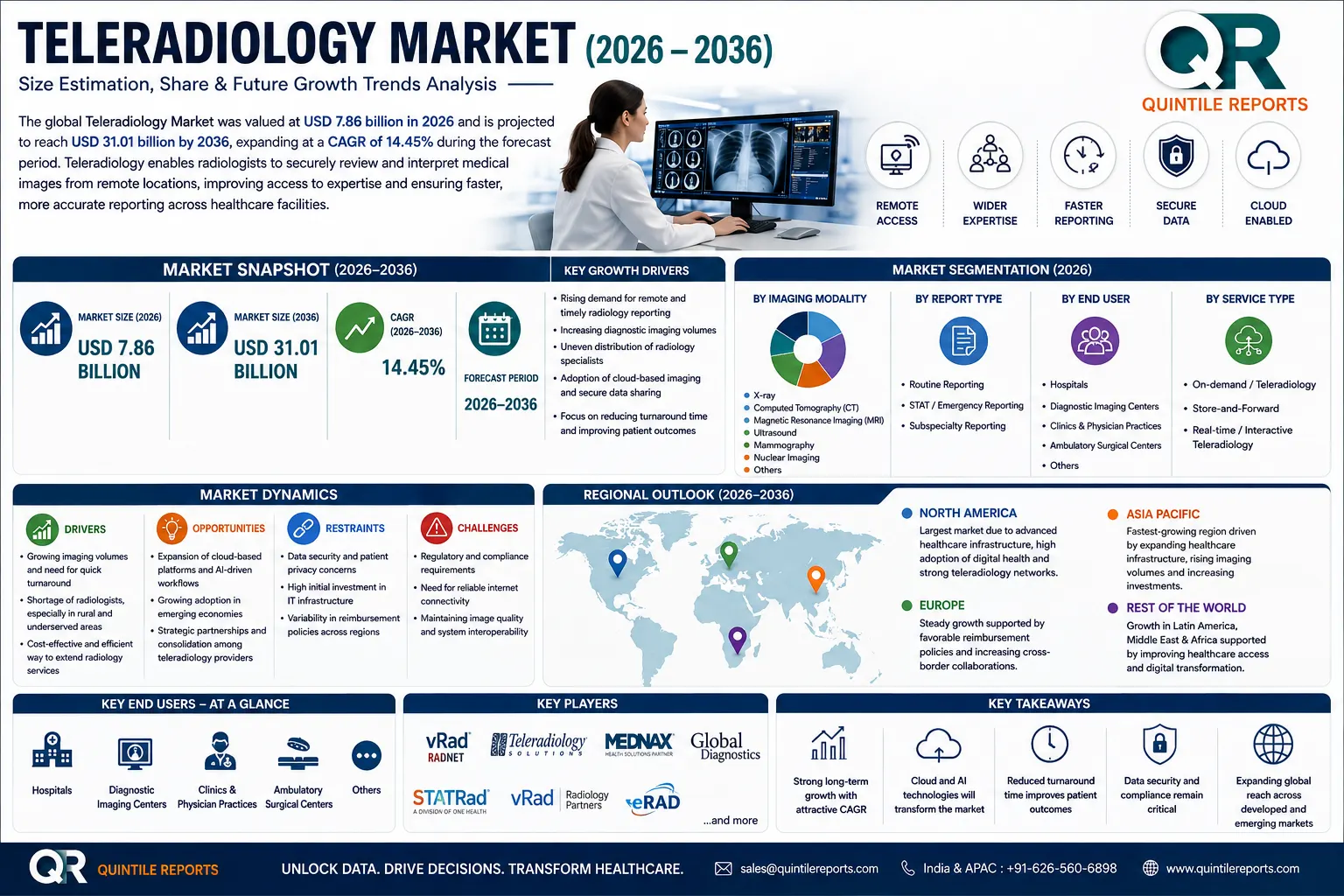
The Teleradiology Market is being driven by rising diagnostic imaging volumes, limited availability of radiologists, demand for faster reporting, and expanding digital healthcare infrastructure. Hospitals, diagnostic centers, and healthcare networks are increasingly using remote radiology to manage workloads, extend reporting coverage, and access subspecialty expertise across geographic boundaries. Cloud-based imaging, PACS/RIS integration, secure data transmission, and AI-assisted workflows are further improving the scalability of teleradiology services.
Growing use of CT, MRI, X-ray, ultrasound, and mammography for diagnosis, screening, emergency assessment, and treatment monitoring is increasing pressure on radiology departments. Higher examination volumes require greater reporting capacity and faster turnaround times. Teleradiology allows cases to be distributed among available radiologists based on workload, urgency, and specialty, helping healthcare facilities manage demand without relying entirely on on-site reporting teams. The continued expansion of diagnostic imaging is therefore a key market growth driver.
The uneven distribution of qualified radiologists remains a major factor supporting teleradiology adoption. Specialist expertise is often concentrated in major cities and large healthcare institutions, while rural hospitals and smaller diagnostic facilities may have limited access to specialists. Remote reporting enables these facilities to connect with radiologists outside their immediate geographic area, improving access to routine and subspecialty interpretation without maintaining a complete specialist workforce at every location.
Emergency departments, trauma centers, stroke services, intensive care units, and 24-hour hospitals require timely interpretation of medical images to support clinical decisions. Teleradiology enables examinations to be assigned to available radiologists across different locations and time zones, supporting overnight, weekend, and overflow reporting. As healthcare providers place greater emphasis on turnaround time and continuity of diagnostic services, remote reporting is increasingly becoming part of routine radiology operations rather than being limited to after-hours coverage.
The adoption of cloud-based PACS and digital imaging infrastructure is improving the ability to store, retrieve, transmit, and share medical images remotely. Cloud platforms can support multi-site hospitals, centralized reporting teams, diagnostic chains, and external teleradiology providers while reducing dependence on extensive local infrastructure. Integration with RIS and other clinical systems can also streamline case assignment, image access, reporting, and communication, supporting wider adoption of connected teleradiology workflows.
Artificial intelligence is increasingly being used as a supporting technology within teleradiology. AI tools can assist with image analysis, case prioritization, abnormality detection, and workflow management, helping radiologists handle increasing examination volumes more efficiently. AI can support the identification and prioritization of potentially critical cases, although qualified radiologists remain essential for clinical interpretation and final reporting. Its integration with remote reporting platforms is expected to improve workflow efficiency and productivity.
Hospitals and diagnostic centers are increasingly using outsourced radiology services to address staffing constraints, manage operating costs, and access subspecialty expertise. Teleradiology providers can offer routine reporting, emergency coverage, overnight services, second opinions, and overflow capacity. This model is particularly useful for smaller facilities and multi-location healthcare networks that cannot maintain extensive in-house specialist teams. Outsourcing also enables reporting capacity to be adjusted according to imaging demand.
Key challenges include patient data privacy, cybersecurity, interoperability, regulatory compliance, connectivity, and reporting quality. Teleradiology requires secure transmission and storage of sensitive medical information, making access controls, encryption, secure networks, and appropriate data-management practices essential. Integration with legacy PACS, RIS, and hospital information systems can increase implementation complexity and costs. The continued dependence on qualified radiologists also limits scalability where specialist shortages remain severe, particularly in highly specialized fields.
Significant opportunities exist across underserved healthcare regions, multi-site hospital networks, diagnostic imaging chains, emergency imaging, and subspecialty reporting. Cloud-connected teleradiology can extend specialist access to rural and secondary healthcare facilities without requiring a full radiology team at every site. Improvements in connectivity, digital imaging, and healthcare IT are creating favorable conditions for adoption in emerging markets.
The convergence of cloud imaging, AI-assisted workflows, remote specialist networks, and integrated digital health systems is expected to create further opportunities for service providers and technology companies. Providers that combine secure infrastructure, reliable reporting, strong interoperability, scalable workflows, and qualified radiologists are likely to be well positioned as healthcare organizations increasingly adopt distributed models of diagnostic care.
Based on product type, X-ray remains a major modality in the teleradiology market due to its broad availability, relatively low cost, and extensive use in routine and emergency diagnostics. It is widely used for chest imaging, trauma, orthopedic, dental, and other first-line examinations. The transition toward digital and filmless X-ray systems is also making image transmission and remote interpretation easier, supporting continued demand for X-ray-based teleradiology services.
Computed Tomography (CT) is expected to be among the fastest-growing product segments as demand increases for detailed imaging in neurological, cardiovascular, pulmonary, trauma, and oncology applications. Rising emergency imaging volumes, installation of advanced CT systems, and the need for rapid interpretation are supporting segment growth. Cloud-based image transmission and access to subspecialty radiologists are further strengthening the integration of CT with teleradiology workflows.
Ultrasound is gaining importance because it does not use ionizing radiation, requires comparatively accessible equipment, and is widely used in primary care, maternal health, emergency medicine, and resource-constrained settings. Portable and connected ultrasound systems are creating opportunities for remote image review, specialist consultation, clinical guidance, and training, particularly across rural and underserved healthcare areas.
Magnetic Resonance Imaging (MRI) represents another important segment due to the complexity of examinations and the need for specialized interpretation. Increasing use of MRI in neurological, musculoskeletal, oncology, and cardiovascular applications is creating greater demand for experienced radiologists. Teleradiology enables facilities without local subspecialists to access qualified expertise remotely. Other modalities, including mammography and nuclear medicine imaging, are also contributing to market development as screening programs and demand for specialized interpretation expand.
Preliminary reporting remains important in teleradiology, particularly for emergency and after-hours services. It provides healthcare providers with an initial interpretation within a short timeframe, supporting time-sensitive clinical decisions when an on-site radiologist or subspecialist is unavailable. This model is particularly relevant to emergency departments, trauma centers, and hospitals requiring continuous radiology coverage.
Final reporting is expected to experience stronger growth as healthcare providers increasingly prioritize comprehensive and formally documented interpretations. Final reports support diagnosis, treatment planning, clinical documentation, and follow-up care. Improvements in digital workflows, secure communication, and remote radiologist access are enabling providers to deliver final reads more efficiently. Growing expectations for reporting accuracy, turnaround time, subspecialty expertise, and standardized documentation are also encouraging investment in quality-control systems and integrated reporting platforms.
Hospitals represent a major end-use segment because they generate high volumes of diagnostic imaging across emergency departments, inpatient units, intensive care, outpatient services, and specialized departments. Teleradiology helps hospitals maintain radiologist coverage during nights, weekends, holidays, and periods of high demand while providing access to subspecialists when specific expertise is unavailable locally. Rapid remote interpretation is particularly valuable for stroke, trauma, internal bleeding, and other conditions requiring timely clinical decisions.
Ambulatory Imaging Centers are expected to be among the faster-growing end-use segments as imaging services increasingly expand beyond hospitals. These centers can use teleradiology to address radiologist shortages, improve reporting turnaround, and manage operating costs without maintaining a full specialist team on-site. Growing use of CT, MRI, mammography, and other advanced imaging at outpatient facilities is creating additional demand for external reporting networks.
Radiology clinics and independent diagnostic centers are also adopting teleradiology to manage fluctuating imaging workloads and obtain specialist coverage according to demand. Remote reporting can reduce dependence on a single on-site reporting team while providing access to a wider pool of radiologists. In addition, specialty and regional healthcare networks can centralize image interpretation and distribute cases based on workload, modality, expertise, and urgency, improving resource utilization across multiple facilities.
North America held the leading position in the global Teleradiology Market, accounting for approximately 38.54% of revenue in 2025. The region benefits from mature healthcare infrastructure, high diagnostic imaging utilization, advanced telecommunications, and widespread adoption of digital radiology systems. PACS, RIS, cloud imaging, and secure data networks enable healthcare organizations to connect facilities with remote radiologists, while demand for continuous reporting and subspecialty expertise further supports adoption.
The U.S. teleradiology market represents the largest country-level market in North America, supported by high imaging volumes, an established healthcare IT ecosystem, and demand for timely radiology reporting. Hospitals, imaging centers, and radiology groups increasingly use remote reporting to manage workload fluctuations and provide coverage during nights and weekends. The focus on efficient, patient-centered healthcare is also supporting adoption, while cloud imaging, AI-assisted workflows, and interoperable systems are creating additional opportunities.
The Canada teleradiology market benefits from the country's geographically dispersed population and differences in radiologist availability between urban centers and rural or remote communities. Teleradiology enables regional facilities to connect with radiologists in larger healthcare centers and specialist networks, helping address staffing limitations and improve access to diagnostic expertise. Continued healthcare digitalization is expected to support further adoption.
Europe represents an established teleradiology market supported by advanced healthcare systems, increasing imaging requirements, population aging, and pressure to improve reporting efficiency. Rising chronic disease burden is contributing to diagnostic imaging demand, while differences in radiologist availability are encouraging healthcare organizations to use remote reporting. Continued development of digital healthcare infrastructure is further supporting centralized and distributed radiology workflows.
The U.K. teleradiology market is supported by the need to expand radiology reporting capacity and manage pressure on diagnostic services. Remote reporting enables healthcare providers to supplement local teams and connect facilities outside major metropolitan areas with radiologists elsewhere in the country. Continued adoption of digital imaging and remote healthcare technologies is expected to strengthen market development.
The Germany teleradiology market benefits from advanced healthcare infrastructure, extensive imaging capabilities, and ongoing digital transformation. Remote interpretation provides hospitals and diagnostic providers with greater flexibility in managing workloads and accessing specialist expertise. Data protection, cybersecurity, interoperability, and regulatory compliance remain important considerations for market participants.
The France teleradiology market is expected to expand alongside investment in digital healthcare and remote clinical services. Teleradiology provides hospitals and imaging centers with additional reporting capacity and access to specialized radiologists. Modernization of healthcare information systems and connected diagnostic technologies is expected to support further adoption.
Asia Pacific is expected to remain one of the most attractive growth regions for teleradiology, supported by expanding hospital networks, rising healthcare expenditure, increasing imaging volumes, and rapid healthcare digitalization. Differences in radiologist availability between metropolitan and rural areas further strengthen the need for remote specialist interpretation. Cloud healthcare platforms, connected imaging equipment, and telehealth infrastructure are improving the feasibility of teleradiology across developing markets.
The China teleradiology market is supported by investment in healthcare infrastructure, expanding hospital capacity, and increasing diagnostic imaging utilization. Digital healthcare systems are enabling large networks to connect imaging facilities with centralized reporting resources. Teleradiology also provides an opportunity to extend specialist expertise to lower-tier cities and regions with limited access to experienced radiologists.
The Japan teleradiology market benefits from advanced healthcare infrastructure and high demand for diagnostic services. The country's aging population is increasing the need for medical assessments, disease monitoring, and imaging, placing additional pressure on radiology departments. Strong digital infrastructure and established imaging capabilities provide a favorable environment for remote reporting.
The India teleradiology market presents significant growth potential due to increasing investments in hospitals, diagnostic centers, digital health infrastructure, and imaging equipment. The concentration of radiologists in major cities and limited specialist availability in smaller and rural locations create strong demand for remote reporting. The expansion of private healthcare networks, diagnostic chains, and digital healthcare platforms is expected to create further opportunities.
The Latin America teleradiology market is developing as healthcare providers expand diagnostic capabilities and adopt digital imaging technologies. Large patient populations, uneven specialist distribution, and differences in healthcare infrastructure create opportunities for remote reporting. Brazil and Mexico are expected to remain important markets because of their large healthcare systems and growing diagnostic imaging requirements. Regional links with North America may also support access to specialist reporting networks, although regulatory, data protection, connectivity, and infrastructure considerations remain important.
The Middle East & Africa (MEA) teleradiology market is expected to expand as healthcare providers invest in diagnostic infrastructure, digital health, and specialist services. Rising demand associated with chronic diseases, cardiovascular conditions, cancer, and trauma is increasing the need for timely diagnostic imaging. Remote radiology can help facilities address specialist shortages, particularly in geographically dispersed and underserved areas.
The Saudi Arabia teleradiology market is benefiting from healthcare modernization, digital health investment, and expansion of advanced hospital and diagnostic networks. Remote reporting can improve access to specialist radiologists and support workload distribution across geographically separated facilities.
The UAE teleradiology market is supported by advanced healthcare infrastructure, strong digital connectivity, and adoption of technology-enabled healthcare services. Hospitals and diagnostic centers are increasingly focused on workflow efficiency and specialist access, creating opportunities for cloud-based teleradiology solutions.
The South Africa teleradiology market offers opportunities due to differences in healthcare resources and specialist availability between major urban centers and underserved areas. Remote interpretation can extend radiology expertise to facilities with limited on-site specialist coverage as diagnostic imaging capabilities expand.
The global Teleradiology Market is expected to maintain strong growth as healthcare systems increasingly adopt digital imaging, remote specialist networks, and distributed reporting models. North America is likely to remain a major revenue-generating region, supported by established infrastructure and high imaging utilization, while Asia Pacific is expected to provide significant growth opportunities as healthcare digitalization and diagnostic capacity expand. Europe is expected to benefit from efforts to improve radiology capacity and manage imaging demand, while Latin America and MEA offer longer-term opportunities through healthcare modernization and improved access to specialist services.
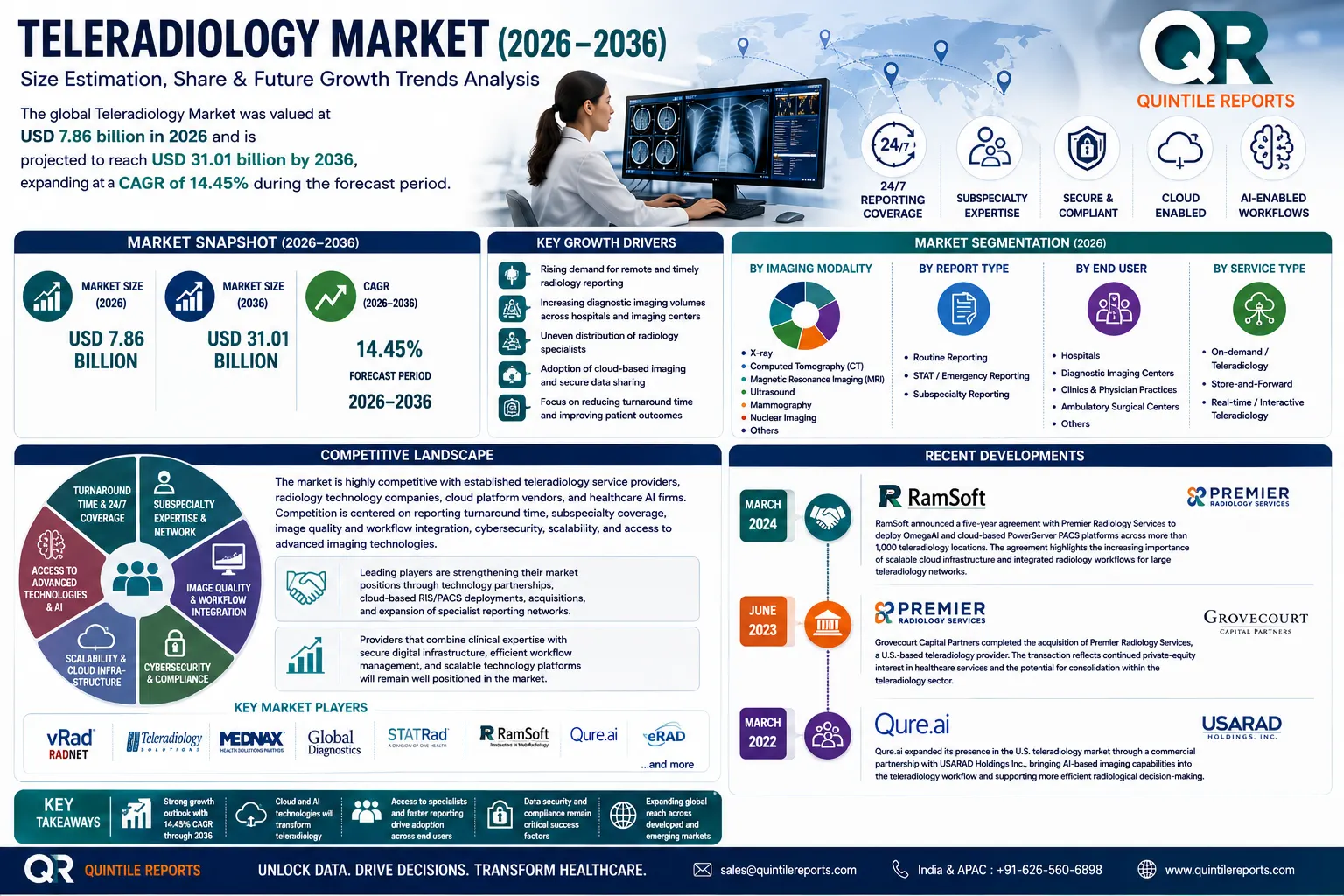
The Teleradiology Market is competitive and includes established teleradiology service providers, radiology technology companies, cloud-based imaging platform vendors, and healthcare AI companies. Competition is increasingly centered on reporting turnaround time, subspecialty coverage, image quality and workflow integration, cybersecurity, scalability, and access to advanced imaging technologies.
Leading participants are strengthening their market positions through technology partnerships, cloud-based RIS/PACS deployments, acquisitions, and expansion of specialist reporting networks. Recent activity involving Premier Radiology Services illustrates the industry's broader move toward consolidation and geographic expansion, while partnerships involving companies such as RamSoft and Qure.ai demonstrate the growing role of cloud infrastructure and AI-enabled imaging workflows.
As healthcare providers increasingly seek reliable 24/7 reporting and access to specialized radiologists, companies that combine clinical expertise with secure digital infrastructure, efficient workflow management, and scalable technology platforms are expected to remain well positioned in the market.
| Date | Company / Development | Details |
| March 2024 | RamSoft | RamSoft announced a five-year agreement with Premier Radiology Services to deploy its OmegaAI and cloud-based PowerServer PACS platforms across more than 1,000 teleradiology locations. The agreement highlights the increasing importance of scalable cloud infrastructure and integrated radiology workflows for large teleradiology networks. |
| June 2023 | Premier Radiology Services | Grovecourt Capital Partners completed the acquisition of Premier Radiology Services, a U.S.-based teleradiology provider. The transaction reflects continued private-equity interest in healthcare services and the potential for consolidation within the teleradiology sector. |
| March 2022 | Qure.ai | Qure.ai expanded its presence in the U.S. teleradiology market through a commercial partnership with USARAD Holdings Inc., bringing AI-based imaging capabilities into the teleradiology workflow and supporting more efficient radiological decision-making. |
| Report Scope | Details |
| Report Version | 2026 |
| Growth Rate | CAGR of 14.45 % from 2026 to 2036 |
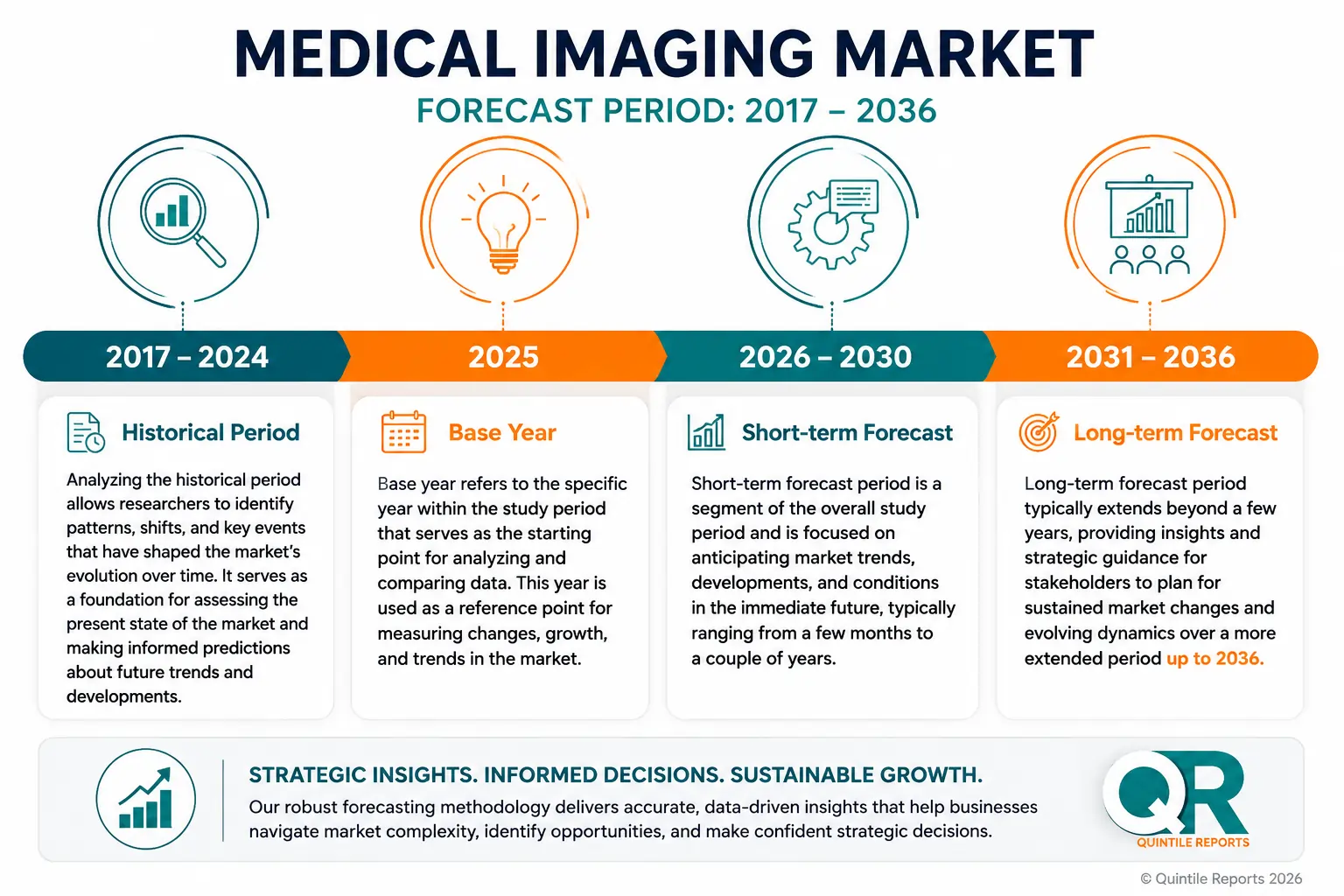
| Base Year | 2025 |
| Actual Estimates / Historical Data | 2017 - 2024 |
| Forecast Period | 2026 - 2036 |
| Quantitative Units | Revenue in USD million/billion & CAGR from 2026 to 2036 |
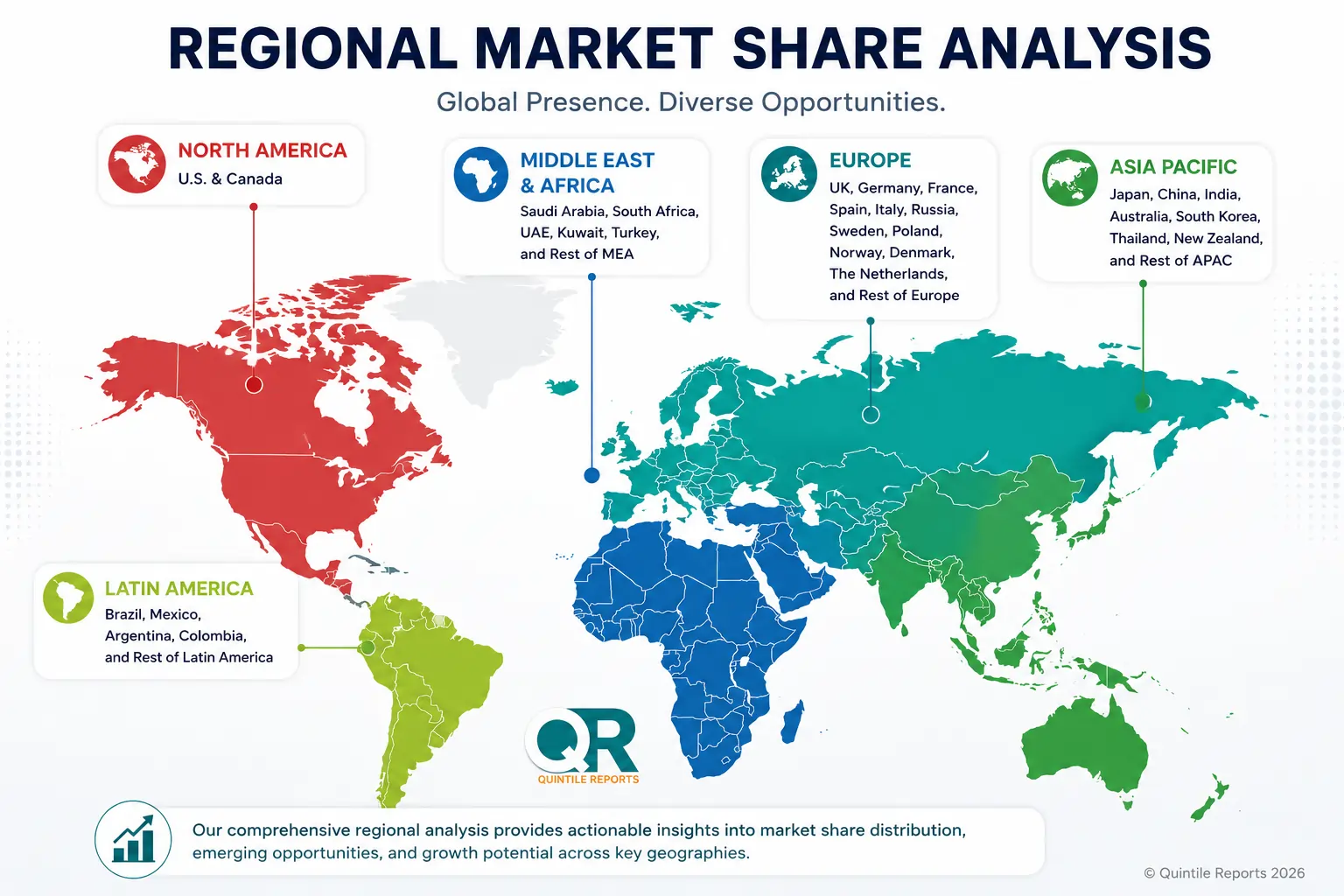
| Country Scope | North America (U.S., Canada), Europe (UK, Germany, France, Italy, Spain, Russia, Sweden, Denmark, Norway, Rest of Europe), Asia Pacific (Japan, China, India, Australia, South Korea, Thailand, Rest of Asia Pacific), Latin America (Brazil, Mexico, Argentina, Colombia, Rest of Latin America), Middle East & Africa (South Africa, Saudi Arabia, UAE, Kuwait, Rest of Middle East & Africa). |
| The Segment Covered by Imaging Modality |
|
| The Segment Covered by Report Type |
|
| Companies Covered |
|
| Report Coverage | Revenue forecast, company share, competitive landscape, growth factors, technology trends, and regional analysis |
| Free Customization Scope (Equivalent to 5 Analyst Working Days) | If you require additional insights beyond the current scope, our analysts can customize the report to meet your specific business needs. |
Quintile Reports provides independent, data-driven market intelligence supported by structured research, industry analysis, and ongoing market monitoring. Our reports combine primary and secondary research, expert insights, competitive assessment, and market forecasting to help businesses make informed strategic decisions.
| Research Stage | Approach Applied to the Teleradiology Market |
| Market Definition & Scope | Defined the teleradiology market across remote radiology interpretation services, supporting technologies, imaging modalities, report types, end users, and geographic markets. |
| Secondary Research | Reviewed healthcare databases, government and regulatory publications, radiology organizations, company disclosures, industry publications, clinical literature, and healthcare technology sources. |
| Primary Research | Gathered market insights through discussions with radiologists, healthcare providers, diagnostic imaging centers, teleradiology companies, healthcare IT professionals, and industry specialists. |
| Market Sizing | Evaluated industry revenues, service adoption, imaging volumes, provider activity, healthcare expenditure, and technology deployment to establish market size estimates. |
| Segment Analysis | Assessed market performance across X-ray, CT, MRI, ultrasound, and other modalities, along with preliminary and final reporting and major end-use settings. |
| Regional Assessment | Analyzed market conditions across North America, Europe, Asia Pacific, Latin America, and Middle East & Africa, including key country-level markets. |
| Growth Driver Analysis | Examined factors such as rising diagnostic imaging volumes, radiologist shortages, demand for faster reporting, healthcare digitalization, cloud adoption, and increasing use of remote specialist services. |
| Opportunity & Restraint Assessment | Evaluated emerging opportunities as well as challenges related to data privacy, cybersecurity, regulatory compliance, interoperability, infrastructure, and availability of qualified radiologists. |
| Competitive Intelligence | Assessed leading participants based on service capabilities, technology platforms, geographic reach, partnerships, acquisitions, reporting expertise, and strategic developments. |
| Forecast Development | Developed market forecasts using historical market performance, current industry conditions, segment and regional adoption patterns, technology developments, investment activity, healthcare infrastructure trends, and relevant macro-level healthcare factors. Forecast assumptions were evaluated in relation to expected changes in diagnostic imaging volumes, radiologist availability, healthcare digitalization, cloud adoption, AI-enabled workflows, regulatory conditions, and other market-specific growth drivers and constraints to establish projections through 2036. |
| Data Triangulation | Cross-validated findings from multiple independent sources and research inputs to improve the consistency and reliability of market estimates. |
| Quality & Expert Validation | Research findings, assumptions, segment estimates, and forecasts are reviewed and validated to ensure that the final analysis reflects prevailing market conditions and industry dynamics. |

The Teleradiology Market is entering a broader phase of adoption as healthcare providers look beyond traditional on-site reporting models to address rising imaging volumes, radiologist shortages, and the need for faster access to specialist interpretation. The expansion of digital imaging infrastructure, cloud-based PACS/RIS platforms, and connected healthcare networks is making remote reporting increasingly practical across hospitals, diagnostic centers, and regional healthcare facilities. At the same time, growing use of AI-assisted workflows is helping radiologists prioritize cases and manage larger workloads without replacing the clinical expertise required for final interpretation. From an industry perspective, the strongest opportunities are likely to emerge where healthcare systems combine reliable digital infrastructure with specialist reporting networks, secure data management, and scalable service models. This combination is expected to make teleradiology an increasingly important component of distributed diagnostic care through the forecast period.
| Author Profile | Details |
| Name | Shivani Patil |
| Designation | Senior Healthcare & Life Sciences Research Analyst |
| Organization | Quintile Reports |
| Research Expertise | Healthcare IT, Radiology Informatics, Medical Imaging, Diagnostic Technologies, Digital Healthcare Solutions |
| Core Research Areas | Market Sizing & Forecasting, Competitive Intelligence, Technology Assessment, Regional Analysis, Industry Trends |
| Analytical Focus | Healthcare technology adoption, emerging diagnostic solutions, digital transformation, market opportunities, and competitive developments |
| Research Approach | Combines industry research, technology assessment, company intelligence, and market-level analysis to develop actionable business insights |
| Professional Focus | Supporting strategic decision-making across market entry, investment planning, business expansion, and technology assessment |
Table 1 List of Abbreviation and Acronyms
Table 2 List of Sources
Table 3 North America Teleradiology Market, by Segment Analysis, (USD Million) 2017-2036
Table 4 North America Teleradiology Market, by Region, (USD Million) 2017-2036
Table 5 U.S. Teleradiology Market, by Segment Analysis, (USD Million) 2017-2036
Table 6 Canada Teleradiology Market, by Segment Analysis, (USD Million) 2017-2036
Table 7 Europe Teleradiology Market, by Segment Analysis, (USD Million) 2017-2036
Table 8 Europe Teleradiology Market, by Region, (USD Million) 2017-2036
Table 9 Germany Teleradiology Market, by Segment Analysis, (USD Million) 2017-2036
Table 10 U.K. Teleradiology Market, by Segment Analysis, (USD Million) 2017-2036
Table 11 France Teleradiology Market, by Segment Analysis, (USD Million) 2017-2036
Table 12 Italy Teleradiology Market, by Segment Analysis, (USD Million) 2017-2036
Table 13 Spain Teleradiology Market, by Segment Analysis, (USD Million) 2017-2036
Table 14 Sweden Teleradiology Market, by Segment Analysis, (USD Million) 2017-2036
Table 15 Denmark Teleradiology Market, by Segment Analysis, (USD Million) 2017-2036
Table 16 Norway Teleradiology Market, by Segment Analysis, (USD Million) 2017-2036
Table 17 The Netherlands Teleradiology Market, by Segment Analysis, (USD Million) 2017-2036
Table 18 Russia Teleradiology Market, by Segment Analysis, (USD Million) 2017-2036
Table 19 Asia Pacific Global Market, by Segment Analysis, (USD Million) 2017-2036
Table 20 Asia Pacific Teleradiology Market, by Region, (USD Million) 2017-2036
Table 21 China Teleradiology Market, by Segment Analysis, (USD Million) 2017-2036
Table 22 Japan Teleradiology Market, by Segment Analysis, (USD Million) 2017-2036
Table 23 India Teleradiology Market, by Segment Analysis, (USD Million) 2017-2036
Table 24 Australia Teleradiology Market, by Segment Analysis, (USD Million) 2017-2036
Table 25 South Korea Teleradiology Market, by Segment Analysis, (USD Million) 2017-2036
Table 26 Thailand Teleradiology Market, by Segment Analysis, (USD Million) 2017-2036
Table 27 Latin America Teleradiology Market, by Segment Analysis, (USD Million) 2017-2036
Table 28 Latin America Teleradiology Market, by Region, (USD Million) 2017-2036
Table 29 Brazil Teleradiology Market, by Segment Analysis, (USD Million) 2017-2036
Table 30 Mexico Teleradiology Market, by Segment Analysis, (USD Million) 2017-2036
Table 31 Argentina Teleradiology Market, by Segment Analysis, (USD Million) 2017-2036
Table 32 Middle East and Africa Teleradiology Market, by Segment Analysis, (USD Million) 2017-2036
Table 33 Middle East and Africa Teleradiology Market, by Region, (USD Million) 2017-2036
Table 34 South Africa Teleradiology Market, by Segment Analysis, (USD Million) 2017-2036
Table 35 Saudi Arabia Teleradiology Market, by Segment Analysis, (USD Million) 2017-2036
Table 36 UAE Teleradiology Market, by Segment Analysis, (USD Million) 2017-2036
Table 37 Kuwait Teleradiology Market, by Segment Analysis, (USD Million) 2017-2036
Table 38 Turkey Teleradiology Market, by Segment Analysis, (USD Million) 2017-2036
Fig.1 Market Research Process
Fig.2 Market Research Approaches
Fig.3 Global Teleradiology Market: Market Scenario
Fig.4 Global Teleradiology Market Competitive Outlook
Fig.5 Global Teleradiology Market Driver Analysis
Fig.6 Global Teleradiology Market Restraint Analysis
Fig.7 Global Teleradiology Market Opportunity Analysis
Fig.8 Global Teleradiology Market Trends Analysis
Fig.9 Global Teleradiology Market: Segment Analysis (Based on the Scope)
Fig.10 Global Teleradiology Market: Regional Analysis
Fig.11 Global Market Shares and Leading Market Players
Fig.12 North America Market Share and Leading Players
Fig.13 Europe Market Share and Leading Players
Fig.14 Asia Pacific Market Share and Leading Players
Fig.15 Latin America Market Share and Leading Players
Fig.16 Middle East & Africa Market Share and Leading Players
Fig.17 North America, by Country
Fig.18 North America
Fig.19 North America Market Estimates and Forecast, 2017-2036
Fig.20 U.S.
Fig.21 Canada
Fig.22 Europe
Fig.23 Europe Market Estimates and Forecast, 2017-2036
Fig.24 U.K.
Fig.25 Germany
Fig.26 France
Fig.27 Italy
Fig.28 Spain
Fig.29 Sweden
Fig.30 Denmark
Fig.31 Norway
Fig.32 The Netherlands
Fig.33 Russia
Fig.34 Asia Pacific
Fig.35 Asia Pacific Market Estimates and Forecast, 2017-2036
Fig.36 China
Fig.37 Japan
Fig.38 India
Fig.39 Australia
Fig.40 South Korea
Fig.41 Thailand
Fig.42 Latin America
Fig.43 Latin America Market Estimates and Forecast, 2017-2036
Fig.44 Brazil
Fig.45 Mexico
Fig.46 Argentina
Fig.47 Colombia
Fig.48 Middle East and Africa
Fig.49 Middle East and Africa Market Estimates and Forecast, 2017-2036
Fig.50 Saudi Arabia
Fig.51 South Africa
Fig.52 UAE
Fig.53 Kuwait
Fig.54 Turkey
Table 1 List of Abbreviation and Acronyms
Table 2 List of Sources
Table 3 North America Teleradiology Market, by Segment Analysis, (USD Million) 2017-2036
Table 4 North America Teleradiology Market, by Region, (USD Million) 2017-2036
Table 5 U.S. Teleradiology Market, by Segment Analysis, (USD Million) 2017-2036
Table 6 Canada Teleradiology Market, by Segment Analysis, (USD Million) 2017-2036
Table 7 Europe Teleradiology Market, by Segment Analysis, (USD Million) 2017-2036
Table 8 Europe Teleradiology Market, by Region, (USD Million) 2017-2036
Table 9 Germany Teleradiology Market, by Segment Analysis, (USD Million) 2017-2036
Table 10 U.K. Teleradiology Market, by Segment Analysis, (USD Million) 2017-2036
Table 11 France Teleradiology Market, by Segment Analysis, (USD Million) 2017-2036
Table 12 Italy Teleradiology Market, by Segment Analysis, (USD Million) 2017-2036
Table 13 Spain Teleradiology Market, by Segment Analysis, (USD Million) 2017-2036
Table 14 Sweden Teleradiology Market, by Segment Analysis, (USD Million) 2017-2036
Table 15 Denmark Teleradiology Market, by Segment Analysis, (USD Million) 2017-2036
Table 16 Norway Teleradiology Market, by Segment Analysis, (USD Million) 2017-2036
Table 17 The Netherlands Teleradiology Market, by Segment Analysis, (USD Million) 2017-2036
Table 18 Russia Teleradiology Market, by Segment Analysis, (USD Million) 2017-2036
Table 19 Asia Pacific Global Market, by Segment Analysis, (USD Million) 2017-2036
Table 20 Asia Pacific Teleradiology Market, by Region, (USD Million) 2017-2036
Table 21 China Teleradiology Market, by Segment Analysis, (USD Million) 2017-2036
Table 22 Japan Teleradiology Market, by Segment Analysis, (USD Million) 2017-2036
Table 23 India Teleradiology Market, by Segment Analysis, (USD Million) 2017-2036
Table 24 Australia Teleradiology Market, by Segment Analysis, (USD Million) 2017-2036
Table 25 South Korea Teleradiology Market, by Segment Analysis, (USD Million) 2017-2036
Table 26 Thailand Teleradiology Market, by Segment Analysis, (USD Million) 2017-2036
Table 27 Latin America Teleradiology Market, by Segment Analysis, (USD Million) 2017-2036
Table 28 Latin America Teleradiology Market, by Region, (USD Million) 2017-2036
Table 29 Brazil Teleradiology Market, by Segment Analysis, (USD Million) 2017-2036
Table 30 Mexico Teleradiology Market, by Segment Analysis, (USD Million) 2017-2036
Table 31 Argentina Teleradiology Market, by Segment Analysis, (USD Million) 2017-2036
Table 32 Middle East and Africa Teleradiology Market, by Segment Analysis, (USD Million) 2017-2036
Table 33 Middle East and Africa Teleradiology Market, by Region, (USD Million) 2017-2036
Table 34 South Africa Teleradiology Market, by Segment Analysis, (USD Million) 2017-2036
Table 35 Saudi Arabia Teleradiology Market, by Segment Analysis, (USD Million) 2017-2036
Table 36 UAE Teleradiology Market, by Segment Analysis, (USD Million) 2017-2036
Table 37 Kuwait Teleradiology Market, by Segment Analysis, (USD Million) 2017-2036
Table 38 Turkey Teleradiology Market, by Segment Analysis, (USD Million) 2017-2036
Fig.1 Market Research Process
Fig.2 Market Research Approaches
Fig.3 Global Teleradiology Market: Market Scenario
Fig.4 Global Teleradiology Market Competitive Outlook
Fig.5 Global Teleradiology Market Driver Analysis
Fig.6 Global Teleradiology Market Restraint Analysis
Fig.7 Global Teleradiology Market Opportunity Analysis
Fig.8 Global Teleradiology Market Trends Analysis
Fig.9 Global Teleradiology Market: Segment Analysis (Based on the Scope)
Fig.10 Global Teleradiology Market: Regional Analysis
Fig.11 Global Market Shares and Leading Market Players
Fig.12 North America Market Share and Leading Players
Fig.13 Europe Market Share and Leading Players
Fig.14 Asia Pacific Market Share and Leading Players
Fig.15 Latin America Market Share and Leading Players
Fig.16 Middle East & Africa Market Share and Leading Players
Fig.17 North America, by Country
Fig.18 North America
Fig.19 North America Market Estimates and Forecast, 2017-2036
Fig.20 U.S.
Fig.21 Canada
Fig.22 Europe
Fig.23 Europe Market Estimates and Forecast, 2017-2036
Fig.24 U.K.
Fig.25 Germany
Fig.26 France
Fig.27 Italy
Fig.28 Spain
Fig.29 Sweden
Fig.30 Denmark
Fig.31 Norway
Fig.32 The Netherlands
Fig.33 Russia
Fig.34 Asia Pacific
Fig.35 Asia Pacific Market Estimates and Forecast, 2017-2036
Fig.36 China
Fig.37 Japan
Fig.38 India
Fig.39 Australia
Fig.40 South Korea
Fig.41 Thailand
Fig.42 Latin America
Fig.43 Latin America Market Estimates and Forecast, 2017-2036
Fig.44 Brazil
Fig.45 Mexico
Fig.46 Argentina
Fig.47 Colombia
Fig.48 Middle East and Africa
Fig.49 Middle East and Africa Market Estimates and Forecast, 2017-2036
Fig.50 Saudi Arabia
Fig.51 South Africa
Fig.52 UAE
Fig.53 Kuwait
Fig.54 Turkey
The global Teleradiology Market is valued at USD 7.86 billion in 2026 and is projected to reach USD 31.01 billion by 2036, expanding at a CAGR of 14.45% from 2026 to 2036.
The market is primarily driven by rising diagnostic imaging volumes, shortages and uneven distribution of radiologists, demand for faster reporting, expansion of cloud-based imaging, digital healthcare adoption, and growing use of remote specialist services. Teleradiology enables healthcare providers to distribute imaging cases across available radiologists and extend reporting coverage beyond individual facilities.
Major trends include cloud-based imaging, PACS and RIS integration, AI-assisted radiology workflows, remote specialist networks, outsourced radiology services, secure digital image transmission, and distributed reporting models. The market is also moving beyond after-hours reporting toward routine reporting, overflow management, subspecialty interpretation, and second opinions.
North America currently holds the leading position in the global Teleradiology Market. The region accounted for approximately 38.54% of market revenue in 2025, supported by mature healthcare infrastructure, high diagnostic imaging utilization, advanced telecommunications, PACS/RIS adoption, cloud imaging, and demand for continuous and subspecialty reporting.
Asia Pacific is expected to remain one of the most attractive growth regions for teleradiology. Expanding hospital networks, increasing healthcare expenditure, rising imaging volumes, healthcare digitalization, differences in radiologist availability, and improving cloud and telehealth infrastructure are supporting regional opportunities.
The market is segmented by imaging modality, report type, end user, service type, and deployment model. Imaging modalities include X-ray, CT, MRI, ultrasound, mammography, and nuclear imaging. Report types include preliminary and final reports, while service types include emergency, routine, subspecialty, second-opinion and consultation, and after-hours reporting.
AI is being integrated into teleradiology workflows to support image analysis, case prioritization, abnormality detection, workflow management, and automated quality checks. AI can help radiologists manage increasing examination volumes and prioritize potentially critical cases, while qualified radiologists remain essential for clinical interpretation and final reporting.
Key challenges include patient data privacy, cybersecurity, regulatory compliance, interoperability, connectivity, reporting quality, integration with legacy PACS/RIS systems, and the availability of qualified radiologists. Secure transmission and controlled access to sensitive medical information are particularly important considerations for teleradiology providers.
Hospitals and diagnostic imaging centers use teleradiology to extend reporting coverage, manage imaging workloads, address radiologist shortages, obtain subspecialty expertise, support overnight and emergency reporting, and improve reporting turnaround times. It also allows organizations to scale reporting capacity according to imaging demand without maintaining a complete specialist workforce at every facility.
The market covers X-ray, Computed Tomography (CT), Magnetic Resonance Imaging (MRI), ultrasound, mammography, nuclear imaging, and other imaging modalities. X-ray represents a major modality because of its broad availability, while CT and MRI are important segments because of increasing demand for rapid and specialized interpretation.
Key companies identified in the report include Everlight Radiology, Radiology Partners, vRad, 4ways Healthcare, TeleDiagnosys Services, USARAD Holdings, RamSoft, Agfa HealthCare, Sectra, Intelerad Medical Systems, GE HealthCare, Philips, Siemens Healthineers, DeepHealth, and ONRAD. Competitive differentiation increasingly focuses on reporting turnaround time, subspecialty coverage, workflow integration, cybersecurity, scalability, and technology capabilities.
The global Teleradiology Market was valued at USD 7.86 billion in 2026 and is projected to reach USD 31.01 billion by 2036, expanding at a CAGR of 14.45% during the forecast period. Teleradiology has become an increasingly important component of modern diagnostic imaging, enabling radiologists to securely review and interpret medical images from locations outside the facility where the images are generated. Growing Diagnostic Imaging volumes, uneven distribution of radiology specialists, and the need for faster reporting are encouraging hospitals, diagnostic centers, and healthcare networks to adopt remote radiology services. The broader expansion of diagnostic imaging across hospitals and imaging centers is also supporting demand for connected interpretation and reporting workflows..
The expansion of the Teleradiology Market is closely linked to the growing volume of diagnostic imaging procedures and the operational pressure faced by radiology departments. Hospitals are increasingly required to provide timely interpretation for emergency, inpatient, outpatient, and specialty imaging studies, while maintaining access to qualified radiologists across different shifts and locations. Teleradiology allows imaging studies to be routed to available specialists, helping healthcare organizations manage reporting workloads, extend coverage hours, and access subspecialty expertise without requiring every facility to maintain a full in-house radiology team.
Technology development is further improving the practicality of remote radiology services. Integration with Picture Archiving and Communication Systems (PACS), Radiology Information Systems (RIS), cloud-based image platforms, and secure communication infrastructure is supporting faster movement of imaging data between facilities and reporting teams. The growing use of digital workflows also allows healthcare networks to coordinate workloads across multiple sites, making remote reporting particularly valuable for organizations operating centralized or distributed imaging services.
Another important factor shaping market demand is the uneven availability of radiology expertise. Smaller hospitals, rural facilities, emergency care providers, and imaging centers may not have access to specialists for every modality or clinical indication. Teleradiology helps bridge this gap by connecting facilities with radiologists who can provide interpretation remotely. This model is particularly relevant for time-sensitive examinations, including trauma, stroke, and emergency CT imaging, where delays in reporting can affect clinical decision-making.
The market is also moving beyond its traditional role as an after-hours reporting solution. Healthcare providers are increasingly using remote radiology services for routine reporting, overflow management, subspecialty interpretation, second opinions, and continuous coverage. This shift is creating opportunities for service providers that can combine reliable reporting capacity with secure technology, efficient workflow management, quality assurance, and access to specialized radiologists.
At the same time, the adoption of teleradiology requires healthcare organizations to address data security, patient privacy, regulatory compliance, interoperability, and integration with existing clinical systems. The transmission of diagnostic images and patient information across networks makes cybersecurity and controlled access important considerations when selecting technology platforms and service providers. Providers that can demonstrate strong security practices, dependable infrastructure, regulatory alignment, and consistent reporting quality are therefore better positioned to compete in the evolving market.
AI-assisted image analysis, case prioritization, workflow support, and automated quality checks can help radiologists manage growing workloads and identify cases requiring prompt attention. The increasing integration of Medical Image Analysis Software with remote reporting workflows is creating additional opportunities for AI-enabled teleradiology.
From a regional perspective, established healthcare systems with high imaging volumes and advanced digital infrastructure continue to provide a strong foundation for teleradiology adoption, while emerging markets offer significant opportunities as healthcare providers expand diagnostic capacity and improve specialist access. Growth prospects will vary according to healthcare expenditure, imaging infrastructure, regulatory frameworks, availability of radiologists, digital connectivity, and the pace of healthcare IT adoption.
Overall, the Teleradiology Market is transitioning from a supplementary reporting service into a broader component of distributed diagnostic care. The combination of increasing imaging demand, specialist workforce constraints, digital healthcare investment, and the need for efficient reporting is expected to sustain market expansion through 2036. Companies offering secure platforms, integrated workflows, specialized reporting capabilities, and scalable service models are likely to benefit as healthcare organizations increasingly incorporate remote radiology into their long-term diagnostic strategies.
The Teleradiology Market is being driven by rising diagnostic imaging volumes, limited availability of radiologists, demand for faster reporting, and expanding digital healthcare infrastructure. Hospitals, diagnostic centers, and healthcare networks are increasingly using remote radiology to manage workloads, extend reporting coverage, and access subspecialty expertise across geographic boundaries. Cloud-based imaging, PACS/RIS integration, secure data transmission, and AI-assisted workflows are further improving the scalability of teleradiology services.
Growing use of CT, MRI, X-ray, ultrasound, and mammography for diagnosis, screening, emergency assessment, and treatment monitoring is increasing pressure on radiology departments. Higher examination volumes require greater reporting capacity and faster turnaround times. Teleradiology allows cases to be distributed among available radiologists based on workload, urgency, and specialty, helping healthcare facilities manage demand without relying entirely on on-site reporting teams. The continued expansion of diagnostic imaging is therefore a key market growth driver.
The uneven distribution of qualified radiologists remains a major factor supporting teleradiology adoption. Specialist expertise is often concentrated in major cities and large healthcare institutions, while rural hospitals and smaller diagnostic facilities may have limited access to specialists. Remote reporting enables these facilities to connect with radiologists outside their immediate geographic area, improving access to routine and subspecialty interpretation without maintaining a complete specialist workforce at every location.
Emergency departments, trauma centers, stroke services, intensive care units, and 24-hour hospitals require timely interpretation of medical images to support clinical decisions. Teleradiology enables examinations to be assigned to available radiologists across different locations and time zones, supporting overnight, weekend, and overflow reporting. As healthcare providers place greater emphasis on turnaround time and continuity of diagnostic services, remote reporting is increasingly becoming part of routine radiology operations rather than being limited to after-hours coverage.
The adoption of cloud-based PACS and digital imaging infrastructure is improving the ability to store, retrieve, transmit, and share medical images remotely. Cloud platforms can support multi-site hospitals, centralized reporting teams, diagnostic chains, and external teleradiology providers while reducing dependence on extensive local infrastructure. Integration with RIS and other clinical systems can also streamline case assignment, image access, reporting, and communication, supporting wider adoption of connected teleradiology workflows.
Artificial intelligence is increasingly being used as a supporting technology within teleradiology. AI tools can assist with image analysis, case prioritization, abnormality detection, and workflow management, helping radiologists handle increasing examination volumes more efficiently. AI can support the identification and prioritization of potentially critical cases, although qualified radiologists remain essential for clinical interpretation and final reporting. Its integration with remote reporting platforms is expected to improve workflow efficiency and productivity.
Hospitals and diagnostic centers are increasingly using outsourced radiology services to address staffing constraints, manage operating costs, and access subspecialty expertise. Teleradiology providers can offer routine reporting, emergency coverage, overnight services, second opinions, and overflow capacity. This model is particularly useful for smaller facilities and multi-location healthcare networks that cannot maintain extensive in-house specialist teams. Outsourcing also enables reporting capacity to be adjusted according to imaging demand.
Key challenges include patient data privacy, cybersecurity, interoperability, regulatory compliance, connectivity, and reporting quality. Teleradiology requires secure transmission and storage of sensitive medical information, making access controls, encryption, secure networks, and appropriate data-management practices essential. Integration with legacy PACS, RIS, and hospital information systems can increase implementation complexity and costs. The continued dependence on qualified radiologists also limits scalability where specialist shortages remain severe, particularly in highly specialized fields.
Significant opportunities exist across underserved healthcare regions, multi-site hospital networks, diagnostic imaging chains, emergency imaging, and subspecialty reporting. Cloud-connected teleradiology can extend specialist access to rural and secondary healthcare facilities without requiring a full radiology team at every site. Improvements in connectivity, digital imaging, and healthcare IT are creating favorable conditions for adoption in emerging markets.
The convergence of cloud imaging, AI-assisted workflows, remote specialist networks, and integrated digital health systems is expected to create further opportunities for service providers and technology companies. Providers that combine secure infrastructure, reliable reporting, strong interoperability, scalable workflows, and qualified radiologists are likely to be well positioned as healthcare organizations increasingly adopt distributed models of diagnostic care.
Based on product type, X-ray remains a major modality in the teleradiology market due to its broad availability, relatively low cost, and extensive use in routine and emergency diagnostics. It is widely used for chest imaging, trauma, orthopedic, dental, and other first-line examinations. The transition toward digital and filmless X-ray systems is also making image transmission and remote interpretation easier, supporting continued demand for X-ray-based teleradiology services.
Computed Tomography (CT) is expected to be among the fastest-growing product segments as demand increases for detailed imaging in neurological, cardiovascular, pulmonary, trauma, and oncology applications. Rising emergency imaging volumes, installation of advanced CT systems, and the need for rapid interpretation are supporting segment growth. Cloud-based image transmission and access to subspecialty radiologists are further strengthening the integration of CT with teleradiology workflows.
Ultrasound is gaining importance because it does not use ionizing radiation, requires comparatively accessible equipment, and is widely used in primary care, maternal health, emergency medicine, and resource-constrained settings. Portable and connected ultrasound systems are creating opportunities for remote image review, specialist consultation, clinical guidance, and training, particularly across rural and underserved healthcare areas.
Magnetic Resonance Imaging (MRI) represents another important segment due to the complexity of examinations and the need for specialized interpretation. Increasing use of MRI in neurological, musculoskeletal, oncology, and cardiovascular applications is creating greater demand for experienced radiologists. Teleradiology enables facilities without local subspecialists to access qualified expertise remotely. Other modalities, including mammography and nuclear medicine imaging, are also contributing to market development as screening programs and demand for specialized interpretation expand.
Preliminary reporting remains important in teleradiology, particularly for emergency and after-hours services. It provides healthcare providers with an initial interpretation within a short timeframe, supporting time-sensitive clinical decisions when an on-site radiologist or subspecialist is unavailable. This model is particularly relevant to emergency departments, trauma centers, and hospitals requiring continuous radiology coverage.
Final reporting is expected to experience stronger growth as healthcare providers increasingly prioritize comprehensive and formally documented interpretations. Final reports support diagnosis, treatment planning, clinical documentation, and follow-up care. Improvements in digital workflows, secure communication, and remote radiologist access are enabling providers to deliver final reads more efficiently. Growing expectations for reporting accuracy, turnaround time, subspecialty expertise, and standardized documentation are also encouraging investment in quality-control systems and integrated reporting platforms.
Hospitals represent a major end-use segment because they generate high volumes of diagnostic imaging across emergency departments, inpatient units, intensive care, outpatient services, and specialized departments. Teleradiology helps hospitals maintain radiologist coverage during nights, weekends, holidays, and periods of high demand while providing access to subspecialists when specific expertise is unavailable locally. Rapid remote interpretation is particularly valuable for stroke, trauma, internal bleeding, and other conditions requiring timely clinical decisions.
Ambulatory Imaging Centers are expected to be among the faster-growing end-use segments as imaging services increasingly expand beyond hospitals. These centers can use teleradiology to address radiologist shortages, improve reporting turnaround, and manage operating costs without maintaining a full specialist team on-site. Growing use of CT, MRI, mammography, and other advanced imaging at outpatient facilities is creating additional demand for external reporting networks.
Radiology clinics and independent diagnostic centers are also adopting teleradiology to manage fluctuating imaging workloads and obtain specialist coverage according to demand. Remote reporting can reduce dependence on a single on-site reporting team while providing access to a wider pool of radiologists. In addition, specialty and regional healthcare networks can centralize image interpretation and distribute cases based on workload, modality, expertise, and urgency, improving resource utilization across multiple facilities.
North America held the leading position in the global Teleradiology Market, accounting for approximately 38.54% of revenue in 2025. The region benefits from mature healthcare infrastructure, high diagnostic imaging utilization, advanced telecommunications, and widespread adoption of digital radiology systems. PACS, RIS, cloud imaging, and secure data networks enable healthcare organizations to connect facilities with remote radiologists, while demand for continuous reporting and subspecialty expertise further supports adoption.
The U.S. teleradiology market represents the largest country-level market in North America, supported by high imaging volumes, an established healthcare IT ecosystem, and demand for timely radiology reporting. Hospitals, imaging centers, and radiology groups increasingly use remote reporting to manage workload fluctuations and provide coverage during nights and weekends. The focus on efficient, patient-centered healthcare is also supporting adoption, while cloud imaging, AI-assisted workflows, and interoperable systems are creating additional opportunities.
The Canada teleradiology market benefits from the country's geographically dispersed population and differences in radiologist availability between urban centers and rural or remote communities. Teleradiology enables regional facilities to connect with radiologists in larger healthcare centers and specialist networks, helping address staffing limitations and improve access to diagnostic expertise. Continued healthcare digitalization is expected to support further adoption.
Europe represents an established teleradiology market supported by advanced healthcare systems, increasing imaging requirements, population aging, and pressure to improve reporting efficiency. Rising chronic disease burden is contributing to diagnostic imaging demand, while differences in radiologist availability are encouraging healthcare organizations to use remote reporting. Continued development of digital healthcare infrastructure is further supporting centralized and distributed radiology workflows.
The U.K. teleradiology market is supported by the need to expand radiology reporting capacity and manage pressure on diagnostic services. Remote reporting enables healthcare providers to supplement local teams and connect facilities outside major metropolitan areas with radiologists elsewhere in the country. Continued adoption of digital imaging and remote healthcare technologies is expected to strengthen market development.
The Germany teleradiology market benefits from advanced healthcare infrastructure, extensive imaging capabilities, and ongoing digital transformation. Remote interpretation provides hospitals and diagnostic providers with greater flexibility in managing workloads and accessing specialist expertise. Data protection, cybersecurity, interoperability, and regulatory compliance remain important considerations for market participants.
The France teleradiology market is expected to expand alongside investment in digital healthcare and remote clinical services. Teleradiology provides hospitals and imaging centers with additional reporting capacity and access to specialized radiologists. Modernization of healthcare information systems and connected diagnostic technologies is expected to support further adoption.
Asia Pacific is expected to remain one of the most attractive growth regions for teleradiology, supported by expanding hospital networks, rising healthcare expenditure, increasing imaging volumes, and rapid healthcare digitalization. Differences in radiologist availability between metropolitan and rural areas further strengthen the need for remote specialist interpretation. Cloud healthcare platforms, connected imaging equipment, and telehealth infrastructure are improving the feasibility of teleradiology across developing markets.
The China teleradiology market is supported by investment in healthcare infrastructure, expanding hospital capacity, and increasing diagnostic imaging utilization. Digital healthcare systems are enabling large networks to connect imaging facilities with centralized reporting resources. Teleradiology also provides an opportunity to extend specialist expertise to lower-tier cities and regions with limited access to experienced radiologists.
The Japan teleradiology market benefits from advanced healthcare infrastructure and high demand for diagnostic services. The country's aging population is increasing the need for medical assessments, disease monitoring, and imaging, placing additional pressure on radiology departments. Strong digital infrastructure and established imaging capabilities provide a favorable environment for remote reporting.
The India teleradiology market presents significant growth potential due to increasing investments in hospitals, diagnostic centers, digital health infrastructure, and imaging equipment. The concentration of radiologists in major cities and limited specialist availability in smaller and rural locations create strong demand for remote reporting. The expansion of private healthcare networks, diagnostic chains, and digital healthcare platforms is expected to create further opportunities.
The Latin America teleradiology market is developing as healthcare providers expand diagnostic capabilities and adopt digital imaging technologies. Large patient populations, uneven specialist distribution, and differences in healthcare infrastructure create opportunities for remote reporting. Brazil and Mexico are expected to remain important markets because of their large healthcare systems and growing diagnostic imaging requirements. Regional links with North America may also support access to specialist reporting networks, although regulatory, data protection, connectivity, and infrastructure considerations remain important.
The Middle East & Africa (MEA) teleradiology market is expected to expand as healthcare providers invest in diagnostic infrastructure, digital health, and specialist services. Rising demand associated with chronic diseases, cardiovascular conditions, cancer, and trauma is increasing the need for timely diagnostic imaging. Remote radiology can help facilities address specialist shortages, particularly in geographically dispersed and underserved areas.
The Saudi Arabia teleradiology market is benefiting from healthcare modernization, digital health investment, and expansion of advanced hospital and diagnostic networks. Remote reporting can improve access to specialist radiologists and support workload distribution across geographically separated facilities.
The UAE teleradiology market is supported by advanced healthcare infrastructure, strong digital connectivity, and adoption of technology-enabled healthcare services. Hospitals and diagnostic centers are increasingly focused on workflow efficiency and specialist access, creating opportunities for cloud-based teleradiology solutions.
The South Africa teleradiology market offers opportunities due to differences in healthcare resources and specialist availability between major urban centers and underserved areas. Remote interpretation can extend radiology expertise to facilities with limited on-site specialist coverage as diagnostic imaging capabilities expand.
The global Teleradiology Market is expected to maintain strong growth as healthcare systems increasingly adopt digital imaging, remote specialist networks, and distributed reporting models. North America is likely to remain a major revenue-generating region, supported by established infrastructure and high imaging utilization, while Asia Pacific is expected to provide significant growth opportunities as healthcare digitalization and diagnostic capacity expand. Europe is expected to benefit from efforts to improve radiology capacity and manage imaging demand, while Latin America and MEA offer longer-term opportunities through healthcare modernization and improved access to specialist services.
The Teleradiology Market is competitive and includes established teleradiology service providers, radiology technology companies, cloud-based imaging platform vendors, and healthcare AI companies. Competition is increasingly centered on reporting turnaround time, subspecialty coverage, image quality and workflow integration, cybersecurity, scalability, and access to advanced imaging technologies.
Leading participants are strengthening their market positions through technology partnerships, cloud-based RIS/PACS deployments, acquisitions, and expansion of specialist reporting networks. Recent activity involving Premier Radiology Services illustrates the industry's broader move toward consolidation and geographic expansion, while partnerships involving companies such as RamSoft and Qure.ai demonstrate the growing role of cloud infrastructure and AI-enabled imaging workflows.
As healthcare providers increasingly seek reliable 24/7 reporting and access to specialized radiologists, companies that combine clinical expertise with secure digital infrastructure, efficient workflow management, and scalable technology platforms are expected to remain well positioned in the market.
| Date | Company / Development | Details |
| March 2024 | RamSoft | RamSoft announced a five-year agreement with Premier Radiology Services to deploy its OmegaAI and cloud-based PowerServer PACS platforms across more than 1,000 teleradiology locations. The agreement highlights the increasing importance of scalable cloud infrastructure and integrated radiology workflows for large teleradiology networks. |
| June 2023 | Premier Radiology Services | Grovecourt Capital Partners completed the acquisition of Premier Radiology Services, a U.S.-based teleradiology provider. The transaction reflects continued private-equity interest in healthcare services and the potential for consolidation within the teleradiology sector. |
| March 2022 | Qure.ai | Qure.ai expanded its presence in the U.S. teleradiology market through a commercial partnership with USARAD Holdings Inc., bringing AI-based imaging capabilities into the teleradiology workflow and supporting more efficient radiological decision-making. |
| Report Scope | Details |
| Report Version | 2026 |
| Growth Rate | CAGR of 14.45 % from 2026 to 2036 |
| Base Year | 2025 |
| Actual Estimates / Historical Data | 2017 - 2024 |
| Forecast Period | 2026 - 2036 |
| Quantitative Units | Revenue in USD million/billion & CAGR from 2026 to 2036 |
| Country Scope | North America (U.S., Canada), Europe (UK, Germany, France, Italy, Spain, Russia, Sweden, Denmark, Norway, Rest of Europe), Asia Pacific (Japan, China, India, Australia, South Korea, Thailand, Rest of Asia Pacific), Latin America (Brazil, Mexico, Argentina, Colombia, Rest of Latin America), Middle East & Africa (South Africa, Saudi Arabia, UAE, Kuwait, Rest of Middle East & Africa). |
| The Segment Covered by Imaging Modality |
|
| The Segment Covered by Report Type |
|
| Companies Covered |
|
| Report Coverage | Revenue forecast, company share, competitive landscape, growth factors, technology trends, and regional analysis |
| Free Customization Scope (Equivalent to 5 Analyst Working Days) | If you require additional insights beyond the current scope, our analysts can customize the report to meet your specific business needs. |
Quintile Reports provides independent, data-driven market intelligence supported by structured research, industry analysis, and ongoing market monitoring. Our reports combine primary and secondary research, expert insights, competitive assessment, and market forecasting to help businesses make informed strategic decisions.
| Research Stage | Approach Applied to the Teleradiology Market |
| Market Definition & Scope | Defined the teleradiology market across remote radiology interpretation services, supporting technologies, imaging modalities, report types, end users, and geographic markets. |
| Secondary Research | Reviewed healthcare databases, government and regulatory publications, radiology organizations, company disclosures, industry publications, clinical literature, and healthcare technology sources. |
| Primary Research | Gathered market insights through discussions with radiologists, healthcare providers, diagnostic imaging centers, teleradiology companies, healthcare IT professionals, and industry specialists. |
| Market Sizing | Evaluated industry revenues, service adoption, imaging volumes, provider activity, healthcare expenditure, and technology deployment to establish market size estimates. |
| Segment Analysis | Assessed market performance across X-ray, CT, MRI, ultrasound, and other modalities, along with preliminary and final reporting and major end-use settings. |
| Regional Assessment | Analyzed market conditions across North America, Europe, Asia Pacific, Latin America, and Middle East & Africa, including key country-level markets. |
| Growth Driver Analysis | Examined factors such as rising diagnostic imaging volumes, radiologist shortages, demand for faster reporting, healthcare digitalization, cloud adoption, and increasing use of remote specialist services. |
| Opportunity & Restraint Assessment | Evaluated emerging opportunities as well as challenges related to data privacy, cybersecurity, regulatory compliance, interoperability, infrastructure, and availability of qualified radiologists. |
| Competitive Intelligence | Assessed leading participants based on service capabilities, technology platforms, geographic reach, partnerships, acquisitions, reporting expertise, and strategic developments. |
| Forecast Development | Developed market forecasts using historical market performance, current industry conditions, segment and regional adoption patterns, technology developments, investment activity, healthcare infrastructure trends, and relevant macro-level healthcare factors. Forecast assumptions were evaluated in relation to expected changes in diagnostic imaging volumes, radiologist availability, healthcare digitalization, cloud adoption, AI-enabled workflows, regulatory conditions, and other market-specific growth drivers and constraints to establish projections through 2036. |
| Data Triangulation | Cross-validated findings from multiple independent sources and research inputs to improve the consistency and reliability of market estimates. |
| Quality & Expert Validation | Research findings, assumptions, segment estimates, and forecasts are reviewed and validated to ensure that the final analysis reflects prevailing market conditions and industry dynamics. |
The Teleradiology Market is entering a broader phase of adoption as healthcare providers look beyond traditional on-site reporting models to address rising imaging volumes, radiologist shortages, and the need for faster access to specialist interpretation. The expansion of digital imaging infrastructure, cloud-based PACS/RIS platforms, and connected healthcare networks is making remote reporting increasingly practical across hospitals, diagnostic centers, and regional healthcare facilities. At the same time, growing use of AI-assisted workflows is helping radiologists prioritize cases and manage larger workloads without replacing the clinical expertise required for final interpretation. From an industry perspective, the strongest opportunities are likely to emerge where healthcare systems combine reliable digital infrastructure with specialist reporting networks, secure data management, and scalable service models. This combination is expected to make teleradiology an increasingly important component of distributed diagnostic care through the forecast period.
| Author Profile | Details |
| Name | Shivani Patil |
| Designation | Senior Healthcare & Life Sciences Research Analyst |
| Organization | Quintile Reports |
| Research Expertise | Healthcare IT, Radiology Informatics, Medical Imaging, Diagnostic Technologies, Digital Healthcare Solutions |
| Core Research Areas | Market Sizing & Forecasting, Competitive Intelligence, Technology Assessment, Regional Analysis, Industry Trends |
| Analytical Focus | Healthcare technology adoption, emerging diagnostic solutions, digital transformation, market opportunities, and competitive developments |
| Research Approach | Combines industry research, technology assessment, company intelligence, and market-level analysis to develop actionable business insights |
| Professional Focus | Supporting strategic decision-making across market entry, investment planning, business expansion, and technology assessment |
Table 1 List of Abbreviation and Acronyms
Table 2 List of Sources
Table 3 North America Teleradiology Market, by Segment Analysis, (USD Million) 2017-2036
Table 4 North America Teleradiology Market, by Region, (USD Million) 2017-2036
Table 5 U.S. Teleradiology Market, by Segment Analysis, (USD Million) 2017-2036
Table 6 Canada Teleradiology Market, by Segment Analysis, (USD Million) 2017-2036
Table 7 Europe Teleradiology Market, by Segment Analysis, (USD Million) 2017-2036
Table 8 Europe Teleradiology Market, by Region, (USD Million) 2017-2036
Table 9 Germany Teleradiology Market, by Segment Analysis, (USD Million) 2017-2036
Table 10 U.K. Teleradiology Market, by Segment Analysis, (USD Million) 2017-2036
Table 11 France Teleradiology Market, by Segment Analysis, (USD Million) 2017-2036
Table 12 Italy Teleradiology Market, by Segment Analysis, (USD Million) 2017-2036
Table 13 Spain Teleradiology Market, by Segment Analysis, (USD Million) 2017-2036
Table 14 Sweden Teleradiology Market, by Segment Analysis, (USD Million) 2017-2036
Table 15 Denmark Teleradiology Market, by Segment Analysis, (USD Million) 2017-2036
Table 16 Norway Teleradiology Market, by Segment Analysis, (USD Million) 2017-2036
Table 17 The Netherlands Teleradiology Market, by Segment Analysis, (USD Million) 2017-2036
Table 18 Russia Teleradiology Market, by Segment Analysis, (USD Million) 2017-2036
Table 19 Asia Pacific Global Market, by Segment Analysis, (USD Million) 2017-2036
Table 20 Asia Pacific Teleradiology Market, by Region, (USD Million) 2017-2036
Table 21 China Teleradiology Market, by Segment Analysis, (USD Million) 2017-2036
Table 22 Japan Teleradiology Market, by Segment Analysis, (USD Million) 2017-2036
Table 23 India Teleradiology Market, by Segment Analysis, (USD Million) 2017-2036
Table 24 Australia Teleradiology Market, by Segment Analysis, (USD Million) 2017-2036
Table 25 South Korea Teleradiology Market, by Segment Analysis, (USD Million) 2017-2036
Table 26 Thailand Teleradiology Market, by Segment Analysis, (USD Million) 2017-2036
Table 27 Latin America Teleradiology Market, by Segment Analysis, (USD Million) 2017-2036
Table 28 Latin America Teleradiology Market, by Region, (USD Million) 2017-2036
Table 29 Brazil Teleradiology Market, by Segment Analysis, (USD Million) 2017-2036
Table 30 Mexico Teleradiology Market, by Segment Analysis, (USD Million) 2017-2036
Table 31 Argentina Teleradiology Market, by Segment Analysis, (USD Million) 2017-2036
Table 32 Middle East and Africa Teleradiology Market, by Segment Analysis, (USD Million) 2017-2036
Table 33 Middle East and Africa Teleradiology Market, by Region, (USD Million) 2017-2036
Table 34 South Africa Teleradiology Market, by Segment Analysis, (USD Million) 2017-2036
Table 35 Saudi Arabia Teleradiology Market, by Segment Analysis, (USD Million) 2017-2036
Table 36 UAE Teleradiology Market, by Segment Analysis, (USD Million) 2017-2036
Table 37 Kuwait Teleradiology Market, by Segment Analysis, (USD Million) 2017-2036
Table 38 Turkey Teleradiology Market, by Segment Analysis, (USD Million) 2017-2036
Fig.1 Market Research Process
Fig.2 Market Research Approaches
Fig.3 Global Teleradiology Market: Market Scenario
Fig.4 Global Teleradiology Market Competitive Outlook
Fig.5 Global Teleradiology Market Driver Analysis
Fig.6 Global Teleradiology Market Restraint Analysis
Fig.7 Global Teleradiology Market Opportunity Analysis
Fig.8 Global Teleradiology Market Trends Analysis
Fig.9 Global Teleradiology Market: Segment Analysis (Based on the Scope)
Fig.10 Global Teleradiology Market: Regional Analysis
Fig.11 Global Market Shares and Leading Market Players
Fig.12 North America Market Share and Leading Players
Fig.13 Europe Market Share and Leading Players
Fig.14 Asia Pacific Market Share and Leading Players
Fig.15 Latin America Market Share and Leading Players
Fig.16 Middle East & Africa Market Share and Leading Players
Fig.17 North America, by Country
Fig.18 North America
Fig.19 North America Market Estimates and Forecast, 2017-2036
Fig.20 U.S.
Fig.21 Canada
Fig.22 Europe
Fig.23 Europe Market Estimates and Forecast, 2017-2036
Fig.24 U.K.
Fig.25 Germany
Fig.26 France
Fig.27 Italy
Fig.28 Spain
Fig.29 Sweden
Fig.30 Denmark
Fig.31 Norway
Fig.32 The Netherlands
Fig.33 Russia
Fig.34 Asia Pacific
Fig.35 Asia Pacific Market Estimates and Forecast, 2017-2036
Fig.36 China
Fig.37 Japan
Fig.38 India
Fig.39 Australia
Fig.40 South Korea
Fig.41 Thailand
Fig.42 Latin America
Fig.43 Latin America Market Estimates and Forecast, 2017-2036
Fig.44 Brazil
Fig.45 Mexico
Fig.46 Argentina
Fig.47 Colombia
Fig.48 Middle East and Africa
Fig.49 Middle East and Africa Market Estimates and Forecast, 2017-2036
Fig.50 Saudi Arabia
Fig.51 South Africa
Fig.52 UAE
Fig.53 Kuwait
Fig.54 Turkey
Table 1 List of Abbreviation and Acronyms
Table 2 List of Sources
Table 3 North America Teleradiology Market, by Segment Analysis, (USD Million) 2017-2036
Table 4 North America Teleradiology Market, by Region, (USD Million) 2017-2036
Table 5 U.S. Teleradiology Market, by Segment Analysis, (USD Million) 2017-2036
Table 6 Canada Teleradiology Market, by Segment Analysis, (USD Million) 2017-2036
Table 7 Europe Teleradiology Market, by Segment Analysis, (USD Million) 2017-2036
Table 8 Europe Teleradiology Market, by Region, (USD Million) 2017-2036
Table 9 Germany Teleradiology Market, by Segment Analysis, (USD Million) 2017-2036
Table 10 U.K. Teleradiology Market, by Segment Analysis, (USD Million) 2017-2036
Table 11 France Teleradiology Market, by Segment Analysis, (USD Million) 2017-2036
Table 12 Italy Teleradiology Market, by Segment Analysis, (USD Million) 2017-2036
Table 13 Spain Teleradiology Market, by Segment Analysis, (USD Million) 2017-2036
Table 14 Sweden Teleradiology Market, by Segment Analysis, (USD Million) 2017-2036
Table 15 Denmark Teleradiology Market, by Segment Analysis, (USD Million) 2017-2036
Table 16 Norway Teleradiology Market, by Segment Analysis, (USD Million) 2017-2036
Table 17 The Netherlands Teleradiology Market, by Segment Analysis, (USD Million) 2017-2036
Table 18 Russia Teleradiology Market, by Segment Analysis, (USD Million) 2017-2036
Table 19 Asia Pacific Global Market, by Segment Analysis, (USD Million) 2017-2036
Table 20 Asia Pacific Teleradiology Market, by Region, (USD Million) 2017-2036
Table 21 China Teleradiology Market, by Segment Analysis, (USD Million) 2017-2036
Table 22 Japan Teleradiology Market, by Segment Analysis, (USD Million) 2017-2036
Table 23 India Teleradiology Market, by Segment Analysis, (USD Million) 2017-2036
Table 24 Australia Teleradiology Market, by Segment Analysis, (USD Million) 2017-2036
Table 25 South Korea Teleradiology Market, by Segment Analysis, (USD Million) 2017-2036
Table 26 Thailand Teleradiology Market, by Segment Analysis, (USD Million) 2017-2036
Table 27 Latin America Teleradiology Market, by Segment Analysis, (USD Million) 2017-2036
Table 28 Latin America Teleradiology Market, by Region, (USD Million) 2017-2036
Table 29 Brazil Teleradiology Market, by Segment Analysis, (USD Million) 2017-2036
Table 30 Mexico Teleradiology Market, by Segment Analysis, (USD Million) 2017-2036
Table 31 Argentina Teleradiology Market, by Segment Analysis, (USD Million) 2017-2036
Table 32 Middle East and Africa Teleradiology Market, by Segment Analysis, (USD Million) 2017-2036
Table 33 Middle East and Africa Teleradiology Market, by Region, (USD Million) 2017-2036
Table 34 South Africa Teleradiology Market, by Segment Analysis, (USD Million) 2017-2036
Table 35 Saudi Arabia Teleradiology Market, by Segment Analysis, (USD Million) 2017-2036
Table 36 UAE Teleradiology Market, by Segment Analysis, (USD Million) 2017-2036
Table 37 Kuwait Teleradiology Market, by Segment Analysis, (USD Million) 2017-2036
Table 38 Turkey Teleradiology Market, by Segment Analysis, (USD Million) 2017-2036
Fig.1 Market Research Process
Fig.2 Market Research Approaches
Fig.3 Global Teleradiology Market: Market Scenario
Fig.4 Global Teleradiology Market Competitive Outlook
Fig.5 Global Teleradiology Market Driver Analysis
Fig.6 Global Teleradiology Market Restraint Analysis
Fig.7 Global Teleradiology Market Opportunity Analysis
Fig.8 Global Teleradiology Market Trends Analysis
Fig.9 Global Teleradiology Market: Segment Analysis (Based on the Scope)
Fig.10 Global Teleradiology Market: Regional Analysis
Fig.11 Global Market Shares and Leading Market Players
Fig.12 North America Market Share and Leading Players
Fig.13 Europe Market Share and Leading Players
Fig.14 Asia Pacific Market Share and Leading Players
Fig.15 Latin America Market Share and Leading Players
Fig.16 Middle East & Africa Market Share and Leading Players
Fig.17 North America, by Country
Fig.18 North America
Fig.19 North America Market Estimates and Forecast, 2017-2036
Fig.20 U.S.
Fig.21 Canada
Fig.22 Europe
Fig.23 Europe Market Estimates and Forecast, 2017-2036
Fig.24 U.K.
Fig.25 Germany
Fig.26 France
Fig.27 Italy
Fig.28 Spain
Fig.29 Sweden
Fig.30 Denmark
Fig.31 Norway
Fig.32 The Netherlands
Fig.33 Russia
Fig.34 Asia Pacific
Fig.35 Asia Pacific Market Estimates and Forecast, 2017-2036
Fig.36 China
Fig.37 Japan
Fig.38 India
Fig.39 Australia
Fig.40 South Korea
Fig.41 Thailand
Fig.42 Latin America
Fig.43 Latin America Market Estimates and Forecast, 2017-2036
Fig.44 Brazil
Fig.45 Mexico
Fig.46 Argentina
Fig.47 Colombia
Fig.48 Middle East and Africa
Fig.49 Middle East and Africa Market Estimates and Forecast, 2017-2036
Fig.50 Saudi Arabia
Fig.51 South Africa
Fig.52 UAE
Fig.53 Kuwait
Fig.54 Turkey

A license granted to one user. Rules or conditions might be applied for e.g. the use of electric files (PDFs) or printings, depending on product.
A license granted to multiple users.
A license granted to a single business site/establishment.
A license granted to all employees within organisation access to the product.
Immediate / Within 24-48 hours - Working days
Online Payments with PayPal and CCavenue
You can order a report by picking any of the payment methods which is bank wire or online payment through any Debit/Credit card or PayPal.
Hard Copy
Radiology Information System (RIS) Market Overview The global Radiology Information System (RIS) Mar
Read MoreMagnetic Resonance Imaging (MRI) Market Overview The global Magnetic Resonance Imaging (MRI) Market,
Read More