The Global Diagnostic Imaging Market continues to play a critical role in modern healthcare by enabling clinicians to visualize internal organs, tissues, bones, and blood vessels for accurate disease diagnosis, treatment planning, and patient monitoring. Diagnostic imaging technologies have become indispensable across hospitals, diagnostic imaging centers, ambulatory care facilities, and specialty clinics, supporting clinical decision-making across cardiology, oncology, neurology, orthopedics, pulmonology, gastroenterology, women's health, and emergency medicine.
According to Quintile Insights' latest market assessment, the Global Diagnostic Imaging Market was valued at USD 89.51 Billion in 2026 and is projected to reach USD 164.95 Billion by 2036, expanding at a CAGR of 5.89% during the forecast period. Market growth is primarily driven by the increasing prevalence of chronic diseases, rising demand for early and accurate disease diagnosis, and continuous advancements in medical imaging technologies. Furthermore, expanding healthcare infrastructure, growing adoption of digital imaging systems, and increasing investments in artificial intelligence (AI)-enabled diagnostic solutions are expected to support market growth throughout the forecast period.
The Diagnostic Imaging Market represents one of the largest segments within the broader Medical Imaging Market, driven by continuous advancements in diagnostic technologies, AI integration, and digital healthcare transformation. These systems include X-ray, computed tomography (CT), magnetic resonance imaging (MRI), ultrasound, nuclear imaging, and hybrid imaging technologies that enable healthcare professionals to detect abnormalities with high precision. Diagnostic imaging equipment plays a vital role in the diagnosis and management of cardiovascular diseases, cancer, neurological disorders, orthopaedic conditions, and traumatic injuries. Continuous innovations in digital imaging, image processing, automation, and AI-assisted diagnostics have significantly improved imaging accuracy, workflow efficiency, and patient outcomes across modern healthcare facilities.
The increasing global burden of chronic diseases, aging populations, and rising demand for preventive healthcare have emerged as some of the primary factors driving the global Diagnostic Imaging Market. Healthcare providers are increasingly investing in advanced imaging technologies capable of delivering high-resolution images, faster diagnostic workflows, and improved clinical decision-making. The widespread adoption of digital radiography, CT scanners, MRI systems, and AI-powered imaging software has significantly enhanced diagnostic efficiency while improving patient safety through optimized radiation exposure and automated image analysis.
The rapid modernization of healthcare infrastructure and continuous technological advancements are further accelerating market growth. Manufacturers are increasingly introducing next-generation imaging systems featuring artificial intelligence, cloud connectivity, automated workflow management, and enhanced image reconstruction technologies to improve operational efficiency and diagnostic accuracy. Additionally, rising healthcare expenditure, expanding outpatient diagnostic centres, increasing demand for portable imaging equipment, and favourable government initiatives supporting early disease screening are expected to create significant growth opportunities for market participants throughout the forecast period.
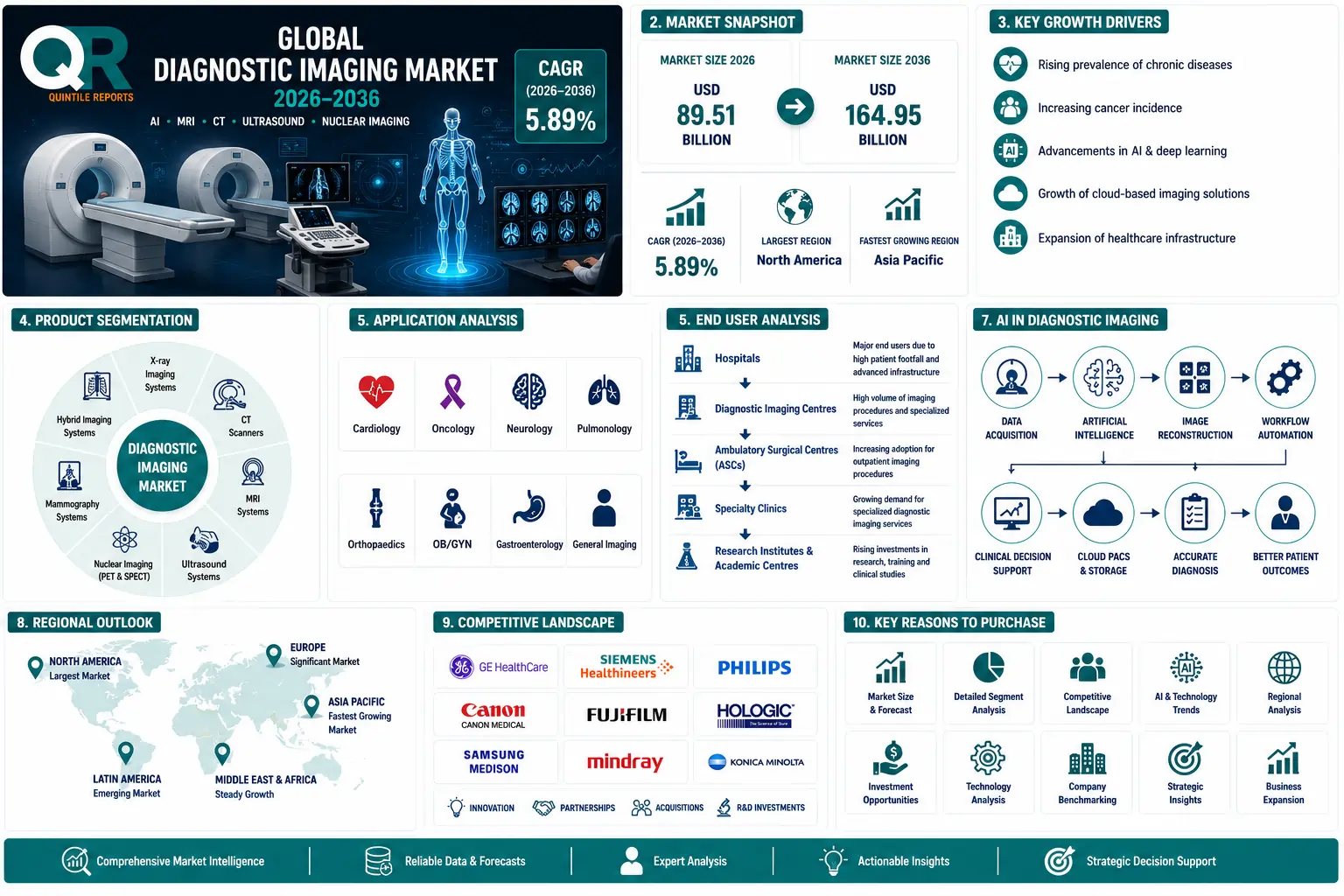
Based on product type, the Diagnostic Imaging Market is segmented into X-ray Imaging Systems, Computed Tomography (CT) Systems, Magnetic Resonance Imaging (MRI) Systems, Ultrasound Imaging Systems, Nuclear Imaging Systems (PET & SPECT), Mammography Systems, Fluoroscopy Systems, and Hybrid Imaging Systems (PET/CT, SPECT/CT, and PET/MRI).
The X-ray Imaging Systems segment dominated the market. The dominance of this segment is attributed to its widespread availability, cost-effectiveness, rapid imaging capabilities, and extensive utilization across hospitals, diagnostic imaging centres, emergency departments, and specialty clinics. X-ray imaging systems remain the first-line diagnostic tool for evaluating fractures, chest diseases, orthopaedic conditions, and numerous medical disorders due to their fast examination time, operational efficiency, and continuous technological advancements in digital radiography. The increasing replacement of conventional analog systems with digital X-ray platforms further strengthens the growth of this segment.
The Computed Tomography (CT) Systems, Magnetic Resonance Imaging (MRI) Systems, Ultrasound Imaging Systems, Nuclear Imaging Systems, Mammography Systems, Fluoroscopy Systems, and Hybrid Imaging Systems segments are expected to witness robust growth during the forecast period, with the Hybrid Imaging Systems segment anticipated to register the fastest CAGR. Increasing demand for highly accurate and comprehensive diagnostic imaging, rising prevalence of cancer, cardiovascular diseases, neurological disorders, and trauma cases, coupled with continuous advancements in AI-enabled image reconstruction, multi-slice CT technology, molecular imaging, and hybrid imaging platforms, are driving segment growth. Meanwhile, MRI and ultrasound systems continue to witness strong adoption owing to their superior soft tissue visualization, radiation-free imaging capabilities, and expanding clinical applications across multiple medical specialties.
Based on application, the Diagnostic Imaging Market is segmented into General Imaging, Cardiology, Oncology, Neurology, Orthopaedics, Obstetrics & Gynecology, Gastroenterology, Pulmonology, and Others.
The General Imaging segment dominated the market. The dominance of this segment is driven by the extensive utilization of imaging systems for routine medical examinations, emergency diagnostics, orthopaedic evaluations, respiratory diseases, abdominal imaging, and preventive health screenings. Increasing patient volumes, growing demand for early disease detection, and expanding healthcare access continue to support the widespread adoption of diagnostic imaging technologies across general healthcare settings.
The Cardiology, Oncology, Neurology, Orthopaedics, Obstetrics & Gynecology, Gastroenterology, Pulmonology, and Others segments are anticipated to witness significant growth during the forecast period, with the Oncology segment expected to emerge as the fastest-growing segment. The increasing global incidence of cancer, growing demand for precise tumour detection, treatment planning, image-guided interventions, and disease monitoring are accelerating the adoption of advanced diagnostic imaging technologies. Meanwhile, cardiology continues to witness steady growth owing to the increasing prevalence of cardiovascular diseases and expanding utilization of CT, MRI, ultrasound, and hybrid imaging systems for cardiac diagnostics.
Based on end user, the Diagnostic Imaging Market is segmented into Hospitals, Diagnostic Imaging Centres, Ambulatory Surgical Centers (ASCs), Specialty Clinics, and Academic & Research Institutes.
The Hospitals segment dominated the market. The dominance of this segment is attributed to the high volume of diagnostic procedures, availability of advanced imaging infrastructure, increasing investments in healthcare modernization, and the presence of multidisciplinary medical services. Hospitals continue to account for the largest share of diagnostic imaging equipment procurement owing to growing inpatient and outpatient diagnostic requirements, emergency care services, and rising adoption of technologically advanced imaging systems.
The Diagnostic Imaging Centres, Ambulatory Surgical Centers (ASCs), Specialty Clinics, and Academic & Research Institutes segments are expected to witness considerable growth during the forecast period, with the Diagnostic Imaging Centres segment anticipated to be the fastest-growing segment. Increasing preference for outpatient diagnostic services, expanding independent imaging facilities, shorter patient waiting times, growing investments in advanced imaging technologies, and rising demand for cost-effective diagnostic procedures are driving market growth. Meanwhile, specialty clinics continue to expand the adoption of diagnostic imaging systems for cardiology, orthopaedics, oncology, women's health, and other specialized medical applications.
Government investments in healthcare infrastructure, national disease screening programs, favourable reimbursement policies, and regulatory initiatives promoting early diagnosis are key factors supporting the growth of the Diagnostic Imaging Market. Public healthcare funding, medical device approval frameworks, and policies encouraging domestic manufacturing of medical equipment further influence market expansion. However, evolving regulatory requirements and healthcare policy reforms may impact product commercialization timelines.
Increasing global healthcare expenditure, rising disposable income, expanding health insurance coverage, and growing investments in hospitals and diagnostic imaging centres are driving market growth. Emerging economies are witnessing significant investments in healthcare modernization, creating new opportunities for imaging equipment manufacturers. However, the high capital cost of advanced imaging systems, maintenance expenses, and budget constraints in developing countries may limit market adoption.
The growing prevalence of chronic diseases such as cancer, cardiovascular disorders, neurological conditions, and musculoskeletal diseases, coupled with the rapidly aging global population, is increasing demand for diagnostic imaging services. Rising awareness regarding preventive healthcare, early disease detection, and routine health screenings is further supporting market growth. Additionally, increasing patient preference for minimally invasive diagnostic procedures continues to accelerate adoption.
Continuous advancements in artificial intelligence (AI), machine learning, cloud-based imaging platforms, digital radiography, 3D/4D imaging, image reconstruction software, and hybrid imaging technologies are transforming diagnostic imaging. Innovations focused on workflow automation, enhanced image quality, dose optimization, portable imaging systems, and remote diagnostics are improving clinical efficiency, diagnostic accuracy, and patient outcomes while driving market competitiveness.
The market operates under stringent regulatory frameworks governing medical device safety, quality standards, cybersecurity, patient privacy, and clinical validation. Compliance with regulatory authorities such as the FDA, European MDR, and other regional agencies is essential for product commercialization. Manufacturers must also adhere to radiation safety regulations, data protection laws, and quality management standards to ensure market compliance.
Growing emphasis on environmentally sustainable healthcare practices is encouraging manufacturers to develop energy-efficient imaging systems with lower radiation exposure and reduced environmental impact. Proper disposal and recycling of electronic medical equipment, adoption of eco-friendly manufacturing practices, and compliance with environmental regulations are becoming increasingly important across the diagnostic imaging industry.
The Diagnostic Imaging Market has high barriers to entry due to significant capital investment requirements, stringent regulatory approvals, advanced technological expertise, and strong intellectual property protection. Established companies benefit from extensive distribution networks, strong brand recognition, and long-term relationships with healthcare providers, making market entry challenging for new participants.
Suppliers of specialized components such as X-ray tubes, semiconductor detectors, imaging sensors, superconducting magnets, and advanced software solutions possess moderate bargaining power due to the limited availability of highly specialized technologies. However, large manufacturers often mitigate supplier dependency through long-term procurement agreements, diversified supply chains, and vertical integration strategies.
Hospitals, diagnostic imaging centres, healthcare networks, and government organizations possess considerable bargaining power because of high-value procurement contracts and competitive bidding processes. Buyers increasingly evaluate vendors based on technology, service quality, maintenance support, total cost of ownership, and reimbursement considerations, leading manufacturers to offer value-added services and flexible financing solutions.
Diagnostic imaging technologies remain indispensable for the accurate diagnosis, treatment planning, and monitoring of numerous medical conditions. Although laboratory diagnostics, biomarker testing, and emerging digital health technologies may complement imaging procedures in certain clinical settings, they cannot fully replace the comprehensive anatomical and functional information provided by advanced imaging systems such as CT, MRI, ultrasound, and nuclear imaging.
The market is highly competitive, with major global players focusing on product innovation, artificial intelligence integration, digital workflow optimization, cloud-enabled imaging platforms, and expansion of comprehensive imaging portfolios. Companies compete through continuous research and development, strategic partnerships, acquisitions, geographic expansion, service offerings, and technological differentiation to strengthen their market position. The increasing adoption of AI-assisted diagnostics, hybrid imaging systems, and portable imaging solutions is further intensifying competition across the global market.
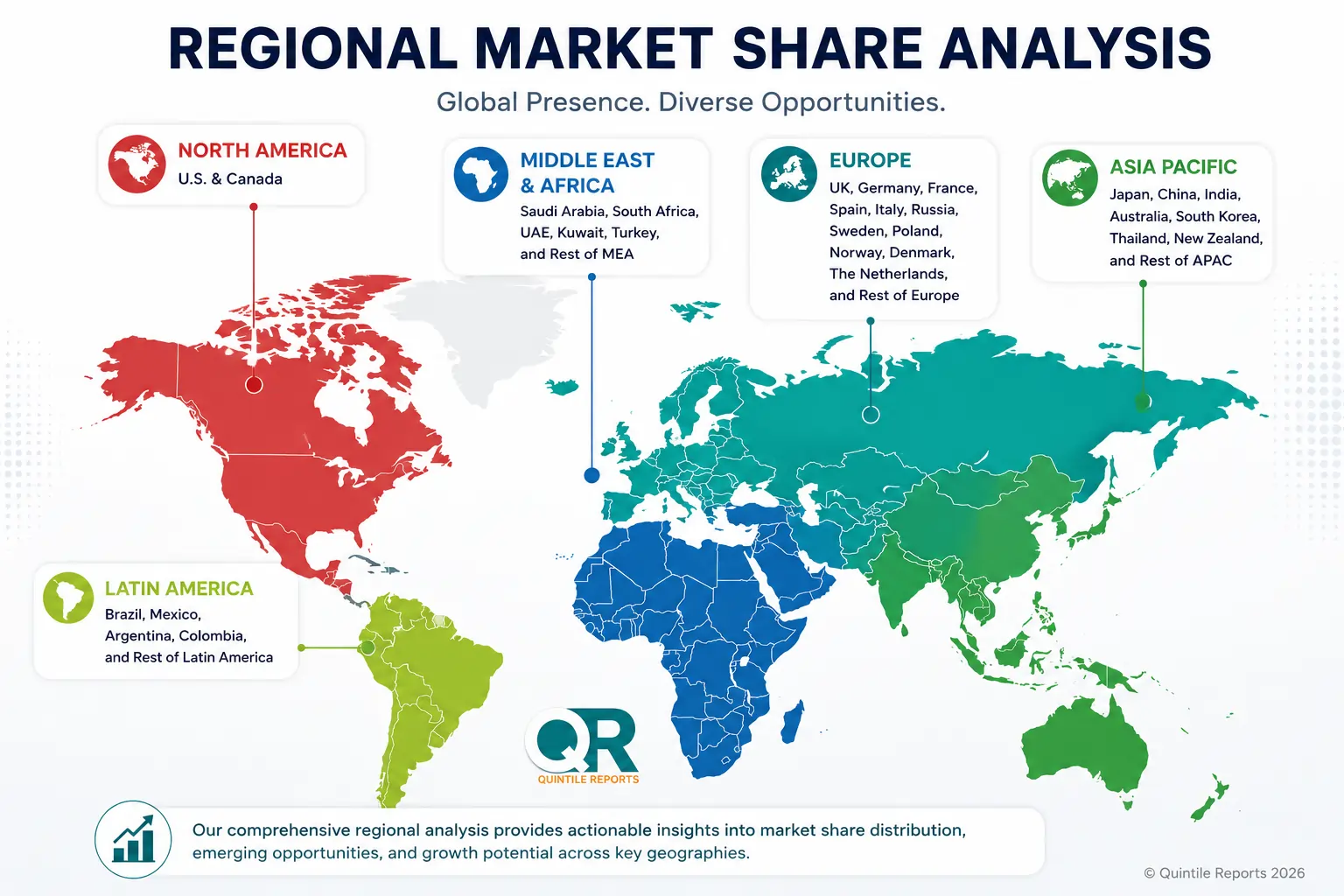
Based on geography, the global Diagnostic Imaging Market is segmented into North America, Europe, Asia Pacific, Latin America, and the Middle East & Africa.
The North America segment dominated the market. The region's dominance is attributed to its advanced healthcare infrastructure, high adoption of technologically advanced imaging systems, favourable reimbursement policies, substantial healthcare expenditure, and the strong presence of leading medical imaging manufacturers. The United States accounts for a significant share of the regional market owing to the widespread deployment of digital radiography, CT, MRI, ultrasound, nuclear imaging, and hybrid imaging systems across hospitals, diagnostic imaging centres, and specialty healthcare facilities. Additionally, the increasing prevalence of chronic diseases, growing demand for early disease diagnosis, and continuous investments in artificial intelligence (AI)-enabled imaging technologies and healthcare digitalization continue to strengthen regional market growth.
The Asia Pacific, Europe, Latin America, and Middle East & Africa regions are expected to witness considerable growth during the forecast period, with Asia Pacific anticipated to be the fastest-growing regional market. Rising healthcare expenditure, rapid expansion of healthcare infrastructure, increasing access to advanced diagnostic services, growing government initiatives supporting early disease detection, and continuous investments in advanced imaging technologies are driving market growth across China, India, Japan, South Korea, and Southeast Asia. Furthermore, the increasing adoption of AI-enabled imaging solutions, portable and point-of-care imaging systems, and healthcare digitalization is expected to accelerate regional growth. Europe continues to maintain a significant market share owing to its well-established healthcare systems, favourable regulatory environment, and widespread adoption of advanced imaging technologies. Meanwhile, Latin America and the Middle East & Africa are witnessing steady market expansion, supported by improving healthcare infrastructure, expanding diagnostic services, increasing healthcare investments, and growing awareness of early disease diagnosis.
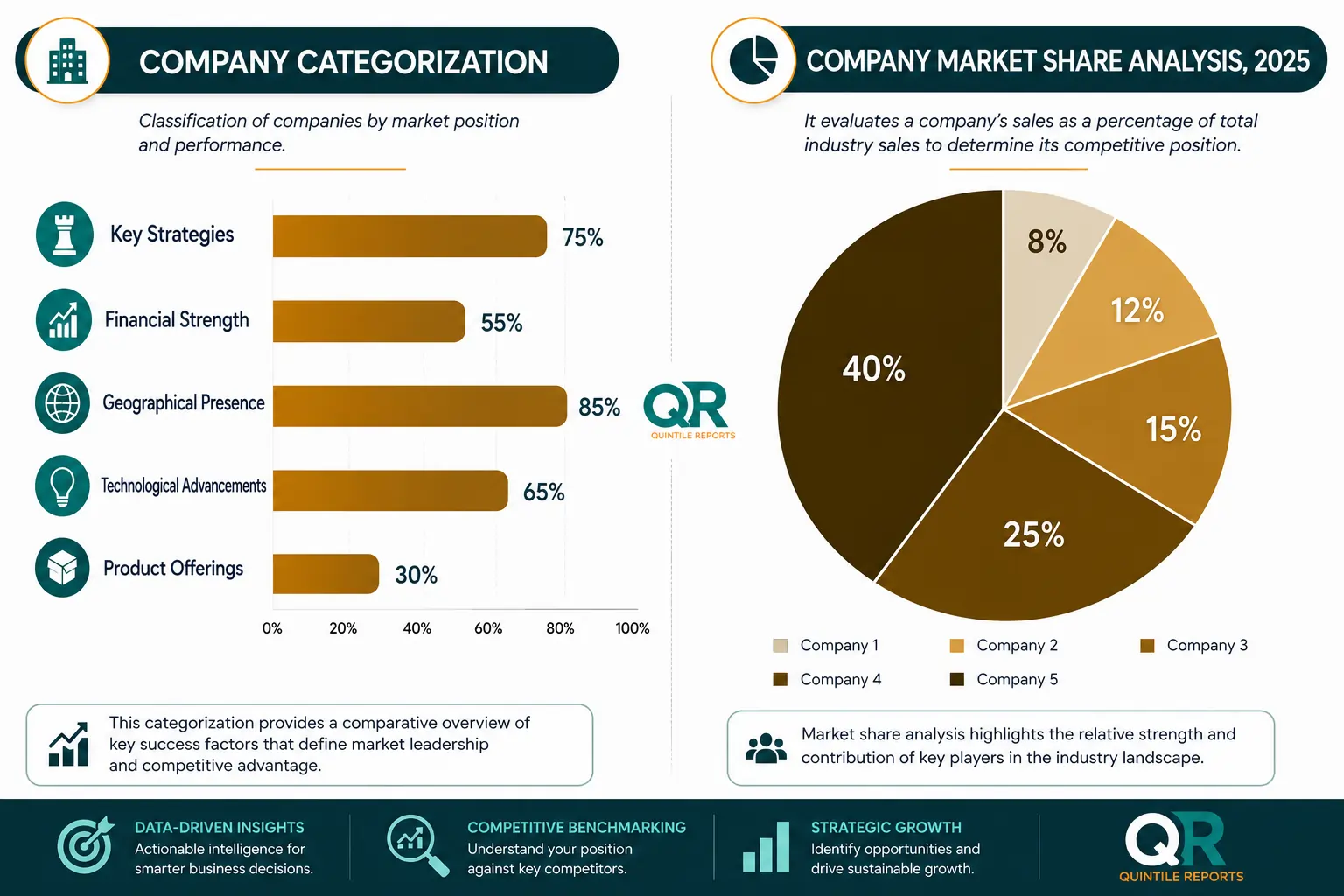
The global Diagnostic Imaging Market is highly competitive, with leading manufacturers focusing on technological innovation, artificial intelligence (AI) integration, product portfolio expansion, and strategic collaborations to strengthen their market position. Companies are continuously investing in research and development to enhance image quality, workflow automation, dose optimization, cloud-based connectivity, advanced image reconstruction, and AI-assisted diagnostic capabilities. Strategic acquisitions, partnerships with healthcare providers, product launches, and expansion into emerging markets remain key growth strategies adopted by market participants to strengthen their global presence. Furthermore, increasing investments in digital health, remote imaging solutions, and next-generation hybrid imaging technologies are expected to intensify competition throughout the forecast period.
| Report Scope | Details |
| Report Version | 2026 |
| Growth Rate | CAGR of 5.89 % from 2026 to 2036 |
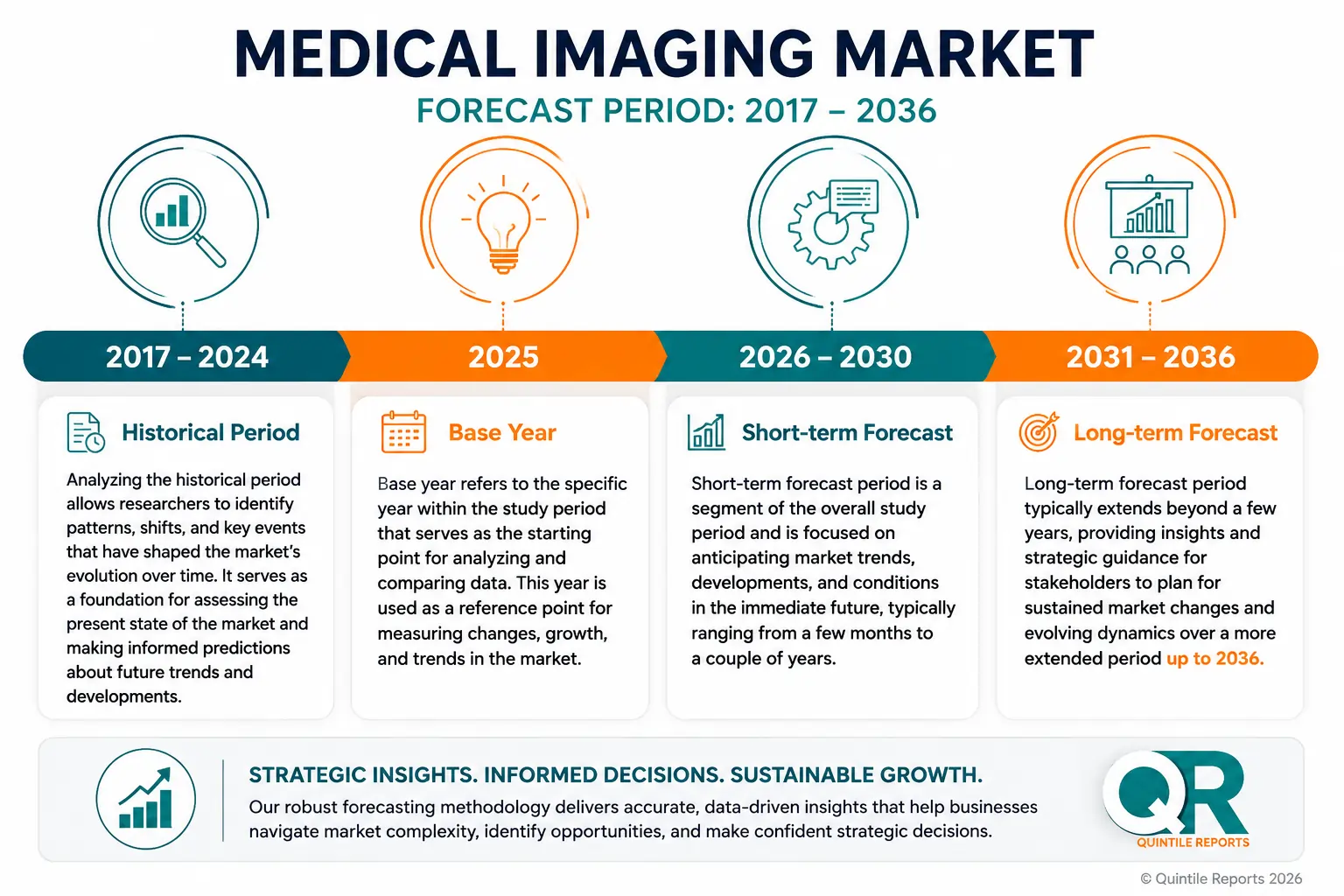
| Base Year | 2025 |
| Actual Estimates / Historical Data | 2017 - 2024 |
| Forecast Period | 2026 - 2036 |
| Quantitative Units | Revenue in USD million/billion & CAGR from 2026 to 2036 |
| Country Scope | North America (U.S., Canada), Europe (UK, Germany, France, Italy, Spain, Russia, Sweden, Denmark, Norway, Rest of Europe), Asia Pacific (Japan, China, India, Australia, South Korea, Thailand, Rest of Asia Pacific), Latin America (Brazil, Mexico, Argentina, Colombia, Rest of Latin America), Middle East & Africa (South Africa, Saudi Arabia, UAE, Kuwait, Rest of Middle East & Africa). |
| The Segment Covered by Modality |
|
| The Segment Covered by Application |
|
| Companies Covered |
|
| Report Coverage | Revenue forecast, company share, competitive landscape, growth factors, technology trends, and regional analysis |
| Free Customization Scope (Equivalent to 5 Analyst Working Days) | If you require additional insights beyond the current scope, our analysts can customize the report to meet your specific business needs. |
At Quintile Insights, we are committed to delivering accurate, reliable, and actionable market intelligence that empowers organizations to make informed strategic decisions. Our research methodology combines extensive primary interviews, validated secondary research, advanced analytical models, and robust market forecasting techniques to provide comprehensive insights into market trends, competitive landscapes, technological innovations, and future growth opportunities across global industries.
Our team of experienced industry analysts continuously monitors evolving market dynamics, regulatory developments, investment activities, mergers & acquisitions, product innovations, and emerging technologies to ensure every report reflects the latest industry landscape. Each research study undergoes a rigorous quality assurance process that includes data triangulation, expert validation, multi-level editorial review, and comprehensive fact-checking to maintain the highest standards of accuracy, consistency, and credibility.
With a strong emphasis on transparency, methodological excellence, customization, and client-centric research, Quintile Insights supports organizations across diverse industries by delivering dependable market intelligence for business expansion, investment planning, product development, competitive benchmarking, and strategic decision-making. Our commitment to data integrity, timely insights, and actionable recommendations has established Quintile Insights as a trusted research partner for enterprises, investors, consultants, government organizations, and industry leaders worldwide.
At Quintile Insights, our Diagnostic Imaging Market research is built on a structured, data-driven methodology designed to deliver accurate, reliable, and actionable market intelligence. The study integrates comprehensive primary and secondary research with advanced analytical models to evaluate market size, growth trends, competitive dynamics, technological advancements, and future opportunities across global and regional markets.
Our research process begins with extensive secondary research, where information is collected from credible sources such as company annual reports, investor presentations, SEC filings, industry journals, government publications, regulatory authorities, healthcare organizations, trade associations, white papers, and reputable commercial databases. This phase establishes a comprehensive understanding of market structure, industry developments, technological innovations, regulatory frameworks, and the competitive landscape.
To validate and strengthen the collected information, primary research is conducted through interviews and discussions with key industry stakeholders, including medical imaging equipment manufacturers, healthcare providers, hospital administrators, diagnostic imaging centre operators, distributors, technology experts, regulatory professionals, and industry consultants. These expert insights help verify market assumptions, identify emerging trends, assess competitive strategies, and provide practical perspectives on current and future market dynamics.
Market size estimation is performed using a combination of top-down and bottom-up approaches, supported by market breakdown analysis, forecasting models, and data triangulation techniques to ensure consistency and accuracy. Historical market performance, macroeconomic indicators, healthcare expenditure, technology adoption rates, regulatory developments, demographic trends, and demand patterns are thoroughly analyzed to generate reliable market forecasts.
The market is comprehensively segmented by product type, application, end user, and region, enabling detailed evaluation of growth opportunities across individual market segments and geographic markets. In addition, competitive benchmarking is conducted to assess the strategic positioning of leading companies based on product portfolios, technological innovation, mergers and acquisitions, strategic partnerships, research and development initiatives, and regional presence.
Every report undergoes a rigorous multi-level quality assurance and validation process before publication to ensure the highest standards of data accuracy, consistency, and analytical integrity. This comprehensive research methodology enables Quintile Insights to deliver dependable market intelligence that supports strategic planning, investment decisions, product development, business expansion, and long-term growth initiatives.
Quintile Insights is a leading market research and consulting firm specializing in delivering high-quality market intelligence, strategic business insights, and customized research solutions across diverse industries. Our team of experienced analysts combines extensive primary research, validated secondary sources, and advanced analytical methodologies to provide accurate market forecasts, competitive intelligence, and actionable business recommendations that empower organizations to make informed business decisions.
We help organizations identify emerging market opportunities, evaluate competitive landscapes, understand evolving industry trends, and develop effective growth strategies through comprehensive market intelligence. Our research portfolio covers market sizing, growth forecasting, technology assessment, regulatory analysis, customer insights, company profiling, competitive benchmarking, and investment analysis, enabling businesses to navigate rapidly evolving market environments with confidence.
Committed to research excellence, transparency, and data integrity, Quintile Insights serves a global client base that includes Fortune 500 companies, healthcare organizations, technology providers, investors, consultants, government agencies, financial institutions, and emerging enterprises. Our client-centric approach, rigorous quality standards, and deep industry expertise have established us as a trusted research partner for organizations seeking reliable market intelligence to support business growth, strategic planning, product development, market expansion, and long-term success.
Table 1 List of Abbreviation and Acronyms
Table 2 List of Sources
Table 3 North America Diagnostic Imaging Market, by Segment Analysis, (USD Million) 2017-2036
Table 4 North America Diagnostic Imaging Market, by Region, (USD Million) 2017-2036
Table 5 U.S. Diagnostic Imaging Market, by Segment Analysis, (USD Million) 2017-2036
Table 6 Canada Diagnostic Imaging Market, by Segment Analysis, (USD Million) 2017-2036
Table 7 Europe Diagnostic Imaging Market, by Segment Analysis, (USD Million) 2017-2036
Table 8 Europe Diagnostic Imaging Market, by Region, (USD Million) 2017-2036
Table 9 Germany Diagnostic Imaging Market, by Segment Analysis, (USD Million) 2017-2036
Table 10 U.K. Diagnostic Imaging Market, by Segment Analysis, (USD Million) 2017-2036
Table 11 France Diagnostic Imaging Market, by Segment Analysis, (USD Million) 2017-2036
Table 12 Italy Diagnostic Imaging Market, by Segment Analysis, (USD Million) 2017-2036
Table 13 Spain Diagnostic Imaging Market, by Segment Analysis, (USD Million) 2017-2036
Table 14 Sweden Diagnostic Imaging Market, by Segment Analysis, (USD Million) 2017-2036
Table 15 Denmark Diagnostic Imaging Market, by Segment Analysis, (USD Million) 2017-2036
Table 16 Norway Diagnostic Imaging Market, by Segment Analysis, (USD Million) 2017-2036
Table 17 The Netherlands Diagnostic Imaging Market, by Segment Analysis, (USD Million) 2017-2036
Table 18 Russia Diagnostic Imaging Market, by Segment Analysis, (USD Million) 2017-2036
Table 19 Asia Pacific Global Market, by Segment Analysis, (USD Million) 2017-2036
Table 20 Asia Pacific Diagnostic Imaging Market, by Region, (USD Million) 2017-2036
Table 21 China Diagnostic Imaging Market, by Segment Analysis, (USD Million) 2017-2036
Table 22 Japan Diagnostic Imaging Market, by Segment Analysis, (USD Million) 2017-2036
Table 23 India Diagnostic Imaging Market, by Segment Analysis, (USD Million) 2017-2036
Table 24 Australia Diagnostic Imaging Market, by Segment Analysis, (USD Million) 2017-2036
Table 25 South Korea Diagnostic Imaging Market, by Segment Analysis, (USD Million) 2017-2036
Table 26 Thailand Diagnostic Imaging Market, by Segment Analysis, (USD Million) 2017-2036
Table 27 Latin America Diagnostic Imaging Market, by Segment Analysis, (USD Million) 2017-2036
Table 28 Latin America Diagnostic Imaging Market, by Region, (USD Million) 2017-2036
Table 29 Brazil Diagnostic Imaging Market, by Segment Analysis, (USD Million) 2017-2036
Table 30 Mexico Diagnostic Imaging Market, by Segment Analysis, (USD Million) 2017-2036
Table 31 Argentina Diagnostic Imaging Market, by Segment Analysis, (USD Million) 2017-2036
Table 32 Middle East and Africa Diagnostic Imaging Market, by Segment Analysis, (USD Million) 2017-2036
Table 33 Middle East and Africa Diagnostic Imaging Market, by Region, (USD Million) 2017-2036
Table 34 South Africa Diagnostic Imaging Market, by Segment Analysis, (USD Million) 2017-2036
Table 35 Saudi Arabia Diagnostic Imaging Market, by Segment Analysis, (USD Million) 2017-2036
Table 36 UAE Diagnostic Imaging Market, by Segment Analysis, (USD Million) 2017-2036
Table 37 Kuwait Diagnostic Imaging Market, by Segment Analysis, (USD Million) 2017-2036
Table 38 Turkey Diagnostic Imaging Market, by Segment Analysis, (USD Million) 2017-2036
Fig.1 Market Research Process
Fig.2 Market Research Approaches
Fig.3 Global Diagnostic Imaging Market: Market Scenario
Fig.4 Global Diagnostic Imaging Market Competitive Outlook
Fig.5 Global Diagnostic Imaging Market Driver Analysis
Fig.6 Global Diagnostic Imaging Market Restraint Analysis
Fig.7 Global Diagnostic Imaging Market Opportunity Analysis
Fig.8 Global Diagnostic Imaging Market Trends Analysis
Fig.9 Global Diagnostic Imaging Market: Segment Analysis (Based on the Scope)
Fig.10 Global Diagnostic Imaging Market: Regional Analysis
Fig.11 Global Market Shares and Leading Market Players
Fig.12 North America Market Share and Leading Players
Fig.13 Europe Market Share and Leading Players
Fig.14 Asia Pacific Market Share and Leading Players
Fig.15 Latin America Market Share and Leading Players
Fig.16 Middle East & Africa Market Share and Leading Players
Fig.17 North America, by Country
Fig.18 North America
Fig.19 North America Market Estimates and Forecast, 2017-2036
Fig.20 U.S.
Fig.21 Canada
Fig.22 Europe
Fig.23 Europe Market Estimates and Forecast, 2017-2036
Fig.24 U.K.
Fig.25 Germany
Fig.26 France
Fig.27 Italy
Fig.28 Spain
Fig.29 Sweden
Fig.30 Denmark
Fig.31 Norway
Fig.32 The Netherlands
Fig.33 Russia
Fig.34 Asia Pacific
Fig.35 Asia Pacific Market Estimates and Forecast, 2017-2036
Fig.36 China
Fig.37 Japan
Fig.38 India
Fig.39 Australia
Fig.40 South Korea
Fig.41 Thailand
Fig.42 Latin America
Fig.43 Latin America Market Estimates and Forecast, 2017-2036
Fig.44 Brazil
Fig.45 Mexico
Fig.46 Argentina
Fig.47 Colombia
Fig.48 Middle East and Africa
Fig.49 Middle East and Africa Market Estimates and Forecast, 2017-2036
Fig.50 Saudi Arabia
Fig.51 South Africa
Fig.52 UAE
Fig.53 Kuwait
Fig.54 Turkey
The Global Diagnostic Imaging Market was valued at USD 89.51 Billion in 2026 and is projected to reach USD 164.95 Billion by 2036, growing at a CAGR of 5.89% during the forecast period.
The Diagnostic Imaging Market is driven by the rising prevalence of chronic diseases, increasing demand for early disease diagnosis, technological advancements, AI integration, digital imaging adoption, and expanding healthcare infrastructure worldwide.
X-ray Imaging Systems dominate the Diagnostic Imaging Market due to their cost-effectiveness, rapid imaging capabilities, widespread availability, and extensive use across hospitals, diagnostic imaging centers, and emergency departments.
The General Imaging segment holds the largest market share due to its extensive use in routine medical examinations, emergency diagnostics, orthopedic evaluations, respiratory disease diagnosis, and preventive health screenings.
Hospitals are the largest end users of diagnostic imaging systems because of high patient volumes, advanced imaging infrastructure, multidisciplinary healthcare services, and continuous investments in modern diagnostic technologies.
Asia Pacific is expected to be the fastest-growing region in the Diagnostic Imaging Market, supported by increasing healthcare investments, expanding diagnostic services, government healthcare initiatives, and growing adoption of AI-enabled imaging technologies.
Key players include GE HealthCare Technologies Inc., Siemens Healthineers AG, Koninklijke Philips N.V., Canon Medical Systems Corporation, FUJIFILM Healthcare Corporation, Hologic, Inc., Shimadzu Corporation, Carestream Health Inc., Samsung Medison Co., Ltd., Mindray Bio-Medical Electronics Co., Ltd., United Imaging Healthcare Co., Ltd., Agfa HealthCare NV, Esaote S.p.A., Planmed Oy, and Konica Minolta Healthcare Americas, Inc.
Artificial intelligence is improving diagnostic accuracy, automating image analysis, enhancing workflow efficiency, optimizing image reconstruction, and supporting faster clinical decision-making, making it a key driver of innovation in the Diagnostic Imaging Market.
The Global Diagnostic Imaging Market continues to play a critical role in modern healthcare by enabling clinicians to visualize internal organs, tissues, bones, and blood vessels for accurate disease diagnosis, treatment planning, and patient monitoring. Diagnostic imaging technologies have become indispensable across hospitals, diagnostic imaging centers, ambulatory care facilities, and specialty clinics, supporting clinical decision-making across cardiology, oncology, neurology, orthopedics, pulmonology, gastroenterology, women's health, and emergency medicine.
According to Quintile Insights' latest market assessment, the Global Diagnostic Imaging Market was valued at USD 89.51 Billion in 2026 and is projected to reach USD 164.95 Billion by 2036, expanding at a CAGR of 5.89% during the forecast period. Market growth is primarily driven by the increasing prevalence of chronic diseases, rising demand for early and accurate disease diagnosis, and continuous advancements in medical imaging technologies. Furthermore, expanding healthcare infrastructure, growing adoption of digital imaging systems, and increasing investments in artificial intelligence (AI)-enabled diagnostic solutions are expected to support market growth throughout the forecast period.
The Diagnostic Imaging Market represents one of the largest segments within the broader Medical Imaging Market, driven by continuous advancements in diagnostic technologies, AI integration, and digital healthcare transformation. These systems include X-ray, computed tomography (CT), magnetic resonance imaging (MRI), ultrasound, nuclear imaging, and hybrid imaging technologies that enable healthcare professionals to detect abnormalities with high precision. Diagnostic imaging equipment plays a vital role in the diagnosis and management of cardiovascular diseases, cancer, neurological disorders, orthopaedic conditions, and traumatic injuries. Continuous innovations in digital imaging, image processing, automation, and AI-assisted diagnostics have significantly improved imaging accuracy, workflow efficiency, and patient outcomes across modern healthcare facilities.
The increasing global burden of chronic diseases, aging populations, and rising demand for preventive healthcare have emerged as some of the primary factors driving the global Diagnostic Imaging Market. Healthcare providers are increasingly investing in advanced imaging technologies capable of delivering high-resolution images, faster diagnostic workflows, and improved clinical decision-making. The widespread adoption of digital radiography, CT scanners, MRI systems, and AI-powered imaging software has significantly enhanced diagnostic efficiency while improving patient safety through optimized radiation exposure and automated image analysis.
The rapid modernization of healthcare infrastructure and continuous technological advancements are further accelerating market growth. Manufacturers are increasingly introducing next-generation imaging systems featuring artificial intelligence, cloud connectivity, automated workflow management, and enhanced image reconstruction technologies to improve operational efficiency and diagnostic accuracy. Additionally, rising healthcare expenditure, expanding outpatient diagnostic centres, increasing demand for portable imaging equipment, and favourable government initiatives supporting early disease screening are expected to create significant growth opportunities for market participants throughout the forecast period.
Based on product type, the Diagnostic Imaging Market is segmented into X-ray Imaging Systems, Computed Tomography (CT) Systems, Magnetic Resonance Imaging (MRI) Systems, Ultrasound Imaging Systems, Nuclear Imaging Systems (PET & SPECT), Mammography Systems, Fluoroscopy Systems, and Hybrid Imaging Systems (PET/CT, SPECT/CT, and PET/MRI).
The X-ray Imaging Systems segment dominated the market. The dominance of this segment is attributed to its widespread availability, cost-effectiveness, rapid imaging capabilities, and extensive utilization across hospitals, diagnostic imaging centres, emergency departments, and specialty clinics. X-ray imaging systems remain the first-line diagnostic tool for evaluating fractures, chest diseases, orthopaedic conditions, and numerous medical disorders due to their fast examination time, operational efficiency, and continuous technological advancements in digital radiography. The increasing replacement of conventional analog systems with digital X-ray platforms further strengthens the growth of this segment.
The Computed Tomography (CT) Systems, Magnetic Resonance Imaging (MRI) Systems, Ultrasound Imaging Systems, Nuclear Imaging Systems, Mammography Systems, Fluoroscopy Systems, and Hybrid Imaging Systems segments are expected to witness robust growth during the forecast period, with the Hybrid Imaging Systems segment anticipated to register the fastest CAGR. Increasing demand for highly accurate and comprehensive diagnostic imaging, rising prevalence of cancer, cardiovascular diseases, neurological disorders, and trauma cases, coupled with continuous advancements in AI-enabled image reconstruction, multi-slice CT technology, molecular imaging, and hybrid imaging platforms, are driving segment growth. Meanwhile, MRI and ultrasound systems continue to witness strong adoption owing to their superior soft tissue visualization, radiation-free imaging capabilities, and expanding clinical applications across multiple medical specialties.
Based on application, the Diagnostic Imaging Market is segmented into General Imaging, Cardiology, Oncology, Neurology, Orthopaedics, Obstetrics & Gynecology, Gastroenterology, Pulmonology, and Others.
The General Imaging segment dominated the market. The dominance of this segment is driven by the extensive utilization of imaging systems for routine medical examinations, emergency diagnostics, orthopaedic evaluations, respiratory diseases, abdominal imaging, and preventive health screenings. Increasing patient volumes, growing demand for early disease detection, and expanding healthcare access continue to support the widespread adoption of diagnostic imaging technologies across general healthcare settings.
The Cardiology, Oncology, Neurology, Orthopaedics, Obstetrics & Gynecology, Gastroenterology, Pulmonology, and Others segments are anticipated to witness significant growth during the forecast period, with the Oncology segment expected to emerge as the fastest-growing segment. The increasing global incidence of cancer, growing demand for precise tumour detection, treatment planning, image-guided interventions, and disease monitoring are accelerating the adoption of advanced diagnostic imaging technologies. Meanwhile, cardiology continues to witness steady growth owing to the increasing prevalence of cardiovascular diseases and expanding utilization of CT, MRI, ultrasound, and hybrid imaging systems for cardiac diagnostics.
Based on end user, the Diagnostic Imaging Market is segmented into Hospitals, Diagnostic Imaging Centres, Ambulatory Surgical Centers (ASCs), Specialty Clinics, and Academic & Research Institutes.
The Hospitals segment dominated the market. The dominance of this segment is attributed to the high volume of diagnostic procedures, availability of advanced imaging infrastructure, increasing investments in healthcare modernization, and the presence of multidisciplinary medical services. Hospitals continue to account for the largest share of diagnostic imaging equipment procurement owing to growing inpatient and outpatient diagnostic requirements, emergency care services, and rising adoption of technologically advanced imaging systems.
The Diagnostic Imaging Centres, Ambulatory Surgical Centers (ASCs), Specialty Clinics, and Academic & Research Institutes segments are expected to witness considerable growth during the forecast period, with the Diagnostic Imaging Centres segment anticipated to be the fastest-growing segment. Increasing preference for outpatient diagnostic services, expanding independent imaging facilities, shorter patient waiting times, growing investments in advanced imaging technologies, and rising demand for cost-effective diagnostic procedures are driving market growth. Meanwhile, specialty clinics continue to expand the adoption of diagnostic imaging systems for cardiology, orthopaedics, oncology, women's health, and other specialized medical applications.
Government investments in healthcare infrastructure, national disease screening programs, favourable reimbursement policies, and regulatory initiatives promoting early diagnosis are key factors supporting the growth of the Diagnostic Imaging Market. Public healthcare funding, medical device approval frameworks, and policies encouraging domestic manufacturing of medical equipment further influence market expansion. However, evolving regulatory requirements and healthcare policy reforms may impact product commercialization timelines.
Increasing global healthcare expenditure, rising disposable income, expanding health insurance coverage, and growing investments in hospitals and diagnostic imaging centres are driving market growth. Emerging economies are witnessing significant investments in healthcare modernization, creating new opportunities for imaging equipment manufacturers. However, the high capital cost of advanced imaging systems, maintenance expenses, and budget constraints in developing countries may limit market adoption.
The growing prevalence of chronic diseases such as cancer, cardiovascular disorders, neurological conditions, and musculoskeletal diseases, coupled with the rapidly aging global population, is increasing demand for diagnostic imaging services. Rising awareness regarding preventive healthcare, early disease detection, and routine health screenings is further supporting market growth. Additionally, increasing patient preference for minimally invasive diagnostic procedures continues to accelerate adoption.
Continuous advancements in artificial intelligence (AI), machine learning, cloud-based imaging platforms, digital radiography, 3D/4D imaging, image reconstruction software, and hybrid imaging technologies are transforming diagnostic imaging. Innovations focused on workflow automation, enhanced image quality, dose optimization, portable imaging systems, and remote diagnostics are improving clinical efficiency, diagnostic accuracy, and patient outcomes while driving market competitiveness.
The market operates under stringent regulatory frameworks governing medical device safety, quality standards, cybersecurity, patient privacy, and clinical validation. Compliance with regulatory authorities such as the FDA, European MDR, and other regional agencies is essential for product commercialization. Manufacturers must also adhere to radiation safety regulations, data protection laws, and quality management standards to ensure market compliance.
Growing emphasis on environmentally sustainable healthcare practices is encouraging manufacturers to develop energy-efficient imaging systems with lower radiation exposure and reduced environmental impact. Proper disposal and recycling of electronic medical equipment, adoption of eco-friendly manufacturing practices, and compliance with environmental regulations are becoming increasingly important across the diagnostic imaging industry.
The Diagnostic Imaging Market has high barriers to entry due to significant capital investment requirements, stringent regulatory approvals, advanced technological expertise, and strong intellectual property protection. Established companies benefit from extensive distribution networks, strong brand recognition, and long-term relationships with healthcare providers, making market entry challenging for new participants.
Suppliers of specialized components such as X-ray tubes, semiconductor detectors, imaging sensors, superconducting magnets, and advanced software solutions possess moderate bargaining power due to the limited availability of highly specialized technologies. However, large manufacturers often mitigate supplier dependency through long-term procurement agreements, diversified supply chains, and vertical integration strategies.
Hospitals, diagnostic imaging centres, healthcare networks, and government organizations possess considerable bargaining power because of high-value procurement contracts and competitive bidding processes. Buyers increasingly evaluate vendors based on technology, service quality, maintenance support, total cost of ownership, and reimbursement considerations, leading manufacturers to offer value-added services and flexible financing solutions.
Diagnostic imaging technologies remain indispensable for the accurate diagnosis, treatment planning, and monitoring of numerous medical conditions. Although laboratory diagnostics, biomarker testing, and emerging digital health technologies may complement imaging procedures in certain clinical settings, they cannot fully replace the comprehensive anatomical and functional information provided by advanced imaging systems such as CT, MRI, ultrasound, and nuclear imaging.
The market is highly competitive, with major global players focusing on product innovation, artificial intelligence integration, digital workflow optimization, cloud-enabled imaging platforms, and expansion of comprehensive imaging portfolios. Companies compete through continuous research and development, strategic partnerships, acquisitions, geographic expansion, service offerings, and technological differentiation to strengthen their market position. The increasing adoption of AI-assisted diagnostics, hybrid imaging systems, and portable imaging solutions is further intensifying competition across the global market.
Based on geography, the global Diagnostic Imaging Market is segmented into North America, Europe, Asia Pacific, Latin America, and the Middle East & Africa.
The North America segment dominated the market. The region's dominance is attributed to its advanced healthcare infrastructure, high adoption of technologically advanced imaging systems, favourable reimbursement policies, substantial healthcare expenditure, and the strong presence of leading medical imaging manufacturers. The United States accounts for a significant share of the regional market owing to the widespread deployment of digital radiography, CT, MRI, ultrasound, nuclear imaging, and hybrid imaging systems across hospitals, diagnostic imaging centres, and specialty healthcare facilities. Additionally, the increasing prevalence of chronic diseases, growing demand for early disease diagnosis, and continuous investments in artificial intelligence (AI)-enabled imaging technologies and healthcare digitalization continue to strengthen regional market growth.
The Asia Pacific, Europe, Latin America, and Middle East & Africa regions are expected to witness considerable growth during the forecast period, with Asia Pacific anticipated to be the fastest-growing regional market. Rising healthcare expenditure, rapid expansion of healthcare infrastructure, increasing access to advanced diagnostic services, growing government initiatives supporting early disease detection, and continuous investments in advanced imaging technologies are driving market growth across China, India, Japan, South Korea, and Southeast Asia. Furthermore, the increasing adoption of AI-enabled imaging solutions, portable and point-of-care imaging systems, and healthcare digitalization is expected to accelerate regional growth. Europe continues to maintain a significant market share owing to its well-established healthcare systems, favourable regulatory environment, and widespread adoption of advanced imaging technologies. Meanwhile, Latin America and the Middle East & Africa are witnessing steady market expansion, supported by improving healthcare infrastructure, expanding diagnostic services, increasing healthcare investments, and growing awareness of early disease diagnosis.
The global Diagnostic Imaging Market is highly competitive, with leading manufacturers focusing on technological innovation, artificial intelligence (AI) integration, product portfolio expansion, and strategic collaborations to strengthen their market position. Companies are continuously investing in research and development to enhance image quality, workflow automation, dose optimization, cloud-based connectivity, advanced image reconstruction, and AI-assisted diagnostic capabilities. Strategic acquisitions, partnerships with healthcare providers, product launches, and expansion into emerging markets remain key growth strategies adopted by market participants to strengthen their global presence. Furthermore, increasing investments in digital health, remote imaging solutions, and next-generation hybrid imaging technologies are expected to intensify competition throughout the forecast period.
| Report Scope | Details |
| Report Version | 2026 |
| Growth Rate | CAGR of 5.89 % from 2026 to 2036 |
| Base Year | 2025 |
| Actual Estimates / Historical Data | 2017 - 2024 |
| Forecast Period | 2026 - 2036 |
| Quantitative Units | Revenue in USD million/billion & CAGR from 2026 to 2036 |
| Country Scope | North America (U.S., Canada), Europe (UK, Germany, France, Italy, Spain, Russia, Sweden, Denmark, Norway, Rest of Europe), Asia Pacific (Japan, China, India, Australia, South Korea, Thailand, Rest of Asia Pacific), Latin America (Brazil, Mexico, Argentina, Colombia, Rest of Latin America), Middle East & Africa (South Africa, Saudi Arabia, UAE, Kuwait, Rest of Middle East & Africa). |
| The Segment Covered by Modality |
|
| The Segment Covered by Application |
|
| Companies Covered |
|
| Report Coverage | Revenue forecast, company share, competitive landscape, growth factors, technology trends, and regional analysis |
| Free Customization Scope (Equivalent to 5 Analyst Working Days) | If you require additional insights beyond the current scope, our analysts can customize the report to meet your specific business needs. |
At Quintile Insights, we are committed to delivering accurate, reliable, and actionable market intelligence that empowers organizations to make informed strategic decisions. Our research methodology combines extensive primary interviews, validated secondary research, advanced analytical models, and robust market forecasting techniques to provide comprehensive insights into market trends, competitive landscapes, technological innovations, and future growth opportunities across global industries.
Our team of experienced industry analysts continuously monitors evolving market dynamics, regulatory developments, investment activities, mergers & acquisitions, product innovations, and emerging technologies to ensure every report reflects the latest industry landscape. Each research study undergoes a rigorous quality assurance process that includes data triangulation, expert validation, multi-level editorial review, and comprehensive fact-checking to maintain the highest standards of accuracy, consistency, and credibility.
With a strong emphasis on transparency, methodological excellence, customization, and client-centric research, Quintile Insights supports organizations across diverse industries by delivering dependable market intelligence for business expansion, investment planning, product development, competitive benchmarking, and strategic decision-making. Our commitment to data integrity, timely insights, and actionable recommendations has established Quintile Insights as a trusted research partner for enterprises, investors, consultants, government organizations, and industry leaders worldwide.
At Quintile Insights, our Diagnostic Imaging Market research is built on a structured, data-driven methodology designed to deliver accurate, reliable, and actionable market intelligence. The study integrates comprehensive primary and secondary research with advanced analytical models to evaluate market size, growth trends, competitive dynamics, technological advancements, and future opportunities across global and regional markets.
Our research process begins with extensive secondary research, where information is collected from credible sources such as company annual reports, investor presentations, SEC filings, industry journals, government publications, regulatory authorities, healthcare organizations, trade associations, white papers, and reputable commercial databases. This phase establishes a comprehensive understanding of market structure, industry developments, technological innovations, regulatory frameworks, and the competitive landscape.
To validate and strengthen the collected information, primary research is conducted through interviews and discussions with key industry stakeholders, including medical imaging equipment manufacturers, healthcare providers, hospital administrators, diagnostic imaging centre operators, distributors, technology experts, regulatory professionals, and industry consultants. These expert insights help verify market assumptions, identify emerging trends, assess competitive strategies, and provide practical perspectives on current and future market dynamics.
Market size estimation is performed using a combination of top-down and bottom-up approaches, supported by market breakdown analysis, forecasting models, and data triangulation techniques to ensure consistency and accuracy. Historical market performance, macroeconomic indicators, healthcare expenditure, technology adoption rates, regulatory developments, demographic trends, and demand patterns are thoroughly analyzed to generate reliable market forecasts.
The market is comprehensively segmented by product type, application, end user, and region, enabling detailed evaluation of growth opportunities across individual market segments and geographic markets. In addition, competitive benchmarking is conducted to assess the strategic positioning of leading companies based on product portfolios, technological innovation, mergers and acquisitions, strategic partnerships, research and development initiatives, and regional presence.
Every report undergoes a rigorous multi-level quality assurance and validation process before publication to ensure the highest standards of data accuracy, consistency, and analytical integrity. This comprehensive research methodology enables Quintile Insights to deliver dependable market intelligence that supports strategic planning, investment decisions, product development, business expansion, and long-term growth initiatives.
Quintile Insights is a leading market research and consulting firm specializing in delivering high-quality market intelligence, strategic business insights, and customized research solutions across diverse industries. Our team of experienced analysts combines extensive primary research, validated secondary sources, and advanced analytical methodologies to provide accurate market forecasts, competitive intelligence, and actionable business recommendations that empower organizations to make informed business decisions.
We help organizations identify emerging market opportunities, evaluate competitive landscapes, understand evolving industry trends, and develop effective growth strategies through comprehensive market intelligence. Our research portfolio covers market sizing, growth forecasting, technology assessment, regulatory analysis, customer insights, company profiling, competitive benchmarking, and investment analysis, enabling businesses to navigate rapidly evolving market environments with confidence.
Committed to research excellence, transparency, and data integrity, Quintile Insights serves a global client base that includes Fortune 500 companies, healthcare organizations, technology providers, investors, consultants, government agencies, financial institutions, and emerging enterprises. Our client-centric approach, rigorous quality standards, and deep industry expertise have established us as a trusted research partner for organizations seeking reliable market intelligence to support business growth, strategic planning, product development, market expansion, and long-term success.
Table 1 List of Abbreviation and Acronyms
Table 2 List of Sources
Table 3 North America Diagnostic Imaging Market, by Segment Analysis, (USD Million) 2017-2036
Table 4 North America Diagnostic Imaging Market, by Region, (USD Million) 2017-2036
Table 5 U.S. Diagnostic Imaging Market, by Segment Analysis, (USD Million) 2017-2036
Table 6 Canada Diagnostic Imaging Market, by Segment Analysis, (USD Million) 2017-2036
Table 7 Europe Diagnostic Imaging Market, by Segment Analysis, (USD Million) 2017-2036
Table 8 Europe Diagnostic Imaging Market, by Region, (USD Million) 2017-2036
Table 9 Germany Diagnostic Imaging Market, by Segment Analysis, (USD Million) 2017-2036
Table 10 U.K. Diagnostic Imaging Market, by Segment Analysis, (USD Million) 2017-2036
Table 11 France Diagnostic Imaging Market, by Segment Analysis, (USD Million) 2017-2036
Table 12 Italy Diagnostic Imaging Market, by Segment Analysis, (USD Million) 2017-2036
Table 13 Spain Diagnostic Imaging Market, by Segment Analysis, (USD Million) 2017-2036
Table 14 Sweden Diagnostic Imaging Market, by Segment Analysis, (USD Million) 2017-2036
Table 15 Denmark Diagnostic Imaging Market, by Segment Analysis, (USD Million) 2017-2036
Table 16 Norway Diagnostic Imaging Market, by Segment Analysis, (USD Million) 2017-2036
Table 17 The Netherlands Diagnostic Imaging Market, by Segment Analysis, (USD Million) 2017-2036
Table 18 Russia Diagnostic Imaging Market, by Segment Analysis, (USD Million) 2017-2036
Table 19 Asia Pacific Global Market, by Segment Analysis, (USD Million) 2017-2036
Table 20 Asia Pacific Diagnostic Imaging Market, by Region, (USD Million) 2017-2036
Table 21 China Diagnostic Imaging Market, by Segment Analysis, (USD Million) 2017-2036
Table 22 Japan Diagnostic Imaging Market, by Segment Analysis, (USD Million) 2017-2036
Table 23 India Diagnostic Imaging Market, by Segment Analysis, (USD Million) 2017-2036
Table 24 Australia Diagnostic Imaging Market, by Segment Analysis, (USD Million) 2017-2036
Table 25 South Korea Diagnostic Imaging Market, by Segment Analysis, (USD Million) 2017-2036
Table 26 Thailand Diagnostic Imaging Market, by Segment Analysis, (USD Million) 2017-2036
Table 27 Latin America Diagnostic Imaging Market, by Segment Analysis, (USD Million) 2017-2036
Table 28 Latin America Diagnostic Imaging Market, by Region, (USD Million) 2017-2036
Table 29 Brazil Diagnostic Imaging Market, by Segment Analysis, (USD Million) 2017-2036
Table 30 Mexico Diagnostic Imaging Market, by Segment Analysis, (USD Million) 2017-2036
Table 31 Argentina Diagnostic Imaging Market, by Segment Analysis, (USD Million) 2017-2036
Table 32 Middle East and Africa Diagnostic Imaging Market, by Segment Analysis, (USD Million) 2017-2036
Table 33 Middle East and Africa Diagnostic Imaging Market, by Region, (USD Million) 2017-2036
Table 34 South Africa Diagnostic Imaging Market, by Segment Analysis, (USD Million) 2017-2036
Table 35 Saudi Arabia Diagnostic Imaging Market, by Segment Analysis, (USD Million) 2017-2036
Table 36 UAE Diagnostic Imaging Market, by Segment Analysis, (USD Million) 2017-2036
Table 37 Kuwait Diagnostic Imaging Market, by Segment Analysis, (USD Million) 2017-2036
Table 38 Turkey Diagnostic Imaging Market, by Segment Analysis, (USD Million) 2017-2036
Fig.1 Market Research Process
Fig.2 Market Research Approaches
Fig.3 Global Diagnostic Imaging Market: Market Scenario
Fig.4 Global Diagnostic Imaging Market Competitive Outlook
Fig.5 Global Diagnostic Imaging Market Driver Analysis
Fig.6 Global Diagnostic Imaging Market Restraint Analysis
Fig.7 Global Diagnostic Imaging Market Opportunity Analysis
Fig.8 Global Diagnostic Imaging Market Trends Analysis
Fig.9 Global Diagnostic Imaging Market: Segment Analysis (Based on the Scope)
Fig.10 Global Diagnostic Imaging Market: Regional Analysis
Fig.11 Global Market Shares and Leading Market Players
Fig.12 North America Market Share and Leading Players
Fig.13 Europe Market Share and Leading Players
Fig.14 Asia Pacific Market Share and Leading Players
Fig.15 Latin America Market Share and Leading Players
Fig.16 Middle East & Africa Market Share and Leading Players
Fig.17 North America, by Country
Fig.18 North America
Fig.19 North America Market Estimates and Forecast, 2017-2036
Fig.20 U.S.
Fig.21 Canada
Fig.22 Europe
Fig.23 Europe Market Estimates and Forecast, 2017-2036
Fig.24 U.K.
Fig.25 Germany
Fig.26 France
Fig.27 Italy
Fig.28 Spain
Fig.29 Sweden
Fig.30 Denmark
Fig.31 Norway
Fig.32 The Netherlands
Fig.33 Russia
Fig.34 Asia Pacific
Fig.35 Asia Pacific Market Estimates and Forecast, 2017-2036
Fig.36 China
Fig.37 Japan
Fig.38 India
Fig.39 Australia
Fig.40 South Korea
Fig.41 Thailand
Fig.42 Latin America
Fig.43 Latin America Market Estimates and Forecast, 2017-2036
Fig.44 Brazil
Fig.45 Mexico
Fig.46 Argentina
Fig.47 Colombia
Fig.48 Middle East and Africa
Fig.49 Middle East and Africa Market Estimates and Forecast, 2017-2036
Fig.50 Saudi Arabia
Fig.51 South Africa
Fig.52 UAE
Fig.53 Kuwait
Fig.54 Turkey

A license granted to one user. Rules or conditions might be applied for e.g. the use of electric files (PDFs) or printings, depending on product.
A license granted to multiple users.
A license granted to a single business site/establishment.
A license granted to all employees within organisation access to the product.
Immediate / Within 24-48 hours - Working days
Online Payments with PayPal and CCavenue
You can order a report by picking any of the payment methods which is bank wire or online payment through any Debit/Credit card or PayPal.
Hard Copy
Radiology Information System (RIS) Market Overview The global Radiology Information System (RIS) Mar
Read MoreTeleradiology Market Overview Report Description The global Teleradiology Market was valued at USD 7
Read MoreMagnetic Resonance Imaging (MRI) Market Overview The global Magnetic Resonance Imaging (MRI) Market,
Read More