The global Recycled Carbon Fiber (rCF) Market is gaining significant momentum as industries increasingly prioritize sustainability, lightweight material adoption, and circular economy initiatives. Recycled carbon fiber is recovered from composite waste streams generated by aerospace, automotive, wind energy, industrial equipment, and consumer product manufacturing. Through advanced recovery technologies such as pyrolysis, solvolysis, and mechanical recycling, valuable carbon fibers are reclaimed and reintroduced into the manufacturing value chain.
Market Size (2026): USD 39.21 Billion
Projected Market Size (2036): USD 111.47 Billion
CAGR (20262036): 10.43%
Incremental Revenue Opportunity: USD 72.26 Billion
As manufacturers seek cost-effective alternatives to virgin carbon fiber while reducing environmental impact, recycled carbon fiber is emerging as an attractive solution for a wide range of structural and semi-structural applications. The material offers a combination of lightweight properties, strength retention, reduced carbon footprint, and lower production costs, making it increasingly suitable for automotive components, construction materials, consumer goods, industrial tooling, and renewable energy applications. Growing regulatory emphasis on waste reduction and sustainable manufacturing practices is expected to further accelerate market adoption.
Growing demand for lightweight materials in electric vehicles, increasing volumes of end-of-life composite waste, and advancements in recycling technologies such as pyrolysis and solvolysis are expected to accelerate market adoption throughout the forecast period. Furthermore, expanding partnerships between recyclers, automotive OEMs, aerospace manufacturers, and renewable energy companies are strengthening supply chain development and supporting large-scale commercialization of recycled carbon fiber solutions.
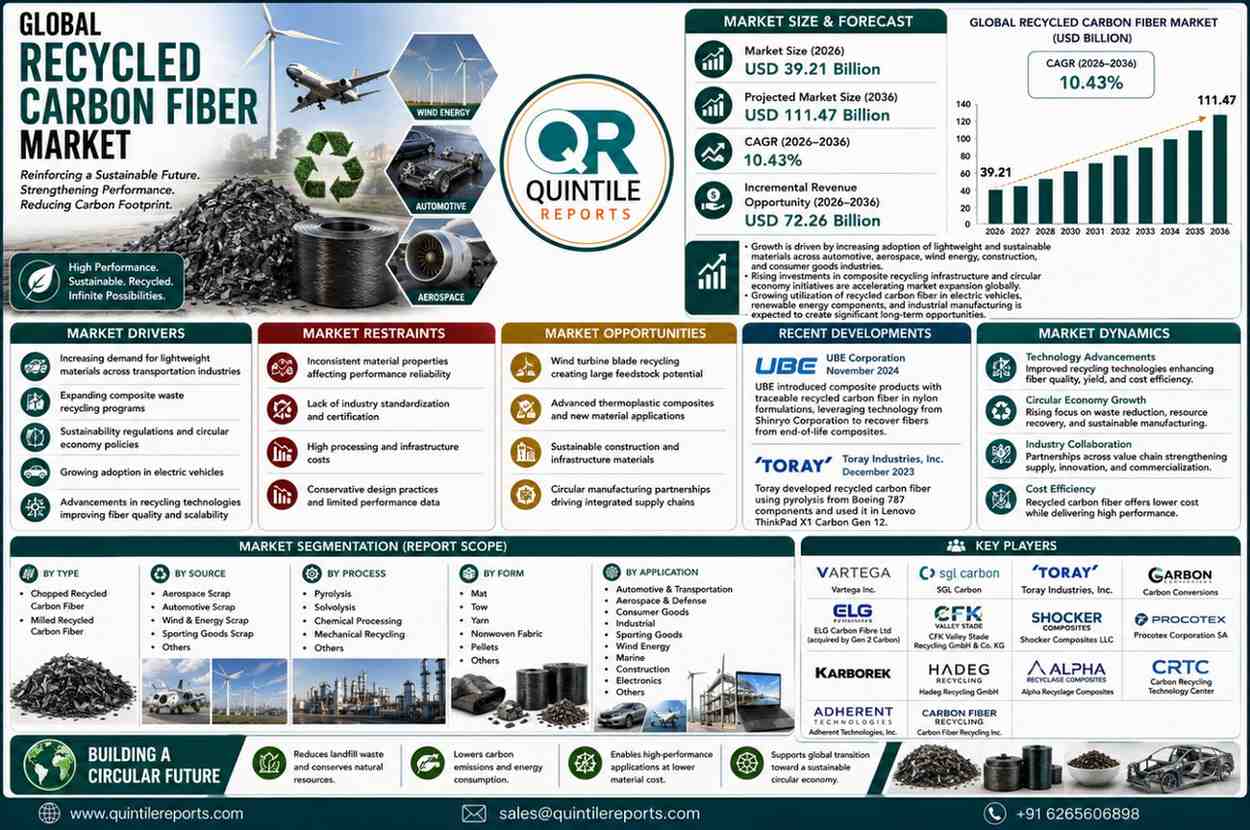
Increasing Demand for Lightweight Materials Across Transportation Industries
Automotive manufacturers, aerospace companies, and mobility solution providers are increasingly adopting lightweight materials to improve fuel efficiency, reduce emissions, and enhance performance. Recycled carbon fiber offers an attractive balance between cost and performance for a wide range of applications.
Expanding Composite Waste Recycling Programs
The growing volume of end-of-life aircraft, wind turbine blades, and industrial composite materials is encouraging investment in advanced recycling technologies. These initiatives are helping establish a reliable feedstock base for recycled carbon fiber production.
Sustainability Regulations and Circular Economy Policies
Governments worldwide are implementing stricter waste management regulations and encouraging circular manufacturing practices. These policies are accelerating demand for recycled materials and creating favorable market conditions for recycled carbon fiber.
Growing Adoption in Electric Vehicles
Electric vehicle manufacturers are incorporating recycled carbon fiber into battery housings, structural supports, interior components, and lightweight body parts to improve vehicle efficiency while reducing material costs.
Inconsistent Material Properties
Variations in fiber length, surface characteristics, and mechanical properties can affect product consistency and limit adoption in highly engineered applications.
Lack of Industry Standardization
The absence of universally accepted standards for testing, certification, and qualification creates challenges for broader adoption across regulated industries.
High Processing and Infrastructure Costs
Advanced recycling facilities require significant capital investment, specialized equipment, and technical expertise, creating barriers for market expansion in certain regions.
Conservative Design Practices
Many engineers and manufacturers remain cautious about incorporating recycled carbon fiber into critical applications due to limited historical performance data and certification challenges.
Wind Turbine Blade Recycling
The increasing number of decommissioned wind turbines is creating a significant source of carbon fiber feedstock and opening new opportunities for recycled material utilization.
Advanced Thermoplastic Composites
Growing use of recycled carbon fiber in thermoplastic compounds, injection molding applications, and lightweight structural materials presents substantial growth potential.
Sustainable Construction Materials
The construction industry is exploring recycled carbon fiber for concrete reinforcement, infrastructure panels, modular building systems, and lightweight structural components.
Circular Manufacturing Partnerships
Collaborations between recyclers, OEMs, material suppliers, and manufacturers are creating integrated supply chains that improve material availability and accelerate adoption.
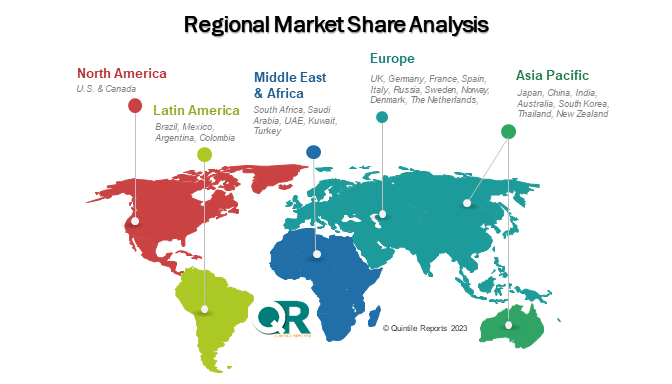
North America continues to strengthen its position in the recycled carbon fiber market through collaboration between aerospace companies, automotive manufacturers, and advanced material innovators. The United States is actively developing recycling infrastructure supported by federal research programs and industry partnerships focused on lightweight transportation and sustainable manufacturing. The growing volume of retired aircraft and wind turbine components is providing valuable feedstock for domestic recycling operations.
Europe remains a global leader due to strong environmental regulations and circular economy initiatives. Germany, France, and the United Kingdom are investing heavily in composite recycling facilities and recycled material adoption programs. Automotive manufacturers are increasingly integrating recycled carbon fiber into vehicle components as part of broader sustainability and carbon reduction strategies.
Asia-Pacific is witnessing rapid expansion driven by growing industrialization, automotive production, electronics manufacturing, and government support for sustainable materials. Japan and South Korea continue to advance recycled carbon fiber technologies for mobility, robotics, and consumer electronics applications. China is emerging as both a major generator of composite waste and an important processing hub for recycled carbon fiber materials.
Latin America and the Middle East & Africa remain emerging markets with increasing interest in lightweight construction materials, transportation efficiency, and renewable energy applications. As recycling infrastructure develops and sustainability initiatives gain momentum, these regions are expected to present new growth opportunities for market participants.
The recycled carbon fiber market is transitioning from a niche sustainability initiative to a commercially viable materials industry. Growing availability of composite waste streams, combined with improvements in fiber recovery technologies, is expected to expand adoption across transportation, industrial, and renewable energy sectors. Companies capable of ensuring fiber quality consistency, traceability, and scalable recycling operations are likely to capture significant market opportunities over the coming decade.
The recycled carbon fiber market is characterized by competition among specialized recyclers, composite manufacturers, advanced material suppliers, and technology developers. Companies are focusing on improving fiber recovery efficiency, product consistency, and material performance to expand adoption across a broader range of applications.
Competitive differentiation increasingly depends on fiber quality control, automated recycling processes, and integration across the value chain. Organizations capable of delivering consistent fiber grades, customized material formulations, and ready-to-use compounds are gaining a significant competitive advantage. Partnerships with aerospace manufacturers, automotive OEMs, wind turbine operators, and industrial producers are helping secure stable feedstock supplies and support long-term growth strategies.
Investment in advanced technologies such as hybrid fiber mats, continuous strand recycled fibers, and thermoplastic-compatible sizing agents is creating new opportunities for product innovation and market expansion. Sustainability certifications, lifecycle assessments, and traceability systems are also becoming increasingly important competitive factors as customers seek verified environmental benefits.
Strategic partnerships, recycling technology advancements, and sustainability-focused product launches are becoming increasingly important competitive differentiators within the recycled carbon fiber market. Industry participants are actively investing in advanced recycling processes, traceability solutions, and closed-loop manufacturing systems to strengthen their environmental credentials while improving material performance and supply security. Companies are also collaborating with automotive, aerospace, electronics, and industrial manufacturers to expand commercial applications for recycled carbon fiber and accelerate circular economy adoption.
Recent developments highlight the industry's growing focus on sustainable composite materials. In November 2024, UBE Corporation introduced a new portfolio of composite products designed to reduce greenhouse gas emissions and environmental impact. These materials incorporate traceable recycled carbon fiber integrated into various nylon formulations, leveraging UBE's expertise in engineering plastics and advanced materials. The recycled carbon fiber technology originates from Shinryo Corporation, enabling the recovery of high-quality fibers from end-of-life composite components and supporting the development of sustainable composite solutions.
Similarly, in December 2023, Toray Industries, Inc. developed recycled carbon fiber sourced from its Boeing 787 component manufacturing operations. Using an advanced pyrolysis recycling process, the recovered carbon fiber was incorporated into thermoplastic pellets and subsequently utilized as a reinforcement material in the Lenovo ThinkPad X1 Carbon Gen 12. This development demonstrates the growing commercialization of recycled carbon fiber in high-performance consumer electronics and highlights the increasing viability of closed-loop recycling models across advanced manufacturing industries.
These strategic initiatives reflect a broader industry trend toward sustainable material innovation, enhanced traceability, and circular manufacturing practices. Market leaders that successfully combine recycling expertise, material performance, and end-user collaboration are expected to strengthen their competitive positioning as demand for low-carbon composite materials continues to rise.
| Report Scope | Details |
| Report Version | 2026 |
| Growth Rate | CAGR of 10.43 % from 2026 to 2036 |
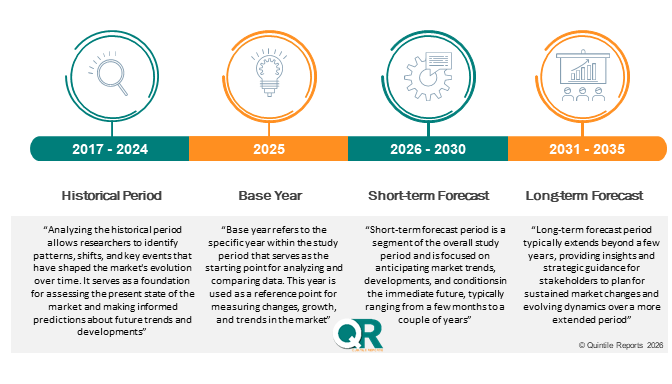
| Base Year | 2025 |
| Actual Estimates / Historical Data | 2017 - 2024 |
| Forecast Period | 2026 - 2036 |
| Quantitative Units | Revenue in USD million/billion & CAGR from 2026 to 2036 |
| Country Scope | North America (U.S., Canada), Europe (UK, Germany, France, Italy, Spain, Russia, Sweden, Denmark, Norway, Rest of Europe), Asia Pacific (Japan, China, India, Australia, South Korea, Thailand, Rest of Asia Pacific), Latin America (Brazil, Mexico, Argentina, Colombia, Rest of Latin America), Middle East & Africa (South Africa, Saudi Arabia, UAE, Kuwait, Rest of Middle East & Africa). |
| The Segment Covered by Type |
|
| The Segment Covered by Source |
|
| Companies Covered |
|
| Report Coverage | Revenue forecast, company share, competitive landscape, growth factors, technology trends, and regional analysis |
| Free Customization Scope (Equivalent to 5 Analyst Working Days) | If you require additional insights beyond the current scope, our analysts can customize the report to meet your specific business needs. |
This report is developed using a rigorous research methodology that combines primary interviews, industry consultations, technology assessments, and extensive secondary research. Market estimates are validated through data triangulation, supply chain analysis, and expert review processes to ensure accuracy and reliability.
The study provides an objective evaluation of industry developments, technology trends, sustainability initiatives, and competitive dynamics, helping stakeholders make informed strategic decisions in a rapidly evolving market environment.
The research methodology employed for this study combines extensive primary research, secondary intelligence gathering, and advanced analytical modeling to provide accurate and actionable insights into the global Recycled Carbon Fiber Market. The study begins with comprehensive secondary research involving the analysis of industry publications, corporate annual reports, sustainability reports, government databases, regulatory frameworks, trade journals, patent filings, academic research papers, and technical publications related to carbon fiber recycling technologies and composite materials.
To validate secondary findings and capture current market developments, extensive primary research was conducted with industry stakeholders across the value chain, including recycled carbon fiber manufacturers, composite material suppliers, automotive OEMs, aerospace companies, wind energy operators, technology providers, distributors, procurement specialists, and industry consultants. These interviews provided first-hand insights into market trends, pricing dynamics, technological advancements, demand patterns, supply chain developments, and future investment strategies.
Market size estimation and forecasting were developed using a combination of bottom-up and top-down approaches. Revenue analysis, production capacity assessments, end-use demand evaluation, and regional consumption patterns were integrated to establish market estimates. Advanced forecasting models were applied to assess the impact of macroeconomic indicators, sustainability initiatives, electric vehicle adoption, aerospace production trends, renewable energy investments, and composite recycling infrastructure expansion on future market growth.
All findings were subjected to rigorous data triangulation and validation processes to ensure consistency, accuracy, and reliability. Multiple data points from supply-side participants, demand-side stakeholders, and independent industry sources were cross-verified to minimize deviations and strengthen forecast precision. The final analysis incorporates qualitative expert opinions alongside quantitative market metrics, providing a balanced assessment of current market conditions, competitive dynamics, technological innovations, and long-term growth opportunities within the global Recycled Carbon Fiber Market.

This report has been prepared by a team of advanced materials analysts, composite industry specialists, and sustainability researchers with extensive expertise in circular economy solutions, lightweight materials, and industrial recycling technologies. Through continuous monitoring of market developments, technology innovations, and regulatory trends, the research team delivers objective, data-driven insights designed to support informed business and investment decisions.
Table 1 List of Abbreviation and Acronyms
Table 2 List of Sources
Table 3 North America Recycled Carbon Fiber Market, by Segment Analysis, (USD Million) 2017-2036
Table 4 North America Recycled Carbon Fiber Market, by Region, (USD Million) 2017-2036
Table 5 U.S. Recycled Carbon Fiber Market, by Segment Analysis, (USD Million) 2017-2036
Table 6 Canada Recycled Carbon Fiber Market, by Segment Analysis, (USD Million) 2017-2036
Table 7 Europe Recycled Carbon Fiber Market, by Segment Analysis, (USD Million) 2017-2036
Table 8 Europe Recycled Carbon Fiber Market, by Region, (USD Million) 2017-2036
Table 9 Germany Recycled Carbon Fiber Market, by Segment Analysis, (USD Million) 2017-2036
Table 10 U.K. Recycled Carbon Fiber Market, by Segment Analysis, (USD Million) 2017-2036
Table 11 France Recycled Carbon Fiber Market, by Segment Analysis, (USD Million) 2017-2036
Table 12 Italy Recycled Carbon Fiber Market, by Segment Analysis, (USD Million) 2017-2036
Table 13 Spain Recycled Carbon Fiber Market, by Segment Analysis, (USD Million) 2017-2036
Table 14 Sweden Recycled Carbon Fiber Market, by Segment Analysis, (USD Million) 2017-2036
Table 15 Denmark Recycled Carbon Fiber Market, by Segment Analysis, (USD Million) 2017-2036
Table 16 Norway Recycled Carbon Fiber Market, by Segment Analysis, (USD Million) 2017-2036
Table 17 The Netherlands Recycled Carbon Fiber Market, by Segment Analysis, (USD Million) 2017-2036
Table 18 Russia Recycled Carbon Fiber Market, by Segment Analysis, (USD Million) 2017-2036
Table 19 Asia Pacific Global Market, by Segment Analysis, (USD Million) 2017-2036
Table 20 Asia Pacific Recycled Carbon Fiber Market, by Region, (USD Million) 2017-2036
Table 21 China Recycled Carbon Fiber Market, by Segment Analysis, (USD Million) 2017-2036
Table 22 Japan Recycled Carbon Fiber Market, by Segment Analysis, (USD Million) 2017-2036
Table 23 India Recycled Carbon Fiber Market, by Segment Analysis, (USD Million) 2017-2036
Table 24 Australia Recycled Carbon Fiber Market, by Segment Analysis, (USD Million) 2017-2036
Table 25 South Korea Recycled Carbon Fiber Market, by Segment Analysis, (USD Million) 2017-2036
Table 26 Thailand Recycled Carbon Fiber Market, by Segment Analysis, (USD Million) 2017-2036
Table 27 Latin America Recycled Carbon Fiber Market, by Segment Analysis, (USD Million) 2017-2036
Table 28 Latin America Recycled Carbon Fiber Market, by Region, (USD Million) 2017-2036
Table 29 Brazil Recycled Carbon Fiber Market, by Segment Analysis, (USD Million) 2017-2036
Table 30 Mexico Recycled Carbon Fiber Market, by Segment Analysis, (USD Million) 2017-2036
Table 31 Argentina Recycled Carbon Fiber Market, by Segment Analysis, (USD Million) 2017-2036
Table 32 Middle East and Africa Recycled Carbon Fiber Market, by Segment Analysis, (USD Million) 2017-2036
Table 33 Middle East and Africa Recycled Carbon Fiber Market, by Region, (USD Million) 2017-2036
Table 34 South Africa Recycled Carbon Fiber Market, by Segment Analysis, (USD Million) 2017-2036
Table 35 Saudi Arabia Recycled Carbon Fiber Market, by Segment Analysis, (USD Million) 2017-2036
Table 36 UAE Recycled Carbon Fiber Market, by Segment Analysis, (USD Million) 2017-2036
Table 37 Kuwait Recycled Carbon Fiber Market, by Segment Analysis, (USD Million) 2017-2036
Table 38 Turkey Recycled Carbon Fiber Market, by Segment Analysis, (USD Million) 2017-2036
Fig.1 Market Research Process
Fig.2 Market Research Approaches
Fig.3 Global Recycled Carbon Fiber Market: Market Scenario
Fig.4 Global Recycled Carbon Fiber Market Competitive Outlook
Fig.5 Global Recycled Carbon Fiber Market Driver Analysis
Fig.6 Global Recycled Carbon Fiber Market Restraint Analysis
Fig.7 Global Recycled Carbon Fiber Market Opportunity Analysis
Fig.8 Global Recycled Carbon Fiber Market Trends Analysis
Fig.9 Global Recycled Carbon Fiber Market: Segment Analysis (Based on the Scope)
Fig.10 Global Recycled Carbon Fiber Market: Regional Analysis
Fig.11 Global Market Shares and Leading Market Players
Fig.12 North America Market Share and Leading Players
Fig.13 Europe Market Share and Leading Players
Fig.14 Asia Pacific Market Share and Leading Players
Fig.15 Latin America Market Share and Leading Players
Fig.16 Middle East & Africa Market Share and Leading Players
Fig.17 North America, by Country
Fig.18 North America
Fig.19 North America Market Estimates and Forecast, 2017-2036
Fig.20 U.S.
Fig.21 Canada
Fig.22 Europe
Fig.23 Europe Market Estimates and Forecast, 2017-2036
Fig.24 U.K.
Fig.25 Germany
Fig.26 France
Fig.27 Italy
Fig.28 Spain
Fig.29 Sweden
Fig.30 Denmark
Fig.31 Norway
Fig.32 The Netherlands
Fig.33 Russia
Fig.34 Asia Pacific
Fig.35 Asia Pacific Market Estimates and Forecast, 2017-2036
Fig.36 China
Fig.37 Japan
Fig.38 India
Fig.39 Australia
Fig.40 South Korea
Fig.41 Thailand
Fig.42 Latin America
Fig.43 Latin America Market Estimates and Forecast, 2017-2036
Fig.44 Brazil
Fig.45 Mexico
Fig.46 Argentina
Fig.47 Colombia
Fig.48 Middle East and Africa
Fig.49 Middle East and Africa Market Estimates and Forecast, 2017-2036
Fig.50 Saudi Arabia
Fig.51 South Africa
Fig.52 UAE
Fig.53 Kuwait
Fig.54 Turkey
Table 1 List of Abbreviation and Acronyms
Table 2 List of Sources
Table 3 North America Recycled Carbon Fiber Market, by Segment Analysis, (USD Million) 2017-2036
Table 4 North America Recycled Carbon Fiber Market, by Region, (USD Million) 2017-2036
Table 5 U.S. Recycled Carbon Fiber Market, by Segment Analysis, (USD Million) 2017-2036
Table 6 Canada Recycled Carbon Fiber Market, by Segment Analysis, (USD Million) 2017-2036
Table 7 Europe Recycled Carbon Fiber Market, by Segment Analysis, (USD Million) 2017-2036
Table 8 Europe Recycled Carbon Fiber Market, by Region, (USD Million) 2017-2036
Table 9 Germany Recycled Carbon Fiber Market, by Segment Analysis, (USD Million) 2017-2036
Table 10 U.K. Recycled Carbon Fiber Market, by Segment Analysis, (USD Million) 2017-2036
Table 11 France Recycled Carbon Fiber Market, by Segment Analysis, (USD Million) 2017-2036
Table 12 Italy Recycled Carbon Fiber Market, by Segment Analysis, (USD Million) 2017-2036
Table 13 Spain Recycled Carbon Fiber Market, by Segment Analysis, (USD Million) 2017-2036
Table 14 Sweden Recycled Carbon Fiber Market, by Segment Analysis, (USD Million) 2017-2036
Table 15 Denmark Recycled Carbon Fiber Market, by Segment Analysis, (USD Million) 2017-2036
Table 16 Norway Recycled Carbon Fiber Market, by Segment Analysis, (USD Million) 2017-2036
Table 17 The Netherlands Recycled Carbon Fiber Market, by Segment Analysis, (USD Million) 2017-2036
Table 18 Russia Recycled Carbon Fiber Market, by Segment Analysis, (USD Million) 2017-2036
Table 19 Asia Pacific Global Market, by Segment Analysis, (USD Million) 2017-2036
Table 20 Asia Pacific Recycled Carbon Fiber Market, by Region, (USD Million) 2017-2036
Table 21 China Recycled Carbon Fiber Market, by Segment Analysis, (USD Million) 2017-2036
Table 22 Japan Recycled Carbon Fiber Market, by Segment Analysis, (USD Million) 2017-2036
Table 23 India Recycled Carbon Fiber Market, by Segment Analysis, (USD Million) 2017-2036
Table 24 Australia Recycled Carbon Fiber Market, by Segment Analysis, (USD Million) 2017-2036
Table 25 South Korea Recycled Carbon Fiber Market, by Segment Analysis, (USD Million) 2017-2036
Table 26 Thailand Recycled Carbon Fiber Market, by Segment Analysis, (USD Million) 2017-2036
Table 27 Latin America Recycled Carbon Fiber Market, by Segment Analysis, (USD Million) 2017-2036
Table 28 Latin America Recycled Carbon Fiber Market, by Region, (USD Million) 2017-2036
Table 29 Brazil Recycled Carbon Fiber Market, by Segment Analysis, (USD Million) 2017-2036
Table 30 Mexico Recycled Carbon Fiber Market, by Segment Analysis, (USD Million) 2017-2036
Table 31 Argentina Recycled Carbon Fiber Market, by Segment Analysis, (USD Million) 2017-2036
Table 32 Middle East and Africa Recycled Carbon Fiber Market, by Segment Analysis, (USD Million) 2017-2036
Table 33 Middle East and Africa Recycled Carbon Fiber Market, by Region, (USD Million) 2017-2036
Table 34 South Africa Recycled Carbon Fiber Market, by Segment Analysis, (USD Million) 2017-2036
Table 35 Saudi Arabia Recycled Carbon Fiber Market, by Segment Analysis, (USD Million) 2017-2036
Table 36 UAE Recycled Carbon Fiber Market, by Segment Analysis, (USD Million) 2017-2036
Table 37 Kuwait Recycled Carbon Fiber Market, by Segment Analysis, (USD Million) 2017-2036
Table 38 Turkey Recycled Carbon Fiber Market, by Segment Analysis, (USD Million) 2017-2036
Fig.1 Market Research Process
Fig.2 Market Research Approaches
Fig.3 Global Recycled Carbon Fiber Market: Market Scenario
Fig.4 Global Recycled Carbon Fiber Market Competitive Outlook
Fig.5 Global Recycled Carbon Fiber Market Driver Analysis
Fig.6 Global Recycled Carbon Fiber Market Restraint Analysis
Fig.7 Global Recycled Carbon Fiber Market Opportunity Analysis
Fig.8 Global Recycled Carbon Fiber Market Trends Analysis
Fig.9 Global Recycled Carbon Fiber Market: Segment Analysis (Based on the Scope)
Fig.10 Global Recycled Carbon Fiber Market: Regional Analysis
Fig.11 Global Market Shares and Leading Market Players
Fig.12 North America Market Share and Leading Players
Fig.13 Europe Market Share and Leading Players
Fig.14 Asia Pacific Market Share and Leading Players
Fig.15 Latin America Market Share and Leading Players
Fig.16 Middle East & Africa Market Share and Leading Players
Fig.17 North America, by Country
Fig.18 North America
Fig.19 North America Market Estimates and Forecast, 2017-2036
Fig.20 U.S.
Fig.21 Canada
Fig.22 Europe
Fig.23 Europe Market Estimates and Forecast, 2017-2036
Fig.24 U.K.
Fig.25 Germany
Fig.26 France
Fig.27 Italy
Fig.28 Spain
Fig.29 Sweden
Fig.30 Denmark
Fig.31 Norway
Fig.32 The Netherlands
Fig.33 Russia
Fig.34 Asia Pacific
Fig.35 Asia Pacific Market Estimates and Forecast, 2017-2036
Fig.36 China
Fig.37 Japan
Fig.38 India
Fig.39 Australia
Fig.40 South Korea
Fig.41 Thailand
Fig.42 Latin America
Fig.43 Latin America Market Estimates and Forecast, 2017-2036
Fig.44 Brazil
Fig.45 Mexico
Fig.46 Argentina
Fig.47 Colombia
Fig.48 Middle East and Africa
Fig.49 Middle East and Africa Market Estimates and Forecast, 2017-2036
Fig.50 Saudi Arabia
Fig.51 South Africa
Fig.52 UAE
Fig.53 Kuwait
Fig.54 Turkey
The global Recycled Carbon Fiber Market is projected to reach USD 111.47 billion by 2036, up from USD 39.21 billion in 2026, registering a CAGR of 10.43% during the forecast period.
Market growth is driven by rising demand for lightweight and sustainable materials, expanding electric vehicle production, increasing composite waste recycling, growing wind turbine blade recycling, and stronger circular economy initiatives across automotive, aerospace, wind energy, and industrial sectors.
Recycled carbon fiber (rCF) is carbon fiber recovered from end-of-life composite materials through processes such as pyrolysis, solvolysis, and mechanical recycling. It retains many of the performance characteristics of virgin carbon fiber while offering lower cost and reduced environmental impact.
Recycled carbon fiber is widely used in automotive, aerospace & defense, wind energy, construction, consumer goods, industrial equipment, marine, electronics, and sporting goods due to its lightweight, strength, and sustainability benefits.
Europe currently leads the market, supported by strong circular economy policies, strict environmental regulations, advanced recycling infrastructure, and growing adoption of sustainable composite materials. North America and Asia-Pacific are also witnessing rapid market growth.
The primary recycling technologies include pyrolysis, solvolysis, chemical recycling, and mechanical recycling. These methods recover carbon fibers from composite waste while maintaining fiber quality for reuse in industrial applications.
Major market participants include Vartega Inc., SGL Carbon, Toray Industries Inc., Carbon Conversions, ELG Carbon Fibre Ltd., Procotex Corporation SA, Hadeg Recycling GmbH, Carbon Fiber Recycling Inc., and several other advanced composite recycling companies.
Future growth opportunities include wind turbine blade recycling, thermoplastic composites, lightweight electric vehicle components, sustainable construction materials, aerospace recycling, and closed-loop manufacturing partnerships, supported by increasing investments in circular economy and carbon reduction initiatives.
The global Recycled Carbon Fiber (rCF) Market is gaining significant momentum as industries increasingly prioritize sustainability, lightweight material adoption, and circular economy initiatives. Recycled carbon fiber is recovered from composite waste streams generated by aerospace, automotive, wind energy, industrial equipment, and consumer product manufacturing. Through advanced recovery technologies such as pyrolysis, solvolysis, and mechanical recycling, valuable carbon fibers are reclaimed and reintroduced into the manufacturing value chain.
Market Size (2026): USD 39.21 Billion
Projected Market Size (2036): USD 111.47 Billion
CAGR (20262036): 10.43%
Incremental Revenue Opportunity: USD 72.26 Billion
As manufacturers seek cost-effective alternatives to virgin carbon fiber while reducing environmental impact, recycled carbon fiber is emerging as an attractive solution for a wide range of structural and semi-structural applications. The material offers a combination of lightweight properties, strength retention, reduced carbon footprint, and lower production costs, making it increasingly suitable for automotive components, construction materials, consumer goods, industrial tooling, and renewable energy applications. Growing regulatory emphasis on waste reduction and sustainable manufacturing practices is expected to further accelerate market adoption.
Growing demand for lightweight materials in electric vehicles, increasing volumes of end-of-life composite waste, and advancements in recycling technologies such as pyrolysis and solvolysis are expected to accelerate market adoption throughout the forecast period. Furthermore, expanding partnerships between recyclers, automotive OEMs, aerospace manufacturers, and renewable energy companies are strengthening supply chain development and supporting large-scale commercialization of recycled carbon fiber solutions.
Increasing Demand for Lightweight Materials Across Transportation Industries
Automotive manufacturers, aerospace companies, and mobility solution providers are increasingly adopting lightweight materials to improve fuel efficiency, reduce emissions, and enhance performance. Recycled carbon fiber offers an attractive balance between cost and performance for a wide range of applications.
Expanding Composite Waste Recycling Programs
The growing volume of end-of-life aircraft, wind turbine blades, and industrial composite materials is encouraging investment in advanced recycling technologies. These initiatives are helping establish a reliable feedstock base for recycled carbon fiber production.
Sustainability Regulations and Circular Economy Policies
Governments worldwide are implementing stricter waste management regulations and encouraging circular manufacturing practices. These policies are accelerating demand for recycled materials and creating favorable market conditions for recycled carbon fiber.
Growing Adoption in Electric Vehicles
Electric vehicle manufacturers are incorporating recycled carbon fiber into battery housings, structural supports, interior components, and lightweight body parts to improve vehicle efficiency while reducing material costs.
Inconsistent Material Properties
Variations in fiber length, surface characteristics, and mechanical properties can affect product consistency and limit adoption in highly engineered applications.
Lack of Industry Standardization
The absence of universally accepted standards for testing, certification, and qualification creates challenges for broader adoption across regulated industries.
High Processing and Infrastructure Costs
Advanced recycling facilities require significant capital investment, specialized equipment, and technical expertise, creating barriers for market expansion in certain regions.
Conservative Design Practices
Many engineers and manufacturers remain cautious about incorporating recycled carbon fiber into critical applications due to limited historical performance data and certification challenges.
Wind Turbine Blade Recycling
The increasing number of decommissioned wind turbines is creating a significant source of carbon fiber feedstock and opening new opportunities for recycled material utilization.
Advanced Thermoplastic Composites
Growing use of recycled carbon fiber in thermoplastic compounds, injection molding applications, and lightweight structural materials presents substantial growth potential.
Sustainable Construction Materials
The construction industry is exploring recycled carbon fiber for concrete reinforcement, infrastructure panels, modular building systems, and lightweight structural components.
Circular Manufacturing Partnerships
Collaborations between recyclers, OEMs, material suppliers, and manufacturers are creating integrated supply chains that improve material availability and accelerate adoption.
North America continues to strengthen its position in the recycled carbon fiber market through collaboration between aerospace companies, automotive manufacturers, and advanced material innovators. The United States is actively developing recycling infrastructure supported by federal research programs and industry partnerships focused on lightweight transportation and sustainable manufacturing. The growing volume of retired aircraft and wind turbine components is providing valuable feedstock for domestic recycling operations.
Europe remains a global leader due to strong environmental regulations and circular economy initiatives. Germany, France, and the United Kingdom are investing heavily in composite recycling facilities and recycled material adoption programs. Automotive manufacturers are increasingly integrating recycled carbon fiber into vehicle components as part of broader sustainability and carbon reduction strategies.
Asia-Pacific is witnessing rapid expansion driven by growing industrialization, automotive production, electronics manufacturing, and government support for sustainable materials. Japan and South Korea continue to advance recycled carbon fiber technologies for mobility, robotics, and consumer electronics applications. China is emerging as both a major generator of composite waste and an important processing hub for recycled carbon fiber materials.
Latin America and the Middle East & Africa remain emerging markets with increasing interest in lightweight construction materials, transportation efficiency, and renewable energy applications. As recycling infrastructure develops and sustainability initiatives gain momentum, these regions are expected to present new growth opportunities for market participants.
The recycled carbon fiber market is transitioning from a niche sustainability initiative to a commercially viable materials industry. Growing availability of composite waste streams, combined with improvements in fiber recovery technologies, is expected to expand adoption across transportation, industrial, and renewable energy sectors. Companies capable of ensuring fiber quality consistency, traceability, and scalable recycling operations are likely to capture significant market opportunities over the coming decade.
The recycled carbon fiber market is characterized by competition among specialized recyclers, composite manufacturers, advanced material suppliers, and technology developers. Companies are focusing on improving fiber recovery efficiency, product consistency, and material performance to expand adoption across a broader range of applications.
Competitive differentiation increasingly depends on fiber quality control, automated recycling processes, and integration across the value chain. Organizations capable of delivering consistent fiber grades, customized material formulations, and ready-to-use compounds are gaining a significant competitive advantage. Partnerships with aerospace manufacturers, automotive OEMs, wind turbine operators, and industrial producers are helping secure stable feedstock supplies and support long-term growth strategies.
Investment in advanced technologies such as hybrid fiber mats, continuous strand recycled fibers, and thermoplastic-compatible sizing agents is creating new opportunities for product innovation and market expansion. Sustainability certifications, lifecycle assessments, and traceability systems are also becoming increasingly important competitive factors as customers seek verified environmental benefits.
Strategic partnerships, recycling technology advancements, and sustainability-focused product launches are becoming increasingly important competitive differentiators within the recycled carbon fiber market. Industry participants are actively investing in advanced recycling processes, traceability solutions, and closed-loop manufacturing systems to strengthen their environmental credentials while improving material performance and supply security. Companies are also collaborating with automotive, aerospace, electronics, and industrial manufacturers to expand commercial applications for recycled carbon fiber and accelerate circular economy adoption.
Recent developments highlight the industry's growing focus on sustainable composite materials. In November 2024, UBE Corporation introduced a new portfolio of composite products designed to reduce greenhouse gas emissions and environmental impact. These materials incorporate traceable recycled carbon fiber integrated into various nylon formulations, leveraging UBE's expertise in engineering plastics and advanced materials. The recycled carbon fiber technology originates from Shinryo Corporation, enabling the recovery of high-quality fibers from end-of-life composite components and supporting the development of sustainable composite solutions.
Similarly, in December 2023, Toray Industries, Inc. developed recycled carbon fiber sourced from its Boeing 787 component manufacturing operations. Using an advanced pyrolysis recycling process, the recovered carbon fiber was incorporated into thermoplastic pellets and subsequently utilized as a reinforcement material in the Lenovo ThinkPad X1 Carbon Gen 12. This development demonstrates the growing commercialization of recycled carbon fiber in high-performance consumer electronics and highlights the increasing viability of closed-loop recycling models across advanced manufacturing industries.
These strategic initiatives reflect a broader industry trend toward sustainable material innovation, enhanced traceability, and circular manufacturing practices. Market leaders that successfully combine recycling expertise, material performance, and end-user collaboration are expected to strengthen their competitive positioning as demand for low-carbon composite materials continues to rise.
| Report Scope | Details |
| Report Version | 2026 |
| Growth Rate | CAGR of 10.43 % from 2026 to 2036 |
| Base Year | 2025 |
| Actual Estimates / Historical Data | 2017 - 2024 |
| Forecast Period | 2026 - 2036 |
| Quantitative Units | Revenue in USD million/billion & CAGR from 2026 to 2036 |
| Country Scope | North America (U.S., Canada), Europe (UK, Germany, France, Italy, Spain, Russia, Sweden, Denmark, Norway, Rest of Europe), Asia Pacific (Japan, China, India, Australia, South Korea, Thailand, Rest of Asia Pacific), Latin America (Brazil, Mexico, Argentina, Colombia, Rest of Latin America), Middle East & Africa (South Africa, Saudi Arabia, UAE, Kuwait, Rest of Middle East & Africa). |
| The Segment Covered by Type |
|
| The Segment Covered by Source |
|
| Companies Covered |
|
| Report Coverage | Revenue forecast, company share, competitive landscape, growth factors, technology trends, and regional analysis |
| Free Customization Scope (Equivalent to 5 Analyst Working Days) | If you require additional insights beyond the current scope, our analysts can customize the report to meet your specific business needs. |
This report is developed using a rigorous research methodology that combines primary interviews, industry consultations, technology assessments, and extensive secondary research. Market estimates are validated through data triangulation, supply chain analysis, and expert review processes to ensure accuracy and reliability.
The study provides an objective evaluation of industry developments, technology trends, sustainability initiatives, and competitive dynamics, helping stakeholders make informed strategic decisions in a rapidly evolving market environment.
The research methodology employed for this study combines extensive primary research, secondary intelligence gathering, and advanced analytical modeling to provide accurate and actionable insights into the global Recycled Carbon Fiber Market. The study begins with comprehensive secondary research involving the analysis of industry publications, corporate annual reports, sustainability reports, government databases, regulatory frameworks, trade journals, patent filings, academic research papers, and technical publications related to carbon fiber recycling technologies and composite materials.
To validate secondary findings and capture current market developments, extensive primary research was conducted with industry stakeholders across the value chain, including recycled carbon fiber manufacturers, composite material suppliers, automotive OEMs, aerospace companies, wind energy operators, technology providers, distributors, procurement specialists, and industry consultants. These interviews provided first-hand insights into market trends, pricing dynamics, technological advancements, demand patterns, supply chain developments, and future investment strategies.
Market size estimation and forecasting were developed using a combination of bottom-up and top-down approaches. Revenue analysis, production capacity assessments, end-use demand evaluation, and regional consumption patterns were integrated to establish market estimates. Advanced forecasting models were applied to assess the impact of macroeconomic indicators, sustainability initiatives, electric vehicle adoption, aerospace production trends, renewable energy investments, and composite recycling infrastructure expansion on future market growth.
All findings were subjected to rigorous data triangulation and validation processes to ensure consistency, accuracy, and reliability. Multiple data points from supply-side participants, demand-side stakeholders, and independent industry sources were cross-verified to minimize deviations and strengthen forecast precision. The final analysis incorporates qualitative expert opinions alongside quantitative market metrics, providing a balanced assessment of current market conditions, competitive dynamics, technological innovations, and long-term growth opportunities within the global Recycled Carbon Fiber Market.
This report has been prepared by a team of advanced materials analysts, composite industry specialists, and sustainability researchers with extensive expertise in circular economy solutions, lightweight materials, and industrial recycling technologies. Through continuous monitoring of market developments, technology innovations, and regulatory trends, the research team delivers objective, data-driven insights designed to support informed business and investment decisions.
Table 1 List of Abbreviation and Acronyms
Table 2 List of Sources
Table 3 North America Recycled Carbon Fiber Market, by Segment Analysis, (USD Million) 2017-2036
Table 4 North America Recycled Carbon Fiber Market, by Region, (USD Million) 2017-2036
Table 5 U.S. Recycled Carbon Fiber Market, by Segment Analysis, (USD Million) 2017-2036
Table 6 Canada Recycled Carbon Fiber Market, by Segment Analysis, (USD Million) 2017-2036
Table 7 Europe Recycled Carbon Fiber Market, by Segment Analysis, (USD Million) 2017-2036
Table 8 Europe Recycled Carbon Fiber Market, by Region, (USD Million) 2017-2036
Table 9 Germany Recycled Carbon Fiber Market, by Segment Analysis, (USD Million) 2017-2036
Table 10 U.K. Recycled Carbon Fiber Market, by Segment Analysis, (USD Million) 2017-2036
Table 11 France Recycled Carbon Fiber Market, by Segment Analysis, (USD Million) 2017-2036
Table 12 Italy Recycled Carbon Fiber Market, by Segment Analysis, (USD Million) 2017-2036
Table 13 Spain Recycled Carbon Fiber Market, by Segment Analysis, (USD Million) 2017-2036
Table 14 Sweden Recycled Carbon Fiber Market, by Segment Analysis, (USD Million) 2017-2036
Table 15 Denmark Recycled Carbon Fiber Market, by Segment Analysis, (USD Million) 2017-2036
Table 16 Norway Recycled Carbon Fiber Market, by Segment Analysis, (USD Million) 2017-2036
Table 17 The Netherlands Recycled Carbon Fiber Market, by Segment Analysis, (USD Million) 2017-2036
Table 18 Russia Recycled Carbon Fiber Market, by Segment Analysis, (USD Million) 2017-2036
Table 19 Asia Pacific Global Market, by Segment Analysis, (USD Million) 2017-2036
Table 20 Asia Pacific Recycled Carbon Fiber Market, by Region, (USD Million) 2017-2036
Table 21 China Recycled Carbon Fiber Market, by Segment Analysis, (USD Million) 2017-2036
Table 22 Japan Recycled Carbon Fiber Market, by Segment Analysis, (USD Million) 2017-2036
Table 23 India Recycled Carbon Fiber Market, by Segment Analysis, (USD Million) 2017-2036
Table 24 Australia Recycled Carbon Fiber Market, by Segment Analysis, (USD Million) 2017-2036
Table 25 South Korea Recycled Carbon Fiber Market, by Segment Analysis, (USD Million) 2017-2036
Table 26 Thailand Recycled Carbon Fiber Market, by Segment Analysis, (USD Million) 2017-2036
Table 27 Latin America Recycled Carbon Fiber Market, by Segment Analysis, (USD Million) 2017-2036
Table 28 Latin America Recycled Carbon Fiber Market, by Region, (USD Million) 2017-2036
Table 29 Brazil Recycled Carbon Fiber Market, by Segment Analysis, (USD Million) 2017-2036
Table 30 Mexico Recycled Carbon Fiber Market, by Segment Analysis, (USD Million) 2017-2036
Table 31 Argentina Recycled Carbon Fiber Market, by Segment Analysis, (USD Million) 2017-2036
Table 32 Middle East and Africa Recycled Carbon Fiber Market, by Segment Analysis, (USD Million) 2017-2036
Table 33 Middle East and Africa Recycled Carbon Fiber Market, by Region, (USD Million) 2017-2036
Table 34 South Africa Recycled Carbon Fiber Market, by Segment Analysis, (USD Million) 2017-2036
Table 35 Saudi Arabia Recycled Carbon Fiber Market, by Segment Analysis, (USD Million) 2017-2036
Table 36 UAE Recycled Carbon Fiber Market, by Segment Analysis, (USD Million) 2017-2036
Table 37 Kuwait Recycled Carbon Fiber Market, by Segment Analysis, (USD Million) 2017-2036
Table 38 Turkey Recycled Carbon Fiber Market, by Segment Analysis, (USD Million) 2017-2036
Fig.1 Market Research Process
Fig.2 Market Research Approaches
Fig.3 Global Recycled Carbon Fiber Market: Market Scenario
Fig.4 Global Recycled Carbon Fiber Market Competitive Outlook
Fig.5 Global Recycled Carbon Fiber Market Driver Analysis
Fig.6 Global Recycled Carbon Fiber Market Restraint Analysis
Fig.7 Global Recycled Carbon Fiber Market Opportunity Analysis
Fig.8 Global Recycled Carbon Fiber Market Trends Analysis
Fig.9 Global Recycled Carbon Fiber Market: Segment Analysis (Based on the Scope)
Fig.10 Global Recycled Carbon Fiber Market: Regional Analysis
Fig.11 Global Market Shares and Leading Market Players
Fig.12 North America Market Share and Leading Players
Fig.13 Europe Market Share and Leading Players
Fig.14 Asia Pacific Market Share and Leading Players
Fig.15 Latin America Market Share and Leading Players
Fig.16 Middle East & Africa Market Share and Leading Players
Fig.17 North America, by Country
Fig.18 North America
Fig.19 North America Market Estimates and Forecast, 2017-2036
Fig.20 U.S.
Fig.21 Canada
Fig.22 Europe
Fig.23 Europe Market Estimates and Forecast, 2017-2036
Fig.24 U.K.
Fig.25 Germany
Fig.26 France
Fig.27 Italy
Fig.28 Spain
Fig.29 Sweden
Fig.30 Denmark
Fig.31 Norway
Fig.32 The Netherlands
Fig.33 Russia
Fig.34 Asia Pacific
Fig.35 Asia Pacific Market Estimates and Forecast, 2017-2036
Fig.36 China
Fig.37 Japan
Fig.38 India
Fig.39 Australia
Fig.40 South Korea
Fig.41 Thailand
Fig.42 Latin America
Fig.43 Latin America Market Estimates and Forecast, 2017-2036
Fig.44 Brazil
Fig.45 Mexico
Fig.46 Argentina
Fig.47 Colombia
Fig.48 Middle East and Africa
Fig.49 Middle East and Africa Market Estimates and Forecast, 2017-2036
Fig.50 Saudi Arabia
Fig.51 South Africa
Fig.52 UAE
Fig.53 Kuwait
Fig.54 Turkey
Table 1 List of Abbreviation and Acronyms
Table 2 List of Sources
Table 3 North America Recycled Carbon Fiber Market, by Segment Analysis, (USD Million) 2017-2036
Table 4 North America Recycled Carbon Fiber Market, by Region, (USD Million) 2017-2036
Table 5 U.S. Recycled Carbon Fiber Market, by Segment Analysis, (USD Million) 2017-2036
Table 6 Canada Recycled Carbon Fiber Market, by Segment Analysis, (USD Million) 2017-2036
Table 7 Europe Recycled Carbon Fiber Market, by Segment Analysis, (USD Million) 2017-2036
Table 8 Europe Recycled Carbon Fiber Market, by Region, (USD Million) 2017-2036
Table 9 Germany Recycled Carbon Fiber Market, by Segment Analysis, (USD Million) 2017-2036
Table 10 U.K. Recycled Carbon Fiber Market, by Segment Analysis, (USD Million) 2017-2036
Table 11 France Recycled Carbon Fiber Market, by Segment Analysis, (USD Million) 2017-2036
Table 12 Italy Recycled Carbon Fiber Market, by Segment Analysis, (USD Million) 2017-2036
Table 13 Spain Recycled Carbon Fiber Market, by Segment Analysis, (USD Million) 2017-2036
Table 14 Sweden Recycled Carbon Fiber Market, by Segment Analysis, (USD Million) 2017-2036
Table 15 Denmark Recycled Carbon Fiber Market, by Segment Analysis, (USD Million) 2017-2036
Table 16 Norway Recycled Carbon Fiber Market, by Segment Analysis, (USD Million) 2017-2036
Table 17 The Netherlands Recycled Carbon Fiber Market, by Segment Analysis, (USD Million) 2017-2036
Table 18 Russia Recycled Carbon Fiber Market, by Segment Analysis, (USD Million) 2017-2036
Table 19 Asia Pacific Global Market, by Segment Analysis, (USD Million) 2017-2036
Table 20 Asia Pacific Recycled Carbon Fiber Market, by Region, (USD Million) 2017-2036
Table 21 China Recycled Carbon Fiber Market, by Segment Analysis, (USD Million) 2017-2036
Table 22 Japan Recycled Carbon Fiber Market, by Segment Analysis, (USD Million) 2017-2036
Table 23 India Recycled Carbon Fiber Market, by Segment Analysis, (USD Million) 2017-2036
Table 24 Australia Recycled Carbon Fiber Market, by Segment Analysis, (USD Million) 2017-2036
Table 25 South Korea Recycled Carbon Fiber Market, by Segment Analysis, (USD Million) 2017-2036
Table 26 Thailand Recycled Carbon Fiber Market, by Segment Analysis, (USD Million) 2017-2036
Table 27 Latin America Recycled Carbon Fiber Market, by Segment Analysis, (USD Million) 2017-2036
Table 28 Latin America Recycled Carbon Fiber Market, by Region, (USD Million) 2017-2036
Table 29 Brazil Recycled Carbon Fiber Market, by Segment Analysis, (USD Million) 2017-2036
Table 30 Mexico Recycled Carbon Fiber Market, by Segment Analysis, (USD Million) 2017-2036
Table 31 Argentina Recycled Carbon Fiber Market, by Segment Analysis, (USD Million) 2017-2036
Table 32 Middle East and Africa Recycled Carbon Fiber Market, by Segment Analysis, (USD Million) 2017-2036
Table 33 Middle East and Africa Recycled Carbon Fiber Market, by Region, (USD Million) 2017-2036
Table 34 South Africa Recycled Carbon Fiber Market, by Segment Analysis, (USD Million) 2017-2036
Table 35 Saudi Arabia Recycled Carbon Fiber Market, by Segment Analysis, (USD Million) 2017-2036
Table 36 UAE Recycled Carbon Fiber Market, by Segment Analysis, (USD Million) 2017-2036
Table 37 Kuwait Recycled Carbon Fiber Market, by Segment Analysis, (USD Million) 2017-2036
Table 38 Turkey Recycled Carbon Fiber Market, by Segment Analysis, (USD Million) 2017-2036
Fig.1 Market Research Process
Fig.2 Market Research Approaches
Fig.3 Global Recycled Carbon Fiber Market: Market Scenario
Fig.4 Global Recycled Carbon Fiber Market Competitive Outlook
Fig.5 Global Recycled Carbon Fiber Market Driver Analysis
Fig.6 Global Recycled Carbon Fiber Market Restraint Analysis
Fig.7 Global Recycled Carbon Fiber Market Opportunity Analysis
Fig.8 Global Recycled Carbon Fiber Market Trends Analysis
Fig.9 Global Recycled Carbon Fiber Market: Segment Analysis (Based on the Scope)
Fig.10 Global Recycled Carbon Fiber Market: Regional Analysis
Fig.11 Global Market Shares and Leading Market Players
Fig.12 North America Market Share and Leading Players
Fig.13 Europe Market Share and Leading Players
Fig.14 Asia Pacific Market Share and Leading Players
Fig.15 Latin America Market Share and Leading Players
Fig.16 Middle East & Africa Market Share and Leading Players
Fig.17 North America, by Country
Fig.18 North America
Fig.19 North America Market Estimates and Forecast, 2017-2036
Fig.20 U.S.
Fig.21 Canada
Fig.22 Europe
Fig.23 Europe Market Estimates and Forecast, 2017-2036
Fig.24 U.K.
Fig.25 Germany
Fig.26 France
Fig.27 Italy
Fig.28 Spain
Fig.29 Sweden
Fig.30 Denmark
Fig.31 Norway
Fig.32 The Netherlands
Fig.33 Russia
Fig.34 Asia Pacific
Fig.35 Asia Pacific Market Estimates and Forecast, 2017-2036
Fig.36 China
Fig.37 Japan
Fig.38 India
Fig.39 Australia
Fig.40 South Korea
Fig.41 Thailand
Fig.42 Latin America
Fig.43 Latin America Market Estimates and Forecast, 2017-2036
Fig.44 Brazil
Fig.45 Mexico
Fig.46 Argentina
Fig.47 Colombia
Fig.48 Middle East and Africa
Fig.49 Middle East and Africa Market Estimates and Forecast, 2017-2036
Fig.50 Saudi Arabia
Fig.51 South Africa
Fig.52 UAE
Fig.53 Kuwait
Fig.54 Turkey

A license granted to one user. Rules or conditions might be applied for e.g. the use of electric files (PDFs) or printings, depending on product.
A license granted to multiple users.
A license granted to a single business site/establishment.
A license granted to all employees within organisation access to the product.
Immediate / Within 24-48 hours - Working days
Online Payments with PayPal and CCavenue
You can order a report by picking any of the payment methods which is bank wire or online payment through any Debit/Credit card or PayPal.
Hard Copy
Aramid Fiber Market Overview The global Aramid Fiber Market was valued at USD 4.98 billion in 2026 a
Read MoreConcrete Market Overview The global concrete market forms the backbone of modern construction, provi
Read MoreSilicon Carbide Market Overview The global Silicon Carbide (SiC) Market was valued at USD 7.52 billi
Read More