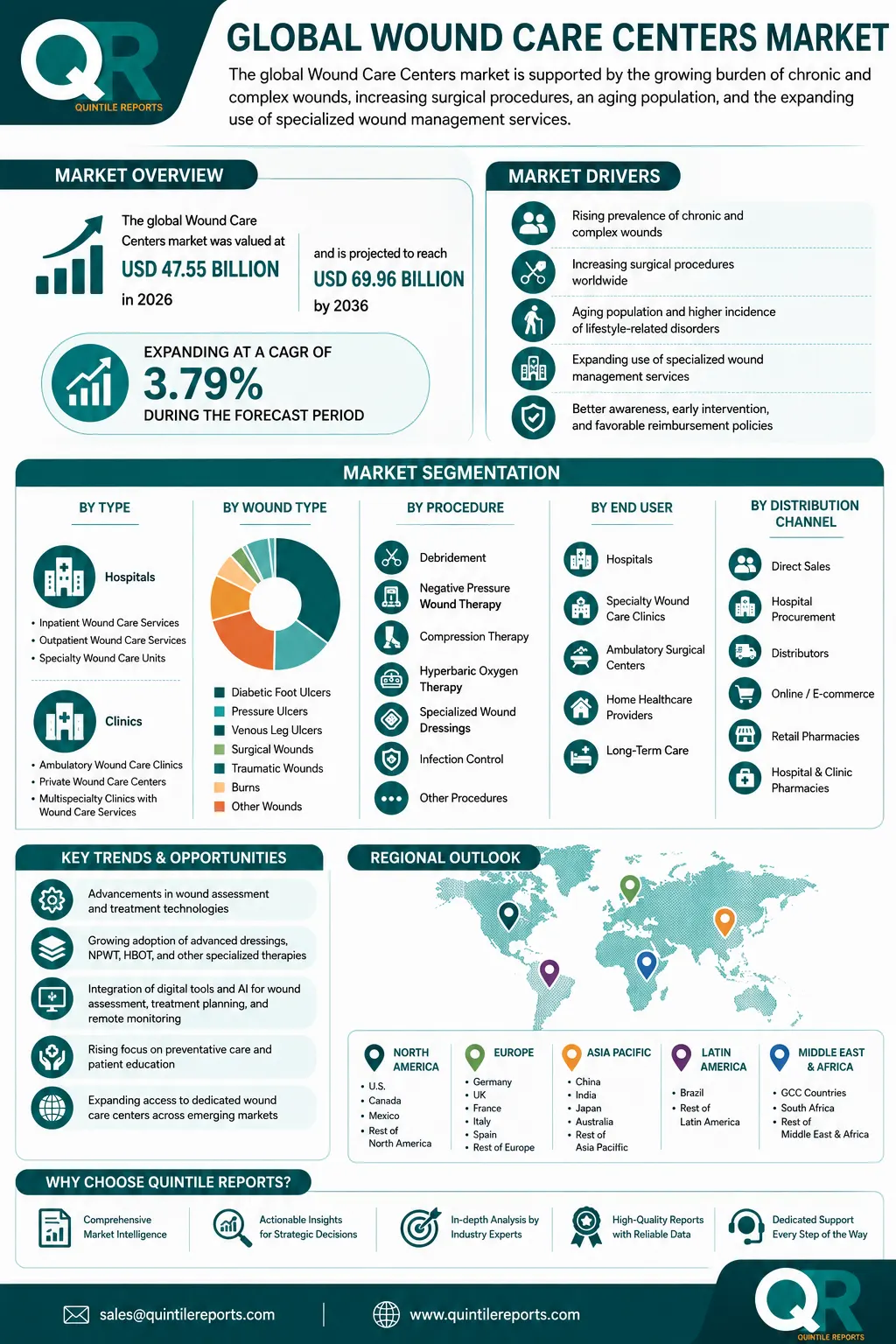
The global Wound Care Centers market was valued at USD 47.55 billion in 2026 and is projected to reach USD 69.96 billion by 2036, expanding at a CAGR of 3.79% during the forecast period. The market is supported by the growing burden of chronic and complex wounds, increasing surgical procedures, an aging population, and the expanding use of specialized wound management services. Wound care centers provide focused treatment for wounds that require prolonged monitoring or advanced clinical intervention, including diabetic foot ulcers, pressure ulcers, venous leg ulcers, surgical wounds, and other difficult-to-heal wounds.
The market is also benefiting from improvements in wound assessment, advanced dressings, negative pressure wound therapy, hyperbaric oxygen therapy, compression-based treatment, and other specialized procedures. Greater awareness of early wound management, improving access to dedicated wound care facilities, and favorable healthcare reimbursement in several markets are further supporting demand. At the same time, the increasing integration of digital tools and artificial intelligence is creating new opportunities for wound assessment, treatment planning, remote monitoring, and clinical workflow management.
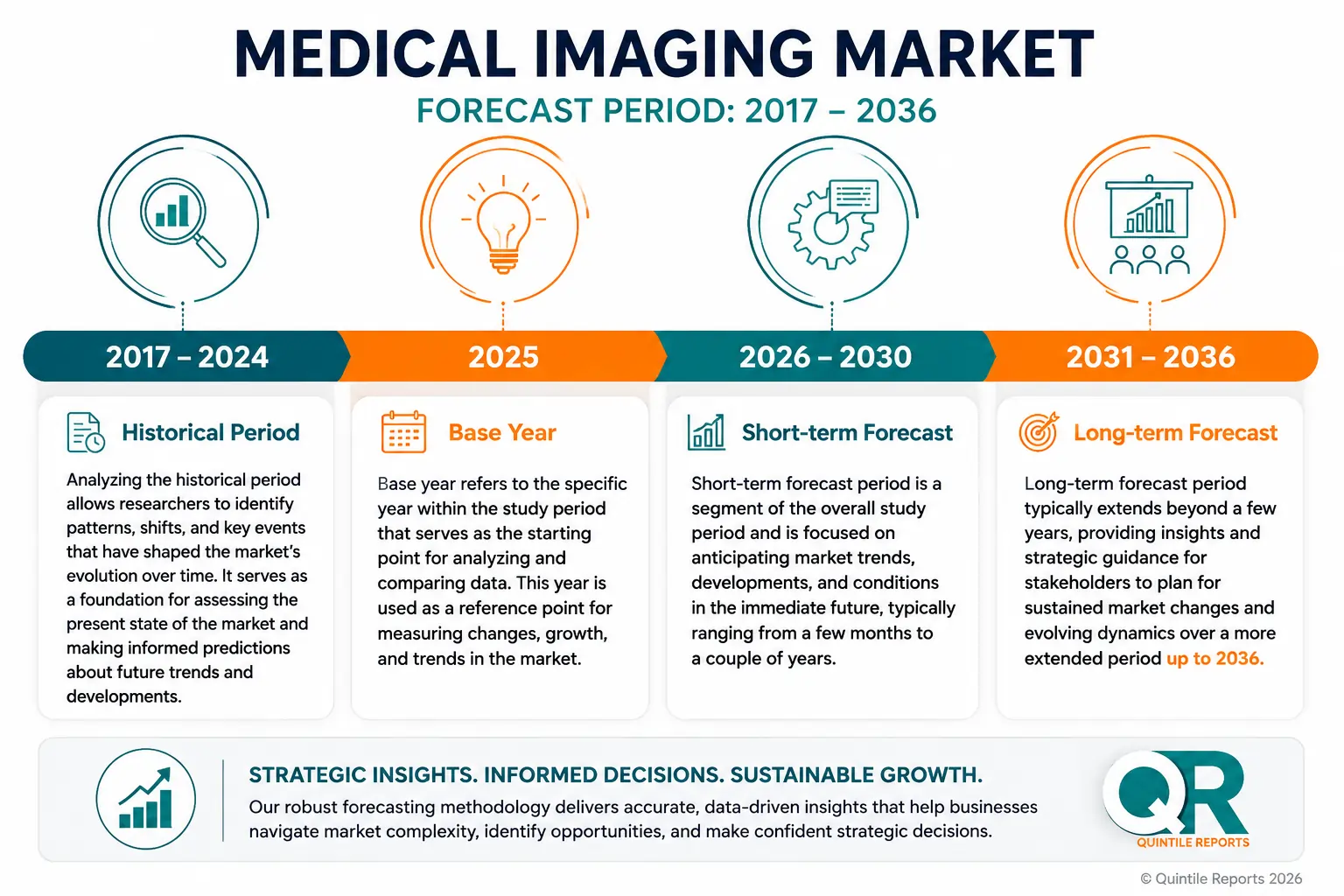
The Wound Care Centers Market study covers the historical period from 2021 to 2025, with 2026 as the base year for market estimation. The market size is determined through a combination of secondary research, industry and company-level data, healthcare expenditure analysis, facility-level assessment, procedure volumes, and validation through primary research with industry participants and experts. The study evaluates revenues generated through wound care services and related treatment activities across hospitals, clinics, ambulatory wound care centers, and other relevant care settings. Historical market data is analyzed to identify market trends and growth patterns, while the base-year market size is established through data triangulation and validation. The forecast period from 2026 to 2036 is developed by assessing historical growth, current market conditions, procedure volumes, patient and wound prevalence trends, healthcare infrastructure expansion, adoption of advanced wound care technologies, reimbursement conditions, and other market dynamics. The report provides market size, growth rates, CAGR, segment-level analysis, regional and country-level forecasts, and competitive insights for the forecast period.
The Wound Care Centers market is undergoing steady transformation as healthcare providers place greater emphasis on specialized management of chronic and complex wounds. The increasing prevalence of diabetes, vascular disorders, pressure-related injuries, and other conditions associated with delayed healing is creating a sustained requirement for dedicated wound care services. In addition, advances in wound treatment technologies are enabling healthcare professionals to deliver more targeted and efficient care.
The market also reflects a shift toward more accessible and specialized treatment environments. While hospitals continue to account for a substantial share of wound care services, dedicated clinics and outpatient centers are gaining importance because they can provide focused treatment, follow-up care, and rehabilitation. The adoption of advanced wound dressings, negative pressure wound therapy, digital imaging, and remote monitoring technologies is expected to further influence the competitive landscape through 2036.
This chapter evaluates the major forces influencing the Wound Care Centers market and examines the factors expected to shape industry growth through 2036. The analysis covers market drivers, restraints, opportunities, emerging trends, technological developments, competitive conditions, and changes in healthcare delivery models. It also assesses the impact of chronic disease prevalence, demographic changes, surgical volumes, healthcare expenditure, reimbursement conditions, and the adoption of advanced wound treatment technologies.
The segment analysis provides a detailed assessment of the market according to Type, Wound Type, Procedure, and End User. Each segment is evaluated based on market size, growth potential, adoption patterns, key demand factors, and competitive developments. The study also considers the increasing use of specialized treatment approaches and the changing preference toward dedicated outpatient wound care facilities.
The regional analysis examines market development across North America, Europe, Asia Pacific, Latin America, and the Middle East & Africa. Regional performance is assessed using factors such as healthcare infrastructure, chronic wound prevalence, treatment accessibility, technology adoption, healthcare expenditure, reimbursement environment, and the presence of major market participants. North America maintained a leading position in the market, while Asia Pacific is expected to register comparatively faster growth during the forecast period as healthcare infrastructure and awareness surrounding advanced wound management continue to improve.
This section evaluates the competitive environment of the Wound Care Centers market and profiles leading companies and wound care service providers. The assessment includes company overview, business operations, financial performance, service and product offerings, geographical presence, competitive positioning, strategic initiatives, partnerships, technology adoption, and recent developments.
Key Players Operating in the Wound Care Centers Market are as follows: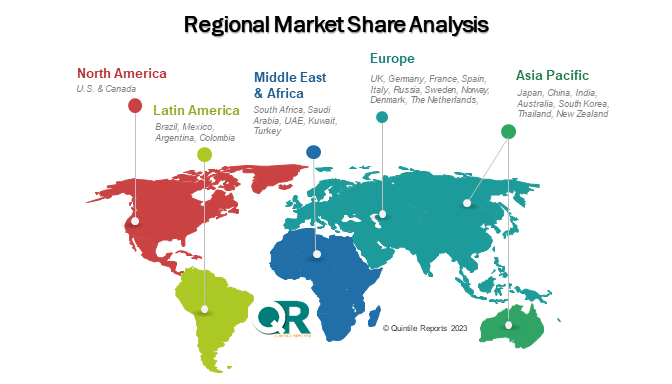
The rising incidence of diabetes, vascular disorders, poor circulation, peripheral artery disease, and other chronic conditions is increasing the number of patients who require prolonged wound management. Chronic wounds can take considerable time to heal and often require repeated assessment, specialized treatment, infection prevention, and ongoing clinical supervision. This growing treatment requirement is supporting demand for dedicated wound care centers and specialized outpatient services.
Technological progress is expanding the range of treatment options available to wound care professionals. Advanced wound dressings, negative pressure wound therapy, hyperbaric oxygen therapy, digital wound imaging, wound closure technologies, and other specialized solutions are helping clinicians improve wound assessment and management. Continued innovation in foam, hydrogel, antimicrobial, bioactive, and other advanced dressing technologies is expected to create additional opportunities for specialized wound care providers.
The increasing number of surgical procedures, combined with a growing elderly population, is contributing to the need for professional wound management. Older adults are more likely to experience conditions associated with delayed healing, while surgical and traumatic wounds may require specialized follow-up after hospital discharge. These demographic and healthcare trends are strengthening the role of dedicated wound care centers across different care settings.
Greater awareness of chronic wound complications is encouraging patients and healthcare professionals to seek treatment at an earlier stage. Wound care centers also play an important role in educating patients, caregivers, and clinicians about wound prevention, infection management, and appropriate treatment pathways. The expansion of specialized facilities in urban as well as underserved areas is expected to improve access to advanced wound management services.
Artificial intelligence is emerging as a useful technology across several stages of wound management. AI-enabled imaging and analytical tools can support clinicians in evaluating wound characteristics, monitoring changes over time, and identifying signs that may require additional attention. Non-contact imaging approaches can also facilitate wound assessment while reducing the need for repeated physical handling of sensitive wound areas.
Beyond clinical assessment, AI can support personalized treatment planning, wound documentation, patient monitoring, appointment management, and administrative workflows. As digital health platforms become more widely integrated into wound care services, AI is expected to contribute to improved consistency in assessment and more efficient management of patient information.
Diabetes remains an important demand driver for the Wound Care Centers market because the condition can increase the risk of diabetic foot ulcers and delay the healing process. Patients with diabetes may require multidisciplinary care involving wound assessment, infection management, vascular evaluation, debridement, specialized dressings, and other advanced therapies. As the global diabetic population continues to expand, the requirement for dedicated facilities capable of managing complex diabetic wounds is also expected to increase.
The relatively high cost associated with specialized consultations, advanced treatment procedures, wound dressings, medical equipment, and repeated follow-up visits can limit access to wound care services. Cost pressures may be particularly significant in markets where insurance coverage and reimbursement for advanced wound management remain limited. These factors can influence treatment adherence and may slow the adoption of certain advanced therapies.
Technological innovation presents significant opportunities for wound care centers. Telemedicine and remote monitoring can extend specialist support beyond traditional clinical settings, while advanced imaging can help healthcare professionals track wound progression more efficiently. Personalized treatment approaches, regenerative medicine, bioengineered materials, extracellular matrix technologies, and emerging techniques such as 3D bioprinting may further expand the scope of advanced wound management over the coming years.
Hospitals are expected to maintain a significant position within the Type segment because they offer multidisciplinary clinical expertise and the infrastructure required to manage complex and acute wounds. Hospitals can provide access to surgeons, wound care specialists, vascular specialists, infectious disease experts, and other healthcare professionals. Their ability to manage patients with severe wounds and complications also supports continued demand for hospital-based wound care services.
Clinics are expected to represent an important growth area as patients increasingly seek specialized and convenient wound treatment outside traditional hospital environments. Dedicated wound care clinics can provide focused services, personalized treatment plans, regular follow-up, and rehabilitation. The expansion of ambulatory and private wound care facilities is likely to improve access to advanced wound management while reducing dependence on inpatient care for patients who do not require hospitalization.
Specialized dressings represent an important component of wound management because they can help protect wounds, control moisture, manage exudate, support healing, and reduce the risk of infection. Healthcare professionals may select different dressing technologies according to wound characteristics and treatment objectives. Continued development of advanced, antimicrobial, bioactive, foam, alginate, hydrocolloid, and other dressing technologies is expected to support the segment.
Negative pressure wound therapy is gaining attention as an advanced approach for managing selected chronic, acute, surgical, and complex wounds. The therapy uses controlled sub-atmospheric pressure to assist in managing wound exudate and supporting the formation of healthy granulation tissue. Continued improvements in device portability, usability, and treatment efficiency are expected to strengthen adoption across hospitals, specialty clinics, and other wound care settings.
North America accounted for a leading share of the global Wound Care Centers market in 2024. The region benefits from developed healthcare infrastructure, a high level of awareness regarding chronic wound management, advanced treatment capabilities, and the presence of established wound care providers. The growing prevalence of chronic diseases and increasing demand for specialized treatment are expected to sustain regional market growth.
Asia Pacific is anticipated to record the fastest growth during the forecast period. Increasing healthcare expenditure, improving medical infrastructure, greater awareness of wound management, and the adoption of advanced treatment technologies are creating favorable conditions for market expansion. Investments by public and private healthcare organizations are also contributing to the development of specialized wound care services across the region.
Europe is expected to experience steady market development supported by increasing awareness of chronic wound management, established healthcare systems, and initiatives aimed at improving the quality and standardization of wound care. Collaboration between healthcare organizations and professional wound management associations is also supporting the adoption of structured wound care practices across the region.
The Latin American market is expected to benefit from improving healthcare access, increasing awareness of chronic wounds, and the gradual adoption of advanced wound treatment technologies. Growth in healthcare expenditure and the expansion of specialized treatment facilities are likely to create additional opportunities for wound care centers across major countries in the region.
The Middle East & Africa market is supported by increasing investments in healthcare infrastructure and growing awareness of specialized wound management. Improvements in medical facilities, greater availability of advanced treatment options, and efforts to strengthen healthcare services are expected to contribute to market development over the forecast period.
The wound care industry continues to witness developments focused on improving wound monitoring, treatment efficiency, and patient convenience. Recent innovation includes advanced wound dressings, smart sensing technologies, fluorescence-based wound assessment, and improved negative pressure wound therapy systems. These developments demonstrate the industry's broader movement toward technology-enabled and data-driven wound management.
| Report Scope | Details |
| Base year | 2025 |
| Historical data | 2018 - 2025 |
| Forecast period | 2026 - 2036 |
| Market size | USD 47.55 billion in 2026 |
| Forecast market size | USD 69.96 billion by 2036 |
| Market representation | Revenue in USD billion & CAGR from 2026 to 2036 |
| Country scope | North America (U.S., Canada), Europe (UK, Germany, France, Italy, Spain, Russia, Sweden, Denmark, Norway, Rest of Europe), Asia Pacific (Japan, China, India, Australia, South Korea, Thailand, Rest of Asia Pacific), Latin America (Brazil, Mexico, Argentina, Colombia, Rest of Latin America), Middle East & Africa (South Africa, Saudi Arabia, UAE, Kuwait, Rest of Middle East & Africa). |
| The Segment covered by Type |
|
| The Segment covered by Wound Type |
|
| The Segment covered by Procedure |
|
| The Segment covered by End User |
|
| Companies covered |
|
| Report coverage | Revenue forecast, company share, competitive landscape, growth factors, market trends, regional analysis, and strategic developments |
| Free customization scope (equivalent to 5 analyst working days) | If you need specific information that is not currently within the scope of the report, we will provide it to you as part of the customization. |
The Wound Care Centers market analysis provides an in-depth assessment of market size, growth opportunities, competitive developments, regional trends, and key market dynamics. The global market was valued at USD 47.55 billion in 2026 and is projected to reach USD 69.96 billion by 2036, growing at a CAGR of 3.79%. The study combines historical analysis with forward-looking market forecasts to help healthcare organizations, investors, service providers, and other stakeholders evaluate opportunities across the evolving wound care landscape. To request a free PDF sample of the report, please contact our principal analyst at sales@quintilereports.com.
List of Tables
Table 1 List of Abbreviation and acronyms
Table 2 List of Sources
Table 3 North America Global Wound Care Centers Market, by Segment Analysis, (USD Million) 2017-2032
Table 4 North America Global Wound Care Centers Market, by Region, (USD Million) 2017-2032
Table 5 U.S. Global Wound Care Centers Market, by Segment Analysis, (USD Million) 2017-2032
Table 6 Canada Global Wound Care Centers Market, by Segment Analysis, (USD Million) 2017-2032
Table 7 Europe Global Wound Care Centers Market, by Segment Analysis, (USD Million) 2017-2032
Table 8 Europe Global Wound Care Centers Market, by Region, (USD Million) 2017-2032
Table 9 Germany Global Wound Care Centers Market, by Segment Analysis, (USD Million) 2017-2032
Table 10 U.K. Global Wound Care Centers Market, by Segment Analysis, (USD Million) 2017-2032
Table 11 France Global Wound Care Centers Market, by Segment Analysis, (USD Million) 2017-2032
Table 12 Italy Global Wound Care Centers Market, by Segment Analysis, (USD Million) 2017-2032
Table 13 Spain Global Wound Care Centers Market, by Segment Analysis, (USD Million) 2017-2032
Table 14 Sweden Global Wound Care Centers Market, by Segment Analysis, (USD Million) 2017-2032
Table 15 Denmark Global Wound Care Centers Market, by Segment Analysis, (USD Million) 2017-2032
Table 16 Norway Global Wound Care Centers Market, by Segment Analysis, (USD Million) 2017-2032
Table 17 The Netherlands Global Wound Care Centers Market, by Segment Analysis, (USD Million) 2017-2032
Table 18 Russia Global Wound Care Centers Market, by Segment Analysis, (USD Million) 2017-2032
Table 19 Asia Pacific Global Wound Care Centers Market, by Segment Analysis, (USD Million) 2017-2032
Table 20 Asia Pacific Global Wound Care Centers Market, by Region, (USD Million) 2017-2032
Table 21 China Global Wound Care Centers Market, by Segment Analysis, (USD Million) 2017-2032
Table 22 Japan Global Wound Care Centers Market, by Segment Analysis, (USD Million) 2017-2032
Table 23 India Global Wound Care Centers Market, by Segment Analysis, (USD Million) 2017-2032
Table 24 Australia Global Wound Care Centers Market, by Segment Analysis, (USD Million) 2017-2032
Table 25 South Korea Global Wound Care Centers Market, by Segment Analysis, (USD Million) 2017-2032
Table 26 Thailand Global Wound Care Centers Market, by Segment Analysis, (USD Million) 2017-2032
Table 27 Latin America Global Wound Care Centers Market, by Segment Analysis, (USD Million) 2017-2032
Table 28 Latin America Global Wound Care Centers Market, by Region, (USD Million) 2017-2032
Table 29 Brazil Global Wound Care Centers Market, by Segment Analysis, (USD Million) 2017-2032
Table 30 Mexico Global Wound Care Centers Market, by Segment Analysis, (USD Million) 2017-2032
Table 31 Argentina Global Wound Care Centers Market, by Segment Analysis, (USD Million) 2017-2032
Table 32 Middle East and Africa Global Wound Care Centers Market, by Segment Analysis, (USD Million) 2017-2032
Table 33 Middle East and Africa Global Wound Care Centers Market, by Region, (USD Million) 2017-2032
Table 34 South Africa Global Wound Care Centers Market, by Segment Analysis, (USD Million) 2017-2032
Table 35 Saudi Arabia Global Wound Care Centers Market, by Segment Analysis, (USD Million) 2017-2032
Table 36 UAE Global Wound Care Centers Market, by Segment Analysis, (USD Million) 2017-2032
Table 37 Kuwait Global Wound Care Centers Market, by Segment Analysis, (USD Million) 2017-2032
Table 38 Turkey Global Wound Care Centers Market, by Segment Analysis, (USD Million) 2017-2032
Fig.1 Market research process
Fig.2 Market research approaches
Fig.3 Global Wound Care Centers Market: market scenario
Fig.4 Global Wound Care Centers Market competitive outlook
Fig.5 Global Wound Care Centers Market driver analysis
Fig.6 Global Wound Care Centers Market restraint analysis
Fig.7 Global Wound Care Centers Market opportunity analysis
Fig.8 Global Wound Care Centers Market trends analysis
Fig.9 Global Wound Care Centers Market: Segment Analysis (Based on the scope)
Fig.10 Global Wound Care Centers Market: regional analysis
Fig.11 Global market shares and leading market players
Fig.12 North America market share and leading players
Fig.13 Europe market share and leading players
Fig.14 Asia Pacific market share and leading players
Fig.15 Latin America market share and leading players
Fig.16 Middle East & Africa market share and leading players
Fig.17 North America, by country
Fig.18 North America
Fig.19 North America market estimates and forecast, 2017-2032
Fig.20 U.S.
Fig.21 Canada
Fig.22 Europe
Fig.23 Europe market estimates and forecast, 2017-2032
Fig.24 U.K.
Fig.25 Germany
Fig.26 France
Fig.27 Italy
Fig.28 Spain
Fig.29 Sweden
Fig.30 Denmark
Fig.31 Norway
Fig.32 The Netherlands
Fig.33 Russia
Fig.34 Asia Pacific
Fig.35 Asia Pacific market estimates and forecast, 2017-2032
Fig.36 China
Fig.37 Japan
Fig.38 India
Fig.39 Australia
Fig.40 South Korea
Fig.41 Thailand
Fig.42 Latin America
Fig.43 Latin America market estimates and forecast, 2017-2032
Fig.44 Brazil
Fig.45 Mexico
Fig.46 Argentina
Fig.47 Colombia
Fig.48 Middle East and Africa
Fig.49 Middle East and Africa market estimates and forecast, 2017-2032
Fig.50 Saudi Arabia
Fig.51 South Africa
Fig.52 UAE
Fig.53 Kuwait
Fig.54 Turkey
The global Wound Care Centers market was valued at USD 47.55 billion in 2026 and is projected to reach USD 69.96 billion by 2036, expanding at a CAGR of 3.79% during the forecast period. The market is supported by the growing burden of chronic and complex wounds, increasing surgical procedures, an aging population, and the expanding use of specialized wound management services. Wound care centers provide focused treatment for wounds that require prolonged monitoring or advanced clinical intervention, including diabetic foot ulcers, pressure ulcers, venous leg ulcers, surgical wounds, and other difficult-to-heal wounds.
The market is also benefiting from improvements in wound assessment, advanced dressings, negative pressure wound therapy, hyperbaric oxygen therapy, compression-based treatment, and other specialized procedures. Greater awareness of early wound management, improving access to dedicated wound care facilities, and favorable healthcare reimbursement in several markets are further supporting demand. At the same time, the increasing integration of digital tools and artificial intelligence is creating new opportunities for wound assessment, treatment planning, remote monitoring, and clinical workflow management.
The Wound Care Centers Market study covers the historical period from 2021 to 2025, with 2026 as the base year for market estimation. The market size is determined through a combination of secondary research, industry and company-level data, healthcare expenditure analysis, facility-level assessment, procedure volumes, and validation through primary research with industry participants and experts. The study evaluates revenues generated through wound care services and related treatment activities across hospitals, clinics, ambulatory wound care centers, and other relevant care settings. Historical market data is analyzed to identify market trends and growth patterns, while the base-year market size is established through data triangulation and validation. The forecast period from 2026 to 2036 is developed by assessing historical growth, current market conditions, procedure volumes, patient and wound prevalence trends, healthcare infrastructure expansion, adoption of advanced wound care technologies, reimbursement conditions, and other market dynamics. The report provides market size, growth rates, CAGR, segment-level analysis, regional and country-level forecasts, and competitive insights for the forecast period.
The Wound Care Centers market is undergoing steady transformation as healthcare providers place greater emphasis on specialized management of chronic and complex wounds. The increasing prevalence of diabetes, vascular disorders, pressure-related injuries, and other conditions associated with delayed healing is creating a sustained requirement for dedicated wound care services. In addition, advances in wound treatment technologies are enabling healthcare professionals to deliver more targeted and efficient care.
The market also reflects a shift toward more accessible and specialized treatment environments. While hospitals continue to account for a substantial share of wound care services, dedicated clinics and outpatient centers are gaining importance because they can provide focused treatment, follow-up care, and rehabilitation. The adoption of advanced wound dressings, negative pressure wound therapy, digital imaging, and remote monitoring technologies is expected to further influence the competitive landscape through 2036.
This chapter evaluates the major forces influencing the Wound Care Centers market and examines the factors expected to shape industry growth through 2036. The analysis covers market drivers, restraints, opportunities, emerging trends, technological developments, competitive conditions, and changes in healthcare delivery models. It also assesses the impact of chronic disease prevalence, demographic changes, surgical volumes, healthcare expenditure, reimbursement conditions, and the adoption of advanced wound treatment technologies.
The segment analysis provides a detailed assessment of the market according to Type, Wound Type, Procedure, and End User. Each segment is evaluated based on market size, growth potential, adoption patterns, key demand factors, and competitive developments. The study also considers the increasing use of specialized treatment approaches and the changing preference toward dedicated outpatient wound care facilities.
The regional analysis examines market development across North America, Europe, Asia Pacific, Latin America, and the Middle East & Africa. Regional performance is assessed using factors such as healthcare infrastructure, chronic wound prevalence, treatment accessibility, technology adoption, healthcare expenditure, reimbursement environment, and the presence of major market participants. North America maintained a leading position in the market, while Asia Pacific is expected to register comparatively faster growth during the forecast period as healthcare infrastructure and awareness surrounding advanced wound management continue to improve.
This section evaluates the competitive environment of the Wound Care Centers market and profiles leading companies and wound care service providers. The assessment includes company overview, business operations, financial performance, service and product offerings, geographical presence, competitive positioning, strategic initiatives, partnerships, technology adoption, and recent developments.
Key Players Operating in the Wound Care Centers Market are as follows:The rising incidence of diabetes, vascular disorders, poor circulation, peripheral artery disease, and other chronic conditions is increasing the number of patients who require prolonged wound management. Chronic wounds can take considerable time to heal and often require repeated assessment, specialized treatment, infection prevention, and ongoing clinical supervision. This growing treatment requirement is supporting demand for dedicated wound care centers and specialized outpatient services.
Technological progress is expanding the range of treatment options available to wound care professionals. Advanced wound dressings, negative pressure wound therapy, hyperbaric oxygen therapy, digital wound imaging, wound closure technologies, and other specialized solutions are helping clinicians improve wound assessment and management. Continued innovation in foam, hydrogel, antimicrobial, bioactive, and other advanced dressing technologies is expected to create additional opportunities for specialized wound care providers.
The increasing number of surgical procedures, combined with a growing elderly population, is contributing to the need for professional wound management. Older adults are more likely to experience conditions associated with delayed healing, while surgical and traumatic wounds may require specialized follow-up after hospital discharge. These demographic and healthcare trends are strengthening the role of dedicated wound care centers across different care settings.
Greater awareness of chronic wound complications is encouraging patients and healthcare professionals to seek treatment at an earlier stage. Wound care centers also play an important role in educating patients, caregivers, and clinicians about wound prevention, infection management, and appropriate treatment pathways. The expansion of specialized facilities in urban as well as underserved areas is expected to improve access to advanced wound management services.
Artificial intelligence is emerging as a useful technology across several stages of wound management. AI-enabled imaging and analytical tools can support clinicians in evaluating wound characteristics, monitoring changes over time, and identifying signs that may require additional attention. Non-contact imaging approaches can also facilitate wound assessment while reducing the need for repeated physical handling of sensitive wound areas.
Beyond clinical assessment, AI can support personalized treatment planning, wound documentation, patient monitoring, appointment management, and administrative workflows. As digital health platforms become more widely integrated into wound care services, AI is expected to contribute to improved consistency in assessment and more efficient management of patient information.
Diabetes remains an important demand driver for the Wound Care Centers market because the condition can increase the risk of diabetic foot ulcers and delay the healing process. Patients with diabetes may require multidisciplinary care involving wound assessment, infection management, vascular evaluation, debridement, specialized dressings, and other advanced therapies. As the global diabetic population continues to expand, the requirement for dedicated facilities capable of managing complex diabetic wounds is also expected to increase.
The relatively high cost associated with specialized consultations, advanced treatment procedures, wound dressings, medical equipment, and repeated follow-up visits can limit access to wound care services. Cost pressures may be particularly significant in markets where insurance coverage and reimbursement for advanced wound management remain limited. These factors can influence treatment adherence and may slow the adoption of certain advanced therapies.
Technological innovation presents significant opportunities for wound care centers. Telemedicine and remote monitoring can extend specialist support beyond traditional clinical settings, while advanced imaging can help healthcare professionals track wound progression more efficiently. Personalized treatment approaches, regenerative medicine, bioengineered materials, extracellular matrix technologies, and emerging techniques such as 3D bioprinting may further expand the scope of advanced wound management over the coming years.
Hospitals are expected to maintain a significant position within the Type segment because they offer multidisciplinary clinical expertise and the infrastructure required to manage complex and acute wounds. Hospitals can provide access to surgeons, wound care specialists, vascular specialists, infectious disease experts, and other healthcare professionals. Their ability to manage patients with severe wounds and complications also supports continued demand for hospital-based wound care services.
Clinics are expected to represent an important growth area as patients increasingly seek specialized and convenient wound treatment outside traditional hospital environments. Dedicated wound care clinics can provide focused services, personalized treatment plans, regular follow-up, and rehabilitation. The expansion of ambulatory and private wound care facilities is likely to improve access to advanced wound management while reducing dependence on inpatient care for patients who do not require hospitalization.
Specialized dressings represent an important component of wound management because they can help protect wounds, control moisture, manage exudate, support healing, and reduce the risk of infection. Healthcare professionals may select different dressing technologies according to wound characteristics and treatment objectives. Continued development of advanced, antimicrobial, bioactive, foam, alginate, hydrocolloid, and other dressing technologies is expected to support the segment.
Negative pressure wound therapy is gaining attention as an advanced approach for managing selected chronic, acute, surgical, and complex wounds. The therapy uses controlled sub-atmospheric pressure to assist in managing wound exudate and supporting the formation of healthy granulation tissue. Continued improvements in device portability, usability, and treatment efficiency are expected to strengthen adoption across hospitals, specialty clinics, and other wound care settings.
North America accounted for a leading share of the global Wound Care Centers market in 2024. The region benefits from developed healthcare infrastructure, a high level of awareness regarding chronic wound management, advanced treatment capabilities, and the presence of established wound care providers. The growing prevalence of chronic diseases and increasing demand for specialized treatment are expected to sustain regional market growth.
Asia Pacific is anticipated to record the fastest growth during the forecast period. Increasing healthcare expenditure, improving medical infrastructure, greater awareness of wound management, and the adoption of advanced treatment technologies are creating favorable conditions for market expansion. Investments by public and private healthcare organizations are also contributing to the development of specialized wound care services across the region.
Europe is expected to experience steady market development supported by increasing awareness of chronic wound management, established healthcare systems, and initiatives aimed at improving the quality and standardization of wound care. Collaboration between healthcare organizations and professional wound management associations is also supporting the adoption of structured wound care practices across the region.
The Latin American market is expected to benefit from improving healthcare access, increasing awareness of chronic wounds, and the gradual adoption of advanced wound treatment technologies. Growth in healthcare expenditure and the expansion of specialized treatment facilities are likely to create additional opportunities for wound care centers across major countries in the region.
The Middle East & Africa market is supported by increasing investments in healthcare infrastructure and growing awareness of specialized wound management. Improvements in medical facilities, greater availability of advanced treatment options, and efforts to strengthen healthcare services are expected to contribute to market development over the forecast period.
The wound care industry continues to witness developments focused on improving wound monitoring, treatment efficiency, and patient convenience. Recent innovation includes advanced wound dressings, smart sensing technologies, fluorescence-based wound assessment, and improved negative pressure wound therapy systems. These developments demonstrate the industry's broader movement toward technology-enabled and data-driven wound management.
| Report Scope | Details |
| Base year | 2025 |
| Historical data | 2018 - 2025 |
| Forecast period | 2026 - 2036 |
| Market size | USD 47.55 billion in 2026 |
| Forecast market size | USD 69.96 billion by 2036 |
| Market representation | Revenue in USD billion & CAGR from 2026 to 2036 |
| Country scope | North America (U.S., Canada), Europe (UK, Germany, France, Italy, Spain, Russia, Sweden, Denmark, Norway, Rest of Europe), Asia Pacific (Japan, China, India, Australia, South Korea, Thailand, Rest of Asia Pacific), Latin America (Brazil, Mexico, Argentina, Colombia, Rest of Latin America), Middle East & Africa (South Africa, Saudi Arabia, UAE, Kuwait, Rest of Middle East & Africa). |
| The Segment covered by Type |
|
| The Segment covered by Wound Type |
|
| The Segment covered by Procedure |
|
| The Segment covered by End User |
|
| Companies covered |
|
| Report coverage | Revenue forecast, company share, competitive landscape, growth factors, market trends, regional analysis, and strategic developments |
| Free customization scope (equivalent to 5 analyst working days) | If you need specific information that is not currently within the scope of the report, we will provide it to you as part of the customization. |
The Wound Care Centers market analysis provides an in-depth assessment of market size, growth opportunities, competitive developments, regional trends, and key market dynamics. The global market was valued at USD 47.55 billion in 2026 and is projected to reach USD 69.96 billion by 2036, growing at a CAGR of 3.79%. The study combines historical analysis with forward-looking market forecasts to help healthcare organizations, investors, service providers, and other stakeholders evaluate opportunities across the evolving wound care landscape. To request a free PDF sample of the report, please contact our principal analyst at sales@quintilereports.com.
Table 1 List of Abbreviation and acronyms
Table 2 List of Sources
Table 3 North America Global Wound Care Centers Market, by Segment Analysis, (USD Million) 2017-2032
Table 4 North America Global Wound Care Centers Market, by Region, (USD Million) 2017-2032
Table 5 U.S. Global Wound Care Centers Market, by Segment Analysis, (USD Million) 2017-2032
Table 6 Canada Global Wound Care Centers Market, by Segment Analysis, (USD Million) 2017-2032
Table 7 Europe Global Wound Care Centers Market, by Segment Analysis, (USD Million) 2017-2032
Table 8 Europe Global Wound Care Centers Market, by Region, (USD Million) 2017-2032
Table 9 Germany Global Wound Care Centers Market, by Segment Analysis, (USD Million) 2017-2032
Table 10 U.K. Global Wound Care Centers Market, by Segment Analysis, (USD Million) 2017-2032
Table 11 France Global Wound Care Centers Market, by Segment Analysis, (USD Million) 2017-2032
Table 12 Italy Global Wound Care Centers Market, by Segment Analysis, (USD Million) 2017-2032
Table 13 Spain Global Wound Care Centers Market, by Segment Analysis, (USD Million) 2017-2032
Table 14 Sweden Global Wound Care Centers Market, by Segment Analysis, (USD Million) 2017-2032
Table 15 Denmark Global Wound Care Centers Market, by Segment Analysis, (USD Million) 2017-2032
Table 16 Norway Global Wound Care Centers Market, by Segment Analysis, (USD Million) 2017-2032
Table 17 The Netherlands Global Wound Care Centers Market, by Segment Analysis, (USD Million) 2017-2032
Table 18 Russia Global Wound Care Centers Market, by Segment Analysis, (USD Million) 2017-2032
Table 19 Asia Pacific Global Wound Care Centers Market, by Segment Analysis, (USD Million) 2017-2032
Table 20 Asia Pacific Global Wound Care Centers Market, by Region, (USD Million) 2017-2032
Table 21 China Global Wound Care Centers Market, by Segment Analysis, (USD Million) 2017-2032
Table 22 Japan Global Wound Care Centers Market, by Segment Analysis, (USD Million) 2017-2032
Table 23 India Global Wound Care Centers Market, by Segment Analysis, (USD Million) 2017-2032
Table 24 Australia Global Wound Care Centers Market, by Segment Analysis, (USD Million) 2017-2032
Table 25 South Korea Global Wound Care Centers Market, by Segment Analysis, (USD Million) 2017-2032
Table 26 Thailand Global Wound Care Centers Market, by Segment Analysis, (USD Million) 2017-2032
Table 27 Latin America Global Wound Care Centers Market, by Segment Analysis, (USD Million) 2017-2032
Table 28 Latin America Global Wound Care Centers Market, by Region, (USD Million) 2017-2032
Table 29 Brazil Global Wound Care Centers Market, by Segment Analysis, (USD Million) 2017-2032
Table 30 Mexico Global Wound Care Centers Market, by Segment Analysis, (USD Million) 2017-2032
Table 31 Argentina Global Wound Care Centers Market, by Segment Analysis, (USD Million) 2017-2032
Table 32 Middle East and Africa Global Wound Care Centers Market, by Segment Analysis, (USD Million) 2017-2032
Table 33 Middle East and Africa Global Wound Care Centers Market, by Region, (USD Million) 2017-2032
Table 34 South Africa Global Wound Care Centers Market, by Segment Analysis, (USD Million) 2017-2032
Table 35 Saudi Arabia Global Wound Care Centers Market, by Segment Analysis, (USD Million) 2017-2032
Table 36 UAE Global Wound Care Centers Market, by Segment Analysis, (USD Million) 2017-2032
Table 37 Kuwait Global Wound Care Centers Market, by Segment Analysis, (USD Million) 2017-2032
Table 38 Turkey Global Wound Care Centers Market, by Segment Analysis, (USD Million) 2017-2032
Fig.1 Market research process
Fig.2 Market research approaches
Fig.3 Global Wound Care Centers Market: market scenario
Fig.4 Global Wound Care Centers Market competitive outlook
Fig.5 Global Wound Care Centers Market driver analysis
Fig.6 Global Wound Care Centers Market restraint analysis
Fig.7 Global Wound Care Centers Market opportunity analysis
Fig.8 Global Wound Care Centers Market trends analysis
Fig.9 Global Wound Care Centers Market: Segment Analysis (Based on the scope)
Fig.10 Global Wound Care Centers Market: regional analysis
Fig.11 Global market shares and leading market players
Fig.12 North America market share and leading players
Fig.13 Europe market share and leading players
Fig.14 Asia Pacific market share and leading players
Fig.15 Latin America market share and leading players
Fig.16 Middle East & Africa market share and leading players
Fig.17 North America, by country
Fig.18 North America
Fig.19 North America market estimates and forecast, 2017-2032
Fig.20 U.S.
Fig.21 Canada
Fig.22 Europe
Fig.23 Europe market estimates and forecast, 2017-2032
Fig.24 U.K.
Fig.25 Germany
Fig.26 France
Fig.27 Italy
Fig.28 Spain
Fig.29 Sweden
Fig.30 Denmark
Fig.31 Norway
Fig.32 The Netherlands
Fig.33 Russia
Fig.34 Asia Pacific
Fig.35 Asia Pacific market estimates and forecast, 2017-2032
Fig.36 China
Fig.37 Japan
Fig.38 India
Fig.39 Australia
Fig.40 South Korea
Fig.41 Thailand
Fig.42 Latin America
Fig.43 Latin America market estimates and forecast, 2017-2032
Fig.44 Brazil
Fig.45 Mexico
Fig.46 Argentina
Fig.47 Colombia
Fig.48 Middle East and Africa
Fig.49 Middle East and Africa market estimates and forecast, 2017-2032
Fig.50 Saudi Arabia
Fig.51 South Africa
Fig.52 UAE
Fig.53 Kuwait
Fig.54 Turkey

A license granted to one user. Rules or conditions might be applied for e.g. the use of electric files (PDFs) or printings, depending on product.
A license granted to multiple users.
A license granted to a single business site/establishment.
A license granted to all employees within organisation access to the product.
Immediate / Within 24-48 hours - Working days
Online Payments with PayPal and CCavenue
You can order a report by picking any of the payment methods which is bank wire or online payment through any Debit/Credit card or PayPal.
Hard Copy
Olanzapine Market Overview The global Olanzapine Market was valued at USD 2.55 billion in 2026 and i
Read MorePolycystic Ovarian Syndrome Treatment Market Overview The global Polycystic Ovarian Syndrome (PCOS)
Read MoreLocal Anesthesia Drugs Market Overview The global Local Anesthesia Drugs Market is poised for stea
Read More