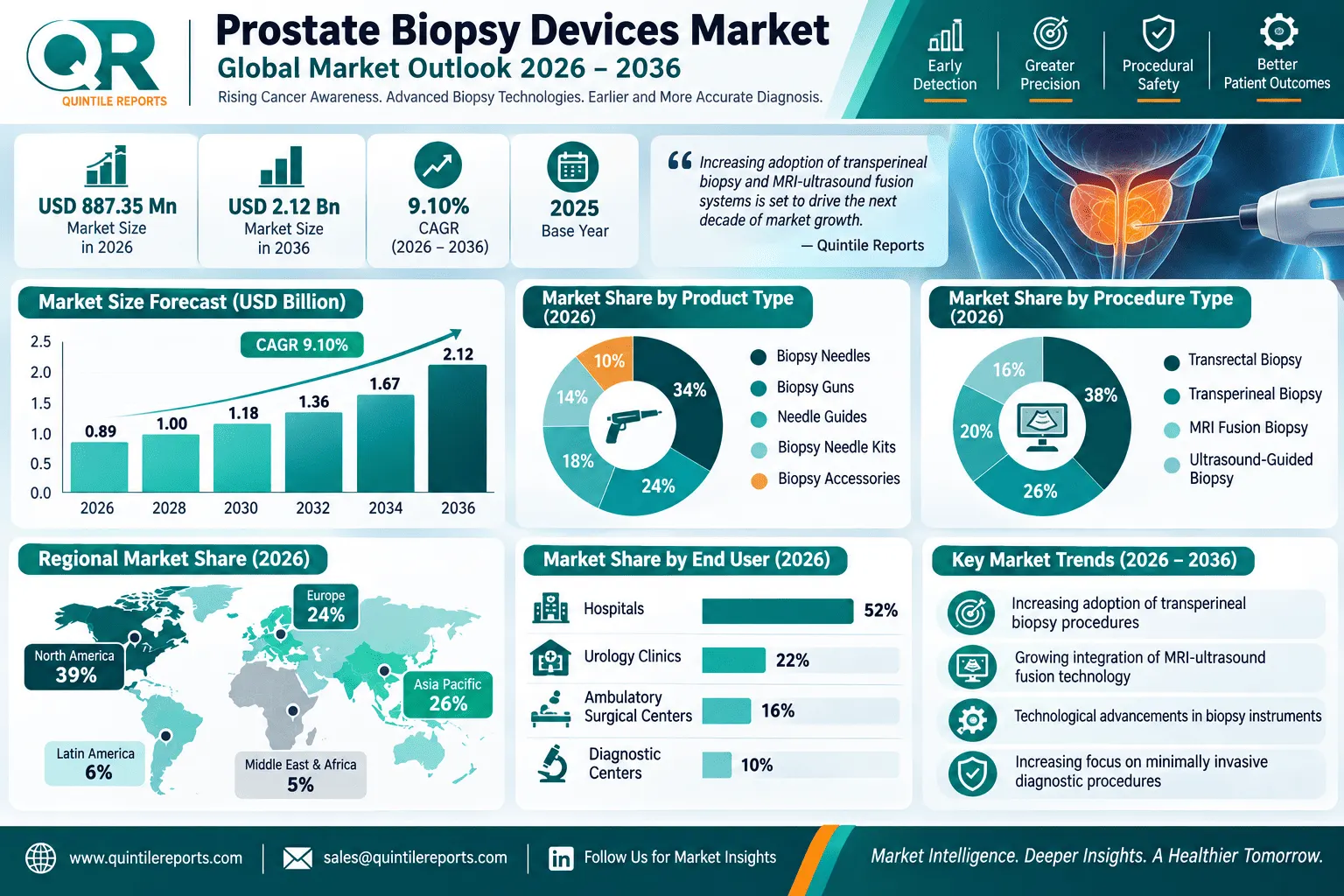
The global Prostate Biopsy Devices Market is witnessing steady growth, driven by the rising prevalence of prostate cancer, increasing demand for early and accurate cancer diagnosis, and advancements in image-guided biopsy technologies. The market is estimated to reach USD 887.35 million in 2026 and is projected to reach USD 2.12 billion by 2036, according to Quintile Reports' market estimates. Increasing adoption of transperineal biopsy procedures, MRI-ultrasound fusion systems, automated biopsy guns, and advanced tissue sampling technologies is expected to support market expansion during the forecast period.
The Prostate Biopsy Devices Market encompasses revenues generated from biopsy needles, biopsy guns, needle guides, biopsy systems, biopsy needle kits, and related accessories used in prostate tissue sampling and cancer diagnosis. The market covers different procedural approaches, guidance technologies, product configurations, usage categories, end users, and distribution channels across global healthcare markets.
Prostate biopsy is a diagnostic procedure involving the collection of tissue samples from the prostate gland for pathological examination. Common approaches include transrectal biopsy, transperineal biopsy, systematic biopsy, targeted biopsy, and MRI-ultrasound fusion-guided biopsy. Advancements in biopsy instruments, multiparametric MRI, ultrasound imaging, and image-fusion technologies are contributing to improvements in procedural precision and diagnostic capabilities.
North America represents a significant regional market, supported by advanced healthcare infrastructure, established urology services, and increasing adoption of advanced diagnostic technologies. Meanwhile, Asia Pacific offers growth opportunities due to rising healthcare expenditure, expanding diagnostic infrastructure, increasing cancer awareness, and improving access to specialized urological services.
The market size estimates presented in this report are based on Quintile Reports' defined market scope, covering prostate biopsy devices and related products across specified product types, procedure categories, end users, usage categories, and geographic markets. Revenue estimates reflect the defined product and geographic scope of the study and may differ from other published studies because of variations in market definitions, product inclusion, geographic coverage, pricing assumptions, and forecasting methodologies.
The increasing adoption of transperineal prostate biopsy is emerging as an important trend in the global market. This approach provides access to different regions of the prostate while reducing exposure to rectal bacteria compared with the transrectal route. Growing emphasis on infection prevention, procedural safety, and improved access to anterior prostate lesions is encouraging healthcare providers to consider transperineal biopsy systems. These developments are creating opportunities for manufacturers offering specialized biopsy needles, needle guides, and compatible biopsy equipment.
The integration of multiparametric MRI with real-time ultrasound imaging is improving the targeting of suspicious prostate lesions. MRI-ultrasound fusion technology enables clinicians to combine MRI-based anatomical information with real-time ultrasound guidance, supporting targeted tissue sampling. Increasing adoption of advanced imaging systems across specialized urology centers is expected to support demand for compatible biopsy devices and image-guided procedural solutions.
Manufacturers are focusing on improvements in biopsy needle design, automated biopsy guns, needle positioning systems, and supporting accessories. These developments aim to improve tissue sampling consistency, procedural control, device reliability, and compatibility with modern imaging technologies. Continuous product development is also encouraging the introduction of biopsy solutions designed to meet the changing requirements of healthcare professionals.
Healthcare providers are increasingly emphasizing diagnostic approaches that support procedural efficiency, patient safety, and improved clinical workflows. This is encouraging the development and adoption of advanced biopsy instruments and image-guided solutions across hospitals, ambulatory surgical centers, and specialized urology facilities. The growing preference for efficient outpatient diagnostic procedures is also creating opportunities for medical device manufacturers.
The increasing prevalence of prostate cancer worldwide represents a major factor supporting the growth of the global prostate biopsy devices market. Prostate cancer remains one of the most frequently diagnosed cancers among men, particularly in the aging male population. Increasing life expectancy, greater awareness of cancer screening, and improvements in diagnostic capabilities are contributing to higher demand for prostate cancer evaluation and tissue sampling procedures. As healthcare providers emphasize early detection and accurate diagnosis, the adoption of advanced prostate biopsy devices is increasing across hospitals, urology clinics, and specialized diagnostic centers.
Furthermore, improvements in prostate-specific antigen (PSA) testing, multiparametric MRI, and image-guided biopsy procedures are strengthening the role of biopsy devices in prostate cancer diagnosis. Growing adoption of transperineal biopsy techniques, MRI-guided biopsy systems, and MRI-ultrasound fusion technologies is enabling clinicians to obtain more precise tissue samples while improving access to suspicious prostate lesions. Countries such as the United States, Germany, the United Kingdom, China, Japan, and India represent important markets due to their expanding healthcare infrastructure, growing awareness of prostate cancer, and increasing availability of advanced urological diagnostic services.
The global Prostate Biopsy Devices Market is segmented based on product type, procedure type, guidance technology, usage, end user, and distribution channel. These segments reflect differences in biopsy equipment requirements, procedural approaches, imaging technologies, product utilization patterns, healthcare delivery settings, and purchasing preferences.
Based on product type, the market is segmented into Biopsy Needles, Biopsy Guns, Needle Guides, Biopsy Needle Kits, and Biopsy Accessories. Biopsy needles represent an essential product category as they are directly involved in obtaining prostate tissue samples for pathological examination. Growing demand for accurate tissue sampling, availability of different needle configurations, and increasing adoption of image-guided biopsy procedures are supporting demand for advanced biopsy needles.
Biopsy Guns are widely used in automated and semi-automated tissue sampling procedures. These devices facilitate controlled needle deployment and consistent tissue collection, supporting procedural efficiency and accuracy. Needle Guides assist healthcare professionals in positioning biopsy needles during ultrasound-guided and other image-guided procedures. Increasing adoption of advanced imaging technologies is supporting the demand for compatible needle guidance systems. The Accessories segment includes supporting components and consumables required for biopsy procedures, including adapters, guide attachments, and related equipment.
Based on procedure type, the market is segmented into Transrectal Prostate Biopsy, Transperineal Prostate Biopsy, MRI Fusion-Guided Biopsy, Ultrasound-Guided Biopsy, MRI-Guided Biopsy, Systematic Prostate Biopsy, and Targeted Prostate Biopsy. Transrectal prostate biopsy involves collecting tissue samples through the rectal wall, while transperineal biopsy accesses the prostate through the perineal region. Both approaches are used for prostate tissue sampling, with clinical selection influenced by patient characteristics, procedural requirements, and institutional practices.
MRI Fusion-Guided Biopsy combines previously acquired MRI images with real-time ultrasound imaging to support targeted sampling of suspicious prostate lesions. Ultrasound-Guided Biopsy uses ultrasound imaging for real-time visualization and needle positioning, while MRI-Guided Biopsy uses MRI imaging to guide tissue collection. In terms of sampling strategy, Systematic Prostate Biopsy involves collecting samples from predefined prostate regions, whereas Targeted Prostate Biopsy focuses on suspicious lesions identified through imaging.
Based on guidance technology, the market is segmented into Ultrasound Guidance, MRI Guidance, MRI-Ultrasound Fusion Guidance, and CT Guidance. Ultrasound Guidance remains an established technology for prostate biopsy procedures because it enables real-time visualization of the prostate and biopsy needle positioning. Its relatively broad availability and cost-effectiveness support its use across hospitals and urology clinics.
MRI Guidance enables clinicians to identify suspicious prostate lesions using detailed soft tissue imaging. MRI-Ultrasound Fusion Guidance combines MRI-based lesion identification with real-time ultrasound imaging, supporting more precise targeted biopsies. Increasing adoption of multiparametric MRI and advanced image-fusion technologies is expected to support this segment. CT guidance represents a limited application within prostate biopsy compared with ultrasound and MRI-based approaches.
Based on usage, the market is divided into Disposable and Reusable devices. Disposable Devices include single-use biopsy needles, needle guides, and related components designed for use in individual procedures. These products help healthcare facilities reduce cross-contamination risks and simplify sterilization requirements. Increasing emphasis on infection prevention and hospital hygiene protocols is supporting demand for disposable biopsy products.
Reusable Devices include biopsy guns, supporting instruments, and compatible equipment designed for repeated use following appropriate cleaning, disinfection, and sterilization procedures. Their adoption is supported by long-term cost considerations and established procurement practices across hospitals and specialized healthcare facilities. Demand for reusable devices is influenced by product durability, maintenance requirements, sterilization protocols, and institutional purchasing preferences.
Based on end user, the market is segmented into Hospitals, Urology Clinics, Ambulatory Surgical Centers, and Diagnostic Centers. Hospitals represent an important end-user category due to their established urology departments, advanced diagnostic infrastructure, and ability to perform complex prostate biopsy procedures. The availability of specialized medical professionals, imaging equipment, and pathological examination services supports demand for prostate biopsy devices across hospital settings.
Urology Clinics are important users of prostate biopsy equipment because of their specialization in prostate-related conditions, cancer screening, and diagnostic procedures. Increasing patient preference for specialized urological consultation and growing adoption of advanced biopsy technologies are supporting this segment. Ambulatory Surgical Centers are gaining relevance due to the increasing shift toward outpatient procedures, shorter recovery periods, and cost-efficient healthcare delivery. Diagnostic Centers contribute to market demand through the availability of advanced imaging facilities, diagnostic evaluation services, and partnerships with urologists and hospitals.
Based on distribution channel, the market is segmented into Direct Sales, Medical Device Distributors, and Online Sales. Direct Sales represent an important channel through which manufacturers supply biopsy devices directly to hospitals, large healthcare networks, and specialized medical facilities. This channel enables manufacturers to establish institutional relationships, provide product demonstrations, and offer technical support.
Medical Device Distributors play an important role in expanding product availability across regional and local healthcare markets. Distributors support procurement, inventory management, logistics, and after-sales services, particularly in emerging economies. Online Sales are gradually gaining relevance as healthcare procurement platforms and digital purchasing channels expand, providing healthcare institutions and authorized buyers with additional product sourcing options.

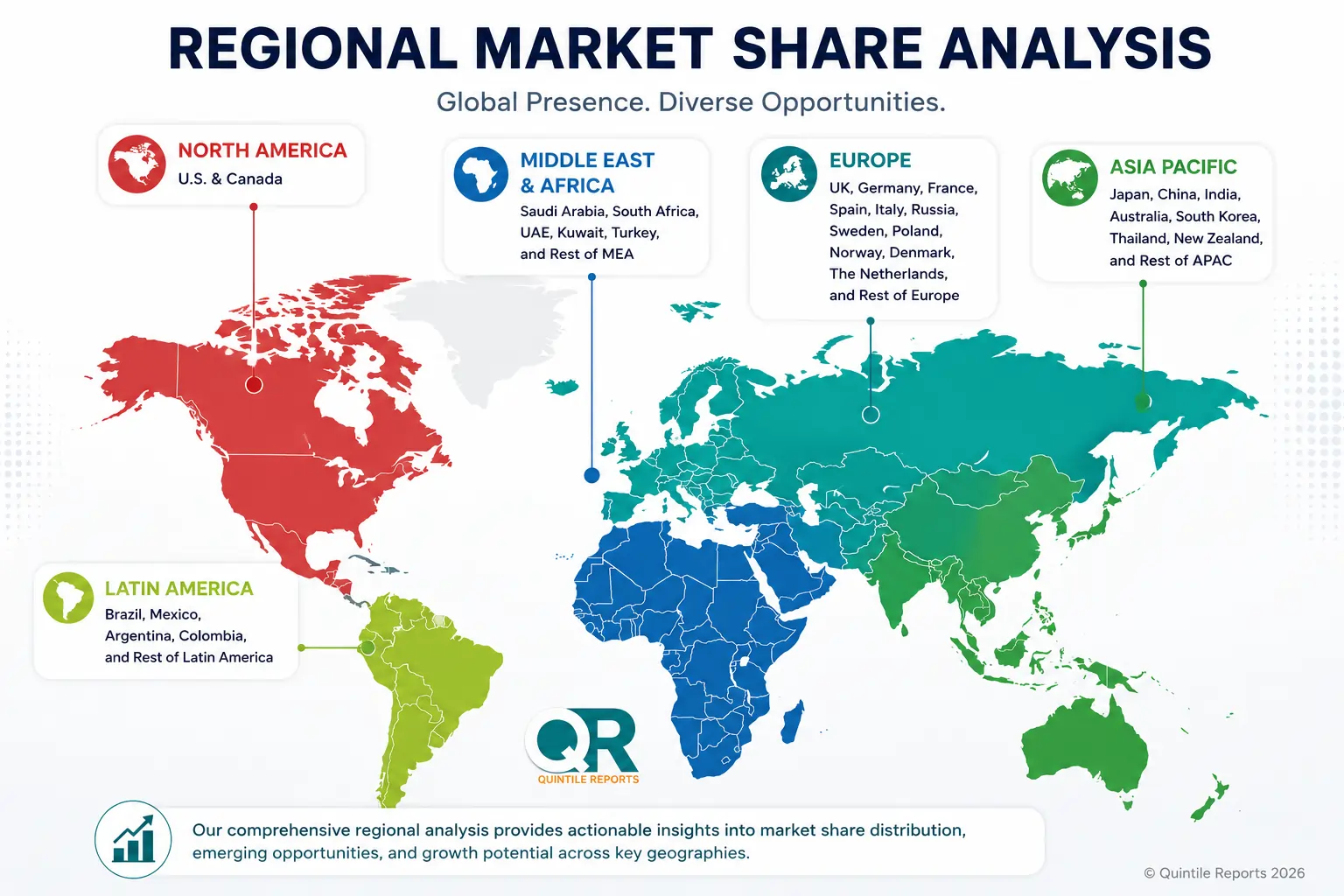
Geographically, the global Prostate Biopsy Devices Market is segmented into North America, Europe, Asia Pacific, Latin America, and Middle East & Africa. In 2025, North America accounted for approximately 38% of the global market revenue, followed by Europe with 32%, Asia Pacific with 22%, Latin America with 5%, and Middle East & Africa with 3%, according to Quintile Reports' market estimates. Regional demand is primarily influenced by prostate cancer prevalence, aging populations, healthcare infrastructure, diagnostic capabilities, reimbursement conditions, and adoption of advanced biopsy technologies.
North America represented the largest regional market, accounting for approximately 38% of global revenue in 2025. The region's dominance is supported by advanced healthcare infrastructure, high awareness of prostate cancer screening, favorable reimbursement conditions, and the presence of established medical device manufacturers. According to GLOBOCAN 2022, North America recorded approximately 255,782 new prostate cancer cases. The United States accounted for approximately 230,125 cases, making it one of the largest country-level markets globally. Increasing adoption of MRI-guided biopsy systems, transperineal biopsy procedures, and MRI-ultrasound fusion technologies is supporting market demand. Canada also contributes to regional growth through established urological care services and increasing access to advanced diagnostic procedures.
Europe accounted for approximately 32% of the global prostate biopsy devices market revenue in 2025, supported by established healthcare systems, increasing prostate cancer screening awareness, and widespread availability of advanced diagnostic technologies. According to GLOBOCAN 2022, Europe recorded approximately 473,011 new prostate cancer cases, representing one of the largest regional disease burdens worldwide. Germany reported approximately 65,269 cases, followed by France with 57,357 cases, the United Kingdom with 55,485 cases, and Italy with 38,180 cases. Increasing adoption of MRI-guided and fusion biopsy technologies, improvements in prostate cancer diagnostic pathways, and investments in specialized urological services are expected to support regional market growth.
Asia Pacific represented approximately 22% of the global market revenue in 2025 and is expected to provide significant growth opportunities during the forecast period. The region recorded approximately 386,424 new prostate cancer cases in 2022, according to GLOBOCAN estimates. China reported approximately 134,156 cases, followed by Japan with 104,318 cases and India with 37,948 cases. Rising prostate cancer incidence, an aging population, increasing healthcare expenditure, and improvements in diagnostic infrastructure are supporting market development. Furthermore, growing investments in hospitals, specialized urology centers, and advanced imaging facilities are expected to increase the adoption of biopsy needles, automated biopsy guns, and image-guided biopsy systems across emerging economies.
Latin America accounted for approximately 5% of the global prostate biopsy devices market revenue in 2025. According to GLOBOCAN 2022, the region recorded approximately 225,985 new prostate cancer cases. Brazil represented a major contributor, with approximately 102,519 new cases, highlighting its importance within the regional market. Mexico and Argentina also represent important markets due to their expanding healthcare infrastructure and increasing demand for cancer diagnostic services. Growing awareness of prostate cancer, investments in diagnostic facilities, and improving access to urological care are expected to create opportunities for biopsy device manufacturers. However, disparities in healthcare access and the limited availability of advanced imaging technologies in certain areas may affect market penetration.
Middle East & Africa accounted for approximately 3% of the global prostate biopsy devices market revenue in 2025. The region is witnessing gradual market development supported by healthcare infrastructure investments, increasing cancer awareness, and expanding diagnostic capabilities. South Africa represents an important country-level market, recording approximately 15,060 new prostate cancer cases in 2022, according to GLOBOCAN estimates. Saudi Arabia and the UAE are also emerging markets due to investments in specialized hospitals, oncology services, and advanced diagnostic infrastructure. Increasing availability of prostate cancer screening, improvements in urological care, and growing adoption of minimally invasive diagnostic procedures are expected to support regional market expansion. However, limited access to advanced biopsy technologies and disparities in healthcare infrastructure remain key challenges across several countries.
The global Prostate Biopsy Devices Market is projected to grow from USD 887.35 million in 2026 to USD 2.12 billion by 2036, registering a CAGR of 9.10% during 2026-2036. Market expansion is expected to be driven by the increasing prevalence of prostate cancer, growing demand for early and accurate diagnosis, an aging male population, and continuous advancements in biopsy technologies. The increasing adoption of transperineal biopsy procedures, MRI-ultrasound fusion systems, and advanced ultrasound-guided equipment is expected to create significant opportunities for market participants. Furthermore, rising investments in healthcare infrastructure, expanding urology services, and growing awareness of prostate cancer screening are expected to strengthen demand across developed and emerging economies. North America is expected to maintain a significant market position, while Asia Pacific is likely to offer attractive growth opportunities due to its large patient population and improving access to advanced diagnostic services. Manufacturers focusing on product innovation, procedural accuracy, infection prevention, and cost-effective biopsy solutions are likely to strengthen their competitive positioning throughout the forecast period.
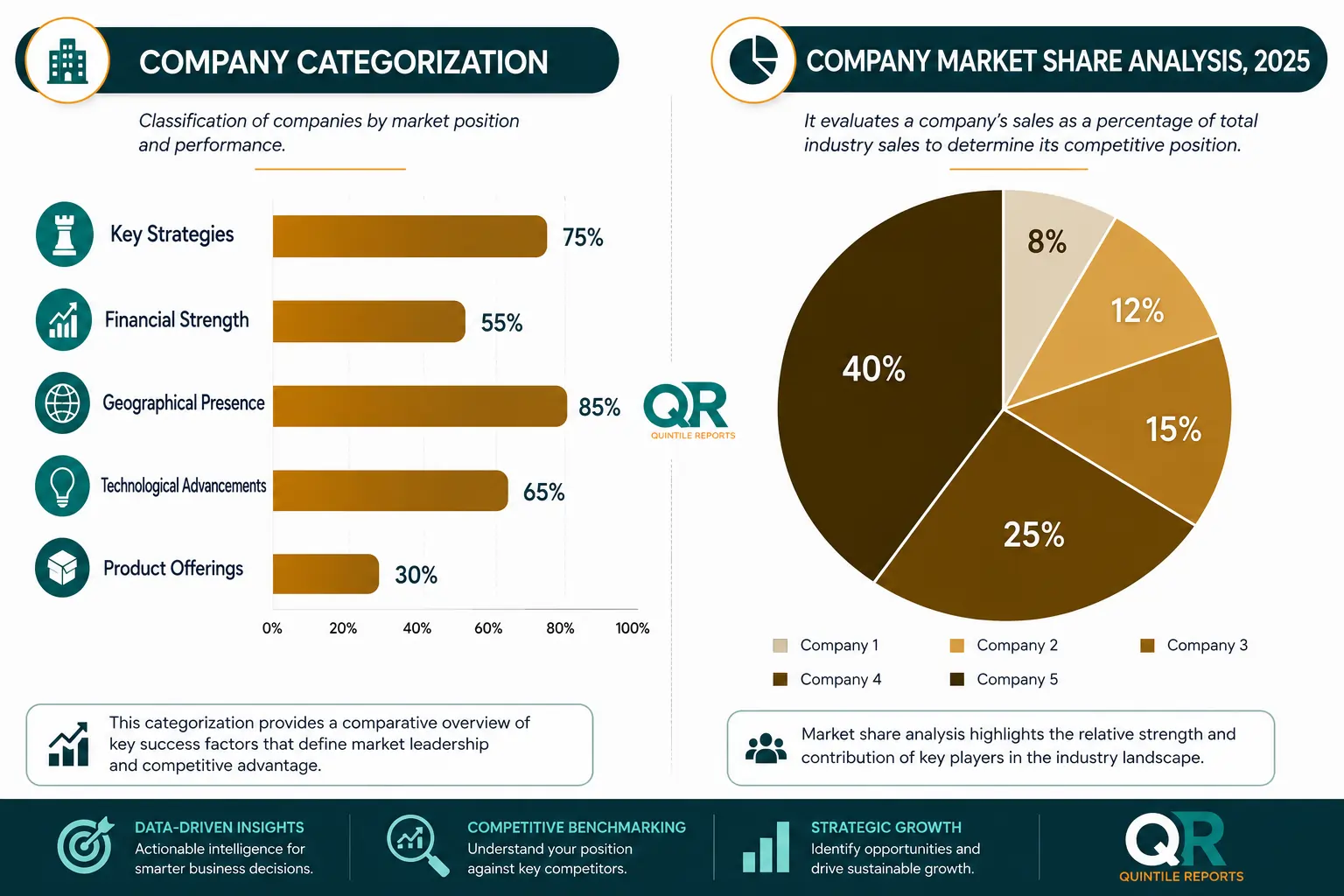
The global market is characterized by the presence of established medical device manufacturers, specialized interventional product developers, and companies offering comprehensive healthcare solutions. Competition is primarily driven by product innovation, procedural safety, clinical reliability, manufacturing capabilities, regulatory compliance, distribution networks, and the ability to address evolving requirements across hospitals, diagnostic centers, and specialty healthcare facilities.
Leading companies such as BD, Boston Scientific, Cook Medical, Medtronic, and Terumo Corporation leverage their extensive medical technology portfolios, established customer relationships, and global commercial presence to strengthen their competitive positions. Meanwhile, Argon Medical Devices, INRAD Inc., UROMED, Mermaid Medical, SOMATEX Medical Technologies, and STERYLAB contribute through specialized product offerings and focused expertise in particular medical device categories.
Market participants are also focusing on strengthening their competitive differentiation through continuous product development, improvements in device design, enhanced material performance, and the introduction of solutions that support minimally invasive procedures. The growing importance of physician preferences, product consistency, patient safety, and operational efficiency is encouraging manufacturers to invest in research and development while expanding their product portfolios.
Furthermore, companies are pursuing strategic initiatives such as geographic expansion, partnerships with healthcare providers, distribution agreements, product approvals, and portfolio diversification to improve market penetration. While larger manufacturers benefit from established global infrastructure and broader product offerings, specialized companies can compete through application-specific expertise, product customization, and responsiveness to niche clinical requirements.
Overall, the competitive environment is shaped by a combination of technological advancement, product differentiation, regulatory capabilities, pricing strategies, and distribution strength. Manufacturers that can consistently deliver reliable, clinically relevant, and cost-effective solutions while adapting to changing healthcare requirements are better positioned to strengthen their presence in the global market.
| Report Scope | Details |
| Report Version | 2026 |
| Growth Rate | CAGR of 9.1 % from 2026 to 2036 |
| Base Year | 2025 |
| Actual Estimates / Historical Data | 2017 - 2024 |
| Forecast Period | 2026 - 2036 |
| Quantitative Units | Revenue in USD million/billion & CAGR from 2026 to 2036 |
| Country Scope | North America (U.S., Canada), Europe (UK, Germany, France, Italy, Spain, Russia, Sweden, Denmark, Norway, Rest of Europe), Asia Pacific (Japan, China, India, Australia, South Korea, Thailand, Rest of Asia Pacific), Latin America (Brazil, Mexico, Argentina, Colombia, Rest of Latin America), Middle East & Africa (South Africa, Saudi Arabia, UAE, Kuwait, Rest of Middle East & Africa). |
| The Segment Covered by Product Type |
|
| The Segment Covered by Procedure Type |
|
| Companies Covered |
|
| Report Coverage | Revenue forecast, company share, competitive landscape, growth factors, technology trends, and regional analysis |
| Free Customization Scope (Equivalent to 5 Analyst Working Days) | If you require additional insights beyond the current scope, our analysts can customize the report to meet your specific business needs. |

Table 1 List of Abbreviation and Acronyms
Table 2 List of Sources
Table 3 North America Prostate Biopsy Devices Market, by Segment Analysis, (USD Million) 2017-2036
Table 4 North America Prostate Biopsy Devices Market, by Region, (USD Million) 2017-2036
Table 5 U.S. Prostate Biopsy Devices Market, by Segment Analysis, (USD Million) 2017-2036
Table 6 Canada Prostate Biopsy Devices Market, by Segment Analysis, (USD Million) 2017-2036
Table 7 Europe Prostate Biopsy Devices Market, by Segment Analysis, (USD Million) 2017-2036
Table 8 Europe Prostate Biopsy Devices Market, by Region, (USD Million) 2017-2036
Table 9 Germany Prostate Biopsy Devices Market, by Segment Analysis, (USD Million) 2017-2036
Table 10 U.K. Prostate Biopsy Devices Market, by Segment Analysis, (USD Million) 2017-2036
Table 11 France Prostate Biopsy Devices Market, by Segment Analysis, (USD Million) 2017-2036
Table 12 Italy Prostate Biopsy Devices Market, by Segment Analysis, (USD Million) 2017-2036
Table 13 Spain Prostate Biopsy Devices Market, by Segment Analysis, (USD Million) 2017-2036
Table 14 Sweden Prostate Biopsy Devices Market, by Segment Analysis, (USD Million) 2017-2036
Table 15 Denmark Prostate Biopsy Devices Market, by Segment Analysis, (USD Million) 2017-2036
Table 16 Norway Prostate Biopsy Devices Market, by Segment Analysis, (USD Million) 2017-2036
Table 17 The Netherlands Prostate Biopsy Devices Market, by Segment Analysis, (USD Million) 2017-2036
Table 18 Russia Prostate Biopsy Devices Market, by Segment Analysis, (USD Million) 2017-2036
Table 19 Asia Pacific Global Market, by Segment Analysis, (USD Million) 2017-2036
Table 20 Asia Pacific Prostate Biopsy Devices Market, by Region, (USD Million) 2017-2036
Table 21 China Prostate Biopsy Devices Market, by Segment Analysis, (USD Million) 2017-2036
Table 22 Japan Prostate Biopsy Devices Market, by Segment Analysis, (USD Million) 2017-2036
Table 23 India Prostate Biopsy Devices Market, by Segment Analysis, (USD Million) 2017-2036
Table 24 Australia Prostate Biopsy Devices Market, by Segment Analysis, (USD Million) 2017-2036
Table 25 South Korea Prostate Biopsy Devices Market, by Segment Analysis, (USD Million) 2017-2036
Table 26 Thailand Prostate Biopsy Devices Market, by Segment Analysis, (USD Million) 2017-2036
Table 27 Latin America Prostate Biopsy Devices Market, by Segment Analysis, (USD Million) 2017-2036
Table 28 Latin America Prostate Biopsy Devices Market, by Region, (USD Million) 2017-2036
Table 29 Brazil Prostate Biopsy Devices Market, by Segment Analysis, (USD Million) 2017-2036
Table 30 Mexico Prostate Biopsy Devices Market, by Segment Analysis, (USD Million) 2017-2036
Table 31 Argentina Prostate Biopsy Devices Market, by Segment Analysis, (USD Million) 2017-2036
Table 32 Middle East and Africa Prostate Biopsy Devices Market, by Segment Analysis, (USD Million) 2017-2036
Table 33 Middle East and Africa Prostate Biopsy Devices Market, by Region, (USD Million) 2017-2036
Table 34 South Africa Prostate Biopsy Devices Market, by Segment Analysis, (USD Million) 2017-2036
Table 35 Saudi Arabia Prostate Biopsy Devices Market, by Segment Analysis, (USD Million) 2017-2036
Table 36 UAE Prostate Biopsy Devices Market, by Segment Analysis, (USD Million) 2017-2036
Table 37 Kuwait Prostate Biopsy Devices Market, by Segment Analysis, (USD Million) 2017-2036
Table 38 Turkey Prostate Biopsy Devices Market, by Segment Analysis, (USD Million) 2017-2036
Fig.1 Market Research Process
Fig.2 Market Research Approaches
Fig.3 Global Prostate Biopsy Devices Market: Market Scenario
Fig.4 Global Prostate Biopsy Devices Market Competitive Outlook
Fig.5 Global Prostate Biopsy Devices Market Driver Analysis
Fig.6 Global Prostate Biopsy Devices Market Restraint Analysis
Fig.7 Global Prostate Biopsy Devices Market Opportunity Analysis
Fig.8 Global Prostate Biopsy Devices Market Trends Analysis
Fig.9 Global Prostate Biopsy Devices Market: Segment Analysis (Based on the Scope)
Fig.10 Global Prostate Biopsy Devices Market: Regional Analysis
Fig.11 Global Market Shares and Leading Market Players
Fig.12 North America Market Share and Leading Players
Fig.13 Europe Market Share and Leading Players
Fig.14 Asia Pacific Market Share and Leading Players
Fig.15 Latin America Market Share and Leading Players
Fig.16 Middle East & Africa Market Share and Leading Players
Fig.17 North America, by Country
Fig.18 North America
Fig.19 North America Market Estimates and Forecast, 2017-2036
Fig.20 U.S.
Fig.21 Canada
Fig.22 Europe
Fig.23 Europe Market Estimates and Forecast, 2017-2036
Fig.24 U.K.
Fig.25 Germany
Fig.26 France
Fig.27 Italy
Fig.28 Spain
Fig.29 Sweden
Fig.30 Denmark
Fig.31 Norway
Fig.32 The Netherlands
Fig.33 Russia
Fig.34 Asia Pacific
Fig.35 Asia Pacific Market Estimates and Forecast, 2017-2036
Fig.36 China
Fig.37 Japan
Fig.38 India
Fig.39 Australia
Fig.40 South Korea
Fig.41 Thailand
Fig.42 Latin America
Fig.43 Latin America Market Estimates and Forecast, 2017-2036
Fig.44 Brazil
Fig.45 Mexico
Fig.46 Argentina
Fig.47 Colombia
Fig.48 Middle East and Africa
Fig.49 Middle East and Africa Market Estimates and Forecast, 2017-2036
Fig.50 Saudi Arabia
Fig.51 South Africa
Fig.52 UAE
Fig.53 Kuwait
Fig.54 Turkey
Table 1 List of Abbreviation and Acronyms
Table 2 List of Sources
Table 3 North America Prostate Biopsy Devices Market, by Segment Analysis, (USD Million) 2017-2036
Table 4 North America Prostate Biopsy Devices Market, by Region, (USD Million) 2017-2036
Table 5 U.S. Prostate Biopsy Devices Market, by Segment Analysis, (USD Million) 2017-2036
Table 6 Canada Prostate Biopsy Devices Market, by Segment Analysis, (USD Million) 2017-2036
Table 7 Europe Prostate Biopsy Devices Market, by Segment Analysis, (USD Million) 2017-2036
Table 8 Europe Prostate Biopsy Devices Market, by Region, (USD Million) 2017-2036
Table 9 Germany Prostate Biopsy Devices Market, by Segment Analysis, (USD Million) 2017-2036
Table 10 U.K. Prostate Biopsy Devices Market, by Segment Analysis, (USD Million) 2017-2036
Table 11 France Prostate Biopsy Devices Market, by Segment Analysis, (USD Million) 2017-2036
Table 12 Italy Prostate Biopsy Devices Market, by Segment Analysis, (USD Million) 2017-2036
Table 13 Spain Prostate Biopsy Devices Market, by Segment Analysis, (USD Million) 2017-2036
Table 14 Sweden Prostate Biopsy Devices Market, by Segment Analysis, (USD Million) 2017-2036
Table 15 Denmark Prostate Biopsy Devices Market, by Segment Analysis, (USD Million) 2017-2036
Table 16 Norway Prostate Biopsy Devices Market, by Segment Analysis, (USD Million) 2017-2036
Table 17 The Netherlands Prostate Biopsy Devices Market, by Segment Analysis, (USD Million) 2017-2036
Table 18 Russia Prostate Biopsy Devices Market, by Segment Analysis, (USD Million) 2017-2036
Table 19 Asia Pacific Global Market, by Segment Analysis, (USD Million) 2017-2036
Table 20 Asia Pacific Prostate Biopsy Devices Market, by Region, (USD Million) 2017-2036
Table 21 China Prostate Biopsy Devices Market, by Segment Analysis, (USD Million) 2017-2036
Table 22 Japan Prostate Biopsy Devices Market, by Segment Analysis, (USD Million) 2017-2036
Table 23 India Prostate Biopsy Devices Market, by Segment Analysis, (USD Million) 2017-2036
Table 24 Australia Prostate Biopsy Devices Market, by Segment Analysis, (USD Million) 2017-2036
Table 25 South Korea Prostate Biopsy Devices Market, by Segment Analysis, (USD Million) 2017-2036
Table 26 Thailand Prostate Biopsy Devices Market, by Segment Analysis, (USD Million) 2017-2036
Table 27 Latin America Prostate Biopsy Devices Market, by Segment Analysis, (USD Million) 2017-2036
Table 28 Latin America Prostate Biopsy Devices Market, by Region, (USD Million) 2017-2036
Table 29 Brazil Prostate Biopsy Devices Market, by Segment Analysis, (USD Million) 2017-2036
Table 30 Mexico Prostate Biopsy Devices Market, by Segment Analysis, (USD Million) 2017-2036
Table 31 Argentina Prostate Biopsy Devices Market, by Segment Analysis, (USD Million) 2017-2036
Table 32 Middle East and Africa Prostate Biopsy Devices Market, by Segment Analysis, (USD Million) 2017-2036
Table 33 Middle East and Africa Prostate Biopsy Devices Market, by Region, (USD Million) 2017-2036
Table 34 South Africa Prostate Biopsy Devices Market, by Segment Analysis, (USD Million) 2017-2036
Table 35 Saudi Arabia Prostate Biopsy Devices Market, by Segment Analysis, (USD Million) 2017-2036
Table 36 UAE Prostate Biopsy Devices Market, by Segment Analysis, (USD Million) 2017-2036
Table 37 Kuwait Prostate Biopsy Devices Market, by Segment Analysis, (USD Million) 2017-2036
Table 38 Turkey Prostate Biopsy Devices Market, by Segment Analysis, (USD Million) 2017-2036
Fig.1 Market Research Process
Fig.2 Market Research Approaches
Fig.3 Global Prostate Biopsy Devices Market: Market Scenario
Fig.4 Global Prostate Biopsy Devices Market Competitive Outlook
Fig.5 Global Prostate Biopsy Devices Market Driver Analysis
Fig.6 Global Prostate Biopsy Devices Market Restraint Analysis
Fig.7 Global Prostate Biopsy Devices Market Opportunity Analysis
Fig.8 Global Prostate Biopsy Devices Market Trends Analysis
Fig.9 Global Prostate Biopsy Devices Market: Segment Analysis (Based on the Scope)
Fig.10 Global Prostate Biopsy Devices Market: Regional Analysis
Fig.11 Global Market Shares and Leading Market Players
Fig.12 North America Market Share and Leading Players
Fig.13 Europe Market Share and Leading Players
Fig.14 Asia Pacific Market Share and Leading Players
Fig.15 Latin America Market Share and Leading Players
Fig.16 Middle East & Africa Market Share and Leading Players
Fig.17 North America, by Country
Fig.18 North America
Fig.19 North America Market Estimates and Forecast, 2017-2036
Fig.20 U.S.
Fig.21 Canada
Fig.22 Europe
Fig.23 Europe Market Estimates and Forecast, 2017-2036
Fig.24 U.K.
Fig.25 Germany
Fig.26 France
Fig.27 Italy
Fig.28 Spain
Fig.29 Sweden
Fig.30 Denmark
Fig.31 Norway
Fig.32 The Netherlands
Fig.33 Russia
Fig.34 Asia Pacific
Fig.35 Asia Pacific Market Estimates and Forecast, 2017-2036
Fig.36 China
Fig.37 Japan
Fig.38 India
Fig.39 Australia
Fig.40 South Korea
Fig.41 Thailand
Fig.42 Latin America
Fig.43 Latin America Market Estimates and Forecast, 2017-2036
Fig.44 Brazil
Fig.45 Mexico
Fig.46 Argentina
Fig.47 Colombia
Fig.48 Middle East and Africa
Fig.49 Middle East and Africa Market Estimates and Forecast, 2017-2036
Fig.50 Saudi Arabia
Fig.51 South Africa
Fig.52 UAE
Fig.53 Kuwait
Fig.54 Turkey
The global Prostate Biopsy Devices Market is witnessing steady growth, driven by the rising prevalence of prostate cancer, increasing demand for early and accurate cancer diagnosis, and advancements in image-guided biopsy technologies. The market is estimated to reach USD 887.35 million in 2026 and is projected to reach USD 2.12 billion by 2036, according to Quintile Reports' market estimates. Increasing adoption of transperineal biopsy procedures, MRI-ultrasound fusion systems, automated biopsy guns, and advanced tissue sampling technologies is expected to support market expansion during the forecast period.
The Prostate Biopsy Devices Market encompasses revenues generated from biopsy needles, biopsy guns, needle guides, biopsy systems, biopsy needle kits, and related accessories used in prostate tissue sampling and cancer diagnosis. The market covers different procedural approaches, guidance technologies, product configurations, usage categories, end users, and distribution channels across global healthcare markets.
Prostate biopsy is a diagnostic procedure involving the collection of tissue samples from the prostate gland for pathological examination. Common approaches include transrectal biopsy, transperineal biopsy, systematic biopsy, targeted biopsy, and MRI-ultrasound fusion-guided biopsy. Advancements in biopsy instruments, multiparametric MRI, ultrasound imaging, and image-fusion technologies are contributing to improvements in procedural precision and diagnostic capabilities.
North America represents a significant regional market, supported by advanced healthcare infrastructure, established urology services, and increasing adoption of advanced diagnostic technologies. Meanwhile, Asia Pacific offers growth opportunities due to rising healthcare expenditure, expanding diagnostic infrastructure, increasing cancer awareness, and improving access to specialized urological services.
The market size estimates presented in this report are based on Quintile Reports' defined market scope, covering prostate biopsy devices and related products across specified product types, procedure categories, end users, usage categories, and geographic markets. Revenue estimates reflect the defined product and geographic scope of the study and may differ from other published studies because of variations in market definitions, product inclusion, geographic coverage, pricing assumptions, and forecasting methodologies.
The increasing adoption of transperineal prostate biopsy is emerging as an important trend in the global market. This approach provides access to different regions of the prostate while reducing exposure to rectal bacteria compared with the transrectal route. Growing emphasis on infection prevention, procedural safety, and improved access to anterior prostate lesions is encouraging healthcare providers to consider transperineal biopsy systems. These developments are creating opportunities for manufacturers offering specialized biopsy needles, needle guides, and compatible biopsy equipment.
The integration of multiparametric MRI with real-time ultrasound imaging is improving the targeting of suspicious prostate lesions. MRI-ultrasound fusion technology enables clinicians to combine MRI-based anatomical information with real-time ultrasound guidance, supporting targeted tissue sampling. Increasing adoption of advanced imaging systems across specialized urology centers is expected to support demand for compatible biopsy devices and image-guided procedural solutions.
Manufacturers are focusing on improvements in biopsy needle design, automated biopsy guns, needle positioning systems, and supporting accessories. These developments aim to improve tissue sampling consistency, procedural control, device reliability, and compatibility with modern imaging technologies. Continuous product development is also encouraging the introduction of biopsy solutions designed to meet the changing requirements of healthcare professionals.
Healthcare providers are increasingly emphasizing diagnostic approaches that support procedural efficiency, patient safety, and improved clinical workflows. This is encouraging the development and adoption of advanced biopsy instruments and image-guided solutions across hospitals, ambulatory surgical centers, and specialized urology facilities. The growing preference for efficient outpatient diagnostic procedures is also creating opportunities for medical device manufacturers.
The increasing prevalence of prostate cancer worldwide represents a major factor supporting the growth of the global prostate biopsy devices market. Prostate cancer remains one of the most frequently diagnosed cancers among men, particularly in the aging male population. Increasing life expectancy, greater awareness of cancer screening, and improvements in diagnostic capabilities are contributing to higher demand for prostate cancer evaluation and tissue sampling procedures. As healthcare providers emphasize early detection and accurate diagnosis, the adoption of advanced prostate biopsy devices is increasing across hospitals, urology clinics, and specialized diagnostic centers.
Furthermore, improvements in prostate-specific antigen (PSA) testing, multiparametric MRI, and image-guided biopsy procedures are strengthening the role of biopsy devices in prostate cancer diagnosis. Growing adoption of transperineal biopsy techniques, MRI-guided biopsy systems, and MRI-ultrasound fusion technologies is enabling clinicians to obtain more precise tissue samples while improving access to suspicious prostate lesions. Countries such as the United States, Germany, the United Kingdom, China, Japan, and India represent important markets due to their expanding healthcare infrastructure, growing awareness of prostate cancer, and increasing availability of advanced urological diagnostic services.
The global Prostate Biopsy Devices Market is segmented based on product type, procedure type, guidance technology, usage, end user, and distribution channel. These segments reflect differences in biopsy equipment requirements, procedural approaches, imaging technologies, product utilization patterns, healthcare delivery settings, and purchasing preferences.
Based on product type, the market is segmented into Biopsy Needles, Biopsy Guns, Needle Guides, Biopsy Needle Kits, and Biopsy Accessories. Biopsy needles represent an essential product category as they are directly involved in obtaining prostate tissue samples for pathological examination. Growing demand for accurate tissue sampling, availability of different needle configurations, and increasing adoption of image-guided biopsy procedures are supporting demand for advanced biopsy needles.
Biopsy Guns are widely used in automated and semi-automated tissue sampling procedures. These devices facilitate controlled needle deployment and consistent tissue collection, supporting procedural efficiency and accuracy. Needle Guides assist healthcare professionals in positioning biopsy needles during ultrasound-guided and other image-guided procedures. Increasing adoption of advanced imaging technologies is supporting the demand for compatible needle guidance systems. The Accessories segment includes supporting components and consumables required for biopsy procedures, including adapters, guide attachments, and related equipment.
Based on procedure type, the market is segmented into Transrectal Prostate Biopsy, Transperineal Prostate Biopsy, MRI Fusion-Guided Biopsy, Ultrasound-Guided Biopsy, MRI-Guided Biopsy, Systematic Prostate Biopsy, and Targeted Prostate Biopsy. Transrectal prostate biopsy involves collecting tissue samples through the rectal wall, while transperineal biopsy accesses the prostate through the perineal region. Both approaches are used for prostate tissue sampling, with clinical selection influenced by patient characteristics, procedural requirements, and institutional practices.
MRI Fusion-Guided Biopsy combines previously acquired MRI images with real-time ultrasound imaging to support targeted sampling of suspicious prostate lesions. Ultrasound-Guided Biopsy uses ultrasound imaging for real-time visualization and needle positioning, while MRI-Guided Biopsy uses MRI imaging to guide tissue collection. In terms of sampling strategy, Systematic Prostate Biopsy involves collecting samples from predefined prostate regions, whereas Targeted Prostate Biopsy focuses on suspicious lesions identified through imaging.
Based on guidance technology, the market is segmented into Ultrasound Guidance, MRI Guidance, MRI-Ultrasound Fusion Guidance, and CT Guidance. Ultrasound Guidance remains an established technology for prostate biopsy procedures because it enables real-time visualization of the prostate and biopsy needle positioning. Its relatively broad availability and cost-effectiveness support its use across hospitals and urology clinics.
MRI Guidance enables clinicians to identify suspicious prostate lesions using detailed soft tissue imaging. MRI-Ultrasound Fusion Guidance combines MRI-based lesion identification with real-time ultrasound imaging, supporting more precise targeted biopsies. Increasing adoption of multiparametric MRI and advanced image-fusion technologies is expected to support this segment. CT guidance represents a limited application within prostate biopsy compared with ultrasound and MRI-based approaches.
Based on usage, the market is divided into Disposable and Reusable devices. Disposable Devices include single-use biopsy needles, needle guides, and related components designed for use in individual procedures. These products help healthcare facilities reduce cross-contamination risks and simplify sterilization requirements. Increasing emphasis on infection prevention and hospital hygiene protocols is supporting demand for disposable biopsy products.
Reusable Devices include biopsy guns, supporting instruments, and compatible equipment designed for repeated use following appropriate cleaning, disinfection, and sterilization procedures. Their adoption is supported by long-term cost considerations and established procurement practices across hospitals and specialized healthcare facilities. Demand for reusable devices is influenced by product durability, maintenance requirements, sterilization protocols, and institutional purchasing preferences.
Based on end user, the market is segmented into Hospitals, Urology Clinics, Ambulatory Surgical Centers, and Diagnostic Centers. Hospitals represent an important end-user category due to their established urology departments, advanced diagnostic infrastructure, and ability to perform complex prostate biopsy procedures. The availability of specialized medical professionals, imaging equipment, and pathological examination services supports demand for prostate biopsy devices across hospital settings.
Urology Clinics are important users of prostate biopsy equipment because of their specialization in prostate-related conditions, cancer screening, and diagnostic procedures. Increasing patient preference for specialized urological consultation and growing adoption of advanced biopsy technologies are supporting this segment. Ambulatory Surgical Centers are gaining relevance due to the increasing shift toward outpatient procedures, shorter recovery periods, and cost-efficient healthcare delivery. Diagnostic Centers contribute to market demand through the availability of advanced imaging facilities, diagnostic evaluation services, and partnerships with urologists and hospitals.
Based on distribution channel, the market is segmented into Direct Sales, Medical Device Distributors, and Online Sales. Direct Sales represent an important channel through which manufacturers supply biopsy devices directly to hospitals, large healthcare networks, and specialized medical facilities. This channel enables manufacturers to establish institutional relationships, provide product demonstrations, and offer technical support.
Medical Device Distributors play an important role in expanding product availability across regional and local healthcare markets. Distributors support procurement, inventory management, logistics, and after-sales services, particularly in emerging economies. Online Sales are gradually gaining relevance as healthcare procurement platforms and digital purchasing channels expand, providing healthcare institutions and authorized buyers with additional product sourcing options.
Geographically, the global Prostate Biopsy Devices Market is segmented into North America, Europe, Asia Pacific, Latin America, and Middle East & Africa. In 2025, North America accounted for approximately 38% of the global market revenue, followed by Europe with 32%, Asia Pacific with 22%, Latin America with 5%, and Middle East & Africa with 3%, according to Quintile Reports' market estimates. Regional demand is primarily influenced by prostate cancer prevalence, aging populations, healthcare infrastructure, diagnostic capabilities, reimbursement conditions, and adoption of advanced biopsy technologies.
North America represented the largest regional market, accounting for approximately 38% of global revenue in 2025. The region's dominance is supported by advanced healthcare infrastructure, high awareness of prostate cancer screening, favorable reimbursement conditions, and the presence of established medical device manufacturers. According to GLOBOCAN 2022, North America recorded approximately 255,782 new prostate cancer cases. The United States accounted for approximately 230,125 cases, making it one of the largest country-level markets globally. Increasing adoption of MRI-guided biopsy systems, transperineal biopsy procedures, and MRI-ultrasound fusion technologies is supporting market demand. Canada also contributes to regional growth through established urological care services and increasing access to advanced diagnostic procedures.
Europe accounted for approximately 32% of the global prostate biopsy devices market revenue in 2025, supported by established healthcare systems, increasing prostate cancer screening awareness, and widespread availability of advanced diagnostic technologies. According to GLOBOCAN 2022, Europe recorded approximately 473,011 new prostate cancer cases, representing one of the largest regional disease burdens worldwide. Germany reported approximately 65,269 cases, followed by France with 57,357 cases, the United Kingdom with 55,485 cases, and Italy with 38,180 cases. Increasing adoption of MRI-guided and fusion biopsy technologies, improvements in prostate cancer diagnostic pathways, and investments in specialized urological services are expected to support regional market growth.
Asia Pacific represented approximately 22% of the global market revenue in 2025 and is expected to provide significant growth opportunities during the forecast period. The region recorded approximately 386,424 new prostate cancer cases in 2022, according to GLOBOCAN estimates. China reported approximately 134,156 cases, followed by Japan with 104,318 cases and India with 37,948 cases. Rising prostate cancer incidence, an aging population, increasing healthcare expenditure, and improvements in diagnostic infrastructure are supporting market development. Furthermore, growing investments in hospitals, specialized urology centers, and advanced imaging facilities are expected to increase the adoption of biopsy needles, automated biopsy guns, and image-guided biopsy systems across emerging economies.
Latin America accounted for approximately 5% of the global prostate biopsy devices market revenue in 2025. According to GLOBOCAN 2022, the region recorded approximately 225,985 new prostate cancer cases. Brazil represented a major contributor, with approximately 102,519 new cases, highlighting its importance within the regional market. Mexico and Argentina also represent important markets due to their expanding healthcare infrastructure and increasing demand for cancer diagnostic services. Growing awareness of prostate cancer, investments in diagnostic facilities, and improving access to urological care are expected to create opportunities for biopsy device manufacturers. However, disparities in healthcare access and the limited availability of advanced imaging technologies in certain areas may affect market penetration.
Middle East & Africa accounted for approximately 3% of the global prostate biopsy devices market revenue in 2025. The region is witnessing gradual market development supported by healthcare infrastructure investments, increasing cancer awareness, and expanding diagnostic capabilities. South Africa represents an important country-level market, recording approximately 15,060 new prostate cancer cases in 2022, according to GLOBOCAN estimates. Saudi Arabia and the UAE are also emerging markets due to investments in specialized hospitals, oncology services, and advanced diagnostic infrastructure. Increasing availability of prostate cancer screening, improvements in urological care, and growing adoption of minimally invasive diagnostic procedures are expected to support regional market expansion. However, limited access to advanced biopsy technologies and disparities in healthcare infrastructure remain key challenges across several countries.
The global Prostate Biopsy Devices Market is projected to grow from USD 887.35 million in 2026 to USD 2.12 billion by 2036, registering a CAGR of 9.10% during 2026-2036. Market expansion is expected to be driven by the increasing prevalence of prostate cancer, growing demand for early and accurate diagnosis, an aging male population, and continuous advancements in biopsy technologies. The increasing adoption of transperineal biopsy procedures, MRI-ultrasound fusion systems, and advanced ultrasound-guided equipment is expected to create significant opportunities for market participants. Furthermore, rising investments in healthcare infrastructure, expanding urology services, and growing awareness of prostate cancer screening are expected to strengthen demand across developed and emerging economies. North America is expected to maintain a significant market position, while Asia Pacific is likely to offer attractive growth opportunities due to its large patient population and improving access to advanced diagnostic services. Manufacturers focusing on product innovation, procedural accuracy, infection prevention, and cost-effective biopsy solutions are likely to strengthen their competitive positioning throughout the forecast period.
The global market is characterized by the presence of established medical device manufacturers, specialized interventional product developers, and companies offering comprehensive healthcare solutions. Competition is primarily driven by product innovation, procedural safety, clinical reliability, manufacturing capabilities, regulatory compliance, distribution networks, and the ability to address evolving requirements across hospitals, diagnostic centers, and specialty healthcare facilities.
Leading companies such as BD, Boston Scientific, Cook Medical, Medtronic, and Terumo Corporation leverage their extensive medical technology portfolios, established customer relationships, and global commercial presence to strengthen their competitive positions. Meanwhile, Argon Medical Devices, INRAD Inc., UROMED, Mermaid Medical, SOMATEX Medical Technologies, and STERYLAB contribute through specialized product offerings and focused expertise in particular medical device categories.
Market participants are also focusing on strengthening their competitive differentiation through continuous product development, improvements in device design, enhanced material performance, and the introduction of solutions that support minimally invasive procedures. The growing importance of physician preferences, product consistency, patient safety, and operational efficiency is encouraging manufacturers to invest in research and development while expanding their product portfolios.
Furthermore, companies are pursuing strategic initiatives such as geographic expansion, partnerships with healthcare providers, distribution agreements, product approvals, and portfolio diversification to improve market penetration. While larger manufacturers benefit from established global infrastructure and broader product offerings, specialized companies can compete through application-specific expertise, product customization, and responsiveness to niche clinical requirements.
Overall, the competitive environment is shaped by a combination of technological advancement, product differentiation, regulatory capabilities, pricing strategies, and distribution strength. Manufacturers that can consistently deliver reliable, clinically relevant, and cost-effective solutions while adapting to changing healthcare requirements are better positioned to strengthen their presence in the global market.
| Report Scope | Details |
| Report Version | 2026 |
| Growth Rate | CAGR of 9.1 % from 2026 to 2036 |
| Base Year | 2025 |
| Actual Estimates / Historical Data | 2017 - 2024 |
| Forecast Period | 2026 - 2036 |
| Quantitative Units | Revenue in USD million/billion & CAGR from 2026 to 2036 |
| Country Scope | North America (U.S., Canada), Europe (UK, Germany, France, Italy, Spain, Russia, Sweden, Denmark, Norway, Rest of Europe), Asia Pacific (Japan, China, India, Australia, South Korea, Thailand, Rest of Asia Pacific), Latin America (Brazil, Mexico, Argentina, Colombia, Rest of Latin America), Middle East & Africa (South Africa, Saudi Arabia, UAE, Kuwait, Rest of Middle East & Africa). |
| The Segment Covered by Product Type |
|
| The Segment Covered by Procedure Type |
|
| Companies Covered |
|
| Report Coverage | Revenue forecast, company share, competitive landscape, growth factors, technology trends, and regional analysis |
| Free Customization Scope (Equivalent to 5 Analyst Working Days) | If you require additional insights beyond the current scope, our analysts can customize the report to meet your specific business needs. |
Table 1 List of Abbreviation and Acronyms
Table 2 List of Sources
Table 3 North America Prostate Biopsy Devices Market, by Segment Analysis, (USD Million) 2017-2036
Table 4 North America Prostate Biopsy Devices Market, by Region, (USD Million) 2017-2036
Table 5 U.S. Prostate Biopsy Devices Market, by Segment Analysis, (USD Million) 2017-2036
Table 6 Canada Prostate Biopsy Devices Market, by Segment Analysis, (USD Million) 2017-2036
Table 7 Europe Prostate Biopsy Devices Market, by Segment Analysis, (USD Million) 2017-2036
Table 8 Europe Prostate Biopsy Devices Market, by Region, (USD Million) 2017-2036
Table 9 Germany Prostate Biopsy Devices Market, by Segment Analysis, (USD Million) 2017-2036
Table 10 U.K. Prostate Biopsy Devices Market, by Segment Analysis, (USD Million) 2017-2036
Table 11 France Prostate Biopsy Devices Market, by Segment Analysis, (USD Million) 2017-2036
Table 12 Italy Prostate Biopsy Devices Market, by Segment Analysis, (USD Million) 2017-2036
Table 13 Spain Prostate Biopsy Devices Market, by Segment Analysis, (USD Million) 2017-2036
Table 14 Sweden Prostate Biopsy Devices Market, by Segment Analysis, (USD Million) 2017-2036
Table 15 Denmark Prostate Biopsy Devices Market, by Segment Analysis, (USD Million) 2017-2036
Table 16 Norway Prostate Biopsy Devices Market, by Segment Analysis, (USD Million) 2017-2036
Table 17 The Netherlands Prostate Biopsy Devices Market, by Segment Analysis, (USD Million) 2017-2036
Table 18 Russia Prostate Biopsy Devices Market, by Segment Analysis, (USD Million) 2017-2036
Table 19 Asia Pacific Global Market, by Segment Analysis, (USD Million) 2017-2036
Table 20 Asia Pacific Prostate Biopsy Devices Market, by Region, (USD Million) 2017-2036
Table 21 China Prostate Biopsy Devices Market, by Segment Analysis, (USD Million) 2017-2036
Table 22 Japan Prostate Biopsy Devices Market, by Segment Analysis, (USD Million) 2017-2036
Table 23 India Prostate Biopsy Devices Market, by Segment Analysis, (USD Million) 2017-2036
Table 24 Australia Prostate Biopsy Devices Market, by Segment Analysis, (USD Million) 2017-2036
Table 25 South Korea Prostate Biopsy Devices Market, by Segment Analysis, (USD Million) 2017-2036
Table 26 Thailand Prostate Biopsy Devices Market, by Segment Analysis, (USD Million) 2017-2036
Table 27 Latin America Prostate Biopsy Devices Market, by Segment Analysis, (USD Million) 2017-2036
Table 28 Latin America Prostate Biopsy Devices Market, by Region, (USD Million) 2017-2036
Table 29 Brazil Prostate Biopsy Devices Market, by Segment Analysis, (USD Million) 2017-2036
Table 30 Mexico Prostate Biopsy Devices Market, by Segment Analysis, (USD Million) 2017-2036
Table 31 Argentina Prostate Biopsy Devices Market, by Segment Analysis, (USD Million) 2017-2036
Table 32 Middle East and Africa Prostate Biopsy Devices Market, by Segment Analysis, (USD Million) 2017-2036
Table 33 Middle East and Africa Prostate Biopsy Devices Market, by Region, (USD Million) 2017-2036
Table 34 South Africa Prostate Biopsy Devices Market, by Segment Analysis, (USD Million) 2017-2036
Table 35 Saudi Arabia Prostate Biopsy Devices Market, by Segment Analysis, (USD Million) 2017-2036
Table 36 UAE Prostate Biopsy Devices Market, by Segment Analysis, (USD Million) 2017-2036
Table 37 Kuwait Prostate Biopsy Devices Market, by Segment Analysis, (USD Million) 2017-2036
Table 38 Turkey Prostate Biopsy Devices Market, by Segment Analysis, (USD Million) 2017-2036
Fig.1 Market Research Process
Fig.2 Market Research Approaches
Fig.3 Global Prostate Biopsy Devices Market: Market Scenario
Fig.4 Global Prostate Biopsy Devices Market Competitive Outlook
Fig.5 Global Prostate Biopsy Devices Market Driver Analysis
Fig.6 Global Prostate Biopsy Devices Market Restraint Analysis
Fig.7 Global Prostate Biopsy Devices Market Opportunity Analysis
Fig.8 Global Prostate Biopsy Devices Market Trends Analysis
Fig.9 Global Prostate Biopsy Devices Market: Segment Analysis (Based on the Scope)
Fig.10 Global Prostate Biopsy Devices Market: Regional Analysis
Fig.11 Global Market Shares and Leading Market Players
Fig.12 North America Market Share and Leading Players
Fig.13 Europe Market Share and Leading Players
Fig.14 Asia Pacific Market Share and Leading Players
Fig.15 Latin America Market Share and Leading Players
Fig.16 Middle East & Africa Market Share and Leading Players
Fig.17 North America, by Country
Fig.18 North America
Fig.19 North America Market Estimates and Forecast, 2017-2036
Fig.20 U.S.
Fig.21 Canada
Fig.22 Europe
Fig.23 Europe Market Estimates and Forecast, 2017-2036
Fig.24 U.K.
Fig.25 Germany
Fig.26 France
Fig.27 Italy
Fig.28 Spain
Fig.29 Sweden
Fig.30 Denmark
Fig.31 Norway
Fig.32 The Netherlands
Fig.33 Russia
Fig.34 Asia Pacific
Fig.35 Asia Pacific Market Estimates and Forecast, 2017-2036
Fig.36 China
Fig.37 Japan
Fig.38 India
Fig.39 Australia
Fig.40 South Korea
Fig.41 Thailand
Fig.42 Latin America
Fig.43 Latin America Market Estimates and Forecast, 2017-2036
Fig.44 Brazil
Fig.45 Mexico
Fig.46 Argentina
Fig.47 Colombia
Fig.48 Middle East and Africa
Fig.49 Middle East and Africa Market Estimates and Forecast, 2017-2036
Fig.50 Saudi Arabia
Fig.51 South Africa
Fig.52 UAE
Fig.53 Kuwait
Fig.54 Turkey
Table 1 List of Abbreviation and Acronyms
Table 2 List of Sources
Table 3 North America Prostate Biopsy Devices Market, by Segment Analysis, (USD Million) 2017-2036
Table 4 North America Prostate Biopsy Devices Market, by Region, (USD Million) 2017-2036
Table 5 U.S. Prostate Biopsy Devices Market, by Segment Analysis, (USD Million) 2017-2036
Table 6 Canada Prostate Biopsy Devices Market, by Segment Analysis, (USD Million) 2017-2036
Table 7 Europe Prostate Biopsy Devices Market, by Segment Analysis, (USD Million) 2017-2036
Table 8 Europe Prostate Biopsy Devices Market, by Region, (USD Million) 2017-2036
Table 9 Germany Prostate Biopsy Devices Market, by Segment Analysis, (USD Million) 2017-2036
Table 10 U.K. Prostate Biopsy Devices Market, by Segment Analysis, (USD Million) 2017-2036
Table 11 France Prostate Biopsy Devices Market, by Segment Analysis, (USD Million) 2017-2036
Table 12 Italy Prostate Biopsy Devices Market, by Segment Analysis, (USD Million) 2017-2036
Table 13 Spain Prostate Biopsy Devices Market, by Segment Analysis, (USD Million) 2017-2036
Table 14 Sweden Prostate Biopsy Devices Market, by Segment Analysis, (USD Million) 2017-2036
Table 15 Denmark Prostate Biopsy Devices Market, by Segment Analysis, (USD Million) 2017-2036
Table 16 Norway Prostate Biopsy Devices Market, by Segment Analysis, (USD Million) 2017-2036
Table 17 The Netherlands Prostate Biopsy Devices Market, by Segment Analysis, (USD Million) 2017-2036
Table 18 Russia Prostate Biopsy Devices Market, by Segment Analysis, (USD Million) 2017-2036
Table 19 Asia Pacific Global Market, by Segment Analysis, (USD Million) 2017-2036
Table 20 Asia Pacific Prostate Biopsy Devices Market, by Region, (USD Million) 2017-2036
Table 21 China Prostate Biopsy Devices Market, by Segment Analysis, (USD Million) 2017-2036
Table 22 Japan Prostate Biopsy Devices Market, by Segment Analysis, (USD Million) 2017-2036
Table 23 India Prostate Biopsy Devices Market, by Segment Analysis, (USD Million) 2017-2036
Table 24 Australia Prostate Biopsy Devices Market, by Segment Analysis, (USD Million) 2017-2036
Table 25 South Korea Prostate Biopsy Devices Market, by Segment Analysis, (USD Million) 2017-2036
Table 26 Thailand Prostate Biopsy Devices Market, by Segment Analysis, (USD Million) 2017-2036
Table 27 Latin America Prostate Biopsy Devices Market, by Segment Analysis, (USD Million) 2017-2036
Table 28 Latin America Prostate Biopsy Devices Market, by Region, (USD Million) 2017-2036
Table 29 Brazil Prostate Biopsy Devices Market, by Segment Analysis, (USD Million) 2017-2036
Table 30 Mexico Prostate Biopsy Devices Market, by Segment Analysis, (USD Million) 2017-2036
Table 31 Argentina Prostate Biopsy Devices Market, by Segment Analysis, (USD Million) 2017-2036
Table 32 Middle East and Africa Prostate Biopsy Devices Market, by Segment Analysis, (USD Million) 2017-2036
Table 33 Middle East and Africa Prostate Biopsy Devices Market, by Region, (USD Million) 2017-2036
Table 34 South Africa Prostate Biopsy Devices Market, by Segment Analysis, (USD Million) 2017-2036
Table 35 Saudi Arabia Prostate Biopsy Devices Market, by Segment Analysis, (USD Million) 2017-2036
Table 36 UAE Prostate Biopsy Devices Market, by Segment Analysis, (USD Million) 2017-2036
Table 37 Kuwait Prostate Biopsy Devices Market, by Segment Analysis, (USD Million) 2017-2036
Table 38 Turkey Prostate Biopsy Devices Market, by Segment Analysis, (USD Million) 2017-2036
Fig.1 Market Research Process
Fig.2 Market Research Approaches
Fig.3 Global Prostate Biopsy Devices Market: Market Scenario
Fig.4 Global Prostate Biopsy Devices Market Competitive Outlook
Fig.5 Global Prostate Biopsy Devices Market Driver Analysis
Fig.6 Global Prostate Biopsy Devices Market Restraint Analysis
Fig.7 Global Prostate Biopsy Devices Market Opportunity Analysis
Fig.8 Global Prostate Biopsy Devices Market Trends Analysis
Fig.9 Global Prostate Biopsy Devices Market: Segment Analysis (Based on the Scope)
Fig.10 Global Prostate Biopsy Devices Market: Regional Analysis
Fig.11 Global Market Shares and Leading Market Players
Fig.12 North America Market Share and Leading Players
Fig.13 Europe Market Share and Leading Players
Fig.14 Asia Pacific Market Share and Leading Players
Fig.15 Latin America Market Share and Leading Players
Fig.16 Middle East & Africa Market Share and Leading Players
Fig.17 North America, by Country
Fig.18 North America
Fig.19 North America Market Estimates and Forecast, 2017-2036
Fig.20 U.S.
Fig.21 Canada
Fig.22 Europe
Fig.23 Europe Market Estimates and Forecast, 2017-2036
Fig.24 U.K.
Fig.25 Germany
Fig.26 France
Fig.27 Italy
Fig.28 Spain
Fig.29 Sweden
Fig.30 Denmark
Fig.31 Norway
Fig.32 The Netherlands
Fig.33 Russia
Fig.34 Asia Pacific
Fig.35 Asia Pacific Market Estimates and Forecast, 2017-2036
Fig.36 China
Fig.37 Japan
Fig.38 India
Fig.39 Australia
Fig.40 South Korea
Fig.41 Thailand
Fig.42 Latin America
Fig.43 Latin America Market Estimates and Forecast, 2017-2036
Fig.44 Brazil
Fig.45 Mexico
Fig.46 Argentina
Fig.47 Colombia
Fig.48 Middle East and Africa
Fig.49 Middle East and Africa Market Estimates and Forecast, 2017-2036
Fig.50 Saudi Arabia
Fig.51 South Africa
Fig.52 UAE
Fig.53 Kuwait
Fig.54 Turkey

A license granted to one user. Rules or conditions might be applied for e.g. the use of electric files (PDFs) or printings, depending on product.
A license granted to multiple users.
A license granted to a single business site/establishment.
A license granted to all employees within organisation access to the product.
Immediate / Within 24-48 hours - Working days
Online Payments with PayPal and CCavenue
You can order a report by picking any of the payment methods which is bank wire or online payment through any Debit/Credit card or PayPal.
Hard Copy