The global Progressive Cavity Pump Market was valued at USD 4.89 billion in 2026 and is projected to reach USD 9.05 billion by 2036, expanding at a CAGR of 5.89% during the forecast period. Market growth is being fueled by increasing demand for efficient fluid handling systems across industries that require precise transfer of highly viscous, abrasive, corrosive, and shear-sensitive materials. Progressive cavity pumps have established themselves as critical equipment in wastewater treatment facilities, oil and gas operations, chemical processing plants, food and beverage manufacturing units, pulp and paper mills, and mining applications.
The ability of these pumps to deliver consistent flow rates with minimal pulsation, even under challenging operating conditions, has significantly enhanced their adoption across industrial sectors. As global industries increasingly prioritize operational efficiency, process automation, and sustainability, progressive cavity pumps are gaining traction due to their reliability, accurate metering capabilities, and compatibility with advanced monitoring technologies. Furthermore, growing investments in municipal infrastructure, environmental compliance initiatives, and industrial modernization programs are expected to generate substantial opportunities for market participants over the next decade.
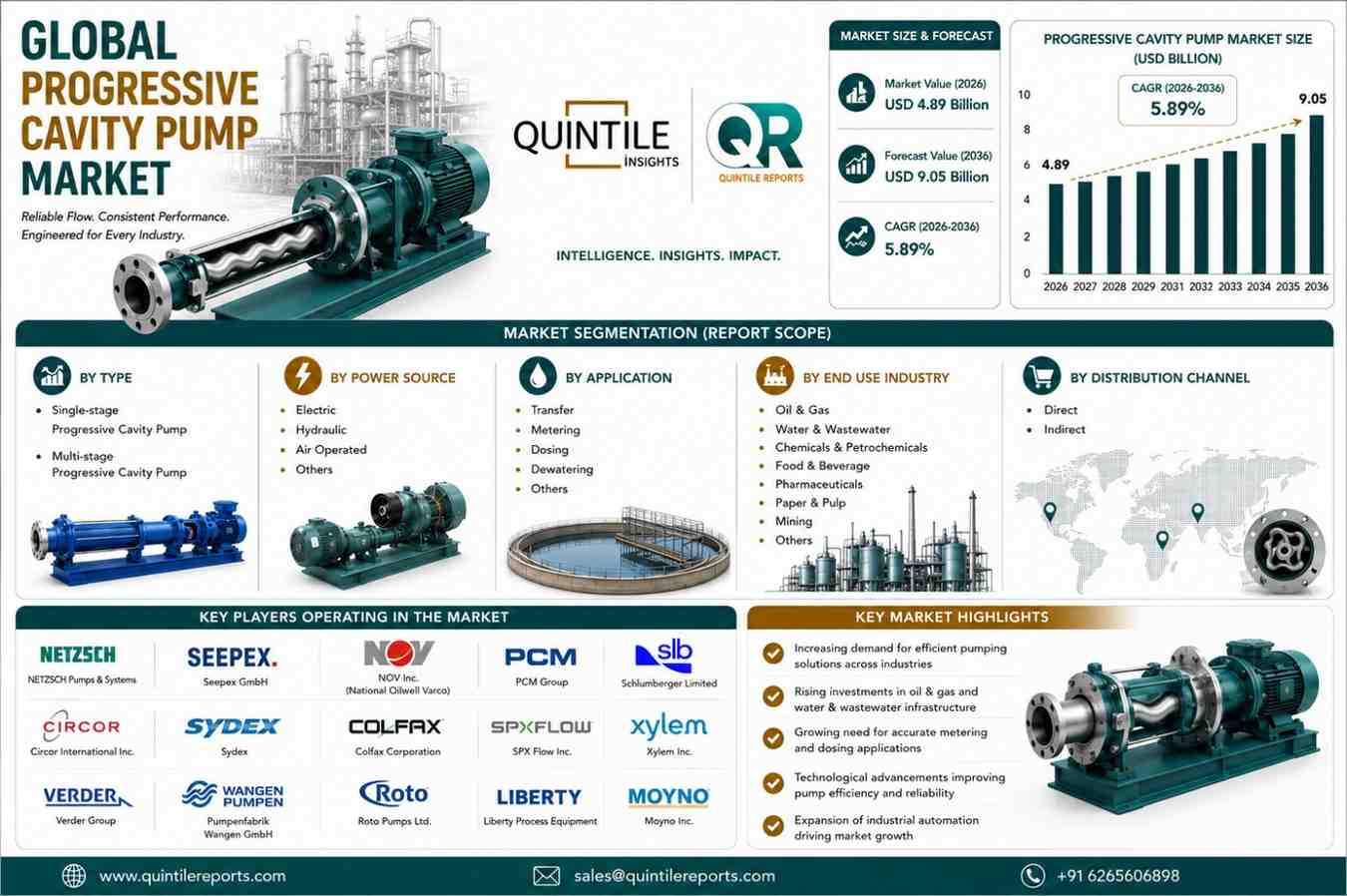
Growth is supported by increasing demand for efficient pumping solutions across wastewater treatment, oil & gas, chemical processing, food manufacturing, and industrial automation sectors.
The progressive cavity pump market is witnessing significant momentum as industries seek dependable pumping solutions capable of handling complex fluid characteristics. Unlike conventional pumping technologies, progressive cavity pumps excel in applications involving high-viscosity fluids, slurries, sludge, chemicals, and delicate products that require low-shear handling. This unique capability makes them indispensable across a wide range of industrial processes where maintaining product integrity and operational consistency is essential.
Increasing global investments in wastewater treatment infrastructure continue to represent a major growth catalyst. Municipal authorities and industrial operators are expanding treatment capacities to address water scarcity challenges, stricter environmental regulations, and growing urban populations. Progressive cavity pumps play a vital role in sludge transfer, chemical dosing, dewatering operations, and biosolid management systems due to their ability to maintain steady flow rates under varying process conditions.
Simultaneously, rising energy demand and ongoing development of mature oilfields are driving adoption within the oil and gas industry. These pumps are extensively utilized for multiphase fluid transport, heavy crude oil extraction, enhanced oil recovery applications, and handling sand-laden production fluids. Their robust performance in demanding operating environments continues to strengthen their value proposition across upstream and midstream energy operations.
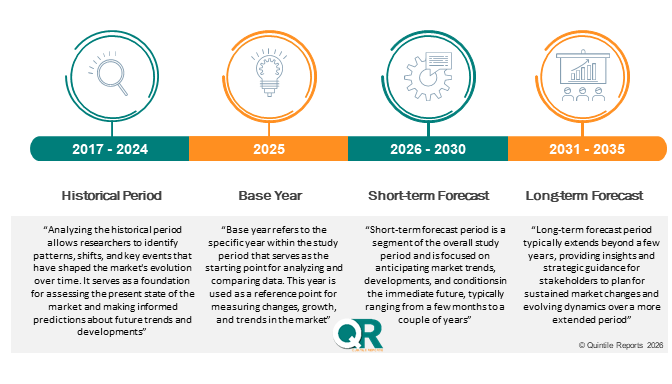
North America remains one of the most established markets for progressive cavity pumps, supported by advanced industrial infrastructure, stringent environmental regulations, and substantial investments in energy production. The United States continues to dominate regional demand due to widespread deployment across shale oil operations, municipal wastewater treatment facilities, food processing plants, and bioenergy projects. Progressive cavity pumps are extensively utilized in major oil-producing regions such as the Permian Basin and Bakken Formation, where operators require reliable systems capable of handling high-viscosity crude and abrasive production fluids.
Canada further contributes to regional market growth through applications in oil sands extraction, mining operations, and municipal water treatment projects. Increasing investments in infrastructure modernization and sustainability-focused water management programs are expected to sustain long-term market expansion throughout North America.
Europe represents a mature yet steadily growing market characterized by strong environmental compliance requirements and widespread adoption of energy-efficient industrial technologies. Countries such as Germany, France, and the United Kingdom continue to invest heavily in wastewater treatment modernization, renewable energy projects, and advanced manufacturing systems.
Germany serves as a major hub for progressive cavity pump innovation and deployment, particularly within wastewater management, biogas production, and food processing applications. European industries increasingly favor pumping technologies that support resource efficiency, lower energy consumption, and reduced environmental impact. This trend is expected to reinforce demand for advanced progressive cavity pump solutions throughout the forecast period.
Asia-Pacific is anticipated to experience the highest growth rate during the forecast timeline, driven by rapid industrialization, urbanization, and infrastructure development. Countries including China and India are investing aggressively in wastewater treatment facilities, industrial manufacturing capacity, and municipal utility upgrades. The region's expanding chemical, food processing, and pharmaceutical sectors are creating additional demand for reliable fluid handling technologies.
Japan and South Korea continue to emphasize automation, precision manufacturing, and energy-efficient industrial systems, supporting adoption of technologically advanced progressive cavity pumps equipped with smart monitoring capabilities. Meanwhile, Southeast Asian economies are witnessing increasing demand from palm oil processing, food manufacturing, and water infrastructure projects.
Latin America is experiencing increasing adoption of progressive cavity pumps across mining, sugar processing, wastewater treatment, and agricultural industries. Countries such as Brazil, Chile, and Mexico are investing in industrial automation and environmental compliance initiatives that require reliable pumping solutions capable of handling abrasive and high-solid-content fluids.
The Middle East and Africa region continues to benefit from growth in oil and gas operations, desalination facilities, mining activities, and industrial wastewater management projects. Saudi Arabia, the United Arab Emirates, and South Africa are among the key contributors to regional demand as governments prioritize industrial diversification and infrastructure development.
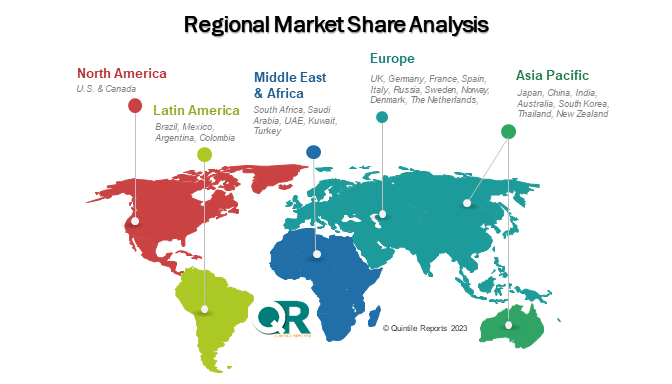
The progressive cavity pump market is highly competitive, featuring a combination of global engineering leaders, specialized pump manufacturers, and emerging regional suppliers. Competition is increasingly centered around technological innovation, operational efficiency, durability, and customization capabilities tailored to industry-specific applications.
Manufacturers are investing significantly in advanced rotor-stator technologies, wear-resistant elastomer materials, and modular pump designs that simplify maintenance while extending operational life. Product innovation efforts are also focused on reducing energy consumption, minimizing downtime, and enhancing reliability in challenging operating environments.
Digital transformation is becoming a key differentiator within the industry. Leading suppliers are integrating smart sensors, predictive maintenance capabilities, Industrial Internet of Things (IIoT) connectivity, and real-time monitoring solutions into their pump systems. These advancements allow operators to optimize performance, reduce maintenance costs, and improve overall asset utilization.
Growing demand from pharmaceutical, food, beverage, and cosmetics industries has further accelerated development of hygienic pump designs featuring stainless steel construction, clean-in-place (CIP) compatibility, and compliance with stringent quality standards. Vendors capable of offering turnkey pumping systems and comprehensive after-sales services are expected to strengthen their market positions in the coming years.
| Report Scope | Details |
| Report Version | 2026 |
| Growth Rate | CAGR of 5.89 % from 2026 to 2036 |
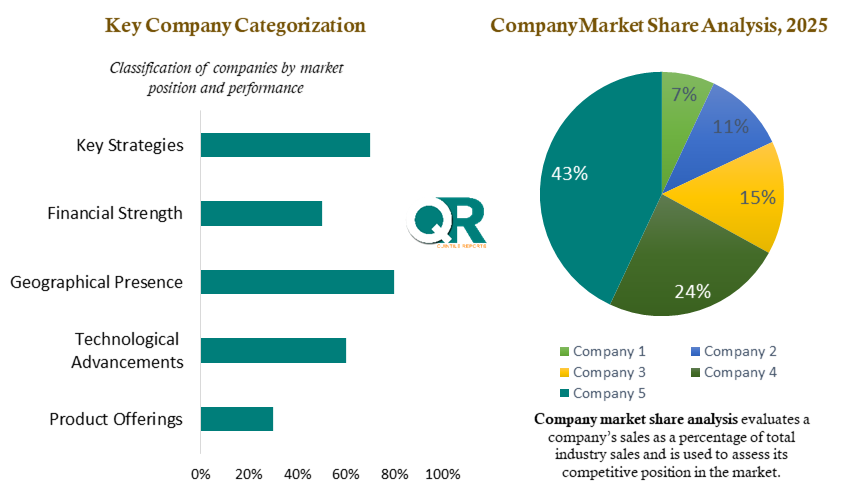
| Base Year | 2025 |
| Actual Estimates / Historical Data | 2017 - 2024 |
| Forecast Period | 2026 - 2036 |
| Quantitative Units | Revenue in USD million/billion & CAGR from 2026 to 2036 |
| Country Scope | North America (U.S., Canada), Europe (UK, Germany, France, Italy, Spain, Russia, Sweden, Denmark, Norway, Rest of Europe), Asia Pacific (Japan, China, India, Australia, South Korea, Thailand, Rest of Asia Pacific), Latin America (Brazil, Mexico, Argentina, Colombia, Rest of Latin America), Middle East & Africa (South Africa, Saudi Arabia, UAE, Kuwait, Rest of Middle East & Africa). |
| The Segment Covered by Type |
|
| The Segment Covered by Power Source |
|
| Companies Covered |
|
| Report Coverage | Revenue forecast, company share, competitive landscape, growth factors, technology trends, and regional analysis |
| Free Customization Scope (Equivalent to 5 Analyst Working Days) | If you require additional insights beyond the current scope, our analysts can customize the report to meet your specific business needs. |
This report has been developed through a rigorous research framework designed to provide dependable, unbiased, and actionable market intelligence. Every market estimate and forecast is supported by extensive primary and secondary research methodologies, ensuring the highest standards of analytical accuracy and reliability.
The research incorporates insights from pump manufacturers, industrial operators, wastewater management experts, EPC contractors, industry consultants, and regulatory stakeholders. Data validation processes include market triangulation, trend analysis, demand-supply assessments, and expert verification procedures to eliminate inconsistencies and strengthen forecast precision.
By combining quantitative market modeling with qualitative industry expertise, the report delivers a comprehensive view of current market conditions, emerging opportunities, technological advancements, and competitive developments. This commitment to transparency and research integrity ensures stakeholders can make informed strategic decisions with confidence.
The study employs a comprehensive blend of primary and secondary research techniques to evaluate the Progressive Cavity Pump Market across multiple dimensions. Secondary research includes detailed reviews of company annual reports, industry publications, government databases, engineering journals, regulatory frameworks, trade association reports, and technology white papers.
Primary research consists of interviews with senior executives, product managers, distribution partners, process engineers, procurement specialists, wastewater treatment authorities, and industrial end-users. These interactions provide valuable insights into current adoption trends, technological developments, operational challenges, and future investment priorities.
Market estimates are generated using advanced forecasting models, statistical analysis, historical trend assessments, and regional demand evaluations. Data triangulation methodologies are applied to validate findings and ensure consistency across various information sources. This robust research process enhances forecast reliability while providing stakeholders with meaningful and actionable industry intelligence.

This report has been prepared by a dedicated team of industrial technology analysts, fluid handling specialists, and market research professionals with extensive experience covering global process equipment and industrial automation markets. The research team combines technical expertise with advanced analytical methodologies to provide reliable, forward-looking market intelligence tailored to the needs of industry stakeholders.
Through continuous monitoring of technological advancements, regulatory developments, investment trends, and competitive activities, our analysts deliver insights that help organizations navigate evolving market landscapes with confidence. The study reflects a commitment to accuracy, transparency, and industry relevance, enabling manufacturers, investors, distributors, engineering firms, and end-users to make informed strategic decisions and capitalize on emerging growth opportunities within the global progressive cavity pump industry.
List of Tables
Table 1 List of Abbreviation and acronyms
Table 2 List of Sources
Table 3 North America Global Progressive Cavity Pump Market, by Segment Analysis, (USD Million) 2017-2036
Table 4 North America Global Progressive Cavity Pump Market, by Region, (USD Million) 2017-2036
Table 5 U.S. Global Progressive Cavity Pump Market, by Segment Analysis, (USD Million) 2017-2036
Table 6 Canada Global Progressive Cavity Pump Market, by Segment Analysis, (USD Million) 2017-2036
Table 7 Europe Global Progressive Cavity Pump Market, by Segment Analysis, (USD Million) 2017-2036
Table 8 Europe Global Progressive Cavity Pump Market, by Region, (USD Million) 2017-2036
Table 9 Germany Global Progressive Cavity Pump Market, by Segment Analysis, (USD Million) 2017-2036
Table 10 U.K. Global Progressive Cavity Pump Market, by Segment Analysis, (USD Million) 2017-2036
Table 11 France Global Progressive Cavity Pump Market, by Segment Analysis, (USD Million) 2017-2036
Table 12 Italy Global Progressive Cavity Pump Market, by Segment Analysis, (USD Million) 2017-2036
Table 13 Spain Global Progressive Cavity Pump Market, by Segment Analysis, (USD Million) 2017-2036
Table 14 Sweden Global Progressive Cavity Pump Market, by Segment Analysis, (USD Million) 2017-2036
Table 15 Denmark Global Progressive Cavity Pump Market, by Segment Analysis, (USD Million) 2017-2036
Table 16 Norway Global Progressive Cavity Pump Market, by Segment Analysis, (USD Million) 2017-2036
Table 17 The Netherlands Global Progressive Cavity Pump Market, by Segment Analysis, (USD Million) 2017-2036
Table 18 Russia Global Progressive Cavity Pump Market, by Segment Analysis, (USD Million) 2017-2036
Table 19 Asia Pacific Global Progressive Cavity Pump Market, by Segment Analysis, (USD Million) 2017-2036
Table 20 Asia Pacific Global Progressive Cavity Pump Market, by Region, (USD Million) 2017-2036
Table 21 China Global Progressive Cavity Pump Market, by Segment Analysis, (USD Million) 2017-2036
Table 22 Japan Global Progressive Cavity Pump Market, by Segment Analysis, (USD Million) 2017-2036
Table 23 India Global Progressive Cavity Pump Market, by Segment Analysis, (USD Million) 2017-2036
Table 24 Australia Global Progressive Cavity Pump Market, by Segment Analysis, (USD Million) 2017-2036
Table 25 South Korea Global Progressive Cavity Pump Market, by Segment Analysis, (USD Million) 2017-2036
Table 26 Thailand Global Progressive Cavity Pump Market, by Segment Analysis, (USD Million) 2017-2036
Table 27 Latin America Global Progressive Cavity Pump Market, by Segment Analysis, (USD Million) 2017-2036
Table 28 Latin America Global Progressive Cavity Pump Market, by Region, (USD Million) 2017-2036
Table 29 Brazil Global Progressive Cavity Pump Market, by Segment Analysis, (USD Million) 2017-2036
Table 30 Mexico Global Progressive Cavity Pump Market, by Segment Analysis, (USD Million) 2017-2036
Table 31 Argentina Global Progressive Cavity Pump Market, by Segment Analysis, (USD Million) 2017-2036
Table 32 Middle East and Africa Global Progressive Cavity Pump Market, by Segment Analysis, (USD Million) 2017-2036
Table 33 Middle East and Africa Global Progressive Cavity Pump Market, by Region, (USD Million) 2017-2036
Table 34 South Africa Global Progressive Cavity Pump Market, by Segment Analysis, (USD Million) 2017-2036
Table 35 Saudi Arabia Global Progressive Cavity Pump Market, by Segment Analysis, (USD Million) 2017-2036
Table 36 UAE Global Progressive Cavity Pump Market, by Segment Analysis, (USD Million) 2017-2036
Table 37 Kuwait Global Progressive Cavity Pump Market, by Segment Analysis, (USD Million) 2017-2036
Table 38 Turkey Global Progressive Cavity Pump Market, by Segment Analysis, (USD Million) 2017-2036
Fig.1 Market research process
Fig.2 Market research approaches
Fig.3 Global Progressive Cavity Pump Market: market scenario
Fig.4 Global Progressive Cavity Pump Market competitive outlook
Fig.5 Global Progressive Cavity Pump Market driver analysis
Fig.6 Global Progressive Cavity Pump Market restraint analysis
Fig.7 Global Progressive Cavity Pump Market opportunity analysis
Fig.8 Global Progressive Cavity Pump Market trends analysis
Fig.9 Global Progressive Cavity Pump Market: Segment Analysis (Based on the scope)
Fig.10 Global Progressive Cavity Pump Market: regional analysis
Fig.11 Global market shares and leading market players
Fig.12 North America market share and leading players
Fig.13 Europe market share and leading players
Fig.14 Asia Pacific market share and leading players
Fig.15 Latin America market share and leading players
Fig.16 Middle East & Africa market share and leading players
Fig.17 North America, by country
Fig.18 North America
Fig.19 North America market estimates and forecast, 2017-2036
Fig.20 U.S.
Fig.21 Canada
Fig.22 Europe
Fig.23 Europe market estimates and forecast, 2017-2036
Fig.24 U.K.
Fig.25 Germany
Fig.26 France
Fig.27 Italy
Fig.28 Spain
Fig.29 Sweden
Fig.30 Denmark
Fig.31 Norway
Fig.32 The Netherlands
Fig.33 Russia
Fig.34 Asia Pacific
Fig.35 Asia Pacific market estimates and forecast, 2017-2036
Fig.36 China
Fig.37 Japan
Fig.38 India
Fig.39 Australia
Fig.40 South Korea
Fig.41 Thailand
Fig.42 Latin America
Fig.43 Latin America market estimates and forecast, 2017-2036
Fig.44 Brazil
Fig.45 Mexico
Fig.46 Argentina
Fig.47 Colombia
Fig.48 Middle East and Africa
Fig.49 Middle East and Africa market estimates and forecast, 2017-2036
Fig.50 Saudi Arabia
Fig.51 South Africa
Fig.52 UAE
Fig.53 Kuwait
Fig.54 Turkey
List of Tables
Table 1 List of Abbreviation and acronyms
Table 2 List of Sources
Table 3 North America Global Progressive Cavity Pump Market, by Segment Analysis, (USD Million) 2017-2036
Table 4 North America Global Progressive Cavity Pump Market, by Region, (USD Million) 2017-2036
Table 5 U.S. Global Progressive Cavity Pump Market, by Segment Analysis, (USD Million) 2017-2036
Table 6 Canada Global Progressive Cavity Pump Market, by Segment Analysis, (USD Million) 2017-2036
Table 7 Europe Global Progressive Cavity Pump Market, by Segment Analysis, (USD Million) 2017-2036
Table 8 Europe Global Progressive Cavity Pump Market, by Region, (USD Million) 2017-2036
Table 9 Germany Global Progressive Cavity Pump Market, by Segment Analysis, (USD Million) 2017-2036
Table 10 U.K. Global Progressive Cavity Pump Market, by Segment Analysis, (USD Million) 2017-2036
Table 11 France Global Progressive Cavity Pump Market, by Segment Analysis, (USD Million) 2017-2036
Table 12 Italy Global Progressive Cavity Pump Market, by Segment Analysis, (USD Million) 2017-2036
Table 13 Spain Global Progressive Cavity Pump Market, by Segment Analysis, (USD Million) 2017-2036
Table 14 Sweden Global Progressive Cavity Pump Market, by Segment Analysis, (USD Million) 2017-2036
Table 15 Denmark Global Progressive Cavity Pump Market, by Segment Analysis, (USD Million) 2017-2036
Table 16 Norway Global Progressive Cavity Pump Market, by Segment Analysis, (USD Million) 2017-2036
Table 17 The Netherlands Global Progressive Cavity Pump Market, by Segment Analysis, (USD Million) 2017-2036
Table 18 Russia Global Progressive Cavity Pump Market, by Segment Analysis, (USD Million) 2017-2036
Table 19 Asia Pacific Global Progressive Cavity Pump Market, by Segment Analysis, (USD Million) 2017-2036
Table 20 Asia Pacific Global Progressive Cavity Pump Market, by Region, (USD Million) 2017-2036
Table 21 China Global Progressive Cavity Pump Market, by Segment Analysis, (USD Million) 2017-2036
Table 22 Japan Global Progressive Cavity Pump Market, by Segment Analysis, (USD Million) 2017-2036
Table 23 India Global Progressive Cavity Pump Market, by Segment Analysis, (USD Million) 2017-2036
Table 24 Australia Global Progressive Cavity Pump Market, by Segment Analysis, (USD Million) 2017-2036
Table 25 South Korea Global Progressive Cavity Pump Market, by Segment Analysis, (USD Million) 2017-2036
Table 26 Thailand Global Progressive Cavity Pump Market, by Segment Analysis, (USD Million) 2017-2036
Table 27 Latin America Global Progressive Cavity Pump Market, by Segment Analysis, (USD Million) 2017-2036
Table 28 Latin America Global Progressive Cavity Pump Market, by Region, (USD Million) 2017-2036
Table 29 Brazil Global Progressive Cavity Pump Market, by Segment Analysis, (USD Million) 2017-2036
Table 30 Mexico Global Progressive Cavity Pump Market, by Segment Analysis, (USD Million) 2017-2036
Table 31 Argentina Global Progressive Cavity Pump Market, by Segment Analysis, (USD Million) 2017-2036
Table 32 Middle East and Africa Global Progressive Cavity Pump Market, by Segment Analysis, (USD Million) 2017-2036
Table 33 Middle East and Africa Global Progressive Cavity Pump Market, by Region, (USD Million) 2017-2036
Table 34 South Africa Global Progressive Cavity Pump Market, by Segment Analysis, (USD Million) 2017-2036
Table 35 Saudi Arabia Global Progressive Cavity Pump Market, by Segment Analysis, (USD Million) 2017-2036
Table 36 UAE Global Progressive Cavity Pump Market, by Segment Analysis, (USD Million) 2017-2036
Table 37 Kuwait Global Progressive Cavity Pump Market, by Segment Analysis, (USD Million) 2017-2036
Table 38 Turkey Global Progressive Cavity Pump Market, by Segment Analysis, (USD Million) 2017-2036
Fig.1 Market research process
Fig.2 Market research approaches
Fig.3 Global Progressive Cavity Pump Market: market scenario
Fig.4 Global Progressive Cavity Pump Market competitive outlook
Fig.5 Global Progressive Cavity Pump Market driver analysis
Fig.6 Global Progressive Cavity Pump Market restraint analysis
Fig.7 Global Progressive Cavity Pump Market opportunity analysis
Fig.8 Global Progressive Cavity Pump Market trends analysis
Fig.9 Global Progressive Cavity Pump Market: Segment Analysis (Based on the scope)
Fig.10 Global Progressive Cavity Pump Market: regional analysis
Fig.11 Global market shares and leading market players
Fig.12 North America market share and leading players
Fig.13 Europe market share and leading players
Fig.14 Asia Pacific market share and leading players
Fig.15 Latin America market share and leading players
Fig.16 Middle East & Africa market share and leading players
Fig.17 North America, by country
Fig.18 North America
Fig.19 North America market estimates and forecast, 2017-2036
Fig.20 U.S.
Fig.21 Canada
Fig.22 Europe
Fig.23 Europe market estimates and forecast, 2017-2036
Fig.24 U.K.
Fig.25 Germany
Fig.26 France
Fig.27 Italy
Fig.28 Spain
Fig.29 Sweden
Fig.30 Denmark
Fig.31 Norway
Fig.32 The Netherlands
Fig.33 Russia
Fig.34 Asia Pacific
Fig.35 Asia Pacific market estimates and forecast, 2017-2036
Fig.36 China
Fig.37 Japan
Fig.38 India
Fig.39 Australia
Fig.40 South Korea
Fig.41 Thailand
Fig.42 Latin America
Fig.43 Latin America market estimates and forecast, 2017-2036
Fig.44 Brazil
Fig.45 Mexico
Fig.46 Argentina
Fig.47 Colombia
Fig.48 Middle East and Africa
Fig.49 Middle East and Africa market estimates and forecast, 2017-2036
Fig.50 Saudi Arabia
Fig.51 South Africa
Fig.52 UAE
Fig.53 Kuwait
Fig.54 Turkey
The global Progressive Cavity Pump Market is projected to reach USD 9.05 billion by 2036, growing from USD 4.89 billion in 2026. The market is expanding due to increasing demand for efficient fluid handling solutions across wastewater treatment, oil & gas, chemical processing, mining, and food processing industries.
The Progressive Cavity Pump Market is expected to grow at a CAGR of 5.89% between 2026 and 2036. Growth is supported by industrial automation, environmental compliance initiatives, and rising investments in wastewater treatment infrastructure.
Key growth drivers include increasing wastewater treatment investments, growing demand from the oil & gas sector, expanding industrial automation, rising adoption in food and beverage processing, and the need for reliable handling of highly viscous, abrasive, and shear-sensitive fluids.
Progressive cavity pumps are widely used in oil & gas, water and wastewater treatment, chemicals and petrochemicals, food & beverage, pharmaceuticals, paper & pulp, and mining industries due to their ability to provide precise, low-pulsation fluid transfer.
North America remains a leading market due to strong oilfield activity, wastewater infrastructure investments, and industrial modernization initiatives. However, Asia-Pacific is expected to witness the fastest growth driven by rapid industrialization and infrastructure development.
Major trends include the adoption of smart monitoring systems, predictive maintenance technologies, Industrial Internet of Things (IIoT) connectivity, real-time performance monitoring, advanced elastomer materials, and energy-efficient pump designs that improve reliability and reduce maintenance costs.
Smart monitoring systems are enabling real-time performance tracking, predictive maintenance, remote diagnostics, and early fault detection. These technologies help reduce downtime, improve operational efficiency, lower maintenance costs, and support Industry 4.0 initiatives across industrial facilities.
The global Progressive Cavity Pump Market was valued at USD 4.89 billion in 2026 and is projected to reach USD 9.05 billion by 2036, expanding at a CAGR of 5.89% during the forecast period. Market growth is being fueled by increasing demand for efficient fluid handling systems across industries that require precise transfer of highly viscous, abrasive, corrosive, and shear-sensitive materials. Progressive cavity pumps have established themselves as critical equipment in wastewater treatment facilities, oil and gas operations, chemical processing plants, food and beverage manufacturing units, pulp and paper mills, and mining applications.
The ability of these pumps to deliver consistent flow rates with minimal pulsation, even under challenging operating conditions, has significantly enhanced their adoption across industrial sectors. As global industries increasingly prioritize operational efficiency, process automation, and sustainability, progressive cavity pumps are gaining traction due to their reliability, accurate metering capabilities, and compatibility with advanced monitoring technologies. Furthermore, growing investments in municipal infrastructure, environmental compliance initiatives, and industrial modernization programs are expected to generate substantial opportunities for market participants over the next decade.
Growth is supported by increasing demand for efficient pumping solutions across wastewater treatment, oil & gas, chemical processing, food manufacturing, and industrial automation sectors.
The progressive cavity pump market is witnessing significant momentum as industries seek dependable pumping solutions capable of handling complex fluid characteristics. Unlike conventional pumping technologies, progressive cavity pumps excel in applications involving high-viscosity fluids, slurries, sludge, chemicals, and delicate products that require low-shear handling. This unique capability makes them indispensable across a wide range of industrial processes where maintaining product integrity and operational consistency is essential.
Increasing global investments in wastewater treatment infrastructure continue to represent a major growth catalyst. Municipal authorities and industrial operators are expanding treatment capacities to address water scarcity challenges, stricter environmental regulations, and growing urban populations. Progressive cavity pumps play a vital role in sludge transfer, chemical dosing, dewatering operations, and biosolid management systems due to their ability to maintain steady flow rates under varying process conditions.
Simultaneously, rising energy demand and ongoing development of mature oilfields are driving adoption within the oil and gas industry. These pumps are extensively utilized for multiphase fluid transport, heavy crude oil extraction, enhanced oil recovery applications, and handling sand-laden production fluids. Their robust performance in demanding operating environments continues to strengthen their value proposition across upstream and midstream energy operations.
North America remains one of the most established markets for progressive cavity pumps, supported by advanced industrial infrastructure, stringent environmental regulations, and substantial investments in energy production. The United States continues to dominate regional demand due to widespread deployment across shale oil operations, municipal wastewater treatment facilities, food processing plants, and bioenergy projects. Progressive cavity pumps are extensively utilized in major oil-producing regions such as the Permian Basin and Bakken Formation, where operators require reliable systems capable of handling high-viscosity crude and abrasive production fluids.
Canada further contributes to regional market growth through applications in oil sands extraction, mining operations, and municipal water treatment projects. Increasing investments in infrastructure modernization and sustainability-focused water management programs are expected to sustain long-term market expansion throughout North America.
Europe represents a mature yet steadily growing market characterized by strong environmental compliance requirements and widespread adoption of energy-efficient industrial technologies. Countries such as Germany, France, and the United Kingdom continue to invest heavily in wastewater treatment modernization, renewable energy projects, and advanced manufacturing systems.
Germany serves as a major hub for progressive cavity pump innovation and deployment, particularly within wastewater management, biogas production, and food processing applications. European industries increasingly favor pumping technologies that support resource efficiency, lower energy consumption, and reduced environmental impact. This trend is expected to reinforce demand for advanced progressive cavity pump solutions throughout the forecast period.
Asia-Pacific is anticipated to experience the highest growth rate during the forecast timeline, driven by rapid industrialization, urbanization, and infrastructure development. Countries including China and India are investing aggressively in wastewater treatment facilities, industrial manufacturing capacity, and municipal utility upgrades. The region's expanding chemical, food processing, and pharmaceutical sectors are creating additional demand for reliable fluid handling technologies.
Japan and South Korea continue to emphasize automation, precision manufacturing, and energy-efficient industrial systems, supporting adoption of technologically advanced progressive cavity pumps equipped with smart monitoring capabilities. Meanwhile, Southeast Asian economies are witnessing increasing demand from palm oil processing, food manufacturing, and water infrastructure projects.
Latin America is experiencing increasing adoption of progressive cavity pumps across mining, sugar processing, wastewater treatment, and agricultural industries. Countries such as Brazil, Chile, and Mexico are investing in industrial automation and environmental compliance initiatives that require reliable pumping solutions capable of handling abrasive and high-solid-content fluids.
The Middle East and Africa region continues to benefit from growth in oil and gas operations, desalination facilities, mining activities, and industrial wastewater management projects. Saudi Arabia, the United Arab Emirates, and South Africa are among the key contributors to regional demand as governments prioritize industrial diversification and infrastructure development.
The progressive cavity pump market is highly competitive, featuring a combination of global engineering leaders, specialized pump manufacturers, and emerging regional suppliers. Competition is increasingly centered around technological innovation, operational efficiency, durability, and customization capabilities tailored to industry-specific applications.
Manufacturers are investing significantly in advanced rotor-stator technologies, wear-resistant elastomer materials, and modular pump designs that simplify maintenance while extending operational life. Product innovation efforts are also focused on reducing energy consumption, minimizing downtime, and enhancing reliability in challenging operating environments.
Digital transformation is becoming a key differentiator within the industry. Leading suppliers are integrating smart sensors, predictive maintenance capabilities, Industrial Internet of Things (IIoT) connectivity, and real-time monitoring solutions into their pump systems. These advancements allow operators to optimize performance, reduce maintenance costs, and improve overall asset utilization.
Growing demand from pharmaceutical, food, beverage, and cosmetics industries has further accelerated development of hygienic pump designs featuring stainless steel construction, clean-in-place (CIP) compatibility, and compliance with stringent quality standards. Vendors capable of offering turnkey pumping systems and comprehensive after-sales services are expected to strengthen their market positions in the coming years.
| Report Scope | Details |
| Report Version | 2026 |
| Growth Rate | CAGR of 5.89 % from 2026 to 2036 |
| Base Year | 2025 |
| Actual Estimates / Historical Data | 2017 - 2024 |
| Forecast Period | 2026 - 2036 |
| Quantitative Units | Revenue in USD million/billion & CAGR from 2026 to 2036 |
| Country Scope | North America (U.S., Canada), Europe (UK, Germany, France, Italy, Spain, Russia, Sweden, Denmark, Norway, Rest of Europe), Asia Pacific (Japan, China, India, Australia, South Korea, Thailand, Rest of Asia Pacific), Latin America (Brazil, Mexico, Argentina, Colombia, Rest of Latin America), Middle East & Africa (South Africa, Saudi Arabia, UAE, Kuwait, Rest of Middle East & Africa). |
| The Segment Covered by Type |
|
| The Segment Covered by Power Source |
|
| Companies Covered |
|
| Report Coverage | Revenue forecast, company share, competitive landscape, growth factors, technology trends, and regional analysis |
| Free Customization Scope (Equivalent to 5 Analyst Working Days) | If you require additional insights beyond the current scope, our analysts can customize the report to meet your specific business needs. |
This report has been developed through a rigorous research framework designed to provide dependable, unbiased, and actionable market intelligence. Every market estimate and forecast is supported by extensive primary and secondary research methodologies, ensuring the highest standards of analytical accuracy and reliability.
The research incorporates insights from pump manufacturers, industrial operators, wastewater management experts, EPC contractors, industry consultants, and regulatory stakeholders. Data validation processes include market triangulation, trend analysis, demand-supply assessments, and expert verification procedures to eliminate inconsistencies and strengthen forecast precision.
By combining quantitative market modeling with qualitative industry expertise, the report delivers a comprehensive view of current market conditions, emerging opportunities, technological advancements, and competitive developments. This commitment to transparency and research integrity ensures stakeholders can make informed strategic decisions with confidence.
The study employs a comprehensive blend of primary and secondary research techniques to evaluate the Progressive Cavity Pump Market across multiple dimensions. Secondary research includes detailed reviews of company annual reports, industry publications, government databases, engineering journals, regulatory frameworks, trade association reports, and technology white papers.
Primary research consists of interviews with senior executives, product managers, distribution partners, process engineers, procurement specialists, wastewater treatment authorities, and industrial end-users. These interactions provide valuable insights into current adoption trends, technological developments, operational challenges, and future investment priorities.
Market estimates are generated using advanced forecasting models, statistical analysis, historical trend assessments, and regional demand evaluations. Data triangulation methodologies are applied to validate findings and ensure consistency across various information sources. This robust research process enhances forecast reliability while providing stakeholders with meaningful and actionable industry intelligence.
This report has been prepared by a dedicated team of industrial technology analysts, fluid handling specialists, and market research professionals with extensive experience covering global process equipment and industrial automation markets. The research team combines technical expertise with advanced analytical methodologies to provide reliable, forward-looking market intelligence tailored to the needs of industry stakeholders.
Through continuous monitoring of technological advancements, regulatory developments, investment trends, and competitive activities, our analysts deliver insights that help organizations navigate evolving market landscapes with confidence. The study reflects a commitment to accuracy, transparency, and industry relevance, enabling manufacturers, investors, distributors, engineering firms, and end-users to make informed strategic decisions and capitalize on emerging growth opportunities within the global progressive cavity pump industry.
Table 1 List of Abbreviation and acronyms
Table 2 List of Sources
Table 3 North America Global Progressive Cavity Pump Market, by Segment Analysis, (USD Million) 2017-2036
Table 4 North America Global Progressive Cavity Pump Market, by Region, (USD Million) 2017-2036
Table 5 U.S. Global Progressive Cavity Pump Market, by Segment Analysis, (USD Million) 2017-2036
Table 6 Canada Global Progressive Cavity Pump Market, by Segment Analysis, (USD Million) 2017-2036
Table 7 Europe Global Progressive Cavity Pump Market, by Segment Analysis, (USD Million) 2017-2036
Table 8 Europe Global Progressive Cavity Pump Market, by Region, (USD Million) 2017-2036
Table 9 Germany Global Progressive Cavity Pump Market, by Segment Analysis, (USD Million) 2017-2036
Table 10 U.K. Global Progressive Cavity Pump Market, by Segment Analysis, (USD Million) 2017-2036
Table 11 France Global Progressive Cavity Pump Market, by Segment Analysis, (USD Million) 2017-2036
Table 12 Italy Global Progressive Cavity Pump Market, by Segment Analysis, (USD Million) 2017-2036
Table 13 Spain Global Progressive Cavity Pump Market, by Segment Analysis, (USD Million) 2017-2036
Table 14 Sweden Global Progressive Cavity Pump Market, by Segment Analysis, (USD Million) 2017-2036
Table 15 Denmark Global Progressive Cavity Pump Market, by Segment Analysis, (USD Million) 2017-2036
Table 16 Norway Global Progressive Cavity Pump Market, by Segment Analysis, (USD Million) 2017-2036
Table 17 The Netherlands Global Progressive Cavity Pump Market, by Segment Analysis, (USD Million) 2017-2036
Table 18 Russia Global Progressive Cavity Pump Market, by Segment Analysis, (USD Million) 2017-2036
Table 19 Asia Pacific Global Progressive Cavity Pump Market, by Segment Analysis, (USD Million) 2017-2036
Table 20 Asia Pacific Global Progressive Cavity Pump Market, by Region, (USD Million) 2017-2036
Table 21 China Global Progressive Cavity Pump Market, by Segment Analysis, (USD Million) 2017-2036
Table 22 Japan Global Progressive Cavity Pump Market, by Segment Analysis, (USD Million) 2017-2036
Table 23 India Global Progressive Cavity Pump Market, by Segment Analysis, (USD Million) 2017-2036
Table 24 Australia Global Progressive Cavity Pump Market, by Segment Analysis, (USD Million) 2017-2036
Table 25 South Korea Global Progressive Cavity Pump Market, by Segment Analysis, (USD Million) 2017-2036
Table 26 Thailand Global Progressive Cavity Pump Market, by Segment Analysis, (USD Million) 2017-2036
Table 27 Latin America Global Progressive Cavity Pump Market, by Segment Analysis, (USD Million) 2017-2036
Table 28 Latin America Global Progressive Cavity Pump Market, by Region, (USD Million) 2017-2036
Table 29 Brazil Global Progressive Cavity Pump Market, by Segment Analysis, (USD Million) 2017-2036
Table 30 Mexico Global Progressive Cavity Pump Market, by Segment Analysis, (USD Million) 2017-2036
Table 31 Argentina Global Progressive Cavity Pump Market, by Segment Analysis, (USD Million) 2017-2036
Table 32 Middle East and Africa Global Progressive Cavity Pump Market, by Segment Analysis, (USD Million) 2017-2036
Table 33 Middle East and Africa Global Progressive Cavity Pump Market, by Region, (USD Million) 2017-2036
Table 34 South Africa Global Progressive Cavity Pump Market, by Segment Analysis, (USD Million) 2017-2036
Table 35 Saudi Arabia Global Progressive Cavity Pump Market, by Segment Analysis, (USD Million) 2017-2036
Table 36 UAE Global Progressive Cavity Pump Market, by Segment Analysis, (USD Million) 2017-2036
Table 37 Kuwait Global Progressive Cavity Pump Market, by Segment Analysis, (USD Million) 2017-2036
Table 38 Turkey Global Progressive Cavity Pump Market, by Segment Analysis, (USD Million) 2017-2036
Fig.1 Market research process
Fig.2 Market research approaches
Fig.3 Global Progressive Cavity Pump Market: market scenario
Fig.4 Global Progressive Cavity Pump Market competitive outlook
Fig.5 Global Progressive Cavity Pump Market driver analysis
Fig.6 Global Progressive Cavity Pump Market restraint analysis
Fig.7 Global Progressive Cavity Pump Market opportunity analysis
Fig.8 Global Progressive Cavity Pump Market trends analysis
Fig.9 Global Progressive Cavity Pump Market: Segment Analysis (Based on the scope)
Fig.10 Global Progressive Cavity Pump Market: regional analysis
Fig.11 Global market shares and leading market players
Fig.12 North America market share and leading players
Fig.13 Europe market share and leading players
Fig.14 Asia Pacific market share and leading players
Fig.15 Latin America market share and leading players
Fig.16 Middle East & Africa market share and leading players
Fig.17 North America, by country
Fig.18 North America
Fig.19 North America market estimates and forecast, 2017-2036
Fig.20 U.S.
Fig.21 Canada
Fig.22 Europe
Fig.23 Europe market estimates and forecast, 2017-2036
Fig.24 U.K.
Fig.25 Germany
Fig.26 France
Fig.27 Italy
Fig.28 Spain
Fig.29 Sweden
Fig.30 Denmark
Fig.31 Norway
Fig.32 The Netherlands
Fig.33 Russia
Fig.34 Asia Pacific
Fig.35 Asia Pacific market estimates and forecast, 2017-2036
Fig.36 China
Fig.37 Japan
Fig.38 India
Fig.39 Australia
Fig.40 South Korea
Fig.41 Thailand
Fig.42 Latin America
Fig.43 Latin America market estimates and forecast, 2017-2036
Fig.44 Brazil
Fig.45 Mexico
Fig.46 Argentina
Fig.47 Colombia
Fig.48 Middle East and Africa
Fig.49 Middle East and Africa market estimates and forecast, 2017-2036
Fig.50 Saudi Arabia
Fig.51 South Africa
Fig.52 UAE
Fig.53 Kuwait
Fig.54 Turkey
Table 1 List of Abbreviation and acronyms
Table 2 List of Sources
Table 3 North America Global Progressive Cavity Pump Market, by Segment Analysis, (USD Million) 2017-2036
Table 4 North America Global Progressive Cavity Pump Market, by Region, (USD Million) 2017-2036
Table 5 U.S. Global Progressive Cavity Pump Market, by Segment Analysis, (USD Million) 2017-2036
Table 6 Canada Global Progressive Cavity Pump Market, by Segment Analysis, (USD Million) 2017-2036
Table 7 Europe Global Progressive Cavity Pump Market, by Segment Analysis, (USD Million) 2017-2036
Table 8 Europe Global Progressive Cavity Pump Market, by Region, (USD Million) 2017-2036
Table 9 Germany Global Progressive Cavity Pump Market, by Segment Analysis, (USD Million) 2017-2036
Table 10 U.K. Global Progressive Cavity Pump Market, by Segment Analysis, (USD Million) 2017-2036
Table 11 France Global Progressive Cavity Pump Market, by Segment Analysis, (USD Million) 2017-2036
Table 12 Italy Global Progressive Cavity Pump Market, by Segment Analysis, (USD Million) 2017-2036
Table 13 Spain Global Progressive Cavity Pump Market, by Segment Analysis, (USD Million) 2017-2036
Table 14 Sweden Global Progressive Cavity Pump Market, by Segment Analysis, (USD Million) 2017-2036
Table 15 Denmark Global Progressive Cavity Pump Market, by Segment Analysis, (USD Million) 2017-2036
Table 16 Norway Global Progressive Cavity Pump Market, by Segment Analysis, (USD Million) 2017-2036
Table 17 The Netherlands Global Progressive Cavity Pump Market, by Segment Analysis, (USD Million) 2017-2036
Table 18 Russia Global Progressive Cavity Pump Market, by Segment Analysis, (USD Million) 2017-2036
Table 19 Asia Pacific Global Progressive Cavity Pump Market, by Segment Analysis, (USD Million) 2017-2036
Table 20 Asia Pacific Global Progressive Cavity Pump Market, by Region, (USD Million) 2017-2036
Table 21 China Global Progressive Cavity Pump Market, by Segment Analysis, (USD Million) 2017-2036
Table 22 Japan Global Progressive Cavity Pump Market, by Segment Analysis, (USD Million) 2017-2036
Table 23 India Global Progressive Cavity Pump Market, by Segment Analysis, (USD Million) 2017-2036
Table 24 Australia Global Progressive Cavity Pump Market, by Segment Analysis, (USD Million) 2017-2036
Table 25 South Korea Global Progressive Cavity Pump Market, by Segment Analysis, (USD Million) 2017-2036
Table 26 Thailand Global Progressive Cavity Pump Market, by Segment Analysis, (USD Million) 2017-2036
Table 27 Latin America Global Progressive Cavity Pump Market, by Segment Analysis, (USD Million) 2017-2036
Table 28 Latin America Global Progressive Cavity Pump Market, by Region, (USD Million) 2017-2036
Table 29 Brazil Global Progressive Cavity Pump Market, by Segment Analysis, (USD Million) 2017-2036
Table 30 Mexico Global Progressive Cavity Pump Market, by Segment Analysis, (USD Million) 2017-2036
Table 31 Argentina Global Progressive Cavity Pump Market, by Segment Analysis, (USD Million) 2017-2036
Table 32 Middle East and Africa Global Progressive Cavity Pump Market, by Segment Analysis, (USD Million) 2017-2036
Table 33 Middle East and Africa Global Progressive Cavity Pump Market, by Region, (USD Million) 2017-2036
Table 34 South Africa Global Progressive Cavity Pump Market, by Segment Analysis, (USD Million) 2017-2036
Table 35 Saudi Arabia Global Progressive Cavity Pump Market, by Segment Analysis, (USD Million) 2017-2036
Table 36 UAE Global Progressive Cavity Pump Market, by Segment Analysis, (USD Million) 2017-2036
Table 37 Kuwait Global Progressive Cavity Pump Market, by Segment Analysis, (USD Million) 2017-2036
Table 38 Turkey Global Progressive Cavity Pump Market, by Segment Analysis, (USD Million) 2017-2036
Fig.1 Market research process
Fig.2 Market research approaches
Fig.3 Global Progressive Cavity Pump Market: market scenario
Fig.4 Global Progressive Cavity Pump Market competitive outlook
Fig.5 Global Progressive Cavity Pump Market driver analysis
Fig.6 Global Progressive Cavity Pump Market restraint analysis
Fig.7 Global Progressive Cavity Pump Market opportunity analysis
Fig.8 Global Progressive Cavity Pump Market trends analysis
Fig.9 Global Progressive Cavity Pump Market: Segment Analysis (Based on the scope)
Fig.10 Global Progressive Cavity Pump Market: regional analysis
Fig.11 Global market shares and leading market players
Fig.12 North America market share and leading players
Fig.13 Europe market share and leading players
Fig.14 Asia Pacific market share and leading players
Fig.15 Latin America market share and leading players
Fig.16 Middle East & Africa market share and leading players
Fig.17 North America, by country
Fig.18 North America
Fig.19 North America market estimates and forecast, 2017-2036
Fig.20 U.S.
Fig.21 Canada
Fig.22 Europe
Fig.23 Europe market estimates and forecast, 2017-2036
Fig.24 U.K.
Fig.25 Germany
Fig.26 France
Fig.27 Italy
Fig.28 Spain
Fig.29 Sweden
Fig.30 Denmark
Fig.31 Norway
Fig.32 The Netherlands
Fig.33 Russia
Fig.34 Asia Pacific
Fig.35 Asia Pacific market estimates and forecast, 2017-2036
Fig.36 China
Fig.37 Japan
Fig.38 India
Fig.39 Australia
Fig.40 South Korea
Fig.41 Thailand
Fig.42 Latin America
Fig.43 Latin America market estimates and forecast, 2017-2036
Fig.44 Brazil
Fig.45 Mexico
Fig.46 Argentina
Fig.47 Colombia
Fig.48 Middle East and Africa
Fig.49 Middle East and Africa market estimates and forecast, 2017-2036
Fig.50 Saudi Arabia
Fig.51 South Africa
Fig.52 UAE
Fig.53 Kuwait
Fig.54 Turkey

A license granted to one user. Rules or conditions might be applied for e.g. the use of electric files (PDFs) or printings, depending on product.
A license granted to multiple users.
A license granted to a single business site/establishment.
A license granted to all employees within organisation access to the product.
Immediate / Within 24-48 hours - Working days
Online Payments with PayPal and CCavenue
You can order a report by picking any of the payment methods which is bank wire or online payment through any Debit/Credit card or PayPal.
Hard Copy