The Global Microreactor Technology Market was valued at USD 629.69 million in 2025 and is anticipated to reach USD 3.43 billion by 2035, growing at a robust CAGR of 19.05% during the forecast period from 2026 to 2035. The Microreactor Technology market report presents a comprehensive overview of the industry by assessing macroeconomic conditions, emerging technologies, regulatory frameworks, and shifting consumer behavior to provide a clear outlook on future market expansion.
Microreactor technology is a breakthrough in chemical engineering that uses tiny reactors with micro-sized channels—just tens to hundreds of micrometres wide—to carry out chemical reactions with incredible precision. This miniaturization allows for exceptional control over key factors like temperature, pressure, mixing, and how long the chemicals stay in the reactor, which helps improve both the speed and efficiency of reactions.
With 2025 serving as the base year, the Microreactor Technology market is experiencing stable growth supported by rising demand across key end-use industries and continuous technological innovation. Companies operating in the market are enhancing their go-to-market (GTM) strategies to capture emerging opportunities and navigate evolving competitive dynamics effectively.
By 2035, the market is expected to demonstrate strong growth potential, driven by sustained investments in innovation, increasing strategic partnerships, and growing merger and acquisition activities. Organizations that prioritize customer-centric solutions, innovation, and agile GTM execution are likely to strengthen their market presence and achieve long-term success. The report provides detailed insights into major market drivers, restraints, opportunities, and challenges across segments, regions, and countries, supported by extensive qualitative and quantitative analysis from 2017 to 2035.
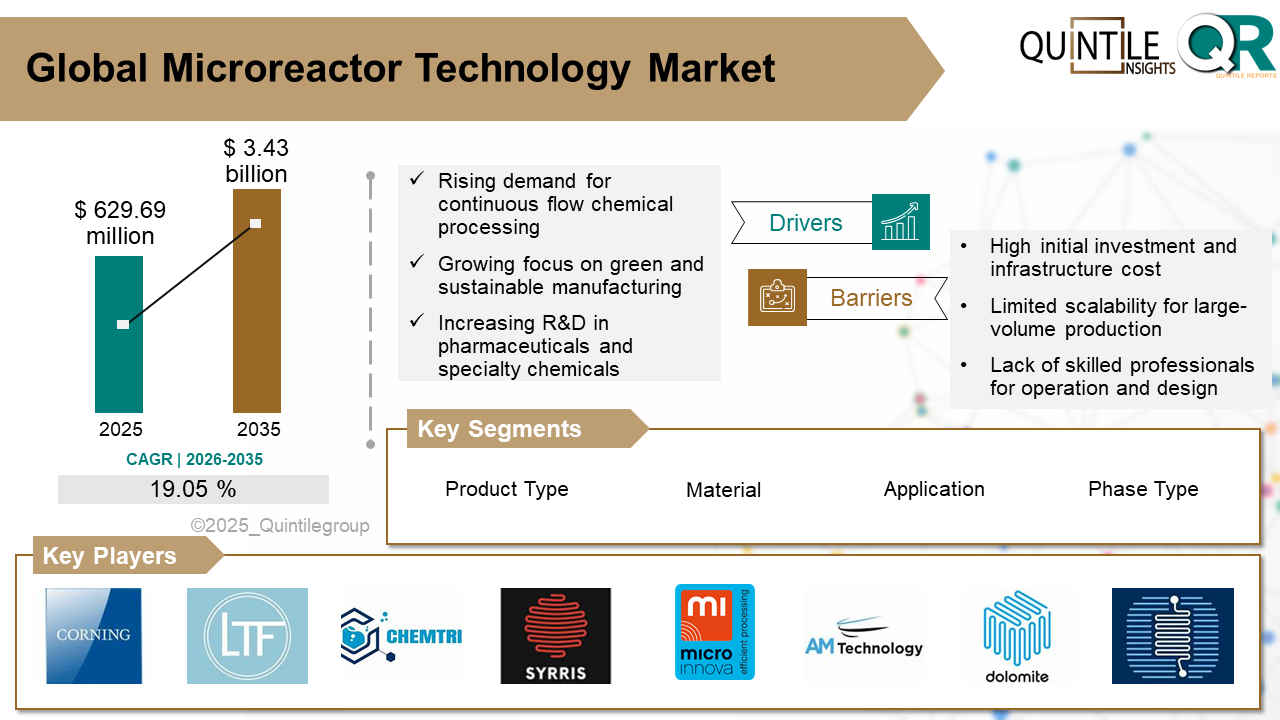
As a result, it’s speeding up drug development, supporting greener chemical production, and enabling flexible, small-scale energy solutions. It also helps companies meet strict environmental standards, reduce risks, and cut costs. Looking ahead, this technology is set to power advances in continuous manufacturing, personalized medicine, and clean energy—playing a key role in shaping the future of industry.
One of the primary factors is the increasing demand for sustainable manufacturing. Microreactors support continuous-flow processes that significantly reduce waste and emissions compared to traditional batch reactors. Their high surface-area-to-volume ratio enhances heat and mass transfer, making chemical reactions more energy-efficient.
In the pharmaceutical industry, microreactors are gaining popularity due to their ability to conduct fast, highly controlled chemical synthesis with excellent selectivity and yield. This leads to less batch-to-batch variation and speeds up drug discovery and development timelines. Coupled with real-time analytics and AI integration, microreactors help optimize processes, enhance productivity, and reduce operational costs.
Another significant area of growth is in nuclear energy, particularly with the development of small modular reactors (SMRs) and portable nuclear units in the 1–20 MW range. These systems are increasingly used for non-electric applications like hydrogen production, water desalination, and providing energy in remote or disaster-stricken regions.
Finally, technological collaborations and digital integration are accelerating innovation in the microreactor space. Partnerships between academia, industry players, and tech providers are driving the field forward. The use of AI for reaction optimization, combined with modular, plug-and-play designs, is making microreactor systems more accessible to mid-sized chemical companies.
Adopting microreactor systems comes with several significant hurdles, especially for small and medium-sized enterprises (SMEs).
The initial setup costs are often prohibitively high, and when automation and advanced process analytics are added, expenses can rise by an additional 20–30%, making widespread adoption difficult.
Even when microreactors are successfully used at the lab scale, scaling those processes to industrial levels presents major technical challenges. In many cases, traditional batch reactors remain more cost-effective for handling large volumes.
Regulatory compliance adds another layer of complexity—particularly in tightly controlled industries like pharmaceuticals —where every process change requires extensive validation, leading to delays and increased documentation efforts.
Moreover, the operation of microreactors demands specialized knowledge in areas like flow chemistry and reaction kinetics, which can create talent gaps and further complicate day-to-day operations.
North America is at the forefront of microreactor technology innovation, fuelled by major strides in small modular reactors (SMRs) and the adoption of digital tools like AI to enhance reaction efficiency. In the United States, the Department of Energy (DOE) is playing a key role, offering up to USD 900 million in grants to accelerate the deployment of Gen III+ SMR projects—an indicator of strong federal backing for this next-generation energy source. Meanwhile, Canada is also making headway, with the Saskatchewan Research Council receiving USD 80 million to pilot the eVinci™ microreactor, highlighting real-world efforts to move microreactors closer to commercialization. To keep pace with these advancements, regulatory frameworks are evolving to ensure that safety and environmental standards are met. Despite the momentum, the industry faces hurdles such as high upfront costs and complex regulatory processes.
Europe is emerging as a leading hub for advanced microreactor research, development, and commercialization, thanks to significant government support and a strong innovation ecosystem. In the UK, nearly USD 400 million has been allocated through the Advanced Nuclear Fund to advance both Advanced Modular Reactors (AMRs) and Small Modular Reactors (SMRs), with a target for deployment by the early 2030s. A key focus across the region is on technological innovation, particularly modular, plug-and-play microreactors that align with GMP (Good Manufacturing Practice) standards. The push toward microreactors is also fuelled by the European Union’s strict environmental regulations and ambitious emissions targets. However, the path to regulatory approval remains a major hurdle, often proving both time-consuming and expensive.
The Asia Pacific region is poised to dominate the microreactor market. This growth is driven by rapid industrialization and modernization across major economies like China, India, Japan, and South Korea. China stands out as a global leader in nuclear energy, with 55 reactors already operational—offering a combined capacity of 53.2 GW—and 23 more under construction. The region benefits from a large, skilled workforce and strong manufacturing infrastructure, along with growing pharmaceutical and specialty chemical sectors that are increasingly adopting microreactors for efficient and scalable production. Government policies across these countries are aligned with ambitious carbon neutrality and energy security targets, further accelerating market growth. However, challenges remain, particularly in harmonizing safety standards across varied regulatory landscapes and navigating the complexities of technology transfer.
Latin America's microreactor market is still in its early stages but shows promising growth as interest rises in decentralized energy solutions, particularly for remote and off-grid communities. Countries like Brazil and Argentina are beginning to explore pilot projects that aim to use microreactors to support both industrial and agricultural needs. While government policies are slowly shifting to favour clean energy investments, the regulatory landscape is still developing and lacks the maturity seen in more advanced regions. The path forward isn't without challenges—limited funding, infrastructure bottlenecks, and lower levels of technological readiness continue to pose hurdles. Yet, there’s significant potential in using microreactors for sustainable chemical manufacturing and improving energy access in underserved rural areas.
The Middle East & Africa (MEA) region is still in the early stages of adopting microreactor technology, but interest is steadily growing—especially around goals like energy security and improving industrial efficiency. Countries such as the UAE and Saudi Arabia are leading the way by investing in nuclear and clean energy research, exploring pilot projects that use microreactors for water desalination and hydrogen production. While regulatory frameworks are beginning to take shape, they remain in development, with a strong emphasis on safety and minimizing environmental impact. The region does face significant hurdles, including geopolitical instability, a shortage of local expertise, and infrastructure limitations.
The United States is emerging as a global frontrunner in microreactor technology, fuelled by a powerful blend of federal backing and a vibrant innovation landscape. The Department of Energy (DOE) has committed up to USD 900 million to accelerate the development and domestic deployment of Generation III+ Small Modular Reactors (SMRs), marking a major push toward commercialization. Regulatory advancements, including the Nuclear Regulatory Commission’s streamlined Part 53 licensing process, are making it easier and faster to bring next-generation designs to market.
In a growing trend, key industry leaders and startups are collaborating with academic institutions to build AI-integrated microreactors capable of real-time diagnostics and improved operational accuracy—especially valuable for sectors like pharmaceutical and chemical manufacturing. The U.S. is also exploring defence applications through initiatives like Project Pele, which highlight microreactors’ potential to deliver resilient, off-grid power. With rising venture capital interest and increasing demand for decentralized clean energy, the market is expected to grow at a rapid pace.
Germany is emerging as a key player in the development of microreactor technology, driven by its strong commitment to sustainable industrial transformation and strict environmental regulations. Although the country maintains a cautious stance on nuclear energy, it is making strategic investments in advanced microreactor research and development, particularly for use in chemical process intensification and pharmaceutical manufacturing. German research institutes and companies are at the forefront of designing modular, plug-and-play microreactors that meet Good Manufacturing Practice (GMP) standards.
Government initiatives, such as funding from the German Federal Ministry of Education and Research (BMBF), are actively backing pilot projects that integrate microreactors with digital process control systems. While regulatory hurdles and public scepticism pose challenges, Germany’s robust industrial foundation and skilled talent pool offer strong potential for global leadership in this space. Reflecting this momentum, annual patent filings in microfluidics and flow chemistry have risen in recent years, signalling a surge in innovation.
Japan is rapidly emerging as a global leader in microreactor technology, driven by its pursuit of energy security and industrial modernization. Backed by the government’s commitment to achieving carbon neutrality by 2050, the country is investing heavily in nuclear innovation and cleaner chemical manufacturing. Through targeted support from the Ministry of Economy, Trade and Industry (METI), Japan is actively funding projects focused on compact microreactors for hydrogen production and pharmaceutical synthesis.
Japanese companies are also harnessing the power of AI and automation to boost process efficiency and safety, particularly in fine chemicals and specialty pharma sectors. Since 2020, Japan has filed over 120 patents in microreactor design and flow chemistry—signalling robust research and development activity. While high upfront costs and regulatory barriers remain, Japan’s strategic push toward digitalization and sustainability is setting it apart as a major force in the Asia-Pacific microreactor market, now the fastest-growing in the world.
In the microreactor market, companies compete by pushing the boundaries of reactor design and process efficiency.
Technological innovation is at the forefront, with a focus on enhancing heat and mass transfer, precision in reaction control, and miniaturization—made possible through advanced materials like glass, metals, and polymers. Those offering modular, plug-and-play systems for continuous-flow manufacturing stand out.
Efficiency and sustainability are also key—microreactors that deliver faster reactions, higher yields, and lower waste appeal to industries facing strict environmental regulations. Integration of AI, automation, and real-time analytics adds another layer of value, especially in pharmaceuticals and specialty chemicals where flexibility is crucial.
Scalability matters too—companies offering modular solutions that easily scale without performance loss are better positioned to serve diverse sectors. Safety and compliance with regulations are non-negotiable, especially in chemical and nuclear applications.
Competitive advantage also comes from material and manufacturing expertise, the ability to provide customized, application-specific designs, and forming strong innovation partnerships with academia and government. Finally, firms that can demonstrate lower operational costs despite high initial investments win customers by delivering better long-term value.
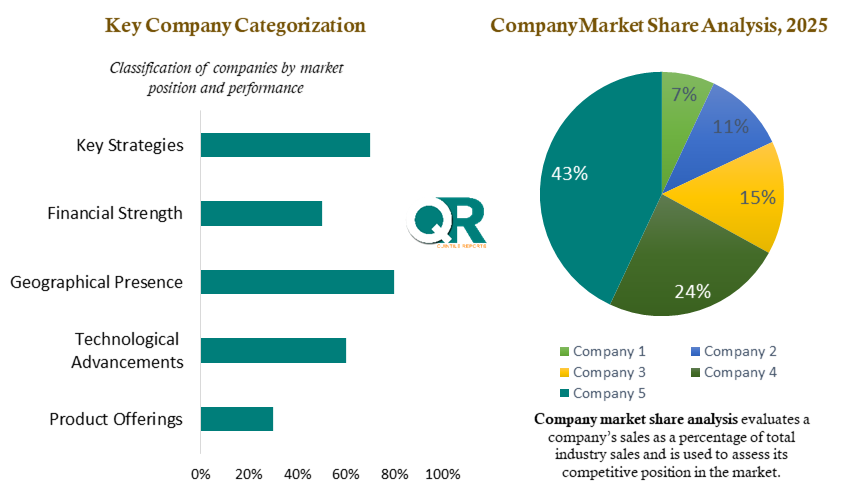
Key players in the market are Corning Incorporated, Little Things Factory GmbH, Chemtrix BV, Syrris Ltd., Vapourtec Ltd., Microinnova Engineering GmbH, AM Technology, Ehrfeld Mikrotechnik BTS GmbH, Future Chemistry, Dolomite Microfluidics, Uniqsis Ltd., Zaiput Flow Technologies, ThalesNano Inc., and other players.
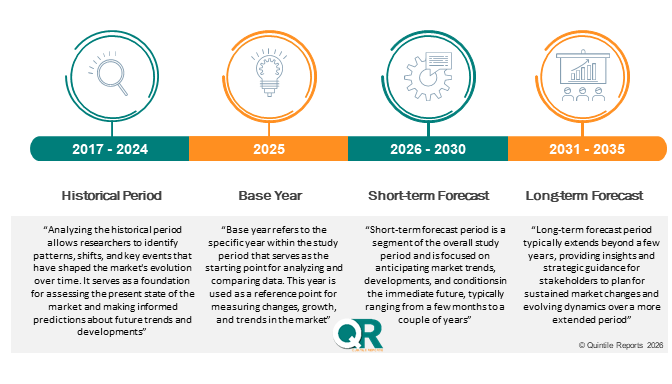
Our team of experienced researchers has meticulously gathered and analyzed data to deliver a thorough examination of market dynamics, competitive landscape, and emerging technologies. With a focus on delivering actionable intelligence, this report aims to empower decision-makers with the information needed to make informed choices and stay ahead of the competition. Whether you are a seasoned industry player or a new entrant, our market research report serves as a strategic tool to navigate the complexities of the market, aiding in successful business planning and growth strategies.
This chapter of our Microreactor Technology market report provides an in-depth examination of the factors shaping the industry landscape. This section typically encompasses several key elements to offer a comprehensive understanding of the industry landscape such as market drivers & restraints analysis, market opportunities & trend analysis, market size & growth analysis, competitive analysis, SWOT analysis, business environment tools such as Porter's five forces & PESTEL analysis, Ansoff Matrix analysis, penetration & growth prospect analysis, regulatory framework & reimbursement scenario analysis, impact of macro & micro economic factors analysis such as Covid-19 impact, GDP growth, market inflation, U.S.- China trade war, Russia-Ukraine war impact, and supply chain analysis.
The segment analysis chapter of Microreactor Technology market report is a critical section that delves into a detailed examination of the market's various segments. Segmentation involves dividing the market into distinct categories based on certain criteria to better understand and address the diverse needs of consumers. This chapter typically follows the introduction and provides a more granular view of the market, offering valuable insights for businesses and stakeholders. The components of the chapter include segment definitions to understand the inclusions and exclusions of the study, assumptions, market size estimates and growth trend analysis of each segment, qualitative analysis of the segment, technological advancements, market penetration rate, market adoption rate, market share examination by each segment, segment growth drivers and restraint barriers, consumer behaviour and challenge analysis.
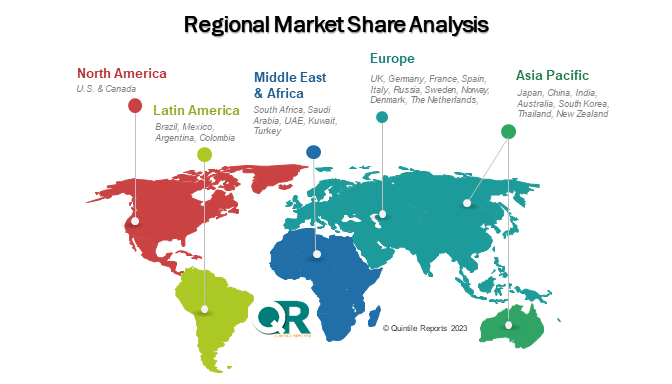
The chapter in Microreactor Technology market research report is a pivotal section that examines and predicts the market dynamics and trends specific to different geographical regions. This chapter is crucial for businesses and stakeholders seeking a comprehensive understanding of how the market behaves across various locations, enabling them to tailor strategies and make informed decisions based on regional variations. The regional analysis chapter of our Microreactor Technology market report is classified into regions & country-level. The chapter consists of North America (U.S., Canada), Europe (UK, Germany, France, Italy, Spain, Russia, Sweden, Denmark, Norway, Rest of Europe), Asia Pacific (Japan, China, India, Australia, South Korea, Thailand, Rest of Asia Pacific), Latin America (Brazil, Mexico, Argentina, Colombia, Rest of Latin America), Middle East & Africa (South Africa, Saudi Arabia, UAE, Kuwait, Rest of Middle East & Africa).
This section of a Microreactor Technology market report is a crucial segment that provides a comprehensive overview of the competitive landscape within the market. This section is vital for businesses, investors, and stakeholders seeking insights into key players, their market positioning, strengths, weaknesses, strategies, and potential impacts on the overall market dynamics. The chapter includes research methodology used to analyse the market competition, list of key players operating in the market, detailed company profile section which includes company overview, business verticals, financial performance, product/services benchmarking, geographical presence, and strategic initiatives.
| Report Scope | Details |
| Report Version | 2026 |
| Growth Rate | CAGR of 19.05 from 2026 to 2035 |
| Base Year | 2025 |
| Actual Estimates / Historical Data | 2017 - 2024 |
| Forecast Period | 2026 - 2035 |
| Quantitative Units | Revenue in USD million/billion & CAGR from 2026 to 2035 |
| Country Scope | North America (U.S., Canada), Europe (UK, Germany, France, Italy, Spain, Russia, Sweden, Denmark, Norway, Rest of Europe), Asia Pacific (Japan, China, India, Australia, South Korea, Thailand, Rest of Asia Pacific), Latin America (Brazil, Mexico, Argentina, Colombia, Rest of Latin America), Middle East & Africa (South Africa, Saudi Arabia, UAE, Kuwait, Rest of Middle East & Africa). |
| The Segment Covered by Type |
|
| The Segment Covered by Material |
|
| Companies Covered |
|
| Report Coverage | Revenue forecast, company share, competitive landscape, growth factors, and trends |
| Free Customization Scope (Equivalent to 5 Analyst Working Days) | If you need specific information, which is not currently within the scope of the report, we will provide it to you as a part of the customization |

Statistics for the 2025 Microreactor Technology market share, size, and revenue growth rate were created by Quintile Report™. Microreactor Technology analysis includes a market forecast outlook for 2035 and a historical overview. Get a free PDF sample of this market analysis, please get in touch with our principal analyst at sales@quintilereports.com
List of Tables
Table 1 List of Abbreviation and acronyms
Table 2 List of Sources
Table 3 North America Global Microreactor Technology Market, by Segment Analysis, (USD Million) 2017-2035
Table 4 North America Global Microreactor Technology Market, by Region, (USD Million) 2017-2035
Table 5 U.S. Global Microreactor Technology Market, by Segment Analysis, (USD Million) 2017-2035
Table 6 Canada Global Microreactor Technology Market, by Segment Analysis, (USD Million) 2017-2035
Table 7 Europe Global Microreactor Technology Market, by Segment Analysis, (USD Million) 2017-2035
Table 8 Europe Global Microreactor Technology Market, by Region, (USD Million) 2017-2035
Table 9 Germany Global Microreactor Technology Market, by Segment Analysis, (USD Million) 2017-2035
Table 10 U.K. Global Microreactor Technology Market, by Segment Analysis, (USD Million) 2017-2035
Table 11 France Global Microreactor Technology Market, by Segment Analysis, (USD Million) 2017-2035
Table 12 Italy Global Microreactor Technology Market, by Segment Analysis, (USD Million) 2017-2035
Table 13 Spain Global Microreactor Technology Market, by Segment Analysis, (USD Million) 2017-2035
Table 14 Sweden Global Microreactor Technology Market, by Segment Analysis, (USD Million) 2017-2035
Table 15 Denmark Global Microreactor Technology Market, by Segment Analysis, (USD Million) 2017-2035
Table 16 Norway Global Microreactor Technology Market, by Segment Analysis, (USD Million) 2017-2035
Table 17 The Netherlands Global Microreactor Technology Market, by Segment Analysis, (USD Million) 2017-2035
Table 18 Russia Global Microreactor Technology Market, by Segment Analysis, (USD Million) 2017-2035
Table 19 Asia Pacific Global Microreactor Technology Market, by Segment Analysis, (USD Million) 2017-2035
Table 20 Asia Pacific Global Microreactor Technology Market, by Region, (USD Million) 2017-2035
Table 21 China Global Microreactor Technology Market, by Segment Analysis, (USD Million) 2017-2035
Table 22 Japan Global Microreactor Technology Market, by Segment Analysis, (USD Million) 2017-2035
Table 23 India Global Microreactor Technology Market, by Segment Analysis, (USD Million) 2017-2035
Table 24 Australia Global Microreactor Technology Market, by Segment Analysis, (USD Million) 2017-2035
Table 25 South Korea Global Microreactor Technology Market, by Segment Analysis, (USD Million) 2017-2035
Table 26 Thailand Global Microreactor Technology Market, by Segment Analysis, (USD Million) 2017-2035
Table 27 Latin America Global Microreactor Technology Market, by Segment Analysis, (USD Million) 2017-2035
Table 28 Latin America Global Microreactor Technology Market, by Region, (USD Million) 2017-2035
Table 29 Brazil Global Microreactor Technology Market, by Segment Analysis, (USD Million) 2017-2035
Table 30 Mexico Global Microreactor Technology Market, by Segment Analysis, (USD Million) 2017-2035
Table 31 Argentina Global Microreactor Technology Market, by Segment Analysis, (USD Million) 2017-2035
Table 32 Middle East and Africa Global Microreactor Technology Market, by Segment Analysis, (USD Million) 2017-2035
Table 33 Middle East and Africa Global Microreactor Technology Market, by Region, (USD Million) 2017-2035
Table 34 South Africa Global Microreactor Technology Market, by Segment Analysis, (USD Million) 2017-2035
Table 35 Saudi Arabia Global Microreactor Technology Market, by Segment Analysis, (USD Million) 2017-2035
Table 36 UAE Global Microreactor Technology Market, by Segment Analysis, (USD Million) 2017-2035
Table 37 Kuwait Global Microreactor Technology Market, by Segment Analysis, (USD Million) 2017-2035
Table 38 Turkey Global Microreactor Technology Market, by Segment Analysis, (USD Million) 2017-2035
Fig.1 Market research process
Fig.2 Market research approaches
Fig.3 Global Microreactor Technology Market: market scenario
Fig.4 Global Microreactor Technology Market competitive outlook
Fig.5 Global Microreactor Technology Market driver analysis
Fig.6 Global Microreactor Technology Market restraint analysis
Fig.7 Global Microreactor Technology Market opportunity analysis
Fig.8 Global Microreactor Technology Market trends analysis
Fig.9 Global Microreactor Technology Market: Segment Analysis (Based on the scope)
Fig.10 Global Microreactor Technology Market: regional analysis
Fig.11 Global market shares and leading market players
Fig.12 North America market share and leading players
Fig.13 Europe market share and leading players
Fig.14 Asia Pacific market share and leading players
Fig.15 Latin America market share and leading players
Fig.16 Middle East & Africa market share and leading players
Fig.17 North America, by country
Fig.18 North America
Fig.19 North America market estimates and forecast, 2017-2035
Fig.20 U.S.
Fig.21 Canada
Fig.22 Europe
Fig.23 Europe market estimates and forecast, 2017-2035
Fig.24 U.K.
Fig.25 Germany
Fig.26 France
Fig.27 Italy
Fig.28 Spain
Fig.29 Sweden
Fig.30 Denmark
Fig.31 Norway
Fig.32 The Netherlands
Fig.33 Russia
Fig.34 Asia Pacific
Fig.35 Asia Pacific market estimates and forecast, 2017-2035
Fig.36 China
Fig.37 Japan
Fig.38 India
Fig.39 Australia
Fig.40 South Korea
Fig.41 Thailand
Fig.42 Latin America
Fig.43 Latin America market estimates and forecast, 2017-2035
Fig.44 Brazil
Fig.45 Mexico
Fig.46 Argentina
Fig.47 Colombia
Fig.48 Middle East and Africa
Fig.49 Middle East and Africa market estimates and forecast, 2017-2035
Fig.50 Saudi Arabia
Fig.51 South Africa
Fig.52 UAE
Fig.53 Kuwait
Fig.54 Turkey
The Global Microreactor Technology Market was valued at USD 629.69 million in 2025 and is anticipated to reach USD 3.43 billion by 2035, growing at a robust CAGR of 19.05% during the forecast period from 2026 to 2035. The Microreactor Technology market report presents a comprehensive overview of the industry by assessing macroeconomic conditions, emerging technologies, regulatory frameworks, and shifting consumer behavior to provide a clear outlook on future market expansion.
Microreactor technology is a breakthrough in chemical engineering that uses tiny reactors with micro-sized channels—just tens to hundreds of micrometres wide—to carry out chemical reactions with incredible precision. This miniaturization allows for exceptional control over key factors like temperature, pressure, mixing, and how long the chemicals stay in the reactor, which helps improve both the speed and efficiency of reactions.
With 2025 serving as the base year, the Microreactor Technology market is experiencing stable growth supported by rising demand across key end-use industries and continuous technological innovation. Companies operating in the market are enhancing their go-to-market (GTM) strategies to capture emerging opportunities and navigate evolving competitive dynamics effectively.
By 2035, the market is expected to demonstrate strong growth potential, driven by sustained investments in innovation, increasing strategic partnerships, and growing merger and acquisition activities. Organizations that prioritize customer-centric solutions, innovation, and agile GTM execution are likely to strengthen their market presence and achieve long-term success. The report provides detailed insights into major market drivers, restraints, opportunities, and challenges across segments, regions, and countries, supported by extensive qualitative and quantitative analysis from 2017 to 2035.
As a result, it’s speeding up drug development, supporting greener chemical production, and enabling flexible, small-scale energy solutions. It also helps companies meet strict environmental standards, reduce risks, and cut costs. Looking ahead, this technology is set to power advances in continuous manufacturing, personalized medicine, and clean energy—playing a key role in shaping the future of industry.
One of the primary factors is the increasing demand for sustainable manufacturing. Microreactors support continuous-flow processes that significantly reduce waste and emissions compared to traditional batch reactors. Their high surface-area-to-volume ratio enhances heat and mass transfer, making chemical reactions more energy-efficient.
In the pharmaceutical industry, microreactors are gaining popularity due to their ability to conduct fast, highly controlled chemical synthesis with excellent selectivity and yield. This leads to less batch-to-batch variation and speeds up drug discovery and development timelines. Coupled with real-time analytics and AI integration, microreactors help optimize processes, enhance productivity, and reduce operational costs.
Another significant area of growth is in nuclear energy, particularly with the development of small modular reactors (SMRs) and portable nuclear units in the 1–20 MW range. These systems are increasingly used for non-electric applications like hydrogen production, water desalination, and providing energy in remote or disaster-stricken regions.
Finally, technological collaborations and digital integration are accelerating innovation in the microreactor space. Partnerships between academia, industry players, and tech providers are driving the field forward. The use of AI for reaction optimization, combined with modular, plug-and-play designs, is making microreactor systems more accessible to mid-sized chemical companies.
Adopting microreactor systems comes with several significant hurdles, especially for small and medium-sized enterprises (SMEs).
The initial setup costs are often prohibitively high, and when automation and advanced process analytics are added, expenses can rise by an additional 20–30%, making widespread adoption difficult.
Even when microreactors are successfully used at the lab scale, scaling those processes to industrial levels presents major technical challenges. In many cases, traditional batch reactors remain more cost-effective for handling large volumes.
Regulatory compliance adds another layer of complexity—particularly in tightly controlled industries like pharmaceuticals —where every process change requires extensive validation, leading to delays and increased documentation efforts.
Moreover, the operation of microreactors demands specialized knowledge in areas like flow chemistry and reaction kinetics, which can create talent gaps and further complicate day-to-day operations.
North America is at the forefront of microreactor technology innovation, fuelled by major strides in small modular reactors (SMRs) and the adoption of digital tools like AI to enhance reaction efficiency. In the United States, the Department of Energy (DOE) is playing a key role, offering up to USD 900 million in grants to accelerate the deployment of Gen III+ SMR projects—an indicator of strong federal backing for this next-generation energy source. Meanwhile, Canada is also making headway, with the Saskatchewan Research Council receiving USD 80 million to pilot the eVinci™ microreactor, highlighting real-world efforts to move microreactors closer to commercialization. To keep pace with these advancements, regulatory frameworks are evolving to ensure that safety and environmental standards are met. Despite the momentum, the industry faces hurdles such as high upfront costs and complex regulatory processes.
Europe is emerging as a leading hub for advanced microreactor research, development, and commercialization, thanks to significant government support and a strong innovation ecosystem. In the UK, nearly USD 400 million has been allocated through the Advanced Nuclear Fund to advance both Advanced Modular Reactors (AMRs) and Small Modular Reactors (SMRs), with a target for deployment by the early 2030s. A key focus across the region is on technological innovation, particularly modular, plug-and-play microreactors that align with GMP (Good Manufacturing Practice) standards. The push toward microreactors is also fuelled by the European Union’s strict environmental regulations and ambitious emissions targets. However, the path to regulatory approval remains a major hurdle, often proving both time-consuming and expensive.
The Asia Pacific region is poised to dominate the microreactor market. This growth is driven by rapid industrialization and modernization across major economies like China, India, Japan, and South Korea. China stands out as a global leader in nuclear energy, with 55 reactors already operational—offering a combined capacity of 53.2 GW—and 23 more under construction. The region benefits from a large, skilled workforce and strong manufacturing infrastructure, along with growing pharmaceutical and specialty chemical sectors that are increasingly adopting microreactors for efficient and scalable production. Government policies across these countries are aligned with ambitious carbon neutrality and energy security targets, further accelerating market growth. However, challenges remain, particularly in harmonizing safety standards across varied regulatory landscapes and navigating the complexities of technology transfer.
Latin America's microreactor market is still in its early stages but shows promising growth as interest rises in decentralized energy solutions, particularly for remote and off-grid communities. Countries like Brazil and Argentina are beginning to explore pilot projects that aim to use microreactors to support both industrial and agricultural needs. While government policies are slowly shifting to favour clean energy investments, the regulatory landscape is still developing and lacks the maturity seen in more advanced regions. The path forward isn't without challenges—limited funding, infrastructure bottlenecks, and lower levels of technological readiness continue to pose hurdles. Yet, there’s significant potential in using microreactors for sustainable chemical manufacturing and improving energy access in underserved rural areas.
The Middle East & Africa (MEA) region is still in the early stages of adopting microreactor technology, but interest is steadily growing—especially around goals like energy security and improving industrial efficiency. Countries such as the UAE and Saudi Arabia are leading the way by investing in nuclear and clean energy research, exploring pilot projects that use microreactors for water desalination and hydrogen production. While regulatory frameworks are beginning to take shape, they remain in development, with a strong emphasis on safety and minimizing environmental impact. The region does face significant hurdles, including geopolitical instability, a shortage of local expertise, and infrastructure limitations.
The United States is emerging as a global frontrunner in microreactor technology, fuelled by a powerful blend of federal backing and a vibrant innovation landscape. The Department of Energy (DOE) has committed up to USD 900 million to accelerate the development and domestic deployment of Generation III+ Small Modular Reactors (SMRs), marking a major push toward commercialization. Regulatory advancements, including the Nuclear Regulatory Commission’s streamlined Part 53 licensing process, are making it easier and faster to bring next-generation designs to market.
In a growing trend, key industry leaders and startups are collaborating with academic institutions to build AI-integrated microreactors capable of real-time diagnostics and improved operational accuracy—especially valuable for sectors like pharmaceutical and chemical manufacturing. The U.S. is also exploring defence applications through initiatives like Project Pele, which highlight microreactors’ potential to deliver resilient, off-grid power. With rising venture capital interest and increasing demand for decentralized clean energy, the market is expected to grow at a rapid pace.
Germany is emerging as a key player in the development of microreactor technology, driven by its strong commitment to sustainable industrial transformation and strict environmental regulations. Although the country maintains a cautious stance on nuclear energy, it is making strategic investments in advanced microreactor research and development, particularly for use in chemical process intensification and pharmaceutical manufacturing. German research institutes and companies are at the forefront of designing modular, plug-and-play microreactors that meet Good Manufacturing Practice (GMP) standards.
Government initiatives, such as funding from the German Federal Ministry of Education and Research (BMBF), are actively backing pilot projects that integrate microreactors with digital process control systems. While regulatory hurdles and public scepticism pose challenges, Germany’s robust industrial foundation and skilled talent pool offer strong potential for global leadership in this space. Reflecting this momentum, annual patent filings in microfluidics and flow chemistry have risen in recent years, signalling a surge in innovation.
Japan is rapidly emerging as a global leader in microreactor technology, driven by its pursuit of energy security and industrial modernization. Backed by the government’s commitment to achieving carbon neutrality by 2050, the country is investing heavily in nuclear innovation and cleaner chemical manufacturing. Through targeted support from the Ministry of Economy, Trade and Industry (METI), Japan is actively funding projects focused on compact microreactors for hydrogen production and pharmaceutical synthesis.
Japanese companies are also harnessing the power of AI and automation to boost process efficiency and safety, particularly in fine chemicals and specialty pharma sectors. Since 2020, Japan has filed over 120 patents in microreactor design and flow chemistry—signalling robust research and development activity. While high upfront costs and regulatory barriers remain, Japan’s strategic push toward digitalization and sustainability is setting it apart as a major force in the Asia-Pacific microreactor market, now the fastest-growing in the world.
In the microreactor market, companies compete by pushing the boundaries of reactor design and process efficiency.
Technological innovation is at the forefront, with a focus on enhancing heat and mass transfer, precision in reaction control, and miniaturization—made possible through advanced materials like glass, metals, and polymers. Those offering modular, plug-and-play systems for continuous-flow manufacturing stand out.
Efficiency and sustainability are also key—microreactors that deliver faster reactions, higher yields, and lower waste appeal to industries facing strict environmental regulations. Integration of AI, automation, and real-time analytics adds another layer of value, especially in pharmaceuticals and specialty chemicals where flexibility is crucial.
Scalability matters too—companies offering modular solutions that easily scale without performance loss are better positioned to serve diverse sectors. Safety and compliance with regulations are non-negotiable, especially in chemical and nuclear applications.
Competitive advantage also comes from material and manufacturing expertise, the ability to provide customized, application-specific designs, and forming strong innovation partnerships with academia and government. Finally, firms that can demonstrate lower operational costs despite high initial investments win customers by delivering better long-term value.
Key players in the market are Corning Incorporated, Little Things Factory GmbH, Chemtrix BV, Syrris Ltd., Vapourtec Ltd., Microinnova Engineering GmbH, AM Technology, Ehrfeld Mikrotechnik BTS GmbH, Future Chemistry, Dolomite Microfluidics, Uniqsis Ltd., Zaiput Flow Technologies, ThalesNano Inc., and other players.
Our team of experienced researchers has meticulously gathered and analyzed data to deliver a thorough examination of market dynamics, competitive landscape, and emerging technologies. With a focus on delivering actionable intelligence, this report aims to empower decision-makers with the information needed to make informed choices and stay ahead of the competition. Whether you are a seasoned industry player or a new entrant, our market research report serves as a strategic tool to navigate the complexities of the market, aiding in successful business planning and growth strategies.
This chapter of our Microreactor Technology market report provides an in-depth examination of the factors shaping the industry landscape. This section typically encompasses several key elements to offer a comprehensive understanding of the industry landscape such as market drivers & restraints analysis, market opportunities & trend analysis, market size & growth analysis, competitive analysis, SWOT analysis, business environment tools such as Porter's five forces & PESTEL analysis, Ansoff Matrix analysis, penetration & growth prospect analysis, regulatory framework & reimbursement scenario analysis, impact of macro & micro economic factors analysis such as Covid-19 impact, GDP growth, market inflation, U.S.- China trade war, Russia-Ukraine war impact, and supply chain analysis.
The segment analysis chapter of Microreactor Technology market report is a critical section that delves into a detailed examination of the market's various segments. Segmentation involves dividing the market into distinct categories based on certain criteria to better understand and address the diverse needs of consumers. This chapter typically follows the introduction and provides a more granular view of the market, offering valuable insights for businesses and stakeholders. The components of the chapter include segment definitions to understand the inclusions and exclusions of the study, assumptions, market size estimates and growth trend analysis of each segment, qualitative analysis of the segment, technological advancements, market penetration rate, market adoption rate, market share examination by each segment, segment growth drivers and restraint barriers, consumer behaviour and challenge analysis.
The chapter in Microreactor Technology market research report is a pivotal section that examines and predicts the market dynamics and trends specific to different geographical regions. This chapter is crucial for businesses and stakeholders seeking a comprehensive understanding of how the market behaves across various locations, enabling them to tailor strategies and make informed decisions based on regional variations. The regional analysis chapter of our Microreactor Technology market report is classified into regions & country-level. The chapter consists of North America (U.S., Canada), Europe (UK, Germany, France, Italy, Spain, Russia, Sweden, Denmark, Norway, Rest of Europe), Asia Pacific (Japan, China, India, Australia, South Korea, Thailand, Rest of Asia Pacific), Latin America (Brazil, Mexico, Argentina, Colombia, Rest of Latin America), Middle East & Africa (South Africa, Saudi Arabia, UAE, Kuwait, Rest of Middle East & Africa).
This section of a Microreactor Technology market report is a crucial segment that provides a comprehensive overview of the competitive landscape within the market. This section is vital for businesses, investors, and stakeholders seeking insights into key players, their market positioning, strengths, weaknesses, strategies, and potential impacts on the overall market dynamics. The chapter includes research methodology used to analyse the market competition, list of key players operating in the market, detailed company profile section which includes company overview, business verticals, financial performance, product/services benchmarking, geographical presence, and strategic initiatives.
| Report Scope | Details |
| Report Version | 2026 |
| Growth Rate | CAGR of 19.05 from 2026 to 2035 |
| Base Year | 2025 |
| Actual Estimates / Historical Data | 2017 - 2024 |
| Forecast Period | 2026 - 2035 |
| Quantitative Units | Revenue in USD million/billion & CAGR from 2026 to 2035 |
| Country Scope | North America (U.S., Canada), Europe (UK, Germany, France, Italy, Spain, Russia, Sweden, Denmark, Norway, Rest of Europe), Asia Pacific (Japan, China, India, Australia, South Korea, Thailand, Rest of Asia Pacific), Latin America (Brazil, Mexico, Argentina, Colombia, Rest of Latin America), Middle East & Africa (South Africa, Saudi Arabia, UAE, Kuwait, Rest of Middle East & Africa). |
| The Segment Covered by Type |
|
| The Segment Covered by Material |
|
| Companies Covered |
|
| Report Coverage | Revenue forecast, company share, competitive landscape, growth factors, and trends |
| Free Customization Scope (Equivalent to 5 Analyst Working Days) | If you need specific information, which is not currently within the scope of the report, we will provide it to you as a part of the customization |
Statistics for the 2025 Microreactor Technology market share, size, and revenue growth rate were created by Quintile Report™. Microreactor Technology analysis includes a market forecast outlook for 2035 and a historical overview. Get a free PDF sample of this market analysis, please get in touch with our principal analyst at sales@quintilereports.com
Table 1 List of Abbreviation and acronyms
Table 2 List of Sources
Table 3 North America Global Microreactor Technology Market, by Segment Analysis, (USD Million) 2017-2035
Table 4 North America Global Microreactor Technology Market, by Region, (USD Million) 2017-2035
Table 5 U.S. Global Microreactor Technology Market, by Segment Analysis, (USD Million) 2017-2035
Table 6 Canada Global Microreactor Technology Market, by Segment Analysis, (USD Million) 2017-2035
Table 7 Europe Global Microreactor Technology Market, by Segment Analysis, (USD Million) 2017-2035
Table 8 Europe Global Microreactor Technology Market, by Region, (USD Million) 2017-2035
Table 9 Germany Global Microreactor Technology Market, by Segment Analysis, (USD Million) 2017-2035
Table 10 U.K. Global Microreactor Technology Market, by Segment Analysis, (USD Million) 2017-2035
Table 11 France Global Microreactor Technology Market, by Segment Analysis, (USD Million) 2017-2035
Table 12 Italy Global Microreactor Technology Market, by Segment Analysis, (USD Million) 2017-2035
Table 13 Spain Global Microreactor Technology Market, by Segment Analysis, (USD Million) 2017-2035
Table 14 Sweden Global Microreactor Technology Market, by Segment Analysis, (USD Million) 2017-2035
Table 15 Denmark Global Microreactor Technology Market, by Segment Analysis, (USD Million) 2017-2035
Table 16 Norway Global Microreactor Technology Market, by Segment Analysis, (USD Million) 2017-2035
Table 17 The Netherlands Global Microreactor Technology Market, by Segment Analysis, (USD Million) 2017-2035
Table 18 Russia Global Microreactor Technology Market, by Segment Analysis, (USD Million) 2017-2035
Table 19 Asia Pacific Global Microreactor Technology Market, by Segment Analysis, (USD Million) 2017-2035
Table 20 Asia Pacific Global Microreactor Technology Market, by Region, (USD Million) 2017-2035
Table 21 China Global Microreactor Technology Market, by Segment Analysis, (USD Million) 2017-2035
Table 22 Japan Global Microreactor Technology Market, by Segment Analysis, (USD Million) 2017-2035
Table 23 India Global Microreactor Technology Market, by Segment Analysis, (USD Million) 2017-2035
Table 24 Australia Global Microreactor Technology Market, by Segment Analysis, (USD Million) 2017-2035
Table 25 South Korea Global Microreactor Technology Market, by Segment Analysis, (USD Million) 2017-2035
Table 26 Thailand Global Microreactor Technology Market, by Segment Analysis, (USD Million) 2017-2035
Table 27 Latin America Global Microreactor Technology Market, by Segment Analysis, (USD Million) 2017-2035
Table 28 Latin America Global Microreactor Technology Market, by Region, (USD Million) 2017-2035
Table 29 Brazil Global Microreactor Technology Market, by Segment Analysis, (USD Million) 2017-2035
Table 30 Mexico Global Microreactor Technology Market, by Segment Analysis, (USD Million) 2017-2035
Table 31 Argentina Global Microreactor Technology Market, by Segment Analysis, (USD Million) 2017-2035
Table 32 Middle East and Africa Global Microreactor Technology Market, by Segment Analysis, (USD Million) 2017-2035
Table 33 Middle East and Africa Global Microreactor Technology Market, by Region, (USD Million) 2017-2035
Table 34 South Africa Global Microreactor Technology Market, by Segment Analysis, (USD Million) 2017-2035
Table 35 Saudi Arabia Global Microreactor Technology Market, by Segment Analysis, (USD Million) 2017-2035
Table 36 UAE Global Microreactor Technology Market, by Segment Analysis, (USD Million) 2017-2035
Table 37 Kuwait Global Microreactor Technology Market, by Segment Analysis, (USD Million) 2017-2035
Table 38 Turkey Global Microreactor Technology Market, by Segment Analysis, (USD Million) 2017-2035
Fig.1 Market research process
Fig.2 Market research approaches
Fig.3 Global Microreactor Technology Market: market scenario
Fig.4 Global Microreactor Technology Market competitive outlook
Fig.5 Global Microreactor Technology Market driver analysis
Fig.6 Global Microreactor Technology Market restraint analysis
Fig.7 Global Microreactor Technology Market opportunity analysis
Fig.8 Global Microreactor Technology Market trends analysis
Fig.9 Global Microreactor Technology Market: Segment Analysis (Based on the scope)
Fig.10 Global Microreactor Technology Market: regional analysis
Fig.11 Global market shares and leading market players
Fig.12 North America market share and leading players
Fig.13 Europe market share and leading players
Fig.14 Asia Pacific market share and leading players
Fig.15 Latin America market share and leading players
Fig.16 Middle East & Africa market share and leading players
Fig.17 North America, by country
Fig.18 North America
Fig.19 North America market estimates and forecast, 2017-2035
Fig.20 U.S.
Fig.21 Canada
Fig.22 Europe
Fig.23 Europe market estimates and forecast, 2017-2035
Fig.24 U.K.
Fig.25 Germany
Fig.26 France
Fig.27 Italy
Fig.28 Spain
Fig.29 Sweden
Fig.30 Denmark
Fig.31 Norway
Fig.32 The Netherlands
Fig.33 Russia
Fig.34 Asia Pacific
Fig.35 Asia Pacific market estimates and forecast, 2017-2035
Fig.36 China
Fig.37 Japan
Fig.38 India
Fig.39 Australia
Fig.40 South Korea
Fig.41 Thailand
Fig.42 Latin America
Fig.43 Latin America market estimates and forecast, 2017-2035
Fig.44 Brazil
Fig.45 Mexico
Fig.46 Argentina
Fig.47 Colombia
Fig.48 Middle East and Africa
Fig.49 Middle East and Africa market estimates and forecast, 2017-2035
Fig.50 Saudi Arabia
Fig.51 South Africa
Fig.52 UAE
Fig.53 Kuwait
Fig.54 Turkey

A license granted to one user. Rules or conditions might be applied for e.g. the use of electric files (PDFs) or printings, depending on product.
A license granted to multiple users.
A license granted to a single business site/establishment.
A license granted to all employees within organisation access to the product.
Immediate / Within 24-48 hours - Working days
Online Payments with PayPal and CCavenue
You can order a report by picking any of the payment methods which is bank wire or online payment through any Debit/Credit card or PayPal.
Hard Copy
 U.S. : +1-201-772-7734