The Global Autonomous Firefighting Drones Market was valued at USD 3.93 billion in 2025 and is projected to reach USD 13.8 billion by 2035, advancing at a notable CAGR of 17.68% throughout the forecast period from 2026 to 2035. The Autonomous Firefighting Drones market report provides an in-depth analysis of the industry by examining macroeconomic indicators, technological progress, regulatory environments, and evolving consumer trends to highlight the market’s long-term growth outlook.
The autonomous firefighting drones market includes unmanned aerial systems designed to detect, monitor, and suppress fires with minimal human input. These drones are equipped with thermal cameras, sensors, fire-retardant payloads, and AI-powered navigation systems. They are used by fire departments, disaster response teams, forestry agencies, and industrial facilities for rapid assessment and early fire suppression.
These drones are capable of entering hazardous zones, operating in low-visibility environments, and performing search-and-rescue support. As fire threats increase due to climate change, urban sprawl, and industrial risks, autonomous drone systems offer a safer, faster, and more efficient alternative to manual firefighting, especially in high-rise buildings, wildlands, and remote infrastructure sites.
Taking 2025 as the base year, the Autonomous Firefighting Drones market is demonstrating steady growth fueled by increased innovation, expanding application areas across end-use sectors, and rapid digital transformation. Market participants are increasingly optimizing their go-to-market (GTM) strategies to strengthen market penetration and capitalize on emerging business opportunities.
Over the coming decade, the market is expected to maintain strong expansion supported by continuous R&D investments, collaborative partnerships, and a rising number of mergers and acquisitions. Businesses that focus on innovation, operational agility, and customer-focused strategies are expected to build a sustainable competitive advantage. The report delivers comprehensive insights into market drivers, restraints, opportunities, and challenges across segments, regions, and countries, backed by detailed qualitative and quantitative analysis from 2017 to 2035.
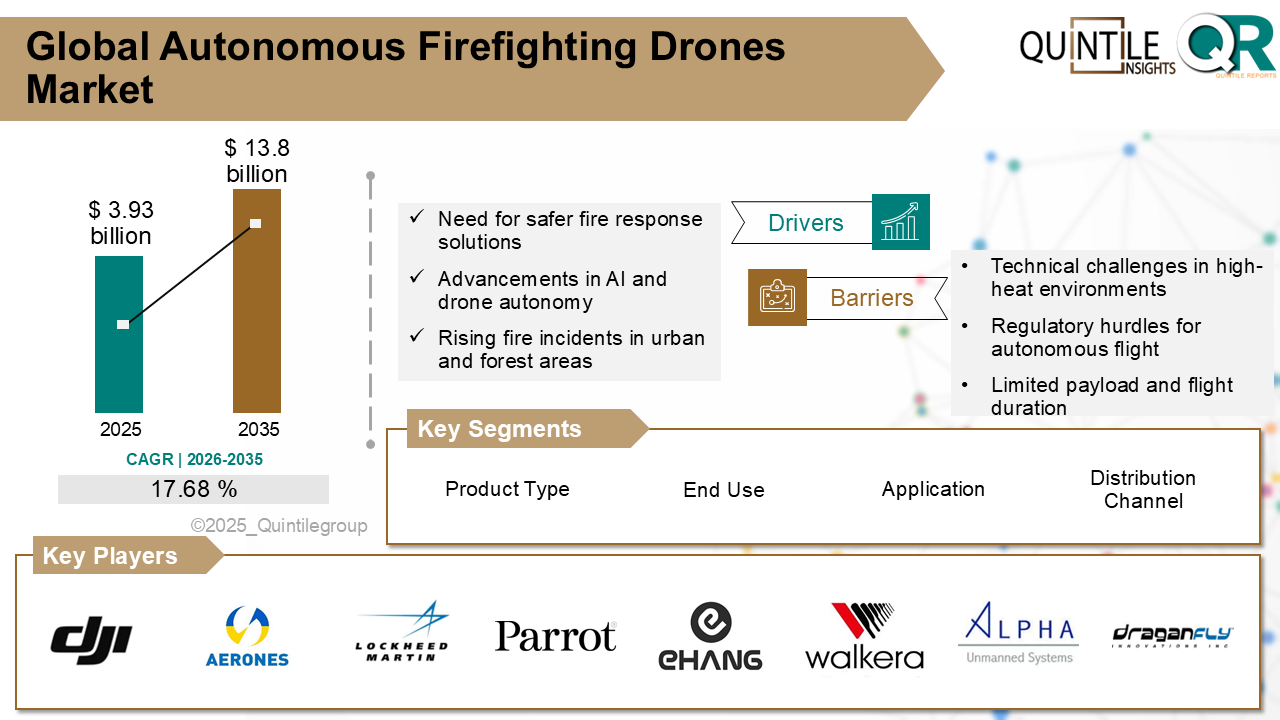
The forest area burnt by wildfires has increased significantly over recent decades, with wildfire incidents rising by approximately 5.4% annually between 2001 and 2023. Autonomous drones enable early detection and aerial suppression, helping prevent fires from spreading while keeping first responders out of harm’s way.
Advancements in cargo drones are also supporting firefighting missions by enabling aerial transport of fire retardants, emergency kits, and lightweight suppression equipment to remote wildfire zones. These payload-capable drones help emergency teams reach areas that may be inaccessible to traditional firefighting vehicles.
Municipal authorities are increasingly partnering with providers of commercial drone services to enhance aerial monitoring and emergency response capabilities. These services supply trained operators, advanced drone fleets, and cloud-based monitoring systems that allow cities to deploy drones quickly during fire incidents.
Urbanization is increasing the complexity of fire safety in high-density areas. In smart cities and megacities, drones are used to access rooftops, narrow streets, and vertical structures. Their ability to navigate in confined spaces and deliver real-time heat mapping makes them valuable for municipal fire departments and emergency services.
Technologies originally developed for last mile drone delivery are also being adapted for emergency response. These systems allow drones to transport small firefighting supplies, communication equipment, or medical kits to responders operating in difficult-to-access urban environments.
Industrial and energy facilities also rely on drone-based fire monitoring. Sites such as chemical plants, oil refineries, and offshore platforms use autonomous drones for routine fire patrols and emergency deployment. These systems can be activated during off-hours or triggered automatically by temperature thresholds.
Facilities are increasingly adopting industrial drone inspection technologies to detect overheating equipment, gas leaks, or structural faults that could lead to fire hazards. These inspections help organizations identify risks early and improve safety management across complex industrial environments.
In addition, drone surveying plays an important role in post-fire assessment. After a fire incident, drones can survey damaged infrastructure, burned forest areas, and affected industrial sites to support recovery planning and ensure the safety of inspection teams.
Policy and funding support for disaster resilience are driving adoption. Governments are investing in AI-based fire control technologies through climate adaptation and public safety programs. Several countries have launched pilot projects or grants to test autonomous drone fleets for firefighting, especially in wildfire-prone regions.
Research into solar powered drones is also expanding as agencies look for long-endurance monitoring solutions. These drones can remain airborne for extended periods and provide continuous surveillance of forests and protected areas, helping authorities detect wildfire risks at an early stage.
Autonomous firefighting drones face regulatory hurdles in many countries. Airspace rules often limit drone operations beyond the visual line of sight, especially in urban zones or during emergencies. Approval processes for night flights or automated fire suppression may delay deployment during critical incidents.
Battery life and payload limitations also restrict performance. Carrying fire retardants or surveillance equipment increases drone weight, reducing flight time and area coverage. In large-scale fires, drones need to return frequently for refueling or refilling, which limits operational continuity unless backed by multiple units.
Reliability in harsh conditions is another concern. High winds, smoke, and thermal turbulence can affect sensor accuracy and flight stability. If autonomous navigation systems are not robust, drones may fail to reach or remain stable in the fire zone, reducing their usefulness in dynamic environments.
Data privacy, cybersecurity, and coordination with ground teams also pose challenges. Real-time integration with emergency response systems requires secure communication links and compatibility with public safety networks. Without strong coordination protocols, drones may risk interfering with helicopters or ground crews.
North America is a leader in wildfire drone deployment. The United States and Canada use autonomous drones for forest fire patrol, thermal imaging, and fire perimeter mapping. State fire departments are testing AI-driven drones under climate adaptation plans. The region’s rising wildfire frequency and government-backed disaster preparedness programs are key drivers supporting drone adoption.
European countries apply firefighting drones in both urban fire safety and forest fire control. Nations such as Germany, France, and Spain use drone systems for early detection in fire-prone parks and industrial areas. Strict safety regulations and strong EU funding for smart emergency response tools continue to push demand for autonomous drone systems.
Asia Pacific countries including Japan, South Korea, and Australia use firefighting drones in coastal, forest, and urban areas. These systems are part of broader disaster risk preparedness strategies. The need for effective emergency response in dense urban zones and regions prone to natural disasters is driving market growth.
Chile, Brazil, and other Latin American countries deploy drones to monitor wildfires in rural, mountainous, and rainforest areas. These drones assist with environmental surveillance and damage assessment during dry seasons. Demand is primarily driven by the need to manage wildfire threats in ecologically sensitive areas despite budget limitations.
In the Middle East, firefighting drones are used in desert environments, oilfields, and high-rise building safety programs. Across parts of Africa, drones support wildfire control in national parks and fire prevention in industrial developments. Harsh terrain, limited access, and the need for fast-response tools are driving the gradual adoption of drone technologies, with support from international agencies and aid-funded programs.
These monitoring operations are often supported by surveillance drone technology equipped with thermal cameras and AI-based detection systems that help authorities identify smoke or heat signatures before fires spread across large areas.
The United States actively uses autonomous drones in wildfire-prone states such as California and Colorado. The U.S. Forest Service and FEMA have funded trials of drone-based early detection systems that use thermal sensors and automated alerts to identify fire outbreaks before ground teams arrive.
In addition to forest applications, U.S. cities use autonomous drones for inspecting rooftops, parking garages, and power substations during emergencies. Integration with police support and drone traffic management tools is expanding, supported by FAA drone safety waivers for emergency services.
Advanced drone mapping systems are also widely used to generate real-time aerial maps of wildfire zones, allowing emergency teams to track fire spread, evaluate terrain conditions, and plan evacuation or containment strategies more effectively.
Germany supports the use of autonomous drones in smart city and emergency response programs. Fire departments use drones for mapping fire scenes, guiding ground units, and checking roof access during high-rise incidents. AI-based routing systems help optimize coverage during emergency response operations.
The German Federal Ministry of Transport and Digital Infrastructure supports drone adoption through public-private partnerships. Firefighting drones are increasingly included in training programs and civil protection exercises, helping first responders coordinate more effectively in densely built areas.
Many municipalities also collaborate with specialized drone services providers to deploy advanced aerial monitoring systems that support firefighting, emergency inspections, and disaster response operations.
Japan uses autonomous drones in fire response drills and real-time city surveillance. Urban centers such as Tokyo and Osaka deploy drones to monitor narrow alleys, station rooftops, and elevated railways for early signs of smoke or heat buildup.
With frequent earthquakes and seasonal typhoons, Japan emphasizes drones that support both fire detection and multi-hazard disaster response. National programs led by the Fire and Disaster Management Agency and the Ministry of Land, Infrastructure, Transport and Tourism are helping scale pilot drone projects into permanent operational systems.
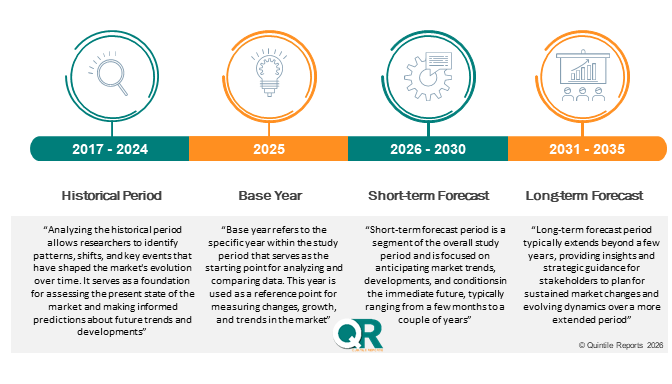
Our team of experienced researchers has meticulously gathered and analyzed data to deliver a thorough examination of market dynamics, competitive landscape, and emerging technologies. With a focus on delivering actionable intelligence, this report aims to empower decision-makers with the information needed to make informed choices and stay ahead of the competition. Whether you are a seasoned industry player or a new entrant, our market research report serves as a strategic tool to navigate the complexities of the market, aiding in successful business planning and growth strategies.
This chapter of our Autonomous Firefighting Drones market report provides an in-depth examination of the factors shaping the industry landscape. This section typically encompasses several key elements to offer a comprehensive understanding of the industry landscape such as market drivers & restraints analysis, market opportunities & trend analysis, market size & growth analysis, competitive analysis, SWOT analysis, business environment tools such as Porter's five forces & PESTEL analysis, Ansoff Matrix analysis, penetration & growth prospect analysis, regulatory framework & reimbursement scenario analysis, impact of macro & micro economic factors analysis such as Covid-19 impact, GDP growth, market inflation, U.S.- China trade war, Russia-Ukraine war impact, and supply chain analysis.
The segment analysis chapter of Autonomous Firefighting Drones market report is a critical section that delves into a detailed examination of the market's various segments. Segmentation involves dividing the market into distinct categories based on certain criteria to better understand and address the diverse needs of consumers. This chapter typically follows the introduction and provides a more granular view of the market, offering valuable insights for businesses and stakeholders. The components of the chapter include segment definitions to understand the inclusions and exclusions of the study, assumptions, market size estimates and growth trend analysis of each segment, qualitative analysis of the segment, technological advancements, market penetration rate, market adoption rate, market share examination by each segment, segment growth drivers and restraint barriers, consumer behaviour and challenge analysis.
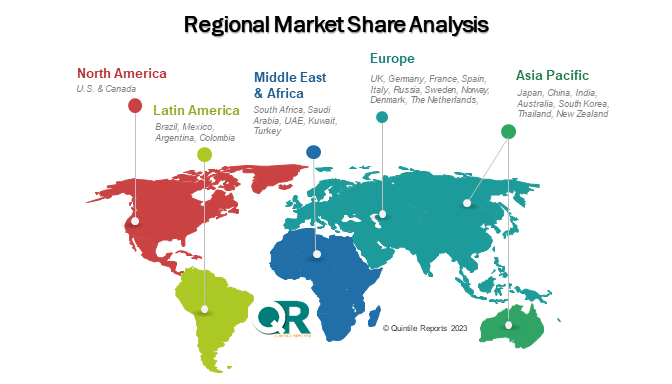
The chapter in Autonomous Firefighting Drones market research report is a pivotal section that examines and predicts the market dynamics and trends specific to different geographical regions. This chapter is crucial for businesses and stakeholders seeking a comprehensive understanding of how the market behaves across various locations, enabling them to tailor strategies and make informed decisions based on regional variations. The regional analysis chapter of our Autonomous Firefighting Drones market report is classified into regions & country-level. The chapter consists of North America (U.S., Canada), Europe (UK, Germany, France, Italy, Spain, Russia, Sweden, Denmark, Norway, Rest of Europe), Asia Pacific (Japan, China, India, Australia, South Korea, Thailand, Rest of Asia Pacific), Latin America (Brazil, Mexico, Argentina, Colombia, Rest of Latin America), Middle East & Africa (South Africa, Saudi Arabia, UAE, Kuwait, Rest of Middle East & Africa).
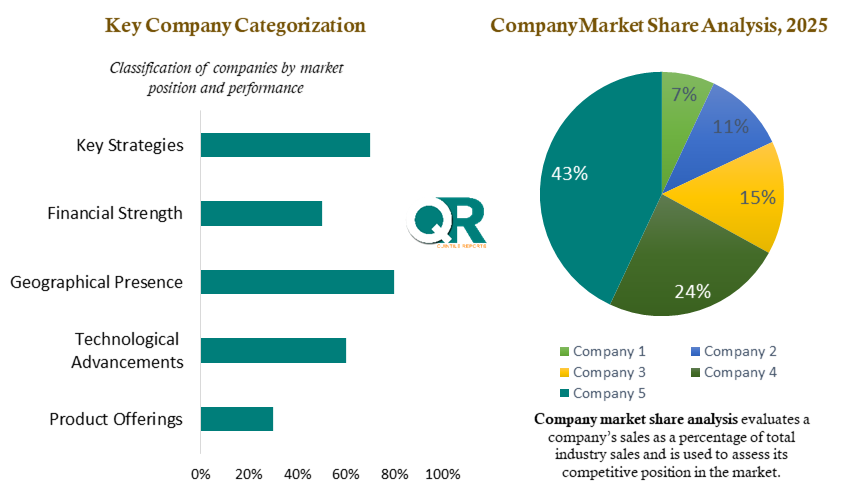
This section of a Autonomous Firefighting Drones market report is a crucial segment that provides a comprehensive overview of the competitive landscape within the market. This section is vital for businesses, investors, and stakeholders seeking insights into key players, their market positioning, strengths, weaknesses, strategies, and potential impacts on the overall market dynamics. The chapter includes research methodology used to analyse the market competition, list of key players operating in the market, detailed company profile section which includes company overview, business verticals, financial performance, product/services benchmarking, geographical presence, and strategic initiatives.
| Report Scope | Details |
| Report Version | 2026 |
| Growth Rate | CAGR of 17.68 from 2026 to 2035 |
| Base Year | 2025 |
| Actual Estimates / Historical Data | 2017 - 2024 |
| Forecast Period | 2026 - 2035 |
| Quantitative Units | Revenue in USD million/billion & CAGR from 2026 to 2035 |
| Country Scope | North America (U.S., Canada), Europe (UK, Germany, France, Italy, Spain, Russia, Sweden, Denmark, Norway, Rest of Europe), Asia Pacific (Japan, China, India, Australia, South Korea, Thailand, Rest of Asia Pacific), Latin America (Brazil, Mexico, Argentina, Colombia, Rest of Latin America), Middle East & Africa (South Africa, Saudi Arabia, UAE, Kuwait, Rest of Middle East & Africa). |
| The Segment Covered by Drone Type |
|
| The Segment Covered by Payload Capacity |
|
| Companies Covered |
|
| Report Coverage | Revenue forecast, company share, competitive landscape, growth factors, and trends |
| Free Customization Scope (Equivalent to 5 Analyst Working Days) | If you need specific information, which is not currently within the scope of the report, we will provide it to you as a part of the customization |

Statistics for the 2025 Autonomous Firefighting Drones market share, size, and revenue growth rate were created by Quintile Report™. Autonomous Firefighting Drones analysis includes a market forecast outlook for 2035 and a historical overview. Get a free PDF sample of this market analysis, please get in touch with our principal analyst at sales@quintilereports.com
List of Tables
Table 1 List of Abbreviation and acronyms
Table 2 List of Sources
Table 3 North America Global Autonomous Firefighting Drones Market, by Segment Analysis, (USD Million) 2017-2035
Table 4 North America Global Autonomous Firefighting Drones Market, by Region, (USD Million) 2017-2035
Table 5 U.S. Global Autonomous Firefighting Drones Market, by Segment Analysis, (USD Million) 2017-2035
Table 6 Canada Global Autonomous Firefighting Drones Market, by Segment Analysis, (USD Million) 2017-2035
Table 7 Europe Global Autonomous Firefighting Drones Market, by Segment Analysis, (USD Million) 2017-2035
Table 8 Europe Global Autonomous Firefighting Drones Market, by Region, (USD Million) 2017-2035
Table 9 Germany Global Autonomous Firefighting Drones Market, by Segment Analysis, (USD Million) 2017-2035
Table 10 U.K. Global Autonomous Firefighting Drones Market, by Segment Analysis, (USD Million) 2017-2035
Table 11 France Global Autonomous Firefighting Drones Market, by Segment Analysis, (USD Million) 2017-2035
Table 12 Italy Global Autonomous Firefighting Drones Market, by Segment Analysis, (USD Million) 2017-2035
Table 13 Spain Global Autonomous Firefighting Drones Market, by Segment Analysis, (USD Million) 2017-2035
Table 14 Sweden Global Autonomous Firefighting Drones Market, by Segment Analysis, (USD Million) 2017-2035
Table 15 Denmark Global Autonomous Firefighting Drones Market, by Segment Analysis, (USD Million) 2017-2035
Table 16 Norway Global Autonomous Firefighting Drones Market, by Segment Analysis, (USD Million) 2017-2035
Table 17 The Netherlands Global Autonomous Firefighting Drones Market, by Segment Analysis, (USD Million) 2017-2035
Table 18 Russia Global Autonomous Firefighting Drones Market, by Segment Analysis, (USD Million) 2017-2035
Table 19 Asia Pacific Global Autonomous Firefighting Drones Market, by Segment Analysis, (USD Million) 2017-2035
Table 20 Asia Pacific Global Autonomous Firefighting Drones Market, by Region, (USD Million) 2017-2035
Table 21 China Global Autonomous Firefighting Drones Market, by Segment Analysis, (USD Million) 2017-2035
Table 22 Japan Global Autonomous Firefighting Drones Market, by Segment Analysis, (USD Million) 2017-2035
Table 23 India Global Autonomous Firefighting Drones Market, by Segment Analysis, (USD Million) 2017-2035
Table 24 Australia Global Autonomous Firefighting Drones Market, by Segment Analysis, (USD Million) 2017-2035
Table 25 South Korea Global Autonomous Firefighting Drones Market, by Segment Analysis, (USD Million) 2017-2035
Table 26 Thailand Global Autonomous Firefighting Drones Market, by Segment Analysis, (USD Million) 2017-2035
Table 27 Latin America Global Autonomous Firefighting Drones Market, by Segment Analysis, (USD Million) 2017-2035
Table 28 Latin America Global Autonomous Firefighting Drones Market, by Region, (USD Million) 2017-2035
Table 29 Brazil Global Autonomous Firefighting Drones Market, by Segment Analysis, (USD Million) 2017-2035
Table 30 Mexico Global Autonomous Firefighting Drones Market, by Segment Analysis, (USD Million) 2017-2035
Table 31 Argentina Global Autonomous Firefighting Drones Market, by Segment Analysis, (USD Million) 2017-2035
Table 32 Middle East and Africa Global Autonomous Firefighting Drones Market, by Segment Analysis, (USD Million) 2017-2035
Table 33 Middle East and Africa Global Autonomous Firefighting Drones Market, by Region, (USD Million) 2017-2035
Table 34 South Africa Global Autonomous Firefighting Drones Market, by Segment Analysis, (USD Million) 2017-2035
Table 35 Saudi Arabia Global Autonomous Firefighting Drones Market, by Segment Analysis, (USD Million) 2017-2035
Table 36 UAE Global Autonomous Firefighting Drones Market, by Segment Analysis, (USD Million) 2017-2035
Table 37 Kuwait Global Autonomous Firefighting Drones Market, by Segment Analysis, (USD Million) 2017-2035
Table 38 Turkey Global Autonomous Firefighting Drones Market, by Segment Analysis, (USD Million) 2017-2035
Fig.1 Market research process
Fig.2 Market research approaches
Fig.3 Global Autonomous Firefighting Drones Market: market scenario
Fig.4 Global Autonomous Firefighting Drones Market competitive outlook
Fig.5 Global Autonomous Firefighting Drones Market driver analysis
Fig.6 Global Autonomous Firefighting Drones Market restraint analysis
Fig.7 Global Autonomous Firefighting Drones Market opportunity analysis
Fig.8 Global Autonomous Firefighting Drones Market trends analysis
Fig.9 Global Autonomous Firefighting Drones Market: Segment Analysis (Based on the scope)
Fig.10 Global Autonomous Firefighting Drones Market: regional analysis
Fig.11 Global market shares and leading market players
Fig.12 North America market share and leading players
Fig.13 Europe market share and leading players
Fig.14 Asia Pacific market share and leading players
Fig.15 Latin America market share and leading players
Fig.16 Middle East & Africa market share and leading players
Fig.17 North America, by country
Fig.18 North America
Fig.19 North America market estimates and forecast, 2017-2035
Fig.20 U.S.
Fig.21 Canada
Fig.22 Europe
Fig.23 Europe market estimates and forecast, 2017-2035
Fig.24 U.K.
Fig.25 Germany
Fig.26 France
Fig.27 Italy
Fig.28 Spain
Fig.29 Sweden
Fig.30 Denmark
Fig.31 Norway
Fig.32 The Netherlands
Fig.33 Russia
Fig.34 Asia Pacific
Fig.35 Asia Pacific market estimates and forecast, 2017-2035
Fig.36 China
Fig.37 Japan
Fig.38 India
Fig.39 Australia
Fig.40 South Korea
Fig.41 Thailand
Fig.42 Latin America
Fig.43 Latin America market estimates and forecast, 2017-2035
Fig.44 Brazil
Fig.45 Mexico
Fig.46 Argentina
Fig.47 Colombia
Fig.48 Middle East and Africa
Fig.49 Middle East and Africa market estimates and forecast, 2017-2035
Fig.50 Saudi Arabia
Fig.51 South Africa
Fig.52 UAE
Fig.53 Kuwait
Fig.54 Turkey
The Global Autonomous Firefighting Drones Market was valued at USD 3.93 billion in 2025 and is projected to reach USD 13.8 billion by 2035, advancing at a notable CAGR of 17.68% throughout the forecast period from 2026 to 2035. The Autonomous Firefighting Drones market report provides an in-depth analysis of the industry by examining macroeconomic indicators, technological progress, regulatory environments, and evolving consumer trends to highlight the market’s long-term growth outlook.
The autonomous firefighting drones market includes unmanned aerial systems designed to detect, monitor, and suppress fires with minimal human input. These drones are equipped with thermal cameras, sensors, fire-retardant payloads, and AI-powered navigation systems. They are used by fire departments, disaster response teams, forestry agencies, and industrial facilities for rapid assessment and early fire suppression.
These drones are capable of entering hazardous zones, operating in low-visibility environments, and performing search-and-rescue support. As fire threats increase due to climate change, urban sprawl, and industrial risks, autonomous drone systems offer a safer, faster, and more efficient alternative to manual firefighting, especially in high-rise buildings, wildlands, and remote infrastructure sites.
Taking 2025 as the base year, the Autonomous Firefighting Drones market is demonstrating steady growth fueled by increased innovation, expanding application areas across end-use sectors, and rapid digital transformation. Market participants are increasingly optimizing their go-to-market (GTM) strategies to strengthen market penetration and capitalize on emerging business opportunities.
Over the coming decade, the market is expected to maintain strong expansion supported by continuous R&D investments, collaborative partnerships, and a rising number of mergers and acquisitions. Businesses that focus on innovation, operational agility, and customer-focused strategies are expected to build a sustainable competitive advantage. The report delivers comprehensive insights into market drivers, restraints, opportunities, and challenges across segments, regions, and countries, backed by detailed qualitative and quantitative analysis from 2017 to 2035.
The forest area burnt by wildfires has increased significantly over recent decades, with wildfire incidents rising by approximately 5.4% annually between 2001 and 2023. Autonomous drones enable early detection and aerial suppression, helping prevent fires from spreading while keeping first responders out of harm’s way.
Advancements in cargo drones are also supporting firefighting missions by enabling aerial transport of fire retardants, emergency kits, and lightweight suppression equipment to remote wildfire zones. These payload-capable drones help emergency teams reach areas that may be inaccessible to traditional firefighting vehicles.
Municipal authorities are increasingly partnering with providers of commercial drone services to enhance aerial monitoring and emergency response capabilities. These services supply trained operators, advanced drone fleets, and cloud-based monitoring systems that allow cities to deploy drones quickly during fire incidents.
Urbanization is increasing the complexity of fire safety in high-density areas. In smart cities and megacities, drones are used to access rooftops, narrow streets, and vertical structures. Their ability to navigate in confined spaces and deliver real-time heat mapping makes them valuable for municipal fire departments and emergency services.
Technologies originally developed for last mile drone delivery are also being adapted for emergency response. These systems allow drones to transport small firefighting supplies, communication equipment, or medical kits to responders operating in difficult-to-access urban environments.
Industrial and energy facilities also rely on drone-based fire monitoring. Sites such as chemical plants, oil refineries, and offshore platforms use autonomous drones for routine fire patrols and emergency deployment. These systems can be activated during off-hours or triggered automatically by temperature thresholds.
Facilities are increasingly adopting industrial drone inspection technologies to detect overheating equipment, gas leaks, or structural faults that could lead to fire hazards. These inspections help organizations identify risks early and improve safety management across complex industrial environments.
In addition, drone surveying plays an important role in post-fire assessment. After a fire incident, drones can survey damaged infrastructure, burned forest areas, and affected industrial sites to support recovery planning and ensure the safety of inspection teams.
Policy and funding support for disaster resilience are driving adoption. Governments are investing in AI-based fire control technologies through climate adaptation and public safety programs. Several countries have launched pilot projects or grants to test autonomous drone fleets for firefighting, especially in wildfire-prone regions.
Research into solar powered drones is also expanding as agencies look for long-endurance monitoring solutions. These drones can remain airborne for extended periods and provide continuous surveillance of forests and protected areas, helping authorities detect wildfire risks at an early stage.
Autonomous firefighting drones face regulatory hurdles in many countries. Airspace rules often limit drone operations beyond the visual line of sight, especially in urban zones or during emergencies. Approval processes for night flights or automated fire suppression may delay deployment during critical incidents.
Battery life and payload limitations also restrict performance. Carrying fire retardants or surveillance equipment increases drone weight, reducing flight time and area coverage. In large-scale fires, drones need to return frequently for refueling or refilling, which limits operational continuity unless backed by multiple units.
Reliability in harsh conditions is another concern. High winds, smoke, and thermal turbulence can affect sensor accuracy and flight stability. If autonomous navigation systems are not robust, drones may fail to reach or remain stable in the fire zone, reducing their usefulness in dynamic environments.
Data privacy, cybersecurity, and coordination with ground teams also pose challenges. Real-time integration with emergency response systems requires secure communication links and compatibility with public safety networks. Without strong coordination protocols, drones may risk interfering with helicopters or ground crews.
North America is a leader in wildfire drone deployment. The United States and Canada use autonomous drones for forest fire patrol, thermal imaging, and fire perimeter mapping. State fire departments are testing AI-driven drones under climate adaptation plans. The region’s rising wildfire frequency and government-backed disaster preparedness programs are key drivers supporting drone adoption.
European countries apply firefighting drones in both urban fire safety and forest fire control. Nations such as Germany, France, and Spain use drone systems for early detection in fire-prone parks and industrial areas. Strict safety regulations and strong EU funding for smart emergency response tools continue to push demand for autonomous drone systems.
Asia Pacific countries including Japan, South Korea, and Australia use firefighting drones in coastal, forest, and urban areas. These systems are part of broader disaster risk preparedness strategies. The need for effective emergency response in dense urban zones and regions prone to natural disasters is driving market growth.
Chile, Brazil, and other Latin American countries deploy drones to monitor wildfires in rural, mountainous, and rainforest areas. These drones assist with environmental surveillance and damage assessment during dry seasons. Demand is primarily driven by the need to manage wildfire threats in ecologically sensitive areas despite budget limitations.
In the Middle East, firefighting drones are used in desert environments, oilfields, and high-rise building safety programs. Across parts of Africa, drones support wildfire control in national parks and fire prevention in industrial developments. Harsh terrain, limited access, and the need for fast-response tools are driving the gradual adoption of drone technologies, with support from international agencies and aid-funded programs.
These monitoring operations are often supported by surveillance drone technology equipped with thermal cameras and AI-based detection systems that help authorities identify smoke or heat signatures before fires spread across large areas.
The United States actively uses autonomous drones in wildfire-prone states such as California and Colorado. The U.S. Forest Service and FEMA have funded trials of drone-based early detection systems that use thermal sensors and automated alerts to identify fire outbreaks before ground teams arrive.
In addition to forest applications, U.S. cities use autonomous drones for inspecting rooftops, parking garages, and power substations during emergencies. Integration with police support and drone traffic management tools is expanding, supported by FAA drone safety waivers for emergency services.
Advanced drone mapping systems are also widely used to generate real-time aerial maps of wildfire zones, allowing emergency teams to track fire spread, evaluate terrain conditions, and plan evacuation or containment strategies more effectively.
Germany supports the use of autonomous drones in smart city and emergency response programs. Fire departments use drones for mapping fire scenes, guiding ground units, and checking roof access during high-rise incidents. AI-based routing systems help optimize coverage during emergency response operations.
The German Federal Ministry of Transport and Digital Infrastructure supports drone adoption through public-private partnerships. Firefighting drones are increasingly included in training programs and civil protection exercises, helping first responders coordinate more effectively in densely built areas.
Many municipalities also collaborate with specialized drone services providers to deploy advanced aerial monitoring systems that support firefighting, emergency inspections, and disaster response operations.
Japan uses autonomous drones in fire response drills and real-time city surveillance. Urban centers such as Tokyo and Osaka deploy drones to monitor narrow alleys, station rooftops, and elevated railways for early signs of smoke or heat buildup.
With frequent earthquakes and seasonal typhoons, Japan emphasizes drones that support both fire detection and multi-hazard disaster response. National programs led by the Fire and Disaster Management Agency and the Ministry of Land, Infrastructure, Transport and Tourism are helping scale pilot drone projects into permanent operational systems.
Our team of experienced researchers has meticulously gathered and analyzed data to deliver a thorough examination of market dynamics, competitive landscape, and emerging technologies. With a focus on delivering actionable intelligence, this report aims to empower decision-makers with the information needed to make informed choices and stay ahead of the competition. Whether you are a seasoned industry player or a new entrant, our market research report serves as a strategic tool to navigate the complexities of the market, aiding in successful business planning and growth strategies.
This chapter of our Autonomous Firefighting Drones market report provides an in-depth examination of the factors shaping the industry landscape. This section typically encompasses several key elements to offer a comprehensive understanding of the industry landscape such as market drivers & restraints analysis, market opportunities & trend analysis, market size & growth analysis, competitive analysis, SWOT analysis, business environment tools such as Porter's five forces & PESTEL analysis, Ansoff Matrix analysis, penetration & growth prospect analysis, regulatory framework & reimbursement scenario analysis, impact of macro & micro economic factors analysis such as Covid-19 impact, GDP growth, market inflation, U.S.- China trade war, Russia-Ukraine war impact, and supply chain analysis.
The segment analysis chapter of Autonomous Firefighting Drones market report is a critical section that delves into a detailed examination of the market's various segments. Segmentation involves dividing the market into distinct categories based on certain criteria to better understand and address the diverse needs of consumers. This chapter typically follows the introduction and provides a more granular view of the market, offering valuable insights for businesses and stakeholders. The components of the chapter include segment definitions to understand the inclusions and exclusions of the study, assumptions, market size estimates and growth trend analysis of each segment, qualitative analysis of the segment, technological advancements, market penetration rate, market adoption rate, market share examination by each segment, segment growth drivers and restraint barriers, consumer behaviour and challenge analysis.
The chapter in Autonomous Firefighting Drones market research report is a pivotal section that examines and predicts the market dynamics and trends specific to different geographical regions. This chapter is crucial for businesses and stakeholders seeking a comprehensive understanding of how the market behaves across various locations, enabling them to tailor strategies and make informed decisions based on regional variations. The regional analysis chapter of our Autonomous Firefighting Drones market report is classified into regions & country-level. The chapter consists of North America (U.S., Canada), Europe (UK, Germany, France, Italy, Spain, Russia, Sweden, Denmark, Norway, Rest of Europe), Asia Pacific (Japan, China, India, Australia, South Korea, Thailand, Rest of Asia Pacific), Latin America (Brazil, Mexico, Argentina, Colombia, Rest of Latin America), Middle East & Africa (South Africa, Saudi Arabia, UAE, Kuwait, Rest of Middle East & Africa).
This section of a Autonomous Firefighting Drones market report is a crucial segment that provides a comprehensive overview of the competitive landscape within the market. This section is vital for businesses, investors, and stakeholders seeking insights into key players, their market positioning, strengths, weaknesses, strategies, and potential impacts on the overall market dynamics. The chapter includes research methodology used to analyse the market competition, list of key players operating in the market, detailed company profile section which includes company overview, business verticals, financial performance, product/services benchmarking, geographical presence, and strategic initiatives.
| Report Scope | Details |
| Report Version | 2026 |
| Growth Rate | CAGR of 17.68 from 2026 to 2035 |
| Base Year | 2025 |
| Actual Estimates / Historical Data | 2017 - 2024 |
| Forecast Period | 2026 - 2035 |
| Quantitative Units | Revenue in USD million/billion & CAGR from 2026 to 2035 |
| Country Scope | North America (U.S., Canada), Europe (UK, Germany, France, Italy, Spain, Russia, Sweden, Denmark, Norway, Rest of Europe), Asia Pacific (Japan, China, India, Australia, South Korea, Thailand, Rest of Asia Pacific), Latin America (Brazil, Mexico, Argentina, Colombia, Rest of Latin America), Middle East & Africa (South Africa, Saudi Arabia, UAE, Kuwait, Rest of Middle East & Africa). |
| The Segment Covered by Drone Type |
|
| The Segment Covered by Payload Capacity |
|
| Companies Covered |
|
| Report Coverage | Revenue forecast, company share, competitive landscape, growth factors, and trends |
| Free Customization Scope (Equivalent to 5 Analyst Working Days) | If you need specific information, which is not currently within the scope of the report, we will provide it to you as a part of the customization |
Statistics for the 2025 Autonomous Firefighting Drones market share, size, and revenue growth rate were created by Quintile Report™. Autonomous Firefighting Drones analysis includes a market forecast outlook for 2035 and a historical overview. Get a free PDF sample of this market analysis, please get in touch with our principal analyst at sales@quintilereports.com
Table 1 List of Abbreviation and acronyms
Table 2 List of Sources
Table 3 North America Global Autonomous Firefighting Drones Market, by Segment Analysis, (USD Million) 2017-2035
Table 4 North America Global Autonomous Firefighting Drones Market, by Region, (USD Million) 2017-2035
Table 5 U.S. Global Autonomous Firefighting Drones Market, by Segment Analysis, (USD Million) 2017-2035
Table 6 Canada Global Autonomous Firefighting Drones Market, by Segment Analysis, (USD Million) 2017-2035
Table 7 Europe Global Autonomous Firefighting Drones Market, by Segment Analysis, (USD Million) 2017-2035
Table 8 Europe Global Autonomous Firefighting Drones Market, by Region, (USD Million) 2017-2035
Table 9 Germany Global Autonomous Firefighting Drones Market, by Segment Analysis, (USD Million) 2017-2035
Table 10 U.K. Global Autonomous Firefighting Drones Market, by Segment Analysis, (USD Million) 2017-2035
Table 11 France Global Autonomous Firefighting Drones Market, by Segment Analysis, (USD Million) 2017-2035
Table 12 Italy Global Autonomous Firefighting Drones Market, by Segment Analysis, (USD Million) 2017-2035
Table 13 Spain Global Autonomous Firefighting Drones Market, by Segment Analysis, (USD Million) 2017-2035
Table 14 Sweden Global Autonomous Firefighting Drones Market, by Segment Analysis, (USD Million) 2017-2035
Table 15 Denmark Global Autonomous Firefighting Drones Market, by Segment Analysis, (USD Million) 2017-2035
Table 16 Norway Global Autonomous Firefighting Drones Market, by Segment Analysis, (USD Million) 2017-2035
Table 17 The Netherlands Global Autonomous Firefighting Drones Market, by Segment Analysis, (USD Million) 2017-2035
Table 18 Russia Global Autonomous Firefighting Drones Market, by Segment Analysis, (USD Million) 2017-2035
Table 19 Asia Pacific Global Autonomous Firefighting Drones Market, by Segment Analysis, (USD Million) 2017-2035
Table 20 Asia Pacific Global Autonomous Firefighting Drones Market, by Region, (USD Million) 2017-2035
Table 21 China Global Autonomous Firefighting Drones Market, by Segment Analysis, (USD Million) 2017-2035
Table 22 Japan Global Autonomous Firefighting Drones Market, by Segment Analysis, (USD Million) 2017-2035
Table 23 India Global Autonomous Firefighting Drones Market, by Segment Analysis, (USD Million) 2017-2035
Table 24 Australia Global Autonomous Firefighting Drones Market, by Segment Analysis, (USD Million) 2017-2035
Table 25 South Korea Global Autonomous Firefighting Drones Market, by Segment Analysis, (USD Million) 2017-2035
Table 26 Thailand Global Autonomous Firefighting Drones Market, by Segment Analysis, (USD Million) 2017-2035
Table 27 Latin America Global Autonomous Firefighting Drones Market, by Segment Analysis, (USD Million) 2017-2035
Table 28 Latin America Global Autonomous Firefighting Drones Market, by Region, (USD Million) 2017-2035
Table 29 Brazil Global Autonomous Firefighting Drones Market, by Segment Analysis, (USD Million) 2017-2035
Table 30 Mexico Global Autonomous Firefighting Drones Market, by Segment Analysis, (USD Million) 2017-2035
Table 31 Argentina Global Autonomous Firefighting Drones Market, by Segment Analysis, (USD Million) 2017-2035
Table 32 Middle East and Africa Global Autonomous Firefighting Drones Market, by Segment Analysis, (USD Million) 2017-2035
Table 33 Middle East and Africa Global Autonomous Firefighting Drones Market, by Region, (USD Million) 2017-2035
Table 34 South Africa Global Autonomous Firefighting Drones Market, by Segment Analysis, (USD Million) 2017-2035
Table 35 Saudi Arabia Global Autonomous Firefighting Drones Market, by Segment Analysis, (USD Million) 2017-2035
Table 36 UAE Global Autonomous Firefighting Drones Market, by Segment Analysis, (USD Million) 2017-2035
Table 37 Kuwait Global Autonomous Firefighting Drones Market, by Segment Analysis, (USD Million) 2017-2035
Table 38 Turkey Global Autonomous Firefighting Drones Market, by Segment Analysis, (USD Million) 2017-2035
Fig.1 Market research process
Fig.2 Market research approaches
Fig.3 Global Autonomous Firefighting Drones Market: market scenario
Fig.4 Global Autonomous Firefighting Drones Market competitive outlook
Fig.5 Global Autonomous Firefighting Drones Market driver analysis
Fig.6 Global Autonomous Firefighting Drones Market restraint analysis
Fig.7 Global Autonomous Firefighting Drones Market opportunity analysis
Fig.8 Global Autonomous Firefighting Drones Market trends analysis
Fig.9 Global Autonomous Firefighting Drones Market: Segment Analysis (Based on the scope)
Fig.10 Global Autonomous Firefighting Drones Market: regional analysis
Fig.11 Global market shares and leading market players
Fig.12 North America market share and leading players
Fig.13 Europe market share and leading players
Fig.14 Asia Pacific market share and leading players
Fig.15 Latin America market share and leading players
Fig.16 Middle East & Africa market share and leading players
Fig.17 North America, by country
Fig.18 North America
Fig.19 North America market estimates and forecast, 2017-2035
Fig.20 U.S.
Fig.21 Canada
Fig.22 Europe
Fig.23 Europe market estimates and forecast, 2017-2035
Fig.24 U.K.
Fig.25 Germany
Fig.26 France
Fig.27 Italy
Fig.28 Spain
Fig.29 Sweden
Fig.30 Denmark
Fig.31 Norway
Fig.32 The Netherlands
Fig.33 Russia
Fig.34 Asia Pacific
Fig.35 Asia Pacific market estimates and forecast, 2017-2035
Fig.36 China
Fig.37 Japan
Fig.38 India
Fig.39 Australia
Fig.40 South Korea
Fig.41 Thailand
Fig.42 Latin America
Fig.43 Latin America market estimates and forecast, 2017-2035
Fig.44 Brazil
Fig.45 Mexico
Fig.46 Argentina
Fig.47 Colombia
Fig.48 Middle East and Africa
Fig.49 Middle East and Africa market estimates and forecast, 2017-2035
Fig.50 Saudi Arabia
Fig.51 South Africa
Fig.52 UAE
Fig.53 Kuwait
Fig.54 Turkey

A license granted to one user. Rules or conditions might be applied for e.g. the use of electric files (PDFs) or printings, depending on product.
A license granted to multiple users.
A license granted to a single business site/establishment.
A license granted to all employees within organisation access to the product.
Immediate / Within 24-48 hours - Working days
Online Payments with PayPal and CCavenue
You can order a report by picking any of the payment methods which is bank wire or online payment through any Debit/Credit card or PayPal.
Hard Copy
 U.S. : +1-201-772-7734