The Global Fire Safety Equipment Market was valued at USD 60.32 billion in 2025 and is forecast to reach USD 134.62 billion by 2035, expanding at a healthy CAGR of 9.48% between 2026 and 2035. The Fire Safety Equipment market report delivers a strategic overview of the industry by analyzing macroeconomic factors, technological innovations, regulatory developments, and changing consumer preferences to assess future market growth potential.
The fire safety equipment market includes products and systems used to detect, control, and extinguish fires. These tools are designed to protect people, property, and assets in residential, commercial, and industrial settings. The market includes fire alarms, extinguishers, sprinklers, suppression systems, smoke detectors, fire hose reels, and emergency lighting systems. These are installed in buildings, manufacturing units, power plants, transportation systems, and public infrastructure.
With 2025 considered the base year, the Fire Safety Equipment market is witnessing progressive growth driven by continuous product innovation, increasing demand from diverse end-use industries, and advancements in digital technologies. Market stakeholders are actively strengthening their go-to-market (GTM) strategies to unlock new opportunities and enhance their competitive capabilities.
Looking forward to 2035, the market is expected to continue its upward trajectory, supported by growing R&D initiatives, expanding strategic collaborations, and increasing merger and acquisition activities. Companies that invest in innovation, adopt flexible GTM strategies, and align with evolving customer requirements are expected to achieve sustainable market leadership. The report provides detailed insights into the markets drivers, restraints, opportunities, and challenges across segments, regions, and countries, supported by comprehensive qualitative and quantitative analysis from 2017 to 2035.
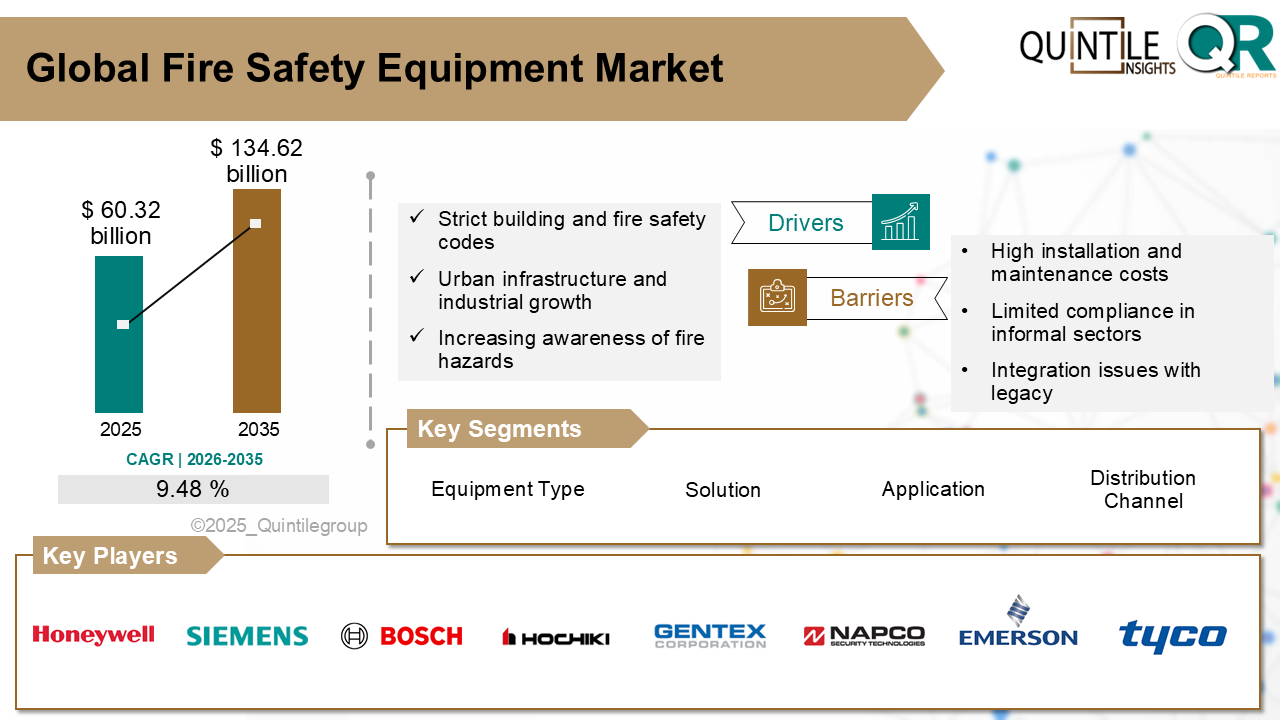
Fire safety equipment is critical in reducing the loss of life and property during fire incidents. Growing awareness of fire risks, stricter safety codes, and increased construction activity across the world are driving the demand for modern, reliable, and easy-to-maintain fire protection systems. As technology advances, automated detection, smart alarm systems, and IoT-connected fire safety solutions are becoming more common in both developed and developing markets.
Fire-related accidents across urban and industrial areas are gradually increasing. As cities expand and high-rise buildings become more common, the need for early detection and response systems becomes more urgent. Fire safety equipment helps reduce the time it takes to detect fires and take action, making these tools essential for new building designs.
Increased construction of commercial spaces like malls, offices, hotels, and hospitals has led to higher demand for fire alarms, smoke detectors, and sprinklers. Building codes in many countries now require full fire protection systems before occupancy, especially in high-density or public-use structures. As the real estate and infrastructure sectors grow, so does the need for fire safety compliance.
Manufacturing plants, oil and gas facilities, and energy production sites also depend heavily on fire safety equipment. These industries work with flammable materials and high temperatures, requiring fixed suppression systems, advanced gas detectors, and fire-resistant infrastructure. In these settings, prevention and containment systems are critical for safety and continuity.
Government regulations and public safety campaigns are making fire safety enforcement stricter. National fire protection standards and international certifications are pushing building owners and industrial operators to install better safety equipment. In some countries, insurance providers also demand proper fire safety installations as a condition for property coverage.
For smaller businesses or public buildings in low-income regions, the cost of automated sprinklers, suppression systems, or smart alarm networks can be difficult to afford. This slows adoption, especially in older or budget-constrained properties.
Maintenance and regular testing of fire safety systems are also important, but often neglected. Poor maintenance can lead to equipment failure during emergencies. Building owners must ensure proper training and inspections, which adds to operational costs and complexity.
Lack of awareness and weak enforcement of fire safety regulations in some regions is another barrier. Without strong local fire codes or active building inspection programs, many properties operate without full compliance. This affects demand for new installations and upgrades.
Compatibility issues with older infrastructure also create challenges. In buildings constructed decades ago, retrofitting modern systems may involve significant electrical or structural changes, making upgrades costly and technically difficult.
North America stands out for its well-established and robust fire safety ecosystem. Both the United States and Canada operate under comprehensive national fire codes that dictate strict requirements for residential, commercial, and industrial buildings. These codes are legally enforced, meaning that new constructions and existing structures must comply. This environment strongly drives the demand for advanced fire safety systems, including sophisticated fire alarm networks, automatic sprinkler systems, and emergency lighting.
Europes approach to fire safety is characterized by a strong emphasis on building fire protection through smart systems and standardized equipment. While each European country has its own regulations, there is increasing harmonization through the Construction Products Regulation (CPR) in the European Union, which establishes common standards for fire performance of building materials.
The Asian fire safety market is experiencing significant growth driven by rapid urbanization and industrial expansion. Countries such as China, India, and Southeast Asian nations are witnessing strong construction activity including residential towers, commercial complexes, and manufacturing facilities. These developments are driving the installation of essential fire safety systems such as smoke detectors, fire alarms, and sprinkler systems.
In Latin America, countries such as Brazil, Mexico, and Chile are strengthening fire safety regulations, particularly in public buildings and workplaces. Increased compliance requirements are driving the adoption of fire detection and suppression equipment in infrastructure such as airports, hospitals, and manufacturing plants.
The Middle East and Africa region is witnessing steady growth as major construction and infrastructure projects expand across Gulf countries including the UAE, Saudi Arabia, and Qatar. These projects require advanced fire protection systems in airports, shopping malls, hotels, and industrial facilities. In Africa, adoption is slower but gradually increasing in urban centers and industrial zones.
The United States has strict fire safety standards set by the National Fire Protection Association (NFPA). Most commercial buildings are required to have alarms, sprinklers, and smoke detectors. Warehouses, chemical plants, and power stations use more advanced suppression and gas detection systems.
The U.S. fire equipment market is also driven by insurance companies that require certified installations to reduce risk. Smart technologies and automated detection systems are gaining traction, especially in tech campuses and high-rise offices. Frequent inspections and routine upgrades maintain steady demand for both products and services.
Germany enforces strong fire protection laws under the DIN (Deutsches Institut fr Normung) and VDE (Verband der Elektrotechnik, Elektronik und Informationstechnik) standards. Most public and commercial buildings must have fire alarms, extinguishers, and safe evacuation systems. The countrys focus on industrial safety also encourages the use of advanced suppression systems in factories and energy plants.
Smart detection and connected alarm systems are becoming more popular in German hospitals, universities, and transport facilities. Local companies provide strong service networks that help building operators comply with regulatory inspections. Export demand for German-made fire safety equipment also contributes to market growth.
Japans fire safety equipment market benefits from strict building codes and high urban density. Most buildings use compact systems such as wall-mounted extinguishers, ceiling smoke detectors, and automatic alarms that suit smaller apartments and office spaces.
The countrys Ministry of Land, Infrastructure, Transport and Tourism supports regular inspections and modernization of fire protection systems. Smart city initiatives and building automation systems are increasing the demand for integrated fire detection sensors and automated suppression technologies across industrial facilities and public infrastructure.
Large international companies dominate the fire safety equipment market by offering comprehensive product portfolios that include detection systems, suppression technologies, emergency lighting, and monitoring software. Many of these firms integrate digital platforms that enable real-time monitoring of building safety conditions.
Regional manufacturers focus on cost-effective solutions tailored to local building codes and infrastructure requirements. These companies often specialize in fire alarms, extinguishers, and installation services for residential and small commercial projects.
Technology integration has become a key competitive factor. Some manufacturers now offer IoT-enabled smoke detectors and wireless alarm systems that transmit alerts to mobile applications or centralized monitoring centers. These solutions help reduce installation complexity while improving response times.
Partnerships with construction firms, facility management companies, and government safety agencies are also common. These collaborations allow equipment providers to secure long-term contracts for installation, inspection, and maintenance services across large commercial and public infrastructure projects.
Key players in the market include Amcor plc, Honeywell International Inc., Johnson Controls, Siemens AG, Robert Bosch GmbH, Halma plc, Hochiki Corporation, Gentex Corporation, United Technologies Corporation, TYCO International, Emerson Electric Co., Napco Security Technologies Inc., Minimax Viking GmbH, Panasonic Corporation, Amerex Corporation, Securiton AG, NoHmi Bosai Ltd., Kidde (Carrier Global Corporation) and other players.
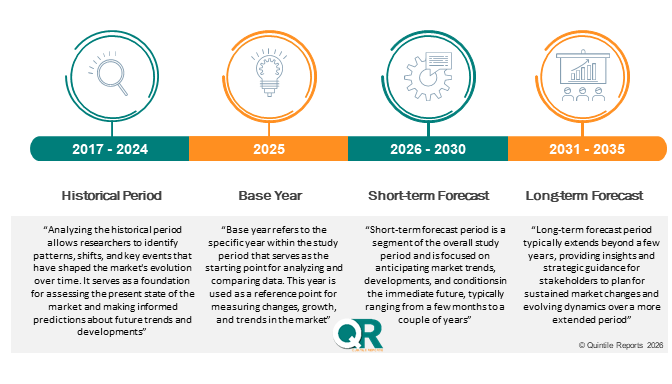
Our team of experienced researchers has meticulously gathered and analyzed data to deliver a thorough examination of market dynamics, competitive landscape, and emerging technologies. With a focus on delivering actionable intelligence, this report aims to empower decision-makers with the information needed to make informed choices and stay ahead of the competition. Whether you are a seasoned industry player or a new entrant, our market research report serves as a strategic tool to navigate the complexities of the market, aiding in successful business planning and growth strategies.
This chapter of our Fire Safety Equipment market report provides an in-depth examination of the factors shaping the industry landscape. This section typically encompasses several key elements to offer a comprehensive understanding of the industry landscape such as market drivers & restraints analysis, market opportunities & trend analysis, market size & growth analysis, competitive analysis, SWOT analysis, business environment tools such as Porter's five forces & PESTEL analysis, Ansoff Matrix analysis, penetration & growth prospect analysis, regulatory framework & reimbursement scenario analysis, impact of macro & micro economic factors analysis such as Covid-19 impact, GDP growth, market inflation, U.S.- China trade war, Russia-Ukraine war impact, and supply chain analysis.
The segment analysis chapter of Fire Safety Equipment market report is a critical section that delves into a detailed examination of the market's various segments. Segmentation involves dividing the market into distinct categories based on certain criteria to better understand and address the diverse needs of consumers. This chapter typically follows the introduction and provides a more granular view of the market, offering valuable insights for businesses and stakeholders. The components of the chapter lude segment definitions to understand the inclusions and exclusions of the study, assumptions, market size estimates and growth trend analysis of each segment, qualitative analysis of the segment, technological advancements, market penetration rate, market adoption rate, market share examination by each segment, segment growth drivers and restraint barriers, consumer behaviour and challenge analysis.
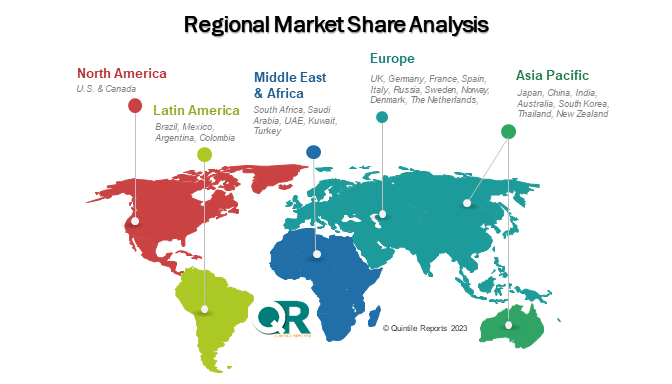
The chapter in Fire Safety Equipment market research report is a pivotal section that examines and predicts the market dynamics and trends specific to different geographical regions. This chapter is crucial for businesses and stakeholders seeking a comprehensive understanding of how the market behaves across various locations, enabling them to tailor strategies and make informed decisions based on regional variations. The regional analysis chapter of our Fire Safety Equipment market report is classified into regions & country-level. The chapter consists of North America (U.S., Canada), Europe (UK, Germany, France, Italy, Spain, Russia, Sweden, Denmark, Norway, Rest of Europe), Asia Pacific (Japan, China, India, Australia, South Korea, Thailand, Rest of Asia Pacific), Latin America (Brazil, Mexico, Argentina, Colombia, Rest of Latin America), Middle East & Africa (South Africa, Saudi Arabia, UAE, Kuwait, Rest of Middle East & Africa).
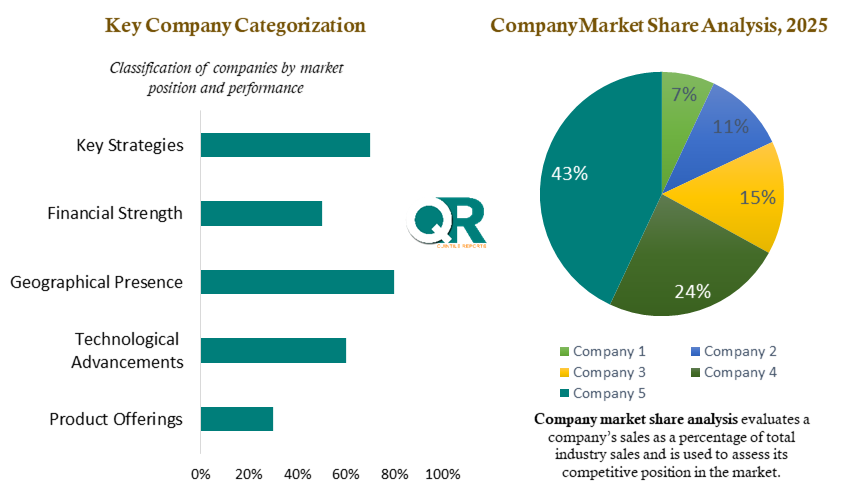
This section of a Fire Safety Equipment market report is a crucial segment that provides a comprehensive overview of the competitive landscape within the market. This section is vital for businesses, investors, and stakeholders seeking insights into key players, their market positioning, strengths, weaknesses, strategies, and potential impacts on the overall market dynamics. The chapter includes research methodology used to analyse the market competition, list of key players operating in the market, detailed company profile section which includes company overview, business verticals, financial performance, product/services benchmarking, geographical presence, and strategic initiatives.
| Report Scope | Details |
| Report Version | 2026 |
| Growth Rate | CAGR of 9.48 from 2026 to 2035 |
| Base Year | 2025 |
| Actual Estimates / Historical Data | 2017 - 2024 |
| Forecast Period | 2026 - 2035 |
| Quantitative Units | Revenue in USD million/billion & CAGR from 2026 to 2035 |
| Country Scope | North America (U.S., Canada), Europe (UK, Germany, France, Italy, Spain, Russia, Sweden, Denmark, Norway, Rest of Europe), Asia Pacific (Japan, China, India, Australia, South Korea, Thailand, Rest of Asia Pacific), Latin America (Brazil, Mexico, Argentina, Colombia, Rest of Latin America), Middle East & Africa (South Africa, Saudi Arabia, UAE, Kuwait, Rest of Middle East & Africa). |
| The Segment Covered by Solution |
|
| The Segment Covered by Equipment Type |
|
| Companies Covered |
|
| Report Coverage | Revenue forecast, company share, competitive landscape, growth factors, and trends |
| Free Customization Scope (Equivalent to 5 Analyst Working Days) | If you need specific information, which is not currently within the scope of the report, we will provide it to you as a part of the customization |

Statistics for the 2025 Fire Safety Equipment market share, size, and revenue growth rate were created by Quintile Report™. Fire Safety Equipment analysis includes a market forecast outlook for 2035 and a historical overview. Get a free PDF sample of this market analysis, please get in touch with our principal analyst at sales@quintilereports.com
List of Tables
Table 1 List of Abbreviation and acronyms
Table 2 List of Sources
Table 3 North America Global Fire Safety Equipment Market, by Segment Analysis, (USD Million) 2017-2035
Table 4 North America Global Fire Safety Equipment Market, by Region, (USD Million) 2017-2035
Table 5 U.S. Global Fire Safety Equipment Market, by Segment Analysis, (USD Million) 2017-2035
Table 6 Canada Global Fire Safety Equipment Market, by Segment Analysis, (USD Million) 2017-2035
Table 7 Europe Global Fire Safety Equipment Market, by Segment Analysis, (USD Million) 2017-2035
Table 8 Europe Global Fire Safety Equipment Market, by Region, (USD Million) 2017-2035
Table 9 Germany Global Fire Safety Equipment Market, by Segment Analysis, (USD Million) 2017-2035
Table 10 U.K. Global Fire Safety Equipment Market, by Segment Analysis, (USD Million) 2017-2035
Table 11 France Global Fire Safety Equipment Market, by Segment Analysis, (USD Million) 2017-2035
Table 12 Italy Global Fire Safety Equipment Market, by Segment Analysis, (USD Million) 2017-2035
Table 13 Spain Global Fire Safety Equipment Market, by Segment Analysis, (USD Million) 2017-2035
Table 14 Sweden Global Fire Safety Equipment Market, by Segment Analysis, (USD Million) 2017-2035
Table 15 Denmark Global Fire Safety Equipment Market, by Segment Analysis, (USD Million) 2017-2035
Table 16 Norway Global Fire Safety Equipment Market, by Segment Analysis, (USD Million) 2017-2035
Table 17 The Netherlands Global Fire Safety Equipment Market, by Segment Analysis, (USD Million) 2017-2035
Table 18 Russia Global Fire Safety Equipment Market, by Segment Analysis, (USD Million) 2017-2035
Table 19 Asia Pacific Global Fire Safety Equipment Market, by Segment Analysis, (USD Million) 2017-2035
Table 20 Asia Pacific Global Fire Safety Equipment Market, by Region, (USD Million) 2017-2035
Table 21 China Global Fire Safety Equipment Market, by Segment Analysis, (USD Million) 2017-2035
Table 22 Japan Global Fire Safety Equipment Market, by Segment Analysis, (USD Million) 2017-2035
Table 23 India Global Fire Safety Equipment Market, by Segment Analysis, (USD Million) 2017-2035
Table 24 Australia Global Fire Safety Equipment Market, by Segment Analysis, (USD Million) 2017-2035
Table 25 South Korea Global Fire Safety Equipment Market, by Segment Analysis, (USD Million) 2017-2035
Table 26 Thailand Global Fire Safety Equipment Market, by Segment Analysis, (USD Million) 2017-2035
Table 27 Latin America Global Fire Safety Equipment Market, by Segment Analysis, (USD Million) 2017-2035
Table 28 Latin America Global Fire Safety Equipment Market, by Region, (USD Million) 2017-2035
Table 29 Brazil Global Fire Safety Equipment Market, by Segment Analysis, (USD Million) 2017-2035
Table 30 Mexico Global Fire Safety Equipment Market, by Segment Analysis, (USD Million) 2017-2035
Table 31 Argentina Global Fire Safety Equipment Market, by Segment Analysis, (USD Million) 2017-2035
Table 32 Middle East and Africa Global Fire Safety Equipment Market, by Segment Analysis, (USD Million) 2017-2035
Table 33 Middle East and Africa Global Fire Safety Equipment Market, by Region, (USD Million) 2017-2035
Table 34 South Africa Global Fire Safety Equipment Market, by Segment Analysis, (USD Million) 2017-2035
Table 35 Saudi Arabia Global Fire Safety Equipment Market, by Segment Analysis, (USD Million) 2017-2035
Table 36 UAE Global Fire Safety Equipment Market, by Segment Analysis, (USD Million) 2017-2035
Table 37 Kuwait Global Fire Safety Equipment Market, by Segment Analysis, (USD Million) 2017-2035
Table 38 Turkey Global Fire Safety Equipment Market, by Segment Analysis, (USD Million) 2017-2035
Fig.1 Market research process
Fig.2 Market research approaches
Fig.3 Global Fire Safety Equipment Market: market scenario
Fig.4 Global Fire Safety Equipment Market competitive outlook
Fig.5 Global Fire Safety Equipment Market driver analysis
Fig.6 Global Fire Safety Equipment Market restraint analysis
Fig.7 Global Fire Safety Equipment Market opportunity analysis
Fig.8 Global Fire Safety Equipment Market trends analysis
Fig.9 Global Fire Safety Equipment Market: Segment Analysis (Based on the scope)
Fig.10 Global Fire Safety Equipment Market: regional analysis
Fig.11 Global market shares and leading market players
Fig.12 North America market share and leading players
Fig.13 Europe market share and leading players
Fig.14 Asia Pacific market share and leading players
Fig.15 Latin America market share and leading players
Fig.16 Middle East & Africa market share and leading players
Fig.17 North America, by country
Fig.18 North America
Fig.19 North America market estimates and forecast, 2017-2035
Fig.20 U.S.
Fig.21 Canada
Fig.22 Europe
Fig.23 Europe market estimates and forecast, 2017-2035
Fig.24 U.K.
Fig.25 Germany
Fig.26 France
Fig.27 Italy
Fig.28 Spain
Fig.29 Sweden
Fig.30 Denmark
Fig.31 Norway
Fig.32 The Netherlands
Fig.33 Russia
Fig.34 Asia Pacific
Fig.35 Asia Pacific market estimates and forecast, 2017-2035
Fig.36 China
Fig.37 Japan
Fig.38 India
Fig.39 Australia
Fig.40 South Korea
Fig.41 Thailand
Fig.42 Latin America
Fig.43 Latin America market estimates and forecast, 2017-2035
Fig.44 Brazil
Fig.45 Mexico
Fig.46 Argentina
Fig.47 Colombia
Fig.48 Middle East and Africa
Fig.49 Middle East and Africa market estimates and forecast, 2017-2035
Fig.50 Saudi Arabia
Fig.51 South Africa
Fig.52 UAE
Fig.53 Kuwait
Fig.54 Turkey
The Global Fire Safety Equipment Market was valued at USD 60.32 billion in 2025 and is forecast to reach USD 134.62 billion by 2035, expanding at a healthy CAGR of 9.48% between 2026 and 2035. The Fire Safety Equipment market report delivers a strategic overview of the industry by analyzing macroeconomic factors, technological innovations, regulatory developments, and changing consumer preferences to assess future market growth potential.
The fire safety equipment market includes products and systems used to detect, control, and extinguish fires. These tools are designed to protect people, property, and assets in residential, commercial, and industrial settings. The market includes fire alarms, extinguishers, sprinklers, suppression systems, smoke detectors, fire hose reels, and emergency lighting systems. These are installed in buildings, manufacturing units, power plants, transportation systems, and public infrastructure.
With 2025 considered the base year, the Fire Safety Equipment market is witnessing progressive growth driven by continuous product innovation, increasing demand from diverse end-use industries, and advancements in digital technologies. Market stakeholders are actively strengthening their go-to-market (GTM) strategies to unlock new opportunities and enhance their competitive capabilities.
Looking forward to 2035, the market is expected to continue its upward trajectory, supported by growing R&D initiatives, expanding strategic collaborations, and increasing merger and acquisition activities. Companies that invest in innovation, adopt flexible GTM strategies, and align with evolving customer requirements are expected to achieve sustainable market leadership. The report provides detailed insights into the markets drivers, restraints, opportunities, and challenges across segments, regions, and countries, supported by comprehensive qualitative and quantitative analysis from 2017 to 2035.
Fire safety equipment is critical in reducing the loss of life and property during fire incidents. Growing awareness of fire risks, stricter safety codes, and increased construction activity across the world are driving the demand for modern, reliable, and easy-to-maintain fire protection systems. As technology advances, automated detection, smart alarm systems, and IoT-connected fire safety solutions are becoming more common in both developed and developing markets.
Fire-related accidents across urban and industrial areas are gradually increasing. As cities expand and high-rise buildings become more common, the need for early detection and response systems becomes more urgent. Fire safety equipment helps reduce the time it takes to detect fires and take action, making these tools essential for new building designs.
Increased construction of commercial spaces like malls, offices, hotels, and hospitals has led to higher demand for fire alarms, smoke detectors, and sprinklers. Building codes in many countries now require full fire protection systems before occupancy, especially in high-density or public-use structures. As the real estate and infrastructure sectors grow, so does the need for fire safety compliance.
Manufacturing plants, oil and gas facilities, and energy production sites also depend heavily on fire safety equipment. These industries work with flammable materials and high temperatures, requiring fixed suppression systems, advanced gas detectors, and fire-resistant infrastructure. In these settings, prevention and containment systems are critical for safety and continuity.
Government regulations and public safety campaigns are making fire safety enforcement stricter. National fire protection standards and international certifications are pushing building owners and industrial operators to install better safety equipment. In some countries, insurance providers also demand proper fire safety installations as a condition for property coverage.
For smaller businesses or public buildings in low-income regions, the cost of automated sprinklers, suppression systems, or smart alarm networks can be difficult to afford. This slows adoption, especially in older or budget-constrained properties.
Maintenance and regular testing of fire safety systems are also important, but often neglected. Poor maintenance can lead to equipment failure during emergencies. Building owners must ensure proper training and inspections, which adds to operational costs and complexity.
Lack of awareness and weak enforcement of fire safety regulations in some regions is another barrier. Without strong local fire codes or active building inspection programs, many properties operate without full compliance. This affects demand for new installations and upgrades.
Compatibility issues with older infrastructure also create challenges. In buildings constructed decades ago, retrofitting modern systems may involve significant electrical or structural changes, making upgrades costly and technically difficult.
North America stands out for its well-established and robust fire safety ecosystem. Both the United States and Canada operate under comprehensive national fire codes that dictate strict requirements for residential, commercial, and industrial buildings. These codes are legally enforced, meaning that new constructions and existing structures must comply. This environment strongly drives the demand for advanced fire safety systems, including sophisticated fire alarm networks, automatic sprinkler systems, and emergency lighting.
Europes approach to fire safety is characterized by a strong emphasis on building fire protection through smart systems and standardized equipment. While each European country has its own regulations, there is increasing harmonization through the Construction Products Regulation (CPR) in the European Union, which establishes common standards for fire performance of building materials.
The Asian fire safety market is experiencing significant growth driven by rapid urbanization and industrial expansion. Countries such as China, India, and Southeast Asian nations are witnessing strong construction activity including residential towers, commercial complexes, and manufacturing facilities. These developments are driving the installation of essential fire safety systems such as smoke detectors, fire alarms, and sprinkler systems.
In Latin America, countries such as Brazil, Mexico, and Chile are strengthening fire safety regulations, particularly in public buildings and workplaces. Increased compliance requirements are driving the adoption of fire detection and suppression equipment in infrastructure such as airports, hospitals, and manufacturing plants.
The Middle East and Africa region is witnessing steady growth as major construction and infrastructure projects expand across Gulf countries including the UAE, Saudi Arabia, and Qatar. These projects require advanced fire protection systems in airports, shopping malls, hotels, and industrial facilities. In Africa, adoption is slower but gradually increasing in urban centers and industrial zones.
The United States has strict fire safety standards set by the National Fire Protection Association (NFPA). Most commercial buildings are required to have alarms, sprinklers, and smoke detectors. Warehouses, chemical plants, and power stations use more advanced suppression and gas detection systems.
The U.S. fire equipment market is also driven by insurance companies that require certified installations to reduce risk. Smart technologies and automated detection systems are gaining traction, especially in tech campuses and high-rise offices. Frequent inspections and routine upgrades maintain steady demand for both products and services.
Germany enforces strong fire protection laws under the DIN (Deutsches Institut fr Normung) and VDE (Verband der Elektrotechnik, Elektronik und Informationstechnik) standards. Most public and commercial buildings must have fire alarms, extinguishers, and safe evacuation systems. The countrys focus on industrial safety also encourages the use of advanced suppression systems in factories and energy plants.
Smart detection and connected alarm systems are becoming more popular in German hospitals, universities, and transport facilities. Local companies provide strong service networks that help building operators comply with regulatory inspections. Export demand for German-made fire safety equipment also contributes to market growth.
Japans fire safety equipment market benefits from strict building codes and high urban density. Most buildings use compact systems such as wall-mounted extinguishers, ceiling smoke detectors, and automatic alarms that suit smaller apartments and office spaces.
The countrys Ministry of Land, Infrastructure, Transport and Tourism supports regular inspections and modernization of fire protection systems. Smart city initiatives and building automation systems are increasing the demand for integrated fire detection sensors and automated suppression technologies across industrial facilities and public infrastructure.
Large international companies dominate the fire safety equipment market by offering comprehensive product portfolios that include detection systems, suppression technologies, emergency lighting, and monitoring software. Many of these firms integrate digital platforms that enable real-time monitoring of building safety conditions.
Regional manufacturers focus on cost-effective solutions tailored to local building codes and infrastructure requirements. These companies often specialize in fire alarms, extinguishers, and installation services for residential and small commercial projects.
Technology integration has become a key competitive factor. Some manufacturers now offer IoT-enabled smoke detectors and wireless alarm systems that transmit alerts to mobile applications or centralized monitoring centers. These solutions help reduce installation complexity while improving response times.
Partnerships with construction firms, facility management companies, and government safety agencies are also common. These collaborations allow equipment providers to secure long-term contracts for installation, inspection, and maintenance services across large commercial and public infrastructure projects.
Key players in the market include Amcor plc, Honeywell International Inc., Johnson Controls, Siemens AG, Robert Bosch GmbH, Halma plc, Hochiki Corporation, Gentex Corporation, United Technologies Corporation, TYCO International, Emerson Electric Co., Napco Security Technologies Inc., Minimax Viking GmbH, Panasonic Corporation, Amerex Corporation, Securiton AG, NoHmi Bosai Ltd., Kidde (Carrier Global Corporation) and other players.
Our team of experienced researchers has meticulously gathered and analyzed data to deliver a thorough examination of market dynamics, competitive landscape, and emerging technologies. With a focus on delivering actionable intelligence, this report aims to empower decision-makers with the information needed to make informed choices and stay ahead of the competition. Whether you are a seasoned industry player or a new entrant, our market research report serves as a strategic tool to navigate the complexities of the market, aiding in successful business planning and growth strategies.
This chapter of our Fire Safety Equipment market report provides an in-depth examination of the factors shaping the industry landscape. This section typically encompasses several key elements to offer a comprehensive understanding of the industry landscape such as market drivers & restraints analysis, market opportunities & trend analysis, market size & growth analysis, competitive analysis, SWOT analysis, business environment tools such as Porter's five forces & PESTEL analysis, Ansoff Matrix analysis, penetration & growth prospect analysis, regulatory framework & reimbursement scenario analysis, impact of macro & micro economic factors analysis such as Covid-19 impact, GDP growth, market inflation, U.S.- China trade war, Russia-Ukraine war impact, and supply chain analysis.
The segment analysis chapter of Fire Safety Equipment market report is a critical section that delves into a detailed examination of the market's various segments. Segmentation involves dividing the market into distinct categories based on certain criteria to better understand and address the diverse needs of consumers. This chapter typically follows the introduction and provides a more granular view of the market, offering valuable insights for businesses and stakeholders. The components of the chapter lude segment definitions to understand the inclusions and exclusions of the study, assumptions, market size estimates and growth trend analysis of each segment, qualitative analysis of the segment, technological advancements, market penetration rate, market adoption rate, market share examination by each segment, segment growth drivers and restraint barriers, consumer behaviour and challenge analysis.
The chapter in Fire Safety Equipment market research report is a pivotal section that examines and predicts the market dynamics and trends specific to different geographical regions. This chapter is crucial for businesses and stakeholders seeking a comprehensive understanding of how the market behaves across various locations, enabling them to tailor strategies and make informed decisions based on regional variations. The regional analysis chapter of our Fire Safety Equipment market report is classified into regions & country-level. The chapter consists of North America (U.S., Canada), Europe (UK, Germany, France, Italy, Spain, Russia, Sweden, Denmark, Norway, Rest of Europe), Asia Pacific (Japan, China, India, Australia, South Korea, Thailand, Rest of Asia Pacific), Latin America (Brazil, Mexico, Argentina, Colombia, Rest of Latin America), Middle East & Africa (South Africa, Saudi Arabia, UAE, Kuwait, Rest of Middle East & Africa).
This section of a Fire Safety Equipment market report is a crucial segment that provides a comprehensive overview of the competitive landscape within the market. This section is vital for businesses, investors, and stakeholders seeking insights into key players, their market positioning, strengths, weaknesses, strategies, and potential impacts on the overall market dynamics. The chapter includes research methodology used to analyse the market competition, list of key players operating in the market, detailed company profile section which includes company overview, business verticals, financial performance, product/services benchmarking, geographical presence, and strategic initiatives.
| Report Scope | Details |
| Report Version | 2026 |
| Growth Rate | CAGR of 9.48 from 2026 to 2035 |
| Base Year | 2025 |
| Actual Estimates / Historical Data | 2017 - 2024 |
| Forecast Period | 2026 - 2035 |
| Quantitative Units | Revenue in USD million/billion & CAGR from 2026 to 2035 |
| Country Scope | North America (U.S., Canada), Europe (UK, Germany, France, Italy, Spain, Russia, Sweden, Denmark, Norway, Rest of Europe), Asia Pacific (Japan, China, India, Australia, South Korea, Thailand, Rest of Asia Pacific), Latin America (Brazil, Mexico, Argentina, Colombia, Rest of Latin America), Middle East & Africa (South Africa, Saudi Arabia, UAE, Kuwait, Rest of Middle East & Africa). |
| The Segment Covered by Solution |
|
| The Segment Covered by Equipment Type |
|
| Companies Covered |
|
| Report Coverage | Revenue forecast, company share, competitive landscape, growth factors, and trends |
| Free Customization Scope (Equivalent to 5 Analyst Working Days) | If you need specific information, which is not currently within the scope of the report, we will provide it to you as a part of the customization |
Statistics for the 2025 Fire Safety Equipment market share, size, and revenue growth rate were created by Quintile Report™. Fire Safety Equipment analysis includes a market forecast outlook for 2035 and a historical overview. Get a free PDF sample of this market analysis, please get in touch with our principal analyst at sales@quintilereports.com
Table 1 List of Abbreviation and acronyms
Table 2 List of Sources
Table 3 North America Global Fire Safety Equipment Market, by Segment Analysis, (USD Million) 2017-2035
Table 4 North America Global Fire Safety Equipment Market, by Region, (USD Million) 2017-2035
Table 5 U.S. Global Fire Safety Equipment Market, by Segment Analysis, (USD Million) 2017-2035
Table 6 Canada Global Fire Safety Equipment Market, by Segment Analysis, (USD Million) 2017-2035
Table 7 Europe Global Fire Safety Equipment Market, by Segment Analysis, (USD Million) 2017-2035
Table 8 Europe Global Fire Safety Equipment Market, by Region, (USD Million) 2017-2035
Table 9 Germany Global Fire Safety Equipment Market, by Segment Analysis, (USD Million) 2017-2035
Table 10 U.K. Global Fire Safety Equipment Market, by Segment Analysis, (USD Million) 2017-2035
Table 11 France Global Fire Safety Equipment Market, by Segment Analysis, (USD Million) 2017-2035
Table 12 Italy Global Fire Safety Equipment Market, by Segment Analysis, (USD Million) 2017-2035
Table 13 Spain Global Fire Safety Equipment Market, by Segment Analysis, (USD Million) 2017-2035
Table 14 Sweden Global Fire Safety Equipment Market, by Segment Analysis, (USD Million) 2017-2035
Table 15 Denmark Global Fire Safety Equipment Market, by Segment Analysis, (USD Million) 2017-2035
Table 16 Norway Global Fire Safety Equipment Market, by Segment Analysis, (USD Million) 2017-2035
Table 17 The Netherlands Global Fire Safety Equipment Market, by Segment Analysis, (USD Million) 2017-2035
Table 18 Russia Global Fire Safety Equipment Market, by Segment Analysis, (USD Million) 2017-2035
Table 19 Asia Pacific Global Fire Safety Equipment Market, by Segment Analysis, (USD Million) 2017-2035
Table 20 Asia Pacific Global Fire Safety Equipment Market, by Region, (USD Million) 2017-2035
Table 21 China Global Fire Safety Equipment Market, by Segment Analysis, (USD Million) 2017-2035
Table 22 Japan Global Fire Safety Equipment Market, by Segment Analysis, (USD Million) 2017-2035
Table 23 India Global Fire Safety Equipment Market, by Segment Analysis, (USD Million) 2017-2035
Table 24 Australia Global Fire Safety Equipment Market, by Segment Analysis, (USD Million) 2017-2035
Table 25 South Korea Global Fire Safety Equipment Market, by Segment Analysis, (USD Million) 2017-2035
Table 26 Thailand Global Fire Safety Equipment Market, by Segment Analysis, (USD Million) 2017-2035
Table 27 Latin America Global Fire Safety Equipment Market, by Segment Analysis, (USD Million) 2017-2035
Table 28 Latin America Global Fire Safety Equipment Market, by Region, (USD Million) 2017-2035
Table 29 Brazil Global Fire Safety Equipment Market, by Segment Analysis, (USD Million) 2017-2035
Table 30 Mexico Global Fire Safety Equipment Market, by Segment Analysis, (USD Million) 2017-2035
Table 31 Argentina Global Fire Safety Equipment Market, by Segment Analysis, (USD Million) 2017-2035
Table 32 Middle East and Africa Global Fire Safety Equipment Market, by Segment Analysis, (USD Million) 2017-2035
Table 33 Middle East and Africa Global Fire Safety Equipment Market, by Region, (USD Million) 2017-2035
Table 34 South Africa Global Fire Safety Equipment Market, by Segment Analysis, (USD Million) 2017-2035
Table 35 Saudi Arabia Global Fire Safety Equipment Market, by Segment Analysis, (USD Million) 2017-2035
Table 36 UAE Global Fire Safety Equipment Market, by Segment Analysis, (USD Million) 2017-2035
Table 37 Kuwait Global Fire Safety Equipment Market, by Segment Analysis, (USD Million) 2017-2035
Table 38 Turkey Global Fire Safety Equipment Market, by Segment Analysis, (USD Million) 2017-2035
Fig.1 Market research process
Fig.2 Market research approaches
Fig.3 Global Fire Safety Equipment Market: market scenario
Fig.4 Global Fire Safety Equipment Market competitive outlook
Fig.5 Global Fire Safety Equipment Market driver analysis
Fig.6 Global Fire Safety Equipment Market restraint analysis
Fig.7 Global Fire Safety Equipment Market opportunity analysis
Fig.8 Global Fire Safety Equipment Market trends analysis
Fig.9 Global Fire Safety Equipment Market: Segment Analysis (Based on the scope)
Fig.10 Global Fire Safety Equipment Market: regional analysis
Fig.11 Global market shares and leading market players
Fig.12 North America market share and leading players
Fig.13 Europe market share and leading players
Fig.14 Asia Pacific market share and leading players
Fig.15 Latin America market share and leading players
Fig.16 Middle East & Africa market share and leading players
Fig.17 North America, by country
Fig.18 North America
Fig.19 North America market estimates and forecast, 2017-2035
Fig.20 U.S.
Fig.21 Canada
Fig.22 Europe
Fig.23 Europe market estimates and forecast, 2017-2035
Fig.24 U.K.
Fig.25 Germany
Fig.26 France
Fig.27 Italy
Fig.28 Spain
Fig.29 Sweden
Fig.30 Denmark
Fig.31 Norway
Fig.32 The Netherlands
Fig.33 Russia
Fig.34 Asia Pacific
Fig.35 Asia Pacific market estimates and forecast, 2017-2035
Fig.36 China
Fig.37 Japan
Fig.38 India
Fig.39 Australia
Fig.40 South Korea
Fig.41 Thailand
Fig.42 Latin America
Fig.43 Latin America market estimates and forecast, 2017-2035
Fig.44 Brazil
Fig.45 Mexico
Fig.46 Argentina
Fig.47 Colombia
Fig.48 Middle East and Africa
Fig.49 Middle East and Africa market estimates and forecast, 2017-2035
Fig.50 Saudi Arabia
Fig.51 South Africa
Fig.52 UAE
Fig.53 Kuwait
Fig.54 Turkey

A license granted to one user. Rules or conditions might be applied for e.g. the use of electric files (PDFs) or printings, depending on product.
A license granted to multiple users.
A license granted to a single business site/establishment.
A license granted to all employees within organisation access to the product.
Immediate / Within 24-48 hours - Working days
Online Payments with PayPal and CCavenue
You can order a report by picking any of the payment methods which is bank wire or online payment through any Debit/Credit card or PayPal.
Hard Copy
Report Overview: The Global Magnetic Induction Heating Device Market was valued at USD 589.3 million
Read MoreReport Overview: The Global Large Scale Bearing Market was valued at USD 21.74 billion in 2025 and i
Read MoreReport Overview: The Global Industrial Ventilation Fan Market was valued at USD 1372.32 million in 2
Read More U.S. : +1-201-772-7734