The Global Large Scale Bearing Market was valued at USD 21.74 billion in 2025 and is projected to reach USD 38.14 billion by 2035, advancing at a notable CAGR of 7.08% throughout the forecast period from 2026 to 2035. The Large Scale Bearing market report provides an in-depth analysis of the industry by examining macroeconomic indicators, technological progress, regulatory environments, and evolving consumer trends to highlight the markets long-term growth outlook.
The large scale bearing market refers to the global industry involved in the production and distribution of large-diameter bearings, typically with outer diameters exceeding 500 mm, designed for heavy-duty industrial machinery and infrastructure applications. These bearings include rolling and roller types such as cylindrical, spherical, and tapered bearings, and they are essential components in equipment like wind turbines, hydro and thermal power plants, mining machinery, cement mills, rail systems, and marine propulsion units.
Taking 2025 as the base year, the Large Scale Bearing market is demonstrating steady growth fueled by increased innovation, expanding application areas across end-use sectors, and rapid digital transformation. Market participants are increasingly optimizing their go-to-market (GTM) strategies to strengthen market penetration and capitalize on emerging business opportunities.
Over the coming decade, the market is expected to maintain strong expansion supported by continuous R&D investments, collaborative partnerships, and a rising number of mergers and acquisitions. Businesses that focus on innovation, operational agility, and customer-focused strategies are expected to build a sustainable competitive advantage. The report delivers comprehensive insights into market drivers, restraints, opportunities, and challenges across segments, regions, and countries, backed by detailed qualitative and quantitative analysis from 2017 to 2035.
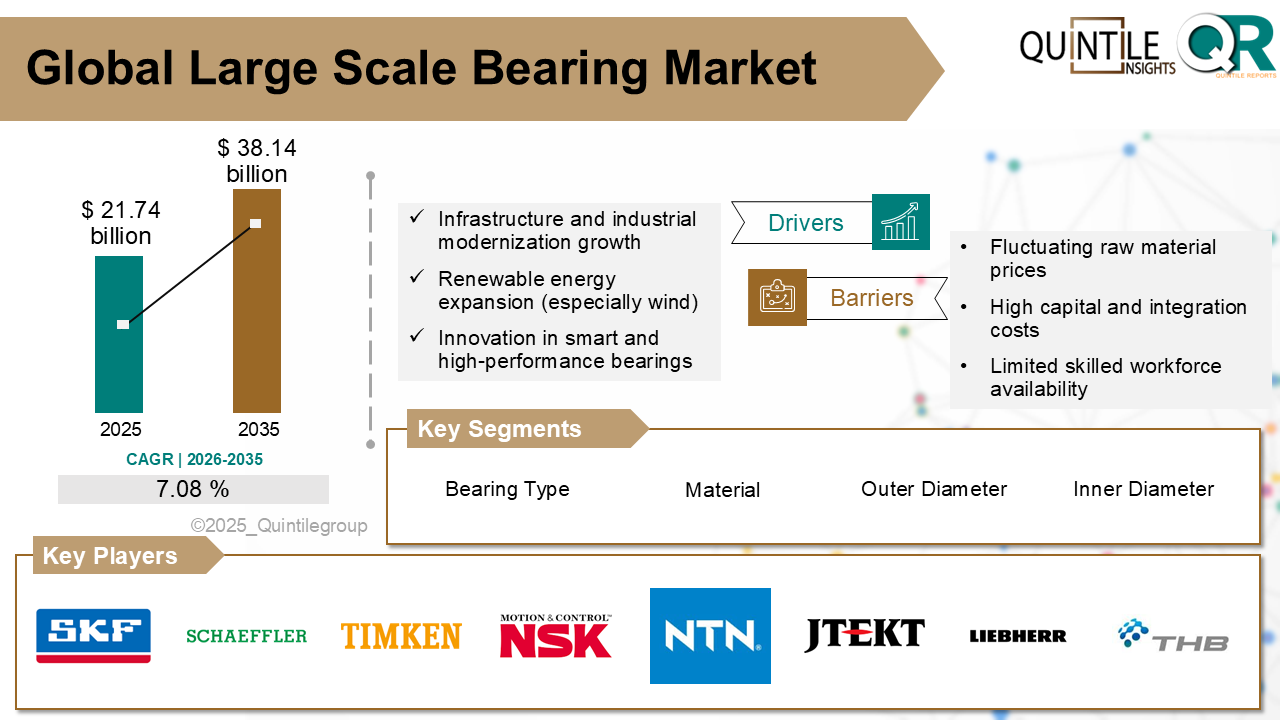
The market includes both manufacturing and aftermarket services, offering bearing units, rotor systems, lubrication systems, and sensor-integrated solutions that support predictive maintenance. Major end-use sectors include industrial manufacturing, oil and gas, construction and mining, renewable energy, metallurgy, and transportation. Market growth is largely driven by expanding infrastructure investments, rising energy generation projects, and increasing industrialization, particularly across Asia-Pacific and North America. Technological advancements such as IoT-enabled smart bearings with real-time monitoring capabilities are also transforming the industry.
Rapid global industrialization and infrastructure expansion represent the primary drivers of the large-scale bearing market. Heavy industries including construction, mining, manufacturing, and power generation rely extensively on large bearings to support equipment used in building roads, bridges, dams, and industrial facilities. Increasing infrastructure development across Asia-Pacific, the Middle East, and Africa continues to fuel demand.
The integration of renewable energy systems, particularly wind turbines and solar tracking installations, is another key growth factor. Large-scale bearings are critical components within wind turbine main shafts, yaw systems, and solar tracking mechanisms. As both onshore and offshore wind installations expand globally, demand for high-performance bearings continues to rise.
The growing adoption of automation and heavy machinery in manufacturing sectors also contributes to market expansion. Advanced industrial equipment used in automotive production, aerospace manufacturing, and material handling requires precision-engineered bearings capable of handling high loads and continuous operational cycles.
Demand from emerging economies further strengthens the market. Countries such as China, India, and Brazil are investing heavily in industrial development, mining operations, and infrastructure projects, leading to increased consumption of large industrial bearings.
Technological innovation is also reshaping the industry. Developments in advanced materials such as ceramics and composites, improved lubrication and sealing systems, and smart bearings equipped with IoT sensors for condition monitoring are enhancing performance, durability, and maintenance efficiency.
High raw material costs and the complexity of precision manufacturing remain major barriers within the large-scale bearing market. These bearings require premium-grade steel, alloys, ceramics, and specialized polymers, and maintaining micrometer-level tolerances requires advanced machinery and technical expertise. This significantly increases production costs and limits entry for smaller manufacturers.
Global supply chain instability and material shortages also pose challenges. Bearings rely on stable supplies of high-quality metals, specialized manufacturing equipment, and electronic components. Disruptions caused by geopolitical tensions, trade policies, and logistics constraints can delay deliveries and increase manufacturing costs.
Strict environmental and regulatory requirements are adding further complexity to manufacturing operations. Regulations regarding emissions, energy consumption, waste management, and carbon footprint reductionsuch as the European Unions Carbon Border Adjustment Mechanism (CBAM)require companies to invest in more sustainable production technologies and materials.
Competition from alternative technologies also affects market growth. Magnetic bearings and fluid-film bearings offer competing solutions for certain high-performance applications. Additionally, increased market commoditization and low-cost imports from developing markets are placing downward pressure on profit margins for established manufacturers.
North America holds a substantial share of the large-scale bearings market, supported by a strong industrial base in sectors such as automotive, aerospace, energy, and heavy manufacturing. The United States leads the region, with growing investments in renewable energy projects and automation technologies driving demand for advanced and sensor-integrated bearing systems.
Europe accounts for a significant portion of the global market due to its mature manufacturing ecosystem and strong emphasis on sustainability and efficiency. Countries such as Germany, France, and the United Kingdom rely heavily on high-performance bearings for automotive manufacturing, industrial machinery, and wind energy systems.
Asia-Pacific represents the largest and fastest-growing regional market, driven by rapid industrialization, infrastructure expansion, and growing automotive and heavy machinery production. China, India, Japan, and Southeast Asian nations are key contributors, supported by government infrastructure initiatives and rising demand for renewable energy installations.
Latin America holds a smaller yet steadily growing share of the market. Countries such as Brazil and Argentina are experiencing increased demand from agriculture, mining, infrastructure, and automotive sectors, all of which require durable bearings for heavy machinery.
The Middle East and Africa region is gradually expanding as demand grows from oil and gas operations, mining activities, construction projects, and energy infrastructure development. Gulf countries and South Africa are key markets where durable bearings are essential for operating machinery in challenging environmental conditions.
The expansion of wind energy installations across the United States is significantly driving demand for large-scale bearings. In 2022, North America added approximately 13.1 GW of new wind capacity, with projections suggesting continued annual additions through 2030 supported by incentives under the Inflation Reduction Act.
Wind turbines require robust yaw and pitch bearings capable of supporting heavy loads while maintaining operational stability. With growing turbine installations across states such as Texas, Iowa, and other parts of the Midwest, bearing manufacturers are increasing production of large slewing and roller bearings to support renewable energy infrastructure development.
Germanys ambitious renewable energy targets have significantly increased demand for large-scale bearings used in wind turbine systems. The country aims to expand onshore wind capacity to around 160 GW by 2035, while already exceeding 60 GW of installed capacity in 2023.
The rapid expansion of wind farm projects has encouraged manufacturers to increase production of high-precision and digitally integrated bearings. German engineering firms are strengthening both domestic supply chains and export capabilities through advanced manufacturing technologies.
Japans transition toward renewable energy is increasing demand for large-scale bearings used in wind turbines and other energy infrastructure systems. The country aims to generate between 36 % and 38 % of its electricity from renewable sources by 2030 and potentially reach 50 % by 2040.
To support this transition, Japan is investing in advanced testing technologies and localized production capabilities. New research initiatives focused on improving offshore wind turbine reliability are contributing to the development of high-performance bearings designed for long operational lifecycles in harsh marine environments.
The large-scale bearings market is highly competitive and driven by continuous technological innovation. Major manufacturers are investing heavily in research and development to create advanced bearing solutions such as hybrid bearings, low-friction designs, energy-efficient variants, and self-lubricating systems.
Leading companies are also introducing smart bearing technologies equipped with embedded sensors capable of monitoring load, vibration, and temperature in real time. These innovations support predictive maintenance systems and reduce operational downtime for critical industrial equipment.
Price competitiveness remains important, particularly in emerging markets. Large multinational manufacturers rely on optimized supply chains and lean production methods to maintain cost advantages, while regional manufacturers provide cost-effective alternatives tailored to local industrial requirements.
Competition is increasingly centered on integrated ecosystems that combine hardware with digital services such as predictive maintenance platforms, real-time diagnostics, and sustainability-focused designs. Bearings designed for remanufacturing, recycled material usage, and energy efficiency are becoming key differentiators in industries focused on lifecycle performance and environmental impact.
Key players in the market include SKF Group, Schaeffler Group, Timken Company, NSK Ltd., NTN Corporation, JTEKT Corporation, Liebherr, THB Bearings, Kaydon Bearings, Luoyang LYC Bearing Co. Ltd., Rothe Erde (thyssenkrupp), ZWZ Group, NTN-SNR, IMO Group, and Xibei Bearing Group.
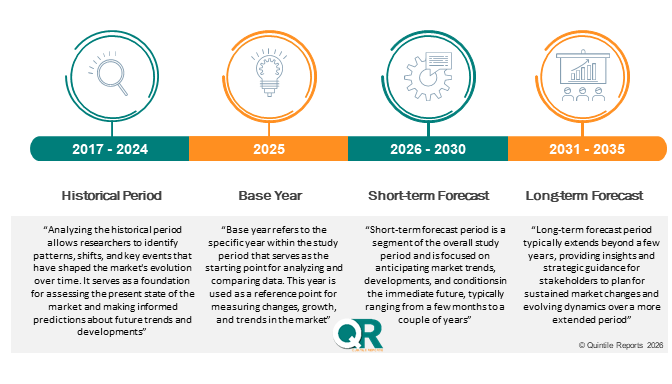
Our team of experienced researchers has meticulously gathered and analyzed data to deliver a thorough examination of market dynamics, competitive landscape, and emerging technologies. With a focus on delivering actionable intelligence, this report aims to empower decision-makers with the information needed to make informed choices and stay ahead of the competition. Whether you are a seasoned industry player or a new entrant, our market research report serves as a strategic tool to navigate the complexities of the market, aiding in successful business planning and growth strategies.
This chapter of our Large Scale Bearing market report provides an in-depth examination of the factors shaping the industry landscape. This section typically encompasses several key elements to offer a comprehensive understanding of the industry landscape such as market drivers & restraints analysis, market opportunities & trend analysis, market size & growth analysis, competitive analysis, SWOT analysis, business environment tools such as Porter's five forces & PESTEL analysis, Ansoff Matrix analysis, penetration & growth prospect analysis, regulatory framework & reimbursement scenario analysis, impact of macro & micro economic factors analysis such as Covid-19 impact, GDP growth, market inflation, U.S.- China trade war, Russia-Ukraine war impact, and supply chain analysis.
The segment analysis chapter of Large Scale Bearing market report is a critical section that delves into a detailed examination of the market's various segments. Segmentation involves dividing the market into distinct categories based on certain criteria to better understand and address the diverse needs of consumers. This chapter typically follows the introduction and provides a more granular view of the market, offering valuable insights for businesses and stakeholders. The components of the chapter lude segment definitions to understand the inclusions and exclusions of the study, assumptions, market size estimates and growth trend analysis of each segment, qualitative analysis of the segment, technological advancements, market penetration rate, market adoption rate, market share examination by each segment, segment growth drivers and restraint barriers, consumer behaviour and challenge analysis.
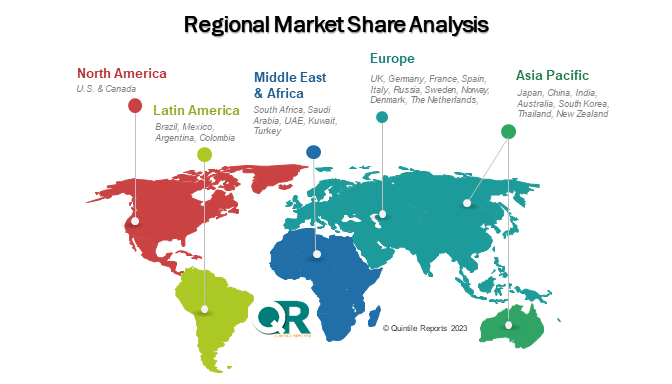
The chapter in Large Scale Bearing market research report is a pivotal section that examines and predicts the market dynamics and trends specific to different geographical regions. This chapter is crucial for businesses and stakeholders seeking a comprehensive understanding of how the market behaves across various locations, enabling them to tailor strategies and make informed decisions based on regional variations. The regional analysis chapter of our Large Scale Bearing market report is classified into regions & country-level. The chapter consists of North America (U.S., Canada), Europe (UK, Germany, France, Italy, Spain, Russia, Sweden, Denmark, Norway, Rest of Europe), Asia Pacific (Japan, China, India, Australia, South Korea, Thailand, Rest of Asia Pacific), Latin America (Brazil, Mexico, Argentina, Colombia, Rest of Latin America), Middle East & Africa (South Africa, Saudi Arabia, UAE, Kuwait, Rest of Middle East & Africa).
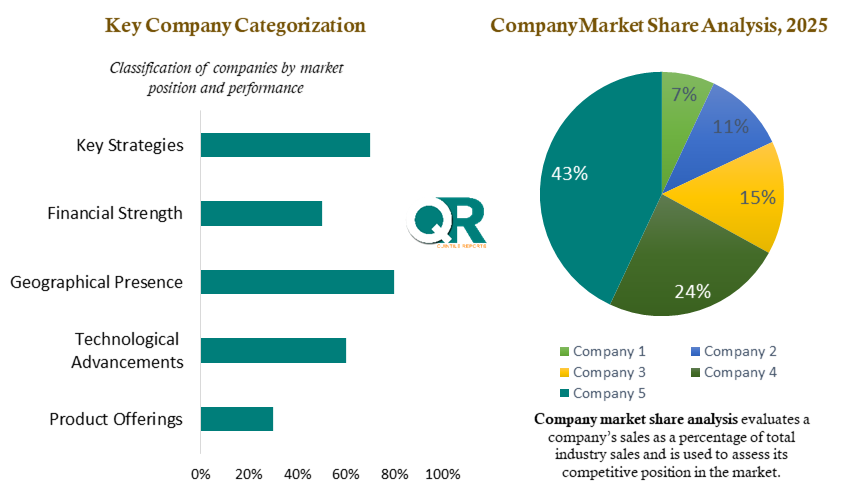
This section of a Large Scale Bearing market report is a crucial segment that provides a comprehensive overview of the competitive landscape within the market. This section is vital for businesses, investors, and stakeholders seeking insights into key players, their market positioning, strengths, weaknesses, strategies, and potential impacts on the overall market dynamics. The chapter includes research methodology used to analyse the market competition, list of key players operating in the market, detailed company profile section which includes company overview, business verticals, financial performance, product/services benchmarking, geographical presence, and strategic initiatives.
| Report Scope | Details |
| Report Version | 2026 |
| Growth Rate | CAGR of 7.08 from 2026 to 2035 |
| Base Year | 2025 |
| Actual Estimates / Historical Data | 2017 - 2024 |
| Forecast Period | 2026 - 2035 |
| Quantitative Units | Revenue in USD million/billion & CAGR from 2026 to 2035 |
| Country Scope | North America (U.S., Canada), Europe (UK, Germany, France, Italy, Spain, Russia, Sweden, Denmark, Norway, Rest of Europe), Asia Pacific (Japan, China, India, Australia, South Korea, Thailand, Rest of Asia Pacific), Latin America (Brazil, Mexico, Argentina, Colombia, Rest of Latin America), Middle East & Africa (South Africa, Saudi Arabia, UAE, Kuwait, Rest of Middle East & Africa). |
| The Segment Covered by Bearing Type |
|
| The Segment Covered by Material |
|
| Companies Covered |
|
| Report Coverage | Revenue forecast, company share, competitive landscape, growth factors, and trends |
| Free Customization Scope (Equivalent to 5 Analyst Working Days) | If you need specific information, which is not currently within the scope of the report, we will provide it to you as a part of the customization |

Statistics for the 2025 Large Scale Bearing market share, size, and revenue growth rate were created by Quintile Report™. Large Scale Bearing analysis includes a market forecast outlook for 2035 and a historical overview. Get a free PDF sample of this market analysis, please get in touch with our principal analyst at sales@quintilereports.com
List of Tables
Table 1 List of Abbreviation and acronyms
Table 2 List of Sources
Table 3 North America Global Large Scale Bearing Market, by Segment Analysis, (USD Million) 2017-2035
Table 4 North America Global Large Scale Bearing Market, by Region, (USD Million) 2017-2035
Table 5 U.S. Global Large Scale Bearing Market, by Segment Analysis, (USD Million) 2017-2035
Table 6 Canada Global Large Scale Bearing Market, by Segment Analysis, (USD Million) 2017-2035
Table 7 Europe Global Large Scale Bearing Market, by Segment Analysis, (USD Million) 2017-2035
Table 8 Europe Global Large Scale Bearing Market, by Region, (USD Million) 2017-2035
Table 9 Germany Global Large Scale Bearing Market, by Segment Analysis, (USD Million) 2017-2035
Table 10 U.K. Global Large Scale Bearing Market, by Segment Analysis, (USD Million) 2017-2035
Table 11 France Global Large Scale Bearing Market, by Segment Analysis, (USD Million) 2017-2035
Table 12 Italy Global Large Scale Bearing Market, by Segment Analysis, (USD Million) 2017-2035
Table 13 Spain Global Large Scale Bearing Market, by Segment Analysis, (USD Million) 2017-2035
Table 14 Sweden Global Large Scale Bearing Market, by Segment Analysis, (USD Million) 2017-2035
Table 15 Denmark Global Large Scale Bearing Market, by Segment Analysis, (USD Million) 2017-2035
Table 16 Norway Global Large Scale Bearing Market, by Segment Analysis, (USD Million) 2017-2035
Table 17 The Netherlands Global Large Scale Bearing Market, by Segment Analysis, (USD Million) 2017-2035
Table 18 Russia Global Large Scale Bearing Market, by Segment Analysis, (USD Million) 2017-2035
Table 19 Asia Pacific Global Large Scale Bearing Market, by Segment Analysis, (USD Million) 2017-2035
Table 20 Asia Pacific Global Large Scale Bearing Market, by Region, (USD Million) 2017-2035
Table 21 China Global Large Scale Bearing Market, by Segment Analysis, (USD Million) 2017-2035
Table 22 Japan Global Large Scale Bearing Market, by Segment Analysis, (USD Million) 2017-2035
Table 23 India Global Large Scale Bearing Market, by Segment Analysis, (USD Million) 2017-2035
Table 24 Australia Global Large Scale Bearing Market, by Segment Analysis, (USD Million) 2017-2035
Table 25 South Korea Global Large Scale Bearing Market, by Segment Analysis, (USD Million) 2017-2035
Table 26 Thailand Global Large Scale Bearing Market, by Segment Analysis, (USD Million) 2017-2035
Table 27 Latin America Global Large Scale Bearing Market, by Segment Analysis, (USD Million) 2017-2035
Table 28 Latin America Global Large Scale Bearing Market, by Region, (USD Million) 2017-2035
Table 29 Brazil Global Large Scale Bearing Market, by Segment Analysis, (USD Million) 2017-2035
Table 30 Mexico Global Large Scale Bearing Market, by Segment Analysis, (USD Million) 2017-2035
Table 31 Argentina Global Large Scale Bearing Market, by Segment Analysis, (USD Million) 2017-2035
Table 32 Middle East and Africa Global Large Scale Bearing Market, by Segment Analysis, (USD Million) 2017-2035
Table 33 Middle East and Africa Global Large Scale Bearing Market, by Region, (USD Million) 2017-2035
Table 34 South Africa Global Large Scale Bearing Market, by Segment Analysis, (USD Million) 2017-2035
Table 35 Saudi Arabia Global Large Scale Bearing Market, by Segment Analysis, (USD Million) 2017-2035
Table 36 UAE Global Large Scale Bearing Market, by Segment Analysis, (USD Million) 2017-2035
Table 37 Kuwait Global Large Scale Bearing Market, by Segment Analysis, (USD Million) 2017-2035
Table 38 Turkey Global Large Scale Bearing Market, by Segment Analysis, (USD Million) 2017-2035
Fig.1 Market research process
Fig.2 Market research approaches
Fig.3 Global Large Scale Bearing Market: market scenario
Fig.4 Global Large Scale Bearing Market competitive outlook
Fig.5 Global Large Scale Bearing Market driver analysis
Fig.6 Global Large Scale Bearing Market restraint analysis
Fig.7 Global Large Scale Bearing Market opportunity analysis
Fig.8 Global Large Scale Bearing Market trends analysis
Fig.9 Global Large Scale Bearing Market: Segment Analysis (Based on the scope)
Fig.10 Global Large Scale Bearing Market: regional analysis
Fig.11 Global market shares and leading market players
Fig.12 North America market share and leading players
Fig.13 Europe market share and leading players
Fig.14 Asia Pacific market share and leading players
Fig.15 Latin America market share and leading players
Fig.16 Middle East & Africa market share and leading players
Fig.17 North America, by country
Fig.18 North America
Fig.19 North America market estimates and forecast, 2017-2035
Fig.20 U.S.
Fig.21 Canada
Fig.22 Europe
Fig.23 Europe market estimates and forecast, 2017-2035
Fig.24 U.K.
Fig.25 Germany
Fig.26 France
Fig.27 Italy
Fig.28 Spain
Fig.29 Sweden
Fig.30 Denmark
Fig.31 Norway
Fig.32 The Netherlands
Fig.33 Russia
Fig.34 Asia Pacific
Fig.35 Asia Pacific market estimates and forecast, 2017-2035
Fig.36 China
Fig.37 Japan
Fig.38 India
Fig.39 Australia
Fig.40 South Korea
Fig.41 Thailand
Fig.42 Latin America
Fig.43 Latin America market estimates and forecast, 2017-2035
Fig.44 Brazil
Fig.45 Mexico
Fig.46 Argentina
Fig.47 Colombia
Fig.48 Middle East and Africa
Fig.49 Middle East and Africa market estimates and forecast, 2017-2035
Fig.50 Saudi Arabia
Fig.51 South Africa
Fig.52 UAE
Fig.53 Kuwait
Fig.54 Turkey
The Global Large Scale Bearing Market was valued at USD 21.74 billion in 2025 and is projected to reach USD 38.14 billion by 2035, advancing at a notable CAGR of 7.08% throughout the forecast period from 2026 to 2035. The Large Scale Bearing market report provides an in-depth analysis of the industry by examining macroeconomic indicators, technological progress, regulatory environments, and evolving consumer trends to highlight the markets long-term growth outlook.
The large scale bearing market refers to the global industry involved in the production and distribution of large-diameter bearings, typically with outer diameters exceeding 500 mm, designed for heavy-duty industrial machinery and infrastructure applications. These bearings include rolling and roller types such as cylindrical, spherical, and tapered bearings, and they are essential components in equipment like wind turbines, hydro and thermal power plants, mining machinery, cement mills, rail systems, and marine propulsion units.
Taking 2025 as the base year, the Large Scale Bearing market is demonstrating steady growth fueled by increased innovation, expanding application areas across end-use sectors, and rapid digital transformation. Market participants are increasingly optimizing their go-to-market (GTM) strategies to strengthen market penetration and capitalize on emerging business opportunities.
Over the coming decade, the market is expected to maintain strong expansion supported by continuous R&D investments, collaborative partnerships, and a rising number of mergers and acquisitions. Businesses that focus on innovation, operational agility, and customer-focused strategies are expected to build a sustainable competitive advantage. The report delivers comprehensive insights into market drivers, restraints, opportunities, and challenges across segments, regions, and countries, backed by detailed qualitative and quantitative analysis from 2017 to 2035.
The market includes both manufacturing and aftermarket services, offering bearing units, rotor systems, lubrication systems, and sensor-integrated solutions that support predictive maintenance. Major end-use sectors include industrial manufacturing, oil and gas, construction and mining, renewable energy, metallurgy, and transportation. Market growth is largely driven by expanding infrastructure investments, rising energy generation projects, and increasing industrialization, particularly across Asia-Pacific and North America. Technological advancements such as IoT-enabled smart bearings with real-time monitoring capabilities are also transforming the industry.
Rapid global industrialization and infrastructure expansion represent the primary drivers of the large-scale bearing market. Heavy industries including construction, mining, manufacturing, and power generation rely extensively on large bearings to support equipment used in building roads, bridges, dams, and industrial facilities. Increasing infrastructure development across Asia-Pacific, the Middle East, and Africa continues to fuel demand.
The integration of renewable energy systems, particularly wind turbines and solar tracking installations, is another key growth factor. Large-scale bearings are critical components within wind turbine main shafts, yaw systems, and solar tracking mechanisms. As both onshore and offshore wind installations expand globally, demand for high-performance bearings continues to rise.
The growing adoption of automation and heavy machinery in manufacturing sectors also contributes to market expansion. Advanced industrial equipment used in automotive production, aerospace manufacturing, and material handling requires precision-engineered bearings capable of handling high loads and continuous operational cycles.
Demand from emerging economies further strengthens the market. Countries such as China, India, and Brazil are investing heavily in industrial development, mining operations, and infrastructure projects, leading to increased consumption of large industrial bearings.
Technological innovation is also reshaping the industry. Developments in advanced materials such as ceramics and composites, improved lubrication and sealing systems, and smart bearings equipped with IoT sensors for condition monitoring are enhancing performance, durability, and maintenance efficiency.
High raw material costs and the complexity of precision manufacturing remain major barriers within the large-scale bearing market. These bearings require premium-grade steel, alloys, ceramics, and specialized polymers, and maintaining micrometer-level tolerances requires advanced machinery and technical expertise. This significantly increases production costs and limits entry for smaller manufacturers.
Global supply chain instability and material shortages also pose challenges. Bearings rely on stable supplies of high-quality metals, specialized manufacturing equipment, and electronic components. Disruptions caused by geopolitical tensions, trade policies, and logistics constraints can delay deliveries and increase manufacturing costs.
Strict environmental and regulatory requirements are adding further complexity to manufacturing operations. Regulations regarding emissions, energy consumption, waste management, and carbon footprint reductionsuch as the European Unions Carbon Border Adjustment Mechanism (CBAM)require companies to invest in more sustainable production technologies and materials.
Competition from alternative technologies also affects market growth. Magnetic bearings and fluid-film bearings offer competing solutions for certain high-performance applications. Additionally, increased market commoditization and low-cost imports from developing markets are placing downward pressure on profit margins for established manufacturers.
North America holds a substantial share of the large-scale bearings market, supported by a strong industrial base in sectors such as automotive, aerospace, energy, and heavy manufacturing. The United States leads the region, with growing investments in renewable energy projects and automation technologies driving demand for advanced and sensor-integrated bearing systems.
Europe accounts for a significant portion of the global market due to its mature manufacturing ecosystem and strong emphasis on sustainability and efficiency. Countries such as Germany, France, and the United Kingdom rely heavily on high-performance bearings for automotive manufacturing, industrial machinery, and wind energy systems.
Asia-Pacific represents the largest and fastest-growing regional market, driven by rapid industrialization, infrastructure expansion, and growing automotive and heavy machinery production. China, India, Japan, and Southeast Asian nations are key contributors, supported by government infrastructure initiatives and rising demand for renewable energy installations.
Latin America holds a smaller yet steadily growing share of the market. Countries such as Brazil and Argentina are experiencing increased demand from agriculture, mining, infrastructure, and automotive sectors, all of which require durable bearings for heavy machinery.
The Middle East and Africa region is gradually expanding as demand grows from oil and gas operations, mining activities, construction projects, and energy infrastructure development. Gulf countries and South Africa are key markets where durable bearings are essential for operating machinery in challenging environmental conditions.
The expansion of wind energy installations across the United States is significantly driving demand for large-scale bearings. In 2022, North America added approximately 13.1 GW of new wind capacity, with projections suggesting continued annual additions through 2030 supported by incentives under the Inflation Reduction Act.
Wind turbines require robust yaw and pitch bearings capable of supporting heavy loads while maintaining operational stability. With growing turbine installations across states such as Texas, Iowa, and other parts of the Midwest, bearing manufacturers are increasing production of large slewing and roller bearings to support renewable energy infrastructure development.
Germanys ambitious renewable energy targets have significantly increased demand for large-scale bearings used in wind turbine systems. The country aims to expand onshore wind capacity to around 160 GW by 2035, while already exceeding 60 GW of installed capacity in 2023.
The rapid expansion of wind farm projects has encouraged manufacturers to increase production of high-precision and digitally integrated bearings. German engineering firms are strengthening both domestic supply chains and export capabilities through advanced manufacturing technologies.
Japans transition toward renewable energy is increasing demand for large-scale bearings used in wind turbines and other energy infrastructure systems. The country aims to generate between 36 % and 38 % of its electricity from renewable sources by 2030 and potentially reach 50 % by 2040.
To support this transition, Japan is investing in advanced testing technologies and localized production capabilities. New research initiatives focused on improving offshore wind turbine reliability are contributing to the development of high-performance bearings designed for long operational lifecycles in harsh marine environments.
The large-scale bearings market is highly competitive and driven by continuous technological innovation. Major manufacturers are investing heavily in research and development to create advanced bearing solutions such as hybrid bearings, low-friction designs, energy-efficient variants, and self-lubricating systems.
Leading companies are also introducing smart bearing technologies equipped with embedded sensors capable of monitoring load, vibration, and temperature in real time. These innovations support predictive maintenance systems and reduce operational downtime for critical industrial equipment.
Price competitiveness remains important, particularly in emerging markets. Large multinational manufacturers rely on optimized supply chains and lean production methods to maintain cost advantages, while regional manufacturers provide cost-effective alternatives tailored to local industrial requirements.
Competition is increasingly centered on integrated ecosystems that combine hardware with digital services such as predictive maintenance platforms, real-time diagnostics, and sustainability-focused designs. Bearings designed for remanufacturing, recycled material usage, and energy efficiency are becoming key differentiators in industries focused on lifecycle performance and environmental impact.
Key players in the market include SKF Group, Schaeffler Group, Timken Company, NSK Ltd., NTN Corporation, JTEKT Corporation, Liebherr, THB Bearings, Kaydon Bearings, Luoyang LYC Bearing Co. Ltd., Rothe Erde (thyssenkrupp), ZWZ Group, NTN-SNR, IMO Group, and Xibei Bearing Group.
Our team of experienced researchers has meticulously gathered and analyzed data to deliver a thorough examination of market dynamics, competitive landscape, and emerging technologies. With a focus on delivering actionable intelligence, this report aims to empower decision-makers with the information needed to make informed choices and stay ahead of the competition. Whether you are a seasoned industry player or a new entrant, our market research report serves as a strategic tool to navigate the complexities of the market, aiding in successful business planning and growth strategies.
This chapter of our Large Scale Bearing market report provides an in-depth examination of the factors shaping the industry landscape. This section typically encompasses several key elements to offer a comprehensive understanding of the industry landscape such as market drivers & restraints analysis, market opportunities & trend analysis, market size & growth analysis, competitive analysis, SWOT analysis, business environment tools such as Porter's five forces & PESTEL analysis, Ansoff Matrix analysis, penetration & growth prospect analysis, regulatory framework & reimbursement scenario analysis, impact of macro & micro economic factors analysis such as Covid-19 impact, GDP growth, market inflation, U.S.- China trade war, Russia-Ukraine war impact, and supply chain analysis.
The segment analysis chapter of Large Scale Bearing market report is a critical section that delves into a detailed examination of the market's various segments. Segmentation involves dividing the market into distinct categories based on certain criteria to better understand and address the diverse needs of consumers. This chapter typically follows the introduction and provides a more granular view of the market, offering valuable insights for businesses and stakeholders. The components of the chapter lude segment definitions to understand the inclusions and exclusions of the study, assumptions, market size estimates and growth trend analysis of each segment, qualitative analysis of the segment, technological advancements, market penetration rate, market adoption rate, market share examination by each segment, segment growth drivers and restraint barriers, consumer behaviour and challenge analysis.
The chapter in Large Scale Bearing market research report is a pivotal section that examines and predicts the market dynamics and trends specific to different geographical regions. This chapter is crucial for businesses and stakeholders seeking a comprehensive understanding of how the market behaves across various locations, enabling them to tailor strategies and make informed decisions based on regional variations. The regional analysis chapter of our Large Scale Bearing market report is classified into regions & country-level. The chapter consists of North America (U.S., Canada), Europe (UK, Germany, France, Italy, Spain, Russia, Sweden, Denmark, Norway, Rest of Europe), Asia Pacific (Japan, China, India, Australia, South Korea, Thailand, Rest of Asia Pacific), Latin America (Brazil, Mexico, Argentina, Colombia, Rest of Latin America), Middle East & Africa (South Africa, Saudi Arabia, UAE, Kuwait, Rest of Middle East & Africa).
This section of a Large Scale Bearing market report is a crucial segment that provides a comprehensive overview of the competitive landscape within the market. This section is vital for businesses, investors, and stakeholders seeking insights into key players, their market positioning, strengths, weaknesses, strategies, and potential impacts on the overall market dynamics. The chapter includes research methodology used to analyse the market competition, list of key players operating in the market, detailed company profile section which includes company overview, business verticals, financial performance, product/services benchmarking, geographical presence, and strategic initiatives.
| Report Scope | Details |
| Report Version | 2026 |
| Growth Rate | CAGR of 7.08 from 2026 to 2035 |
| Base Year | 2025 |
| Actual Estimates / Historical Data | 2017 - 2024 |
| Forecast Period | 2026 - 2035 |
| Quantitative Units | Revenue in USD million/billion & CAGR from 2026 to 2035 |
| Country Scope | North America (U.S., Canada), Europe (UK, Germany, France, Italy, Spain, Russia, Sweden, Denmark, Norway, Rest of Europe), Asia Pacific (Japan, China, India, Australia, South Korea, Thailand, Rest of Asia Pacific), Latin America (Brazil, Mexico, Argentina, Colombia, Rest of Latin America), Middle East & Africa (South Africa, Saudi Arabia, UAE, Kuwait, Rest of Middle East & Africa). |
| The Segment Covered by Bearing Type |
|
| The Segment Covered by Material |
|
| Companies Covered |
|
| Report Coverage | Revenue forecast, company share, competitive landscape, growth factors, and trends |
| Free Customization Scope (Equivalent to 5 Analyst Working Days) | If you need specific information, which is not currently within the scope of the report, we will provide it to you as a part of the customization |
Statistics for the 2025 Large Scale Bearing market share, size, and revenue growth rate were created by Quintile Report™. Large Scale Bearing analysis includes a market forecast outlook for 2035 and a historical overview. Get a free PDF sample of this market analysis, please get in touch with our principal analyst at sales@quintilereports.com
Table 1 List of Abbreviation and acronyms
Table 2 List of Sources
Table 3 North America Global Large Scale Bearing Market, by Segment Analysis, (USD Million) 2017-2035
Table 4 North America Global Large Scale Bearing Market, by Region, (USD Million) 2017-2035
Table 5 U.S. Global Large Scale Bearing Market, by Segment Analysis, (USD Million) 2017-2035
Table 6 Canada Global Large Scale Bearing Market, by Segment Analysis, (USD Million) 2017-2035
Table 7 Europe Global Large Scale Bearing Market, by Segment Analysis, (USD Million) 2017-2035
Table 8 Europe Global Large Scale Bearing Market, by Region, (USD Million) 2017-2035
Table 9 Germany Global Large Scale Bearing Market, by Segment Analysis, (USD Million) 2017-2035
Table 10 U.K. Global Large Scale Bearing Market, by Segment Analysis, (USD Million) 2017-2035
Table 11 France Global Large Scale Bearing Market, by Segment Analysis, (USD Million) 2017-2035
Table 12 Italy Global Large Scale Bearing Market, by Segment Analysis, (USD Million) 2017-2035
Table 13 Spain Global Large Scale Bearing Market, by Segment Analysis, (USD Million) 2017-2035
Table 14 Sweden Global Large Scale Bearing Market, by Segment Analysis, (USD Million) 2017-2035
Table 15 Denmark Global Large Scale Bearing Market, by Segment Analysis, (USD Million) 2017-2035
Table 16 Norway Global Large Scale Bearing Market, by Segment Analysis, (USD Million) 2017-2035
Table 17 The Netherlands Global Large Scale Bearing Market, by Segment Analysis, (USD Million) 2017-2035
Table 18 Russia Global Large Scale Bearing Market, by Segment Analysis, (USD Million) 2017-2035
Table 19 Asia Pacific Global Large Scale Bearing Market, by Segment Analysis, (USD Million) 2017-2035
Table 20 Asia Pacific Global Large Scale Bearing Market, by Region, (USD Million) 2017-2035
Table 21 China Global Large Scale Bearing Market, by Segment Analysis, (USD Million) 2017-2035
Table 22 Japan Global Large Scale Bearing Market, by Segment Analysis, (USD Million) 2017-2035
Table 23 India Global Large Scale Bearing Market, by Segment Analysis, (USD Million) 2017-2035
Table 24 Australia Global Large Scale Bearing Market, by Segment Analysis, (USD Million) 2017-2035
Table 25 South Korea Global Large Scale Bearing Market, by Segment Analysis, (USD Million) 2017-2035
Table 26 Thailand Global Large Scale Bearing Market, by Segment Analysis, (USD Million) 2017-2035
Table 27 Latin America Global Large Scale Bearing Market, by Segment Analysis, (USD Million) 2017-2035
Table 28 Latin America Global Large Scale Bearing Market, by Region, (USD Million) 2017-2035
Table 29 Brazil Global Large Scale Bearing Market, by Segment Analysis, (USD Million) 2017-2035
Table 30 Mexico Global Large Scale Bearing Market, by Segment Analysis, (USD Million) 2017-2035
Table 31 Argentina Global Large Scale Bearing Market, by Segment Analysis, (USD Million) 2017-2035
Table 32 Middle East and Africa Global Large Scale Bearing Market, by Segment Analysis, (USD Million) 2017-2035
Table 33 Middle East and Africa Global Large Scale Bearing Market, by Region, (USD Million) 2017-2035
Table 34 South Africa Global Large Scale Bearing Market, by Segment Analysis, (USD Million) 2017-2035
Table 35 Saudi Arabia Global Large Scale Bearing Market, by Segment Analysis, (USD Million) 2017-2035
Table 36 UAE Global Large Scale Bearing Market, by Segment Analysis, (USD Million) 2017-2035
Table 37 Kuwait Global Large Scale Bearing Market, by Segment Analysis, (USD Million) 2017-2035
Table 38 Turkey Global Large Scale Bearing Market, by Segment Analysis, (USD Million) 2017-2035
Fig.1 Market research process
Fig.2 Market research approaches
Fig.3 Global Large Scale Bearing Market: market scenario
Fig.4 Global Large Scale Bearing Market competitive outlook
Fig.5 Global Large Scale Bearing Market driver analysis
Fig.6 Global Large Scale Bearing Market restraint analysis
Fig.7 Global Large Scale Bearing Market opportunity analysis
Fig.8 Global Large Scale Bearing Market trends analysis
Fig.9 Global Large Scale Bearing Market: Segment Analysis (Based on the scope)
Fig.10 Global Large Scale Bearing Market: regional analysis
Fig.11 Global market shares and leading market players
Fig.12 North America market share and leading players
Fig.13 Europe market share and leading players
Fig.14 Asia Pacific market share and leading players
Fig.15 Latin America market share and leading players
Fig.16 Middle East & Africa market share and leading players
Fig.17 North America, by country
Fig.18 North America
Fig.19 North America market estimates and forecast, 2017-2035
Fig.20 U.S.
Fig.21 Canada
Fig.22 Europe
Fig.23 Europe market estimates and forecast, 2017-2035
Fig.24 U.K.
Fig.25 Germany
Fig.26 France
Fig.27 Italy
Fig.28 Spain
Fig.29 Sweden
Fig.30 Denmark
Fig.31 Norway
Fig.32 The Netherlands
Fig.33 Russia
Fig.34 Asia Pacific
Fig.35 Asia Pacific market estimates and forecast, 2017-2035
Fig.36 China
Fig.37 Japan
Fig.38 India
Fig.39 Australia
Fig.40 South Korea
Fig.41 Thailand
Fig.42 Latin America
Fig.43 Latin America market estimates and forecast, 2017-2035
Fig.44 Brazil
Fig.45 Mexico
Fig.46 Argentina
Fig.47 Colombia
Fig.48 Middle East and Africa
Fig.49 Middle East and Africa market estimates and forecast, 2017-2035
Fig.50 Saudi Arabia
Fig.51 South Africa
Fig.52 UAE
Fig.53 Kuwait
Fig.54 Turkey

A license granted to one user. Rules or conditions might be applied for e.g. the use of electric files (PDFs) or printings, depending on product.
A license granted to multiple users.
A license granted to a single business site/establishment.
A license granted to all employees within organisation access to the product.
Immediate / Within 24-48 hours - Working days
Online Payments with PayPal and CCavenue
You can order a report by picking any of the payment methods which is bank wire or online payment through any Debit/Credit card or PayPal.
Hard Copy
 U.S. : +1-201-772-7734