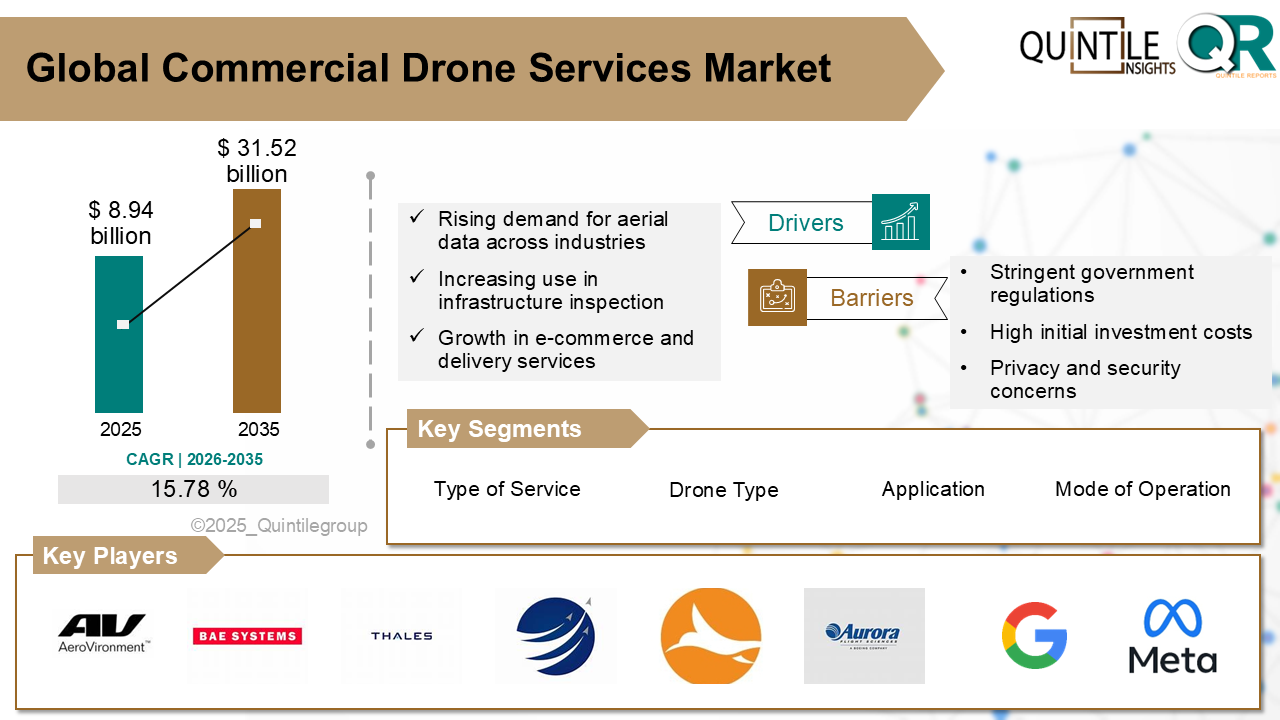
The Global Commercial Drone Services Market was valued at USD 8.94 billion in 2025 and is projected to reach USD 31.52 billion by 2035, advancing at a notable CAGR of 15.78% throughout the forecast period from 2026 to 2035. The Commercial Drone Services market report provides an in-depth analysis of the industry by examining macroeconomic indicators, technological progress, regulatory environments, and evolving consumer trends to highlight the markets long-term growth outlook.
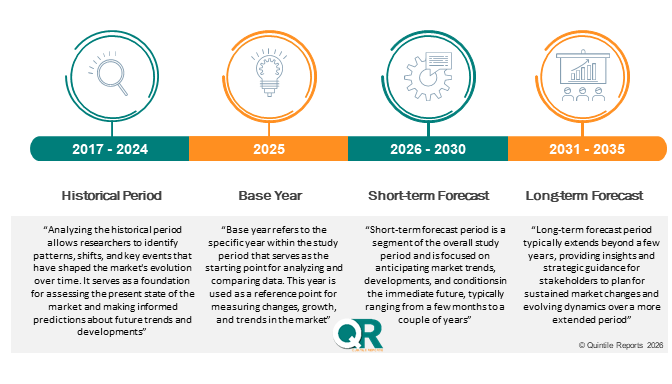
Taking 2025 as the base year, the Commercial Drone Services market is demonstrating steady growth fueled by increased innovation, expanding application areas across end-use sectors, and rapid digital transformation. Market participants are increasingly optimizing their go-to-market (GTM) strategies to strengthen market penetration and capitalize on emerging business opportunities.
Over the coming decade, the market is expected to maintain strong expansion supported by continuous R&D investments, collaborative partnerships, and a rising number of mergers and acquisitions. Businesses that focus on innovation, operational agility, and customer-focused strategies are expected to build a sustainable competitive advantage. The report delivers comprehensive insights into market drivers, restraints, opportunities, and challenges across segments, regions, and countries, backed by detailed qualitative and quantitative analysis from 2017 to 2035.
The Commercial Drone Services Market is rapidly evolving as drones become essential tools across a wide range of industries. These services go far beyond just flying UAVsthey include everything from aerial inspections, imaging, and mapping to maintenance, repair, and even pilot training. Drones are now widely used in agriculture for precision farming, in construction for site monitoring, and in industries like oil and gas or mining for safety inspections and environmental monitoring.
Key services such as aerial photography and remote sensing are proving invaluable in areas like infrastructure development and disaster management. Whats really driving this market forward, though, is the rapid pace of technology. With AI integration, smarter sensors like LiDAR and thermal imaging, longer battery life, and more autonomous capabilities, drones are becoming more powerful and versatile than ever. As a result, businesses are increasingly turning to drone services to improve efficiency, safety, and decision-making across their operations.
The commercial drone services market is rapidly expanding, driven by a blend of technological innovations and evolving industry needs.
Advances in artificial intelligence, autonomous navigation, high-resolution imaging, and improved battery efficiency are enhancing drone capabilitiesallowing them to perform complex tasks like real-time data analysis and Beyond Visual Line of Sight (BVLOS) operations with longer flight durations.
At the same time, there is growing demand for drone services across various industries, including agriculture, logistics, construction, and defence. Among these, agriculture holds the largest market share, particularly in countries like India, China, and the U.S., where precision farming is crucial.
Regulatory support is also playing a key role. Governments, especially in regions like North America, are creating clearer frameworkssuch as FAA regulations in the U.S.that reduce operational hurdles and encourage broader commercial adoption.
Adding to this momentum is the explosive growth of e-commerce, which is fuelling the need for faster, more efficient parcel delivery. Drones provide a compelling solution, especially for reaching remote or underserved areas, making them a valuable asset for the logistics sector.
One major challenge is the complex web of regulatory hurdles and airspace restrictions, which vary widely across countries. These rules, especially those governing Beyond Visual Line of Sight (BVLOS) flights, create compliance burdens that can slow market expansion.
Safety and privacy concerns also weigh heavily on the industry. Risks of mid-air collisions, accidents, or unauthorized surveillance raise red flags for both the public and regulators, often resulting in stricter policies and restricted drone operations in urban or sensitive environments.
On the technological front, limitations such as short battery life, limited payload capacity, and the complexity of processing large volumes of data affect operational efficiency. This is especially evident in sectors like precision agriculture, where crop-monitoring drones are constrained by these factors.
Lastly, the high initial costs involved in acquiring drones, maintaining them, training staff, and integrating the necessary software systems pose a financial barrierparticularly for small and medium enterprises.
North America leads the commercial drone services market, thanks to cutting-edge technology and strong regulatory support. The U.S. FAA has played a crucial role by expanding Part 135 and BVLOS waivers, reducing operational barriers and enabling large-scale drone use in sectors like logistics, agriculture, and infrastructure. AI-powered drones, 5G connectivity, and edge computing are transforming how data is collected and analysed in real time, boosting efficiency. The rise of Drone-as-a-Service (DaaS) is making drone technology more accessible, especially for small and mid-sized businesses in construction, mining, and farming. Meanwhile, cities are seeing growth in drone-based medical and parcel deliveries.
Europes commercial drone services market is rapidly evolving, driven by a strong push for regulatory harmony and sustainability. Thanks to unified rules from the European Union Aviation Safety Agency (EASA), businesses can now operate drones more easily across borders, reducing regulatory complexity. Countries like Germany, France, and the UK are leading with tech innovations in autonomous flight and smart city integration. Drones are widely used in environmental monitoring, precision agriculture, energy infrastructure inspections, and urban planning. At the same time, strict privacy and safety standards guide how drones are used in crowded urban areas.
The Asia Pacific region is witnessing rapid growth in the drone market, fuelled by industrialization, urbanization, and strong government support for drone adoption. Countries like China, Japan, India, and Australia are leading the way. The region is embracing cutting-edge technologies like AI and machine learning for tasks such as agricultural monitoring, mining surveys, and infrastructure inspections. Drones are being widely used in precision agriculture to boost crop yields, in logistics for last-mile deliveries, and in environmental monitoring to manage natural resources. There is also a surge in investment in drone startups and growing integration with IoT, particularly in smart city initiatives.
Latin America's commercial drone services market is steadily taking off, fuelled by growing recognition of drones' value across agriculture, mining, and infrastructure. In countries like Brazil, Mexico, and Argentina, drones are being used for tasks like crop monitoring, livestock tracking, and inspecting pipelines. Governments are working to create clearer safety and privacy regulations, though fragmented rules still pose challenges. Technological efforts are centred on cost-effective drone solutions that can handle the regions varied terrains. International partnerships and pilot projects are also highlighting drones' potential in disaster response and environmental protection.
The Middle East and Africa (MEA) region is rapidly embracing commercial drone services across key sectors like oil and gas, mining, agriculture, and security. Countries such as the UAE, Saudi Arabia, and South Africa are leveraging drones for tasks like infrastructure inspection, border surveillance, and precision farming. As regulatory frameworks continue to evolve, many nations are balancing the growth of drone operations with safety and privacy concerns. Technological advancementssuch as drones equipped with high-end sensors for pipeline monitoring and environmental assessmentsare driving innovation. Government-backed initiatives and collaborations with global drone tech providers are further boosting adoption.
The United States commercial drone services market is rapidly advancing, guided by a well-established regulatory framework led by the Federal Aviation Administration (FAA). This mature environment, with clearly defined rules on pilot certification, flight altitudes, and beyond-visual-line-of-sight (BVLOS) operations, has opened doors for wide adoption across industries such as agriculture, logistics, infrastructure inspection, and aerial surveillance. At the heart of this growth lies robust technological innovationdrones are increasingly equipped with AI and machine learning capabilities, enabling autonomous navigation and real-time data analytics.
Industry leaders have made notable strides, achieving over one million commercial deliveries, while startups continue to drive innovation in areas like fleet management and precision agriculture. However, the market is not without its hurdles. Challenges persist in the form of fragmented regulations at state and local levels, a limited pool of trained remote pilots, and rising cybersecurity risks, particularly when drones are used in critical infrastructure. Additionally, supply chain strains and national security concernsespecially those targeting DJI drones under the FY25 National Defence Authorization Actare prompting further scrutiny and regulatory pressure across the ecosystem.
Germany is emerging as a European leader in commercial drone services, driven by regulatory harmonization through the European Union Aviation Safety Agency (EASA), which ensures standardized drone operations across member states and smooth cross-border activities. The country is deeply invested in technological innovation, particularly in autonomous flight systems, advanced sensor integration, and smart city applications. German companies and research institutions are pioneering drone use in key sectors such as energy infrastructure inspection, environmental monitoring, and urban planning.
Applications in precision agriculture, industrial inspection, and logistics are rapidly expanding, supported by robust government initiatives that promote digital transformation and sustainability. Rigorous enforcement of privacy and safety standards shapes how drones operate, especially in densely populated areas. A defining strength of Germanys drone landscape is the strong collaboration between traditional aerospace firms and agile startups, especially those developing BVLOS capabilities and advanced drone traffic management systems.
Japans commercial drone services market is rapidly evolving, propelled by strong government support and a forward-looking regulatory environment that welcomes innovation. The Ministry of Land, Infrastructure, Transport and Tourism (MLIT) has paved the way for advanced drone operations, allowing beyond visual line of sight (BVLOS) flights and night missions under specific conditions. As the country faces an aging population and acute labour shortagesespecially in agriculture and logisticsdrones are stepping in as efficient, tech-enabled solutions. Advances in artificial intelligence and sensor technologies are enabling autonomous flight capabilities and high-precision applications in rice paddy monitoring, disaster response, infrastructure inspection, and even mining surveys.
Both domestic drone manufacturers and specialized integrators are actively piloting urban delivery services and smart agriculture systems. However, high operational costs and the need for clearer, more unified regulations remain barriers to scaling. To ensure the safe integration of drones into its airspace, Japan is also investing in drone traffic management infrastructure and building public-private partnerships aimed at long-term ecosystem development.
In the highly competitive drone services market, companies differentiate themselves through cutting-edge technological innovation, strategic partnerships, and deep industry specialization.
Advanced capabilities like AI-powered autonomous flight, BVLOS (Beyond Visual Line of Sight) operations, and integration of sophisticated sensors such as LiDAR and multispectral cameras are setting new performance standards.
Innovations like drone-in-a-box solutions and smart fleet management software further enable scalable, automated operations. Success also hinges on strong regulatory collaboration while ensuring compliance with data privacy and airspace protocols. Many firms carve a niche by offering specialized services tailored to sectors like agriculture, construction, energy, logistics, and public safetyintegrating drones with data analytics and sector-specific platforms to deliver end-to-end value, such as AI-driven crop health analysis or predictive maintenance for infrastructure.
As Drone-as-a-Service (DaaS) models gain traction, the ability to deploy large fleets efficiently, reduce pilot dependency through automation, and seamlessly integrate into enterprise workflows becomes crucial. Strategic partnerships with logistics firms, healthcare providers, governments, and tech companies help expand reach and unlock new use cases like medical deliveries and urban air mobility.
Key differentiators include AI-driven autonomy, robust data analytics platforms offering actionable insights, deep regulatory expertise, customized industry applications, and comprehensive fleet and airspace management capabilitiesall essential for safety, scalability, and long-term competitiveness.
Key players in the market are AeroVironment Inc., Airbus S.A.S, Boeing (Aurora Flight Sciences), Sunbirds SAS, BAE Systems, Thales Group, Bye Aerospace, Alta Devices (Hanergy), Google (Alphabet), Facebook (Meta), XSun, UAVOS Inc., Silent Falcon UAS Technologies, and other players.
Our team of experienced researchers has meticulously gathered and analyzed data to deliver a thorough examination of market dynamics, competitive landscape, and emerging technologies. With a focus on delivering actionable intelligence, this report aims to empower decision-makers with the information needed to make informed choices and stay ahead of the competition. Whether you are a seasoned industry player or a new entrant, our market research report serves as a strategic tool to navigate the complexities of the market, aiding in successful business planning and growth strategies.
This chapter of our Commercial Drone Services market report provides an in-depth examination of the factors shaping the industry landscape. This section typically encompasses several key elements to offer a comprehensive understanding of the industry landscape such as market drivers & restraints analysis, market opportunities & trend analysis, market size & growth analysis, competitive analysis, SWOT analysis, business environment tools such as Porter's five forces & PESTEL analysis, Ansoff Matrix analysis, penetration & growth prospect analysis, regulatory framework & reimbursement scenario analysis, impact of macro & micro economic factors analysis such as Covid-19 impact, GDP growth, market inflation, U.S.- China trade war, Russia-Ukraine war impact, and supply chain analysis.
The segment analysis chapter of Commercial Drone Services market report is a critical section that delves into a detailed examination of the market's various segments. Segmentation involves dividing the market into distinct categories based on certain criteria to better understand and address the diverse needs of consumers. This chapter typically follows the introduction and provides a more granular view of the market, offering valuable insights for businesses and stakeholders. The components of the chapter lude segment definitions to understand the inclusions and exclusions of the study, assumptions, market size estimates and growth trend analysis of each segment, qualitative analysis of the segment, technological advancements, market penetration rate, market adoption rate, market share examination by each segment, segment growth drivers and restraint barriers, consumer behaviour and challenge analysis.
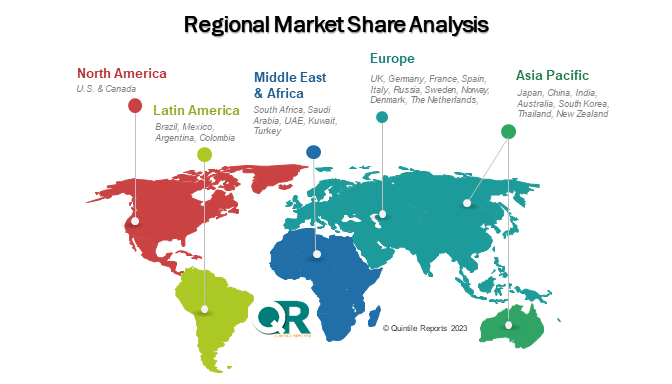
The chapter in Commercial Drone Services market research report is a pivotal section that examines and predicts the market dynamics and trends specific to different geographical regions. This chapter is crucial for businesses and stakeholders seeking a comprehensive understanding of how the market behaves across various locations, enabling them to tailor strategies and make informed decisions based on regional variations. The regional analysis chapter of our Commercial Drone Services market report is classified into regions & country-level. The chapter consists of North America (U.S., Canada), Europe (UK, Germany, France, Italy, Spain, Russia, Sweden, Denmark, Norway, Rest of Europe), Asia Pacific (Japan, China, India, Australia, South Korea, Thailand, Rest of Asia Pacific), Latin America (Brazil, Mexico, Argentina, Colombia, Rest of Latin America), Middle East & Africa (South Africa, Saudi Arabia, UAE, Kuwait, Rest of Middle East & Africa).
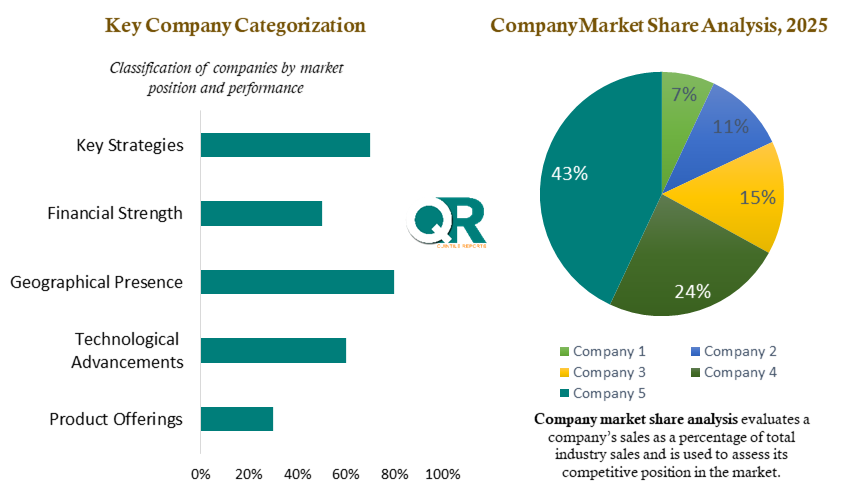
This section of a Commercial Drone Services market report is a crucial segment that provides a comprehensive overview of the competitive landscape within the market. This section is vital for businesses, investors, and stakeholders seeking insights into key players, their market positioning, strengths, weaknesses, strategies, and potential impacts on the overall market dynamics. The chapter includes research methodology used to analyse the market competition, list of key players operating in the market, detailed company profile section which includes company overview, business verticals, financial performance, product/services benchmarking, geographical presence, and strategic initiatives.
| Report Scope | Details |
| Report Version | 2026 |
| Growth Rate | CAGR of 15.78 from 2026 to 2035 |
| Base Year | 2025 |
| Actual Estimates / Historical Data | 2017 - 2024 |
| Forecast Period | 2026 - 2035 |
| Quantitative Units | Revenue in USD million/billion & CAGR from 2026 to 2035 |
| Country Scope | North America (U.S., Canada), Europe (UK, Germany, France, Italy, Spain, Russia, Sweden, Denmark, Norway, Rest of Europe), Asia Pacific (Japan, China, India, Australia, South Korea, Thailand, Rest of Asia Pacific), Latin America (Brazil, Mexico, Argentina, Colombia, Rest of Latin America), Middle East & Africa (South Africa, Saudi Arabia, UAE, Kuwait, Rest of Middle East & Africa). |
| The Segment Covered by Type of Service |
|
| The Segment Covered by Drone Type |
|
| Companies Covered | |
| Report Coverage | Revenue forecast, company share, competitive landscape, growth factors, and trends |
| Free Customization Scope (Equivalent to 5 Analyst Working Days) | If you need specific information, which is not currently within the scope of the report, we will provide it to you as a part of the customization |

Statistics for the 2025 Commercial Drone Services market share, size, and revenue growth rate were created by Quintile Report™. Commercial Drone Services analysis includes a market forecast outlook for 2035 and a historical overview. Get a free PDF sample of this market analysis, please get in touch with our principal analyst at sales@quintilereports.com
List of Tables
Table 1 List of Abbreviation and acronyms
Table 2 List of Sources
Table 3 North America Global Commercial Drone Services Market, by Segment Analysis, (USD Million) 2017-2035
Table 4 North America Global Commercial Drone Services Market, by Region, (USD Million) 2017-2035
Table 5 U.S. Global Commercial Drone Services Market, by Segment Analysis, (USD Million) 2017-2035
Table 6 Canada Global Commercial Drone Services Market, by Segment Analysis, (USD Million) 2017-2035
Table 7 Europe Global Commercial Drone Services Market, by Segment Analysis, (USD Million) 2017-2035
Table 8 Europe Global Commercial Drone Services Market, by Region, (USD Million) 2017-2035
Table 9 Germany Global Commercial Drone Services Market, by Segment Analysis, (USD Million) 2017-2035
Table 10 U.K. Global Commercial Drone Services Market, by Segment Analysis, (USD Million) 2017-2035
Table 11 France Global Commercial Drone Services Market, by Segment Analysis, (USD Million) 2017-2035
Table 12 Italy Global Commercial Drone Services Market, by Segment Analysis, (USD Million) 2017-2035
Table 13 Spain Global Commercial Drone Services Market, by Segment Analysis, (USD Million) 2017-2035
Table 14 Sweden Global Commercial Drone Services Market, by Segment Analysis, (USD Million) 2017-2035
Table 15 Denmark Global Commercial Drone Services Market, by Segment Analysis, (USD Million) 2017-2035
Table 16 Norway Global Commercial Drone Services Market, by Segment Analysis, (USD Million) 2017-2035
Table 17 The Netherlands Global Commercial Drone Services Market, by Segment Analysis, (USD Million) 2017-2035
Table 18 Russia Global Commercial Drone Services Market, by Segment Analysis, (USD Million) 2017-2035
Table 19 Asia Pacific Global Commercial Drone Services Market, by Segment Analysis, (USD Million) 2017-2035
Table 20 Asia Pacific Global Commercial Drone Services Market, by Region, (USD Million) 2017-2035
Table 21 China Global Commercial Drone Services Market, by Segment Analysis, (USD Million) 2017-2035
Table 22 Japan Global Commercial Drone Services Market, by Segment Analysis, (USD Million) 2017-2035
Table 23 India Global Commercial Drone Services Market, by Segment Analysis, (USD Million) 2017-2035
Table 24 Australia Global Commercial Drone Services Market, by Segment Analysis, (USD Million) 2017-2035
Table 25 South Korea Global Commercial Drone Services Market, by Segment Analysis, (USD Million) 2017-2035
Table 26 Thailand Global Commercial Drone Services Market, by Segment Analysis, (USD Million) 2017-2035
Table 27 Latin America Global Commercial Drone Services Market, by Segment Analysis, (USD Million) 2017-2035
Table 28 Latin America Global Commercial Drone Services Market, by Region, (USD Million) 2017-2035
Table 29 Brazil Global Commercial Drone Services Market, by Segment Analysis, (USD Million) 2017-2035
Table 30 Mexico Global Commercial Drone Services Market, by Segment Analysis, (USD Million) 2017-2035
Table 31 Argentina Global Commercial Drone Services Market, by Segment Analysis, (USD Million) 2017-2035
Table 32 Middle East and Africa Global Commercial Drone Services Market, by Segment Analysis, (USD Million) 2017-2035
Table 33 Middle East and Africa Global Commercial Drone Services Market, by Region, (USD Million) 2017-2035
Table 34 South Africa Global Commercial Drone Services Market, by Segment Analysis, (USD Million) 2017-2035
Table 35 Saudi Arabia Global Commercial Drone Services Market, by Segment Analysis, (USD Million) 2017-2035
Table 36 UAE Global Commercial Drone Services Market, by Segment Analysis, (USD Million) 2017-2035
Table 37 Kuwait Global Commercial Drone Services Market, by Segment Analysis, (USD Million) 2017-2035
Table 38 Turkey Global Commercial Drone Services Market, by Segment Analysis, (USD Million) 2017-2035
Fig.1 Market research process
Fig.2 Market research approaches
Fig.3 Global Commercial Drone Services Market: market scenario
Fig.4 Global Commercial Drone Services Market competitive outlook
Fig.5 Global Commercial Drone Services Market driver analysis
Fig.6 Global Commercial Drone Services Market restraint analysis
Fig.7 Global Commercial Drone Services Market opportunity analysis
Fig.8 Global Commercial Drone Services Market trends analysis
Fig.9 Global Commercial Drone Services Market: Segment Analysis (Based on the scope)
Fig.10 Global Commercial Drone Services Market: regional analysis
Fig.11 Global market shares and leading market players
Fig.12 North America market share and leading players
Fig.13 Europe market share and leading players
Fig.14 Asia Pacific market share and leading players
Fig.15 Latin America market share and leading players
Fig.16 Middle East & Africa market share and leading players
Fig.17 North America, by country
Fig.18 North America
Fig.19 North America market estimates and forecast, 2017-2035
Fig.20 U.S.
Fig.21 Canada
Fig.22 Europe
Fig.23 Europe market estimates and forecast, 2017-2035
Fig.24 U.K.
Fig.25 Germany
Fig.26 France
Fig.27 Italy
Fig.28 Spain
Fig.29 Sweden
Fig.30 Denmark
Fig.31 Norway
Fig.32 The Netherlands
Fig.33 Russia
Fig.34 Asia Pacific
Fig.35 Asia Pacific market estimates and forecast, 2017-2035
Fig.36 China
Fig.37 Japan
Fig.38 India
Fig.39 Australia
Fig.40 South Korea
Fig.41 Thailand
Fig.42 Latin America
Fig.43 Latin America market estimates and forecast, 2017-2035
Fig.44 Brazil
Fig.45 Mexico
Fig.46 Argentina
Fig.47 Colombia
Fig.48 Middle East and Africa
Fig.49 Middle East and Africa market estimates and forecast, 2017-2035
Fig.50 Saudi Arabia
Fig.51 South Africa
Fig.52 UAE
Fig.53 Kuwait
Fig.54 Turkey
The Global Commercial Drone Services Market was valued at USD 8.94 billion in 2025 and is projected to reach USD 31.52 billion by 2035, advancing at a notable CAGR of 15.78% throughout the forecast period from 2026 to 2035. The Commercial Drone Services market report provides an in-depth analysis of the industry by examining macroeconomic indicators, technological progress, regulatory environments, and evolving consumer trends to highlight the markets long-term growth outlook.
Taking 2025 as the base year, the Commercial Drone Services market is demonstrating steady growth fueled by increased innovation, expanding application areas across end-use sectors, and rapid digital transformation. Market participants are increasingly optimizing their go-to-market (GTM) strategies to strengthen market penetration and capitalize on emerging business opportunities.
Over the coming decade, the market is expected to maintain strong expansion supported by continuous R&D investments, collaborative partnerships, and a rising number of mergers and acquisitions. Businesses that focus on innovation, operational agility, and customer-focused strategies are expected to build a sustainable competitive advantage. The report delivers comprehensive insights into market drivers, restraints, opportunities, and challenges across segments, regions, and countries, backed by detailed qualitative and quantitative analysis from 2017 to 2035.
The Commercial Drone Services Market is rapidly evolving as drones become essential tools across a wide range of industries. These services go far beyond just flying UAVsthey include everything from aerial inspections, imaging, and mapping to maintenance, repair, and even pilot training. Drones are now widely used in agriculture for precision farming, in construction for site monitoring, and in industries like oil and gas or mining for safety inspections and environmental monitoring.
Key services such as aerial photography and remote sensing are proving invaluable in areas like infrastructure development and disaster management. Whats really driving this market forward, though, is the rapid pace of technology. With AI integration, smarter sensors like LiDAR and thermal imaging, longer battery life, and more autonomous capabilities, drones are becoming more powerful and versatile than ever. As a result, businesses are increasingly turning to drone services to improve efficiency, safety, and decision-making across their operations.
The commercial drone services market is rapidly expanding, driven by a blend of technological innovations and evolving industry needs.
Advances in artificial intelligence, autonomous navigation, high-resolution imaging, and improved battery efficiency are enhancing drone capabilitiesallowing them to perform complex tasks like real-time data analysis and Beyond Visual Line of Sight (BVLOS) operations with longer flight durations.
At the same time, there is growing demand for drone services across various industries, including agriculture, logistics, construction, and defence. Among these, agriculture holds the largest market share, particularly in countries like India, China, and the U.S., where precision farming is crucial.
Regulatory support is also playing a key role. Governments, especially in regions like North America, are creating clearer frameworkssuch as FAA regulations in the U.S.that reduce operational hurdles and encourage broader commercial adoption.
Adding to this momentum is the explosive growth of e-commerce, which is fuelling the need for faster, more efficient parcel delivery. Drones provide a compelling solution, especially for reaching remote or underserved areas, making them a valuable asset for the logistics sector.
One major challenge is the complex web of regulatory hurdles and airspace restrictions, which vary widely across countries. These rules, especially those governing Beyond Visual Line of Sight (BVLOS) flights, create compliance burdens that can slow market expansion.
Safety and privacy concerns also weigh heavily on the industry. Risks of mid-air collisions, accidents, or unauthorized surveillance raise red flags for both the public and regulators, often resulting in stricter policies and restricted drone operations in urban or sensitive environments.
On the technological front, limitations such as short battery life, limited payload capacity, and the complexity of processing large volumes of data affect operational efficiency. This is especially evident in sectors like precision agriculture, where crop-monitoring drones are constrained by these factors.
Lastly, the high initial costs involved in acquiring drones, maintaining them, training staff, and integrating the necessary software systems pose a financial barrierparticularly for small and medium enterprises.
North America leads the commercial drone services market, thanks to cutting-edge technology and strong regulatory support. The U.S. FAA has played a crucial role by expanding Part 135 and BVLOS waivers, reducing operational barriers and enabling large-scale drone use in sectors like logistics, agriculture, and infrastructure. AI-powered drones, 5G connectivity, and edge computing are transforming how data is collected and analysed in real time, boosting efficiency. The rise of Drone-as-a-Service (DaaS) is making drone technology more accessible, especially for small and mid-sized businesses in construction, mining, and farming. Meanwhile, cities are seeing growth in drone-based medical and parcel deliveries.
Europes commercial drone services market is rapidly evolving, driven by a strong push for regulatory harmony and sustainability. Thanks to unified rules from the European Union Aviation Safety Agency (EASA), businesses can now operate drones more easily across borders, reducing regulatory complexity. Countries like Germany, France, and the UK are leading with tech innovations in autonomous flight and smart city integration. Drones are widely used in environmental monitoring, precision agriculture, energy infrastructure inspections, and urban planning. At the same time, strict privacy and safety standards guide how drones are used in crowded urban areas.
The Asia Pacific region is witnessing rapid growth in the drone market, fuelled by industrialization, urbanization, and strong government support for drone adoption. Countries like China, Japan, India, and Australia are leading the way. The region is embracing cutting-edge technologies like AI and machine learning for tasks such as agricultural monitoring, mining surveys, and infrastructure inspections. Drones are being widely used in precision agriculture to boost crop yields, in logistics for last-mile deliveries, and in environmental monitoring to manage natural resources. There is also a surge in investment in drone startups and growing integration with IoT, particularly in smart city initiatives.
Latin America's commercial drone services market is steadily taking off, fuelled by growing recognition of drones' value across agriculture, mining, and infrastructure. In countries like Brazil, Mexico, and Argentina, drones are being used for tasks like crop monitoring, livestock tracking, and inspecting pipelines. Governments are working to create clearer safety and privacy regulations, though fragmented rules still pose challenges. Technological efforts are centred on cost-effective drone solutions that can handle the regions varied terrains. International partnerships and pilot projects are also highlighting drones' potential in disaster response and environmental protection.
The Middle East and Africa (MEA) region is rapidly embracing commercial drone services across key sectors like oil and gas, mining, agriculture, and security. Countries such as the UAE, Saudi Arabia, and South Africa are leveraging drones for tasks like infrastructure inspection, border surveillance, and precision farming. As regulatory frameworks continue to evolve, many nations are balancing the growth of drone operations with safety and privacy concerns. Technological advancementssuch as drones equipped with high-end sensors for pipeline monitoring and environmental assessmentsare driving innovation. Government-backed initiatives and collaborations with global drone tech providers are further boosting adoption.
The United States commercial drone services market is rapidly advancing, guided by a well-established regulatory framework led by the Federal Aviation Administration (FAA). This mature environment, with clearly defined rules on pilot certification, flight altitudes, and beyond-visual-line-of-sight (BVLOS) operations, has opened doors for wide adoption across industries such as agriculture, logistics, infrastructure inspection, and aerial surveillance. At the heart of this growth lies robust technological innovationdrones are increasingly equipped with AI and machine learning capabilities, enabling autonomous navigation and real-time data analytics.
Industry leaders have made notable strides, achieving over one million commercial deliveries, while startups continue to drive innovation in areas like fleet management and precision agriculture. However, the market is not without its hurdles. Challenges persist in the form of fragmented regulations at state and local levels, a limited pool of trained remote pilots, and rising cybersecurity risks, particularly when drones are used in critical infrastructure. Additionally, supply chain strains and national security concernsespecially those targeting DJI drones under the FY25 National Defence Authorization Actare prompting further scrutiny and regulatory pressure across the ecosystem.
Germany is emerging as a European leader in commercial drone services, driven by regulatory harmonization through the European Union Aviation Safety Agency (EASA), which ensures standardized drone operations across member states and smooth cross-border activities. The country is deeply invested in technological innovation, particularly in autonomous flight systems, advanced sensor integration, and smart city applications. German companies and research institutions are pioneering drone use in key sectors such as energy infrastructure inspection, environmental monitoring, and urban planning.
Applications in precision agriculture, industrial inspection, and logistics are rapidly expanding, supported by robust government initiatives that promote digital transformation and sustainability. Rigorous enforcement of privacy and safety standards shapes how drones operate, especially in densely populated areas. A defining strength of Germanys drone landscape is the strong collaboration between traditional aerospace firms and agile startups, especially those developing BVLOS capabilities and advanced drone traffic management systems.
Japans commercial drone services market is rapidly evolving, propelled by strong government support and a forward-looking regulatory environment that welcomes innovation. The Ministry of Land, Infrastructure, Transport and Tourism (MLIT) has paved the way for advanced drone operations, allowing beyond visual line of sight (BVLOS) flights and night missions under specific conditions. As the country faces an aging population and acute labour shortagesespecially in agriculture and logisticsdrones are stepping in as efficient, tech-enabled solutions. Advances in artificial intelligence and sensor technologies are enabling autonomous flight capabilities and high-precision applications in rice paddy monitoring, disaster response, infrastructure inspection, and even mining surveys.
Both domestic drone manufacturers and specialized integrators are actively piloting urban delivery services and smart agriculture systems. However, high operational costs and the need for clearer, more unified regulations remain barriers to scaling. To ensure the safe integration of drones into its airspace, Japan is also investing in drone traffic management infrastructure and building public-private partnerships aimed at long-term ecosystem development.
In the highly competitive drone services market, companies differentiate themselves through cutting-edge technological innovation, strategic partnerships, and deep industry specialization.
Advanced capabilities like AI-powered autonomous flight, BVLOS (Beyond Visual Line of Sight) operations, and integration of sophisticated sensors such as LiDAR and multispectral cameras are setting new performance standards.
Innovations like drone-in-a-box solutions and smart fleet management software further enable scalable, automated operations. Success also hinges on strong regulatory collaboration while ensuring compliance with data privacy and airspace protocols. Many firms carve a niche by offering specialized services tailored to sectors like agriculture, construction, energy, logistics, and public safetyintegrating drones with data analytics and sector-specific platforms to deliver end-to-end value, such as AI-driven crop health analysis or predictive maintenance for infrastructure.
As Drone-as-a-Service (DaaS) models gain traction, the ability to deploy large fleets efficiently, reduce pilot dependency through automation, and seamlessly integrate into enterprise workflows becomes crucial. Strategic partnerships with logistics firms, healthcare providers, governments, and tech companies help expand reach and unlock new use cases like medical deliveries and urban air mobility.
Key differentiators include AI-driven autonomy, robust data analytics platforms offering actionable insights, deep regulatory expertise, customized industry applications, and comprehensive fleet and airspace management capabilitiesall essential for safety, scalability, and long-term competitiveness.
Key players in the market are AeroVironment Inc., Airbus S.A.S, Boeing (Aurora Flight Sciences), Sunbirds SAS, BAE Systems, Thales Group, Bye Aerospace, Alta Devices (Hanergy), Google (Alphabet), Facebook (Meta), XSun, UAVOS Inc., Silent Falcon UAS Technologies, and other players.
Our team of experienced researchers has meticulously gathered and analyzed data to deliver a thorough examination of market dynamics, competitive landscape, and emerging technologies. With a focus on delivering actionable intelligence, this report aims to empower decision-makers with the information needed to make informed choices and stay ahead of the competition. Whether you are a seasoned industry player or a new entrant, our market research report serves as a strategic tool to navigate the complexities of the market, aiding in successful business planning and growth strategies.
This chapter of our Commercial Drone Services market report provides an in-depth examination of the factors shaping the industry landscape. This section typically encompasses several key elements to offer a comprehensive understanding of the industry landscape such as market drivers & restraints analysis, market opportunities & trend analysis, market size & growth analysis, competitive analysis, SWOT analysis, business environment tools such as Porter's five forces & PESTEL analysis, Ansoff Matrix analysis, penetration & growth prospect analysis, regulatory framework & reimbursement scenario analysis, impact of macro & micro economic factors analysis such as Covid-19 impact, GDP growth, market inflation, U.S.- China trade war, Russia-Ukraine war impact, and supply chain analysis.
The segment analysis chapter of Commercial Drone Services market report is a critical section that delves into a detailed examination of the market's various segments. Segmentation involves dividing the market into distinct categories based on certain criteria to better understand and address the diverse needs of consumers. This chapter typically follows the introduction and provides a more granular view of the market, offering valuable insights for businesses and stakeholders. The components of the chapter lude segment definitions to understand the inclusions and exclusions of the study, assumptions, market size estimates and growth trend analysis of each segment, qualitative analysis of the segment, technological advancements, market penetration rate, market adoption rate, market share examination by each segment, segment growth drivers and restraint barriers, consumer behaviour and challenge analysis.
The chapter in Commercial Drone Services market research report is a pivotal section that examines and predicts the market dynamics and trends specific to different geographical regions. This chapter is crucial for businesses and stakeholders seeking a comprehensive understanding of how the market behaves across various locations, enabling them to tailor strategies and make informed decisions based on regional variations. The regional analysis chapter of our Commercial Drone Services market report is classified into regions & country-level. The chapter consists of North America (U.S., Canada), Europe (UK, Germany, France, Italy, Spain, Russia, Sweden, Denmark, Norway, Rest of Europe), Asia Pacific (Japan, China, India, Australia, South Korea, Thailand, Rest of Asia Pacific), Latin America (Brazil, Mexico, Argentina, Colombia, Rest of Latin America), Middle East & Africa (South Africa, Saudi Arabia, UAE, Kuwait, Rest of Middle East & Africa).
This section of a Commercial Drone Services market report is a crucial segment that provides a comprehensive overview of the competitive landscape within the market. This section is vital for businesses, investors, and stakeholders seeking insights into key players, their market positioning, strengths, weaknesses, strategies, and potential impacts on the overall market dynamics. The chapter includes research methodology used to analyse the market competition, list of key players operating in the market, detailed company profile section which includes company overview, business verticals, financial performance, product/services benchmarking, geographical presence, and strategic initiatives.
| Report Scope | Details |
| Report Version | 2026 |
| Growth Rate | CAGR of 15.78 from 2026 to 2035 |
| Base Year | 2025 |
| Actual Estimates / Historical Data | 2017 - 2024 |
| Forecast Period | 2026 - 2035 |
| Quantitative Units | Revenue in USD million/billion & CAGR from 2026 to 2035 |
| Country Scope | North America (U.S., Canada), Europe (UK, Germany, France, Italy, Spain, Russia, Sweden, Denmark, Norway, Rest of Europe), Asia Pacific (Japan, China, India, Australia, South Korea, Thailand, Rest of Asia Pacific), Latin America (Brazil, Mexico, Argentina, Colombia, Rest of Latin America), Middle East & Africa (South Africa, Saudi Arabia, UAE, Kuwait, Rest of Middle East & Africa). |
| The Segment Covered by Type of Service |
|
| The Segment Covered by Drone Type |
|
| Companies Covered | |
| Report Coverage | Revenue forecast, company share, competitive landscape, growth factors, and trends |
| Free Customization Scope (Equivalent to 5 Analyst Working Days) | If you need specific information, which is not currently within the scope of the report, we will provide it to you as a part of the customization |
Statistics for the 2025 Commercial Drone Services market share, size, and revenue growth rate were created by Quintile Report™. Commercial Drone Services analysis includes a market forecast outlook for 2035 and a historical overview. Get a free PDF sample of this market analysis, please get in touch with our principal analyst at sales@quintilereports.com
Table 1 List of Abbreviation and acronyms
Table 2 List of Sources
Table 3 North America Global Commercial Drone Services Market, by Segment Analysis, (USD Million) 2017-2035
Table 4 North America Global Commercial Drone Services Market, by Region, (USD Million) 2017-2035
Table 5 U.S. Global Commercial Drone Services Market, by Segment Analysis, (USD Million) 2017-2035
Table 6 Canada Global Commercial Drone Services Market, by Segment Analysis, (USD Million) 2017-2035
Table 7 Europe Global Commercial Drone Services Market, by Segment Analysis, (USD Million) 2017-2035
Table 8 Europe Global Commercial Drone Services Market, by Region, (USD Million) 2017-2035
Table 9 Germany Global Commercial Drone Services Market, by Segment Analysis, (USD Million) 2017-2035
Table 10 U.K. Global Commercial Drone Services Market, by Segment Analysis, (USD Million) 2017-2035
Table 11 France Global Commercial Drone Services Market, by Segment Analysis, (USD Million) 2017-2035
Table 12 Italy Global Commercial Drone Services Market, by Segment Analysis, (USD Million) 2017-2035
Table 13 Spain Global Commercial Drone Services Market, by Segment Analysis, (USD Million) 2017-2035
Table 14 Sweden Global Commercial Drone Services Market, by Segment Analysis, (USD Million) 2017-2035
Table 15 Denmark Global Commercial Drone Services Market, by Segment Analysis, (USD Million) 2017-2035
Table 16 Norway Global Commercial Drone Services Market, by Segment Analysis, (USD Million) 2017-2035
Table 17 The Netherlands Global Commercial Drone Services Market, by Segment Analysis, (USD Million) 2017-2035
Table 18 Russia Global Commercial Drone Services Market, by Segment Analysis, (USD Million) 2017-2035
Table 19 Asia Pacific Global Commercial Drone Services Market, by Segment Analysis, (USD Million) 2017-2035
Table 20 Asia Pacific Global Commercial Drone Services Market, by Region, (USD Million) 2017-2035
Table 21 China Global Commercial Drone Services Market, by Segment Analysis, (USD Million) 2017-2035
Table 22 Japan Global Commercial Drone Services Market, by Segment Analysis, (USD Million) 2017-2035
Table 23 India Global Commercial Drone Services Market, by Segment Analysis, (USD Million) 2017-2035
Table 24 Australia Global Commercial Drone Services Market, by Segment Analysis, (USD Million) 2017-2035
Table 25 South Korea Global Commercial Drone Services Market, by Segment Analysis, (USD Million) 2017-2035
Table 26 Thailand Global Commercial Drone Services Market, by Segment Analysis, (USD Million) 2017-2035
Table 27 Latin America Global Commercial Drone Services Market, by Segment Analysis, (USD Million) 2017-2035
Table 28 Latin America Global Commercial Drone Services Market, by Region, (USD Million) 2017-2035
Table 29 Brazil Global Commercial Drone Services Market, by Segment Analysis, (USD Million) 2017-2035
Table 30 Mexico Global Commercial Drone Services Market, by Segment Analysis, (USD Million) 2017-2035
Table 31 Argentina Global Commercial Drone Services Market, by Segment Analysis, (USD Million) 2017-2035
Table 32 Middle East and Africa Global Commercial Drone Services Market, by Segment Analysis, (USD Million) 2017-2035
Table 33 Middle East and Africa Global Commercial Drone Services Market, by Region, (USD Million) 2017-2035
Table 34 South Africa Global Commercial Drone Services Market, by Segment Analysis, (USD Million) 2017-2035
Table 35 Saudi Arabia Global Commercial Drone Services Market, by Segment Analysis, (USD Million) 2017-2035
Table 36 UAE Global Commercial Drone Services Market, by Segment Analysis, (USD Million) 2017-2035
Table 37 Kuwait Global Commercial Drone Services Market, by Segment Analysis, (USD Million) 2017-2035
Table 38 Turkey Global Commercial Drone Services Market, by Segment Analysis, (USD Million) 2017-2035
Fig.1 Market research process
Fig.2 Market research approaches
Fig.3 Global Commercial Drone Services Market: market scenario
Fig.4 Global Commercial Drone Services Market competitive outlook
Fig.5 Global Commercial Drone Services Market driver analysis
Fig.6 Global Commercial Drone Services Market restraint analysis
Fig.7 Global Commercial Drone Services Market opportunity analysis
Fig.8 Global Commercial Drone Services Market trends analysis
Fig.9 Global Commercial Drone Services Market: Segment Analysis (Based on the scope)
Fig.10 Global Commercial Drone Services Market: regional analysis
Fig.11 Global market shares and leading market players
Fig.12 North America market share and leading players
Fig.13 Europe market share and leading players
Fig.14 Asia Pacific market share and leading players
Fig.15 Latin America market share and leading players
Fig.16 Middle East & Africa market share and leading players
Fig.17 North America, by country
Fig.18 North America
Fig.19 North America market estimates and forecast, 2017-2035
Fig.20 U.S.
Fig.21 Canada
Fig.22 Europe
Fig.23 Europe market estimates and forecast, 2017-2035
Fig.24 U.K.
Fig.25 Germany
Fig.26 France
Fig.27 Italy
Fig.28 Spain
Fig.29 Sweden
Fig.30 Denmark
Fig.31 Norway
Fig.32 The Netherlands
Fig.33 Russia
Fig.34 Asia Pacific
Fig.35 Asia Pacific market estimates and forecast, 2017-2035
Fig.36 China
Fig.37 Japan
Fig.38 India
Fig.39 Australia
Fig.40 South Korea
Fig.41 Thailand
Fig.42 Latin America
Fig.43 Latin America market estimates and forecast, 2017-2035
Fig.44 Brazil
Fig.45 Mexico
Fig.46 Argentina
Fig.47 Colombia
Fig.48 Middle East and Africa
Fig.49 Middle East and Africa market estimates and forecast, 2017-2035
Fig.50 Saudi Arabia
Fig.51 South Africa
Fig.52 UAE
Fig.53 Kuwait
Fig.54 Turkey

A license granted to one user. Rules or conditions might be applied for e.g. the use of electric files (PDFs) or printings, depending on product.
A license granted to multiple users.
A license granted to a single business site/establishment.
A license granted to all employees within organisation access to the product.
Immediate / Within 24-48 hours - Working days
Online Payments with PayPal and CCavenue
You can order a report by picking any of the payment methods which is bank wire or online payment through any Debit/Credit card or PayPal.
Hard Copy
Report Overview: The Global Gas and Liquid Flow Management Systems Market was valued at USD 21.82 bi
Read MoreReport Overview: The Global Product Fall Protection Systems Market was valued at USD 8.62 million in
Read MoreReport Overview: The Global Superconductor Motors Market was valued at USD 135.82 million in 2025 an
Read More U.S. : +1-201-772-7734