The Global Steel Tubes Market was valued at USD 100.58 billion in 2025 and is anticipated to reach USD 123.41 billion by 2035, growing at a robust CAGR of 3.08% during the forecast period from 2026 to 2035. The Steel Tubes market report presents a comprehensive overview of the industry by assessing macroeconomic conditions, emerging technologies, regulatory frameworks, and shifting consumer behavior to provide a clear outlook on future market expansion.
With 2025 serving as the base year, the Steel Tubes market is experiencing stable growth supported by rising demand across key end-use industries and continuous technological innovation. Companies operating in the market are enhancing their go-to-market (GTM) strategies to capture emerging opportunities and navigate evolving competitive dynamics effectively.
By 2035, the market is expected to demonstrate strong growth potential, driven by sustained investments in innovation, increasing strategic partnerships, and growing merger and acquisition activities. Organizations that prioritize customer-centric solutions, innovation, and agile GTM execution are likely to strengthen their market presence and achieve long-term success. The report provides detailed insights into major market drivers, restraints, opportunities, and challenges across segments, regions, and countries, supported by extensive qualitative and quantitative analysis from 2017 to 2035.
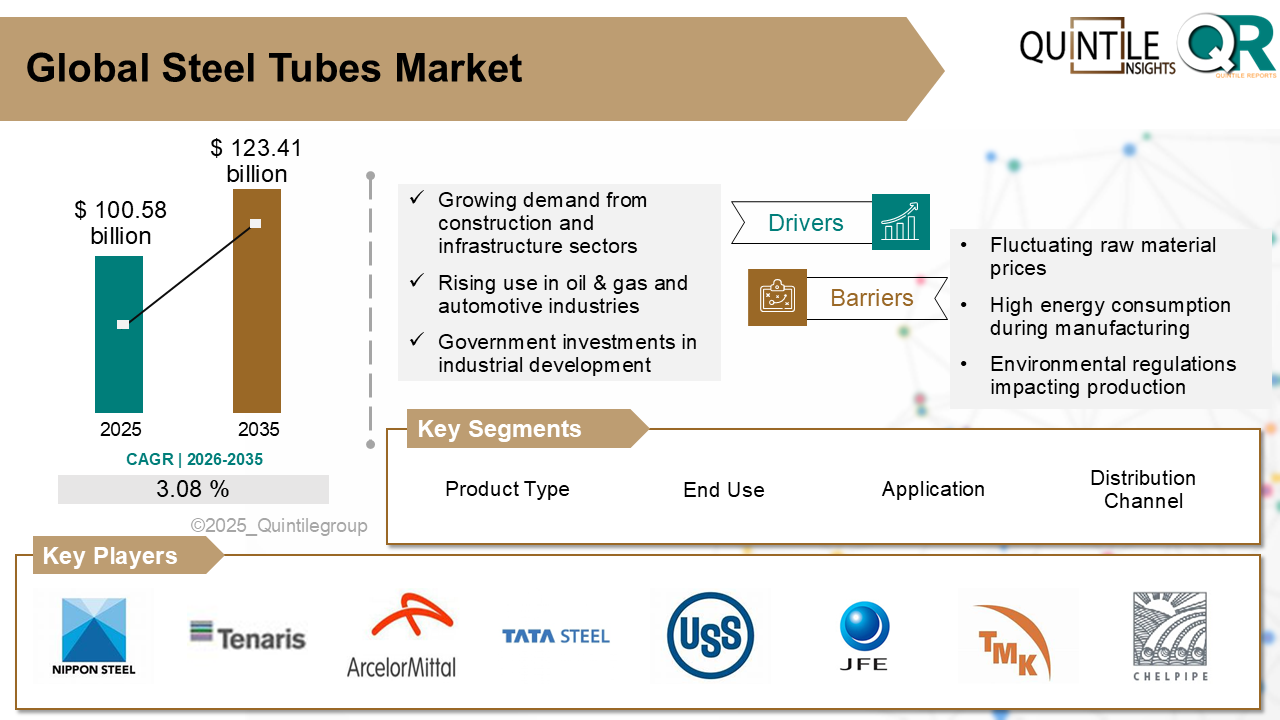
The steel tubes market encompasses the production and distribution of steel tubes used across various industries such as construction, automotive, oil and gas, petrochemicals, and infrastructure. Steel tubes are cylindrical hollow sections made primarily from carbon steel, stainless steel, alloy steel, or other materials, manufactured either as seamless or welded tubes.
Their significance lies in their strength, durability, and versatility, making them essential for structural support, fluid transportation, machinery manufacturing, and energy sector applications. The market's scope includes different product types (seamless and welded), material types, and end-use industries, with a global reach. The steel tubes market is a critical component of broader industrial growth and urbanization, supporting infrastructure development and industrial manufacturing worldwide.
The growth of the steel tube market is driven by a combination of industrial expansion, urbanization, and increasing infrastructure needs across the globe.
With over 56% of the worlds population now living in urban areas, the demand for steel tubes is surging, especially in construction, automotive, and oil and gas sectors. Rapid urbanization is fuelling large-scale infrastructure projects that depend heavily on steel tubes for pipelines, structural components, and building frameworks.
A significant boost also comes from the oil and gas industry, one of the largest consumers of steel tubes. Seamless tubes are critical for drilling, pipeline systems, and refinery operations. This demand is further amplified by rising refining capacities in regions like Asia-Pacific and the Middle East.
At the same time, technological advancements in manufacturingsuch as improvements in welding methods like ERW and SAW, and enhanced alloy treatmentsare enabling the production of stronger, lighter, and more corrosion-resistant tubes. These innovations cater to evolving industry needs while promoting sustainable production practices that align with global environmental regulations.
Additionally, government-led infrastructure initiatives, such as the U.S. Bipartisan Infrastructure Law and Saudi Arabias Neom City project, are accelerating the use of steel tubes in transportation, energy, water treatment, and urban development.
One major challenge is the fluctuation in raw material pricesespecially for iron ore, coal, and energy inputswhich directly affects production costs and squeezes profit margins. This price volatility also creates instability in the market, making it difficult to maintain a steady demand-supply balance.
Additionally, the market is highly fragmented, with numerous mid-range and regional manufacturers creating intense competition. This environment often leads to price wars and declining profitability, while the need for localized sourcing and productionthough beneficial for proximitycan limit economies of scale and hinder investments in innovation.
Environmental and regulatory pressures further complicate matters. As governments enforce stricter emissions regulations and push for decarbonization, manufacturers are compelled to invest in expensive process upgrades and ensure product complianceleading to increased operational costs and potential delays in scaling up production.
Lastly, economic uncertainties and geopolitical risks, such as global slowdowns, trade conflicts, and regional tensions, continue to disrupt supply chains and delay infrastructure projects. These factors collectively reduce industrial output and weaken the overall demand for steel tubes.
The North American steel tubes market is experiencing significant growth, fuelled by strong demand across key sectors like oil and gas, construction, and automotive. Crude steel production in the region saw a notable increase, signalling a surge in industrial activity. The oil and gas industry continues to be a major driver, which in turn boosts the need for steel tubes used in pipelines and drilling operations. Meanwhile, massive infrastructure investmentsparticularly the $1.2 trillion allocated under the Bipartisan Infrastructure Laware amplifying demand for construction-grade steel tubes. Technological advancements have also played a crucial role, with innovations like electric resistance welding and cold forming enhancing the quality and cost-efficiency of welded steel tubes. Despite facing challenges such as ongoing supply chain issues and increasing pressure to adopt sustainable manufacturing practices, the market outlook remains optimistic thanks to its broad base of end-use industries and continued government support for infrastructure development.
Europes steel tubes market reflects the regions mature industrial base and strong commitment to environmental responsibility. Leading the way in both production and consumption are Germany, Italy, and France, thanks to their advanced manufacturing capabilities and emphasis on producing high-quality seamless and welded tubes. The market is shaped significantly by the European Unions rigorous environmental regulations, which are pushing manufacturers to adopt greener production methods and incorporate recycled materials. Key industries such as construction and automotive continue to drive demandparticularly for lightweight, corrosion-resistant tubes that align with modern efficiency and durability standards. Companies are actively investing in product development and sustainable practices, helping to steer the industry forward. Initiatives like the EU Green Deal are playing a pivotal role, encouraging energy-efficient processes and circular economy approaches that are redefining the future of steel tube manufacturing in Europe.
The Asia Pacific steel tubes market is the fastest-growing region worldwide. This dominance is fuelled by rapid urbanization, aggressive industrialization, and a wave of large-scale infrastructure projects across the region. Emerging economies like China, India, and nations in Southeast Asia are pouring investments into building transportation networks, expanding energy pipelines, and developing urban housingkey drivers of steel tube demand. China continues to lead globally in both steel production and consumption, meeting domestic needs while also catering to international markets. Additionally, the booming oil and gas sector, coupled with rising refining capacities, is further increasing the demand for both seamless and welded steel tubes. While the region is steadily embracing advanced technologies and sustainable practices, challenges such as the volatility of raw material prices remain a concern.
The steel tubes market in Latin America is primarily driven by the strong industrial and economic roles of Brazil and Mexico, the regions leading producers and consumers. Brazil alone produces over 30 million tonnes of steel annually, while Mexicorecognized as a major automotive manufacturing hubproduces around 4 million vehicles each year. This robust automotive output fuels demand for steel tubes, particularly in structural and exhaust system applications. Additionally, large-scale infrastructure projects such as Mexicos ambitious Mayan Train and Brazils expanding road networks further boost the need for steel tubing. The regions thriving oil and gas sector also plays a critical role, requiring substantial quantities of steel tubes for drilling operations and pipeline development.
The steel tubes market in the Middle East and Africa is deeply shaped by the regions strong ties to the oil and gas industry, with the Middle East alone accounting for around 27% of global crude oil production. Steel tubes play a critical role in this sector, being essential for drilling equipment, pipelines, and refinery infrastructure. Beyond energy, demand is rising due to major construction projects like Saudi Arabias ambitious Neom City, which are driving significant steel tube usage in the construction sector. In Africa, rapid urbanization is another major growth driver, fuelling the need for housing, transportation systems, and water pipeline networks. Additionally, renewable energy projects, such as Moroccos Noor Solar Project, are expanding the scope of steel tube applications across the region.
The U.S. steel tubes market remains a backbone of the nation's industrial and infrastructure growth, supporting vital sectors like construction, energy, oil and gas, and manufacturing. The market is poised for steady expansion, fuelled by industrial momentum and federal investmentsparticularly the Bipartisan Infrastructure Law, which injects over $1.2 trillion into transportation, energy, and construction projects. This legislation significantly increases the need for steel tubes in bridges, roads, and pipelines. A surge in oil and gas activity, with crude oil production averaging 12.8 million barrels per day in 2023, also drives demand, especially for drilling and pipeline infrastructure. Meanwhile, steady growth in automotive manufacturing and machinery output adds to consumption.
The regulatory environment further shapes the market, with federal efforts pushing sustainable manufacturing practices and strict adherence to quality and safety standards like ASTM and API. On the trade front, the U.S. balances imports and exports with key partners such as Canada, Mexico, and Asian countries. Agreements like USMCA support regional trade, while tariffs and global trade policies affect pricing and availability. Technological advancements have been pivotalmodern electric resistance welding (ERW), cold forming techniques, and alloy treatments now deliver stronger, more durable, and corrosion-resistant products. Innovations cater to emerging needs in renewable energy, including offshore wind and hydrogen storage.
Germany stands as a dominant force in Europes steel tubes industry, powered by its strong automotive, construction, and machinery sectors. These tubes are essential in everything from vehicle frames to infrastructure, underlining their economic importance. A key demand driver is the automotive industry, where lightweight and durable tubes are crucial for exhaust systems and structural components. Simultaneously, Germanys urban development and renewable energy projects further elevate demand, especially for specialized tubing.
The market operates within a highly regulated framework shaped by EU environmental mandates like the Green Deal, pushing manufacturers toward greener practices and strict adherence to EN and ISO standards. Trade remains vital, with Germany exporting significantly across Europe and to countries like the U.S., while relying on imports for certain raw materials and products. On the innovation front, German manufacturers lead with advanced welding, alloy technology, and digitalization under Industry 4.0, producing seamless and welded tubes that balance strength, lightness, and corrosion resistanceperfectly aligning with the evolving needs of modern industry.
Japans steel tubes market plays a vital role in powering its core industriesmanufacturing, automotive, and constructionby supplying essential components for everything from vehicle exhaust systems to energy infrastructure. As a hub of precision engineering and a global automotive leader, Japan depends on high-quality steel tubes to uphold its export-oriented economy and support high-tech manufacturing. Demand is chiefly driven by the automotive sector, where steel tubes are used in structural components, chassis, and exhausts, while construction, urban renewal, and energy projects also contribute significantly.
The country's stringent regulatory framework ensures manufacturers meet strict environmental and quality standards, with policies promoting energy efficiency, emission control, and sustainable practices, all under the umbrella of JIS (Japanese Industrial Standards). Technological innovation further strengthens the industry, with cutting-edge developments in seamless tube production, high-strength alloys, and precision cold drawing. Robotics and automation have boosted production efficiency and product consistency, especially in the creation of lightweight, corrosion-resistant tubes that meet evolving industrial needs.
Competition in the steel tubes market is shaped by a blend of pricing pressure, quality demands, and the need for customization across various end-use industries. Price remains a key factor, especially in segments like structural steel tubes where buyers are highly cost-sensitive, pushing manufacturers to optimize efficiency and logistics.
In contrast, sectors like automotive and mechanical applications prioritize precision, durability, and compliance with global standards (ASTM, EN, JIS), placing product quality at the centre of competition.
Companies also differentiate through their ability to offer customized solutionssuch as special coatings, unique dimensions, or alloy compositionswhich is critical for industries like oil and gas or petrochemicals. A wide distribution network and local presence play a vital role in reaching diverse markets quickly and reliably.
Meanwhile, strong customer serviceincluding technical support and on-time deliverycan tip the scale, especially for large infrastructure or industrial clients. Technological innovation, such as ERW, cold drawing, and digital automation, improves both product performance and production agility, giving companies an edge.
At the same time, sustainability effortslike using recycled steel and reducing energy useare increasingly valued, especially in markets with strict environmental norms. Holding international quality certifications also builds trust and can command premium pricing.
Key players in the market are Nippon Steel Corporation, Tenaris S.A., ArcelorMittal, Tata Steel, Vallourec S.A., United States Steel Corporation, JFE Steel Corporation, Hyundai Steel Company, SAIL, ChelPipe Group, EVRAZ North America, Sandvik Materials Technology, Zekelman Industries, Jindal SAW Ltd., TMK Group, and other players.
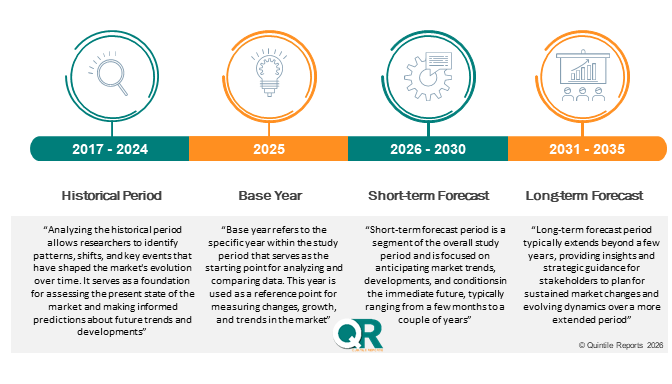
Our team of experienced researchers has meticulously gathered and analyzed data to deliver a thorough examination of market dynamics, competitive landscape, and emerging technologies. With a focus on delivering actionable intelligence, this report aims to empower decision-makers with the information needed to make informed choices and stay ahead of the competition. Whether you are a seasoned industry player or a new entrant, our market research report serves as a strategic tool to navigate the complexities of the market, aiding in successful business planning and growth strategies.
This chapter of our Steel Tubes market report provides an in-depth examination of the factors shaping the industry landscape. This section typically encompasses several key elements to offer a comprehensive understanding of the industry landscape such as market drivers & restraints analysis, market opportunities & trend analysis, market size & growth analysis, competitive analysis, SWOT analysis, business environment tools such as Porter's five forces & PESTEL analysis, Ansoff Matrix analysis, penetration & growth prospect analysis, regulatory framework & reimbursement scenario analysis, impact of macro & micro economic factors analysis such as Covid-19 impact, GDP growth, market inflation, U.S.- China trade war, Russia-Ukraine war impact, and supply chain analysis.
The segment analysis chapter of Steel Tubes market report is a critical section that delves into a detailed examination of the market's various segments. Segmentation involves dividing the market into distinct categories based on certain criteria to better understand and address the diverse needs of consumers. This chapter typically follows the introduction and provides a more granular view of the market, offering valuable insights for businesses and stakeholders. The components of the chapter lude segment definitions to understand the inclusions and exclusions of the study, assumptions, market size estimates and growth trend analysis of each segment, qualitative analysis of the segment, technological advancements, market penetration rate, market adoption rate, market share examination by each segment, segment growth drivers and restraint barriers, consumer behaviour and challenge analysis.
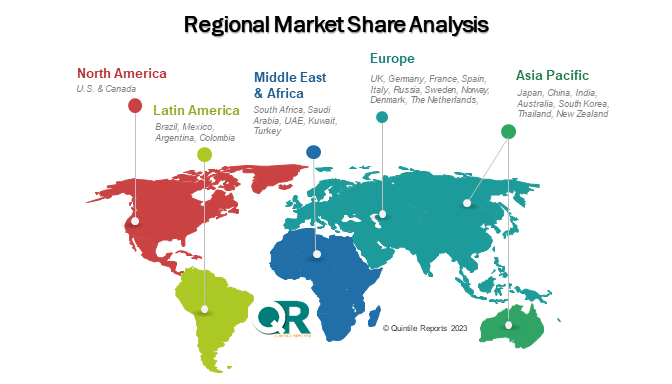
The chapter in Steel Tubes market research report is a pivotal section that examines and predicts the market dynamics and trends specific to different geographical regions. This chapter is crucial for businesses and stakeholders seeking a comprehensive understanding of how the market behaves across various locations, enabling them to tailor strategies and make informed decisions based on regional variations. The regional analysis chapter of our Steel Tubes market report is classified into regions & country-level. The chapter consists of North America (U.S., Canada), Europe (UK, Germany, France, Italy, Spain, Russia, Sweden, Denmark, Norway, Rest of Europe), Asia Pacific (Japan, China, India, Australia, South Korea, Thailand, Rest of Asia Pacific), Latin America (Brazil, Mexico, Argentina, Colombia, Rest of Latin America), Middle East & Africa (South Africa, Saudi Arabia, UAE, Kuwait, Rest of Middle East & Africa).
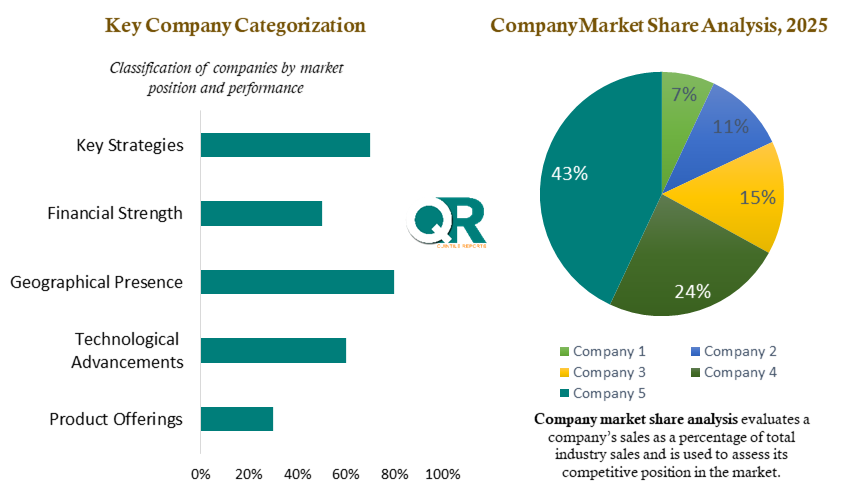
This section of a Steel Tubes market report is a crucial segment that provides a comprehensive overview of the competitive landscape within the market. This section is vital for businesses, investors, and stakeholders seeking insights into key players, their market positioning, strengths, weaknesses, strategies, and potential impacts on the overall market dynamics. The chapter includes research methodology used to analyse the market competition, list of key players operating in the market, detailed company profile section which includes company overview, business verticals, financial performance, product/services benchmarking, geographical presence, and strategic initiatives.
| Report Scope | Details |
| Report Version | 2026 |
| Growth Rate | CAGR of 3.08 from 2026 to 2035 |
| Base Year | 2025 |
| Actual Estimates / Historical Data | 2017 - 2024 |
| Forecast Period | 2026 - 2035 |
| Quantitative Units | Revenue in USD million/billion & CAGR from 2026 to 2035 |
| Country Scope | North America (U.S., Canada), Europe (UK, Germany, France, Italy, Spain, Russia, Sweden, Denmark, Norway, Rest of Europe), Asia Pacific (Japan, China, India, Australia, South Korea, Thailand, Rest of Asia Pacific), Latin America (Brazil, Mexico, Argentina, Colombia, Rest of Latin America), Middle East & Africa (South Africa, Saudi Arabia, UAE, Kuwait, Rest of Middle East & Africa). |
| The Segment Covered by Type |
|
| The Segment Covered by Shape |
|
| Companies Covered |
|
| Report Coverage | Revenue forecast, company share, competitive landscape, growth factors, and trends |
| Free Customization Scope (Equivalent to 5 Analyst Working Days) | If you need specific information, which is not currently within the scope of the report, we will provide it to you as a part of the customization |

Statistics for the 2025 Steel Tubes market share, size, and revenue growth rate were created by Quintile Report™. Steel Tubes analysis includes a market forecast outlook for 2035 and a historical overview. Get a free PDF sample of this market analysis, please get in touch with our principal analyst at sales@quintilereports.com
List of Tables
Table 1 List of Abbreviation and acronyms
Table 2 List of Sources
Table 3 North America Global Steel Tubes Market, by Segment Analysis, (USD Million) 2017-2035
Table 4 North America Global Steel Tubes Market, by Region, (USD Million) 2017-2035
Table 5 U.S. Global Steel Tubes Market, by Segment Analysis, (USD Million) 2017-2035
Table 6 Canada Global Steel Tubes Market, by Segment Analysis, (USD Million) 2017-2035
Table 7 Europe Global Steel Tubes Market, by Segment Analysis, (USD Million) 2017-2035
Table 8 Europe Global Steel Tubes Market, by Region, (USD Million) 2017-2035
Table 9 Germany Global Steel Tubes Market, by Segment Analysis, (USD Million) 2017-2035
Table 10 U.K. Global Steel Tubes Market, by Segment Analysis, (USD Million) 2017-2035
Table 11 France Global Steel Tubes Market, by Segment Analysis, (USD Million) 2017-2035
Table 12 Italy Global Steel Tubes Market, by Segment Analysis, (USD Million) 2017-2035
Table 13 Spain Global Steel Tubes Market, by Segment Analysis, (USD Million) 2017-2035
Table 14 Sweden Global Steel Tubes Market, by Segment Analysis, (USD Million) 2017-2035
Table 15 Denmark Global Steel Tubes Market, by Segment Analysis, (USD Million) 2017-2035
Table 16 Norway Global Steel Tubes Market, by Segment Analysis, (USD Million) 2017-2035
Table 17 The Netherlands Global Steel Tubes Market, by Segment Analysis, (USD Million) 2017-2035
Table 18 Russia Global Steel Tubes Market, by Segment Analysis, (USD Million) 2017-2035
Table 19 Asia Pacific Global Steel Tubes Market, by Segment Analysis, (USD Million) 2017-2035
Table 20 Asia Pacific Global Steel Tubes Market, by Region, (USD Million) 2017-2035
Table 21 China Global Steel Tubes Market, by Segment Analysis, (USD Million) 2017-2035
Table 22 Japan Global Steel Tubes Market, by Segment Analysis, (USD Million) 2017-2035
Table 23 India Global Steel Tubes Market, by Segment Analysis, (USD Million) 2017-2035
Table 24 Australia Global Steel Tubes Market, by Segment Analysis, (USD Million) 2017-2035
Table 25 South Korea Global Steel Tubes Market, by Segment Analysis, (USD Million) 2017-2035
Table 26 Thailand Global Steel Tubes Market, by Segment Analysis, (USD Million) 2017-2035
Table 27 Latin America Global Steel Tubes Market, by Segment Analysis, (USD Million) 2017-2035
Table 28 Latin America Global Steel Tubes Market, by Region, (USD Million) 2017-2035
Table 29 Brazil Global Steel Tubes Market, by Segment Analysis, (USD Million) 2017-2035
Table 30 Mexico Global Steel Tubes Market, by Segment Analysis, (USD Million) 2017-2035
Table 31 Argentina Global Steel Tubes Market, by Segment Analysis, (USD Million) 2017-2035
Table 32 Middle East and Africa Global Steel Tubes Market, by Segment Analysis, (USD Million) 2017-2035
Table 33 Middle East and Africa Global Steel Tubes Market, by Region, (USD Million) 2017-2035
Table 34 South Africa Global Steel Tubes Market, by Segment Analysis, (USD Million) 2017-2035
Table 35 Saudi Arabia Global Steel Tubes Market, by Segment Analysis, (USD Million) 2017-2035
Table 36 UAE Global Steel Tubes Market, by Segment Analysis, (USD Million) 2017-2035
Table 37 Kuwait Global Steel Tubes Market, by Segment Analysis, (USD Million) 2017-2035
Table 38 Turkey Global Steel Tubes Market, by Segment Analysis, (USD Million) 2017-2035
Fig.1 Market research process
Fig.2 Market research approaches
Fig.3 Global Steel Tubes Market: market scenario
Fig.4 Global Steel Tubes Market competitive outlook
Fig.5 Global Steel Tubes Market driver analysis
Fig.6 Global Steel Tubes Market restraint analysis
Fig.7 Global Steel Tubes Market opportunity analysis
Fig.8 Global Steel Tubes Market trends analysis
Fig.9 Global Steel Tubes Market: Segment Analysis (Based on the scope)
Fig.10 Global Steel Tubes Market: regional analysis
Fig.11 Global market shares and leading market players
Fig.12 North America market share and leading players
Fig.13 Europe market share and leading players
Fig.14 Asia Pacific market share and leading players
Fig.15 Latin America market share and leading players
Fig.16 Middle East & Africa market share and leading players
Fig.17 North America, by country
Fig.18 North America
Fig.19 North America market estimates and forecast, 2017-2035
Fig.20 U.S.
Fig.21 Canada
Fig.22 Europe
Fig.23 Europe market estimates and forecast, 2017-2035
Fig.24 U.K.
Fig.25 Germany
Fig.26 France
Fig.27 Italy
Fig.28 Spain
Fig.29 Sweden
Fig.30 Denmark
Fig.31 Norway
Fig.32 The Netherlands
Fig.33 Russia
Fig.34 Asia Pacific
Fig.35 Asia Pacific market estimates and forecast, 2017-2035
Fig.36 China
Fig.37 Japan
Fig.38 India
Fig.39 Australia
Fig.40 South Korea
Fig.41 Thailand
Fig.42 Latin America
Fig.43 Latin America market estimates and forecast, 2017-2035
Fig.44 Brazil
Fig.45 Mexico
Fig.46 Argentina
Fig.47 Colombia
Fig.48 Middle East and Africa
Fig.49 Middle East and Africa market estimates and forecast, 2017-2035
Fig.50 Saudi Arabia
Fig.51 South Africa
Fig.52 UAE
Fig.53 Kuwait
Fig.54 Turkey
The Global Steel Tubes Market was valued at USD 100.58 billion in 2025 and is anticipated to reach USD 123.41 billion by 2035, growing at a robust CAGR of 3.08% during the forecast period from 2026 to 2035. The Steel Tubes market report presents a comprehensive overview of the industry by assessing macroeconomic conditions, emerging technologies, regulatory frameworks, and shifting consumer behavior to provide a clear outlook on future market expansion.
With 2025 serving as the base year, the Steel Tubes market is experiencing stable growth supported by rising demand across key end-use industries and continuous technological innovation. Companies operating in the market are enhancing their go-to-market (GTM) strategies to capture emerging opportunities and navigate evolving competitive dynamics effectively.
By 2035, the market is expected to demonstrate strong growth potential, driven by sustained investments in innovation, increasing strategic partnerships, and growing merger and acquisition activities. Organizations that prioritize customer-centric solutions, innovation, and agile GTM execution are likely to strengthen their market presence and achieve long-term success. The report provides detailed insights into major market drivers, restraints, opportunities, and challenges across segments, regions, and countries, supported by extensive qualitative and quantitative analysis from 2017 to 2035.
The steel tubes market encompasses the production and distribution of steel tubes used across various industries such as construction, automotive, oil and gas, petrochemicals, and infrastructure. Steel tubes are cylindrical hollow sections made primarily from carbon steel, stainless steel, alloy steel, or other materials, manufactured either as seamless or welded tubes.
Their significance lies in their strength, durability, and versatility, making them essential for structural support, fluid transportation, machinery manufacturing, and energy sector applications. The market's scope includes different product types (seamless and welded), material types, and end-use industries, with a global reach. The steel tubes market is a critical component of broader industrial growth and urbanization, supporting infrastructure development and industrial manufacturing worldwide.
The growth of the steel tube market is driven by a combination of industrial expansion, urbanization, and increasing infrastructure needs across the globe.
With over 56% of the worlds population now living in urban areas, the demand for steel tubes is surging, especially in construction, automotive, and oil and gas sectors. Rapid urbanization is fuelling large-scale infrastructure projects that depend heavily on steel tubes for pipelines, structural components, and building frameworks.
A significant boost also comes from the oil and gas industry, one of the largest consumers of steel tubes. Seamless tubes are critical for drilling, pipeline systems, and refinery operations. This demand is further amplified by rising refining capacities in regions like Asia-Pacific and the Middle East.
At the same time, technological advancements in manufacturingsuch as improvements in welding methods like ERW and SAW, and enhanced alloy treatmentsare enabling the production of stronger, lighter, and more corrosion-resistant tubes. These innovations cater to evolving industry needs while promoting sustainable production practices that align with global environmental regulations.
Additionally, government-led infrastructure initiatives, such as the U.S. Bipartisan Infrastructure Law and Saudi Arabias Neom City project, are accelerating the use of steel tubes in transportation, energy, water treatment, and urban development.
One major challenge is the fluctuation in raw material pricesespecially for iron ore, coal, and energy inputswhich directly affects production costs and squeezes profit margins. This price volatility also creates instability in the market, making it difficult to maintain a steady demand-supply balance.
Additionally, the market is highly fragmented, with numerous mid-range and regional manufacturers creating intense competition. This environment often leads to price wars and declining profitability, while the need for localized sourcing and productionthough beneficial for proximitycan limit economies of scale and hinder investments in innovation.
Environmental and regulatory pressures further complicate matters. As governments enforce stricter emissions regulations and push for decarbonization, manufacturers are compelled to invest in expensive process upgrades and ensure product complianceleading to increased operational costs and potential delays in scaling up production.
Lastly, economic uncertainties and geopolitical risks, such as global slowdowns, trade conflicts, and regional tensions, continue to disrupt supply chains and delay infrastructure projects. These factors collectively reduce industrial output and weaken the overall demand for steel tubes.
The North American steel tubes market is experiencing significant growth, fuelled by strong demand across key sectors like oil and gas, construction, and automotive. Crude steel production in the region saw a notable increase, signalling a surge in industrial activity. The oil and gas industry continues to be a major driver, which in turn boosts the need for steel tubes used in pipelines and drilling operations. Meanwhile, massive infrastructure investmentsparticularly the $1.2 trillion allocated under the Bipartisan Infrastructure Laware amplifying demand for construction-grade steel tubes. Technological advancements have also played a crucial role, with innovations like electric resistance welding and cold forming enhancing the quality and cost-efficiency of welded steel tubes. Despite facing challenges such as ongoing supply chain issues and increasing pressure to adopt sustainable manufacturing practices, the market outlook remains optimistic thanks to its broad base of end-use industries and continued government support for infrastructure development.
Europes steel tubes market reflects the regions mature industrial base and strong commitment to environmental responsibility. Leading the way in both production and consumption are Germany, Italy, and France, thanks to their advanced manufacturing capabilities and emphasis on producing high-quality seamless and welded tubes. The market is shaped significantly by the European Unions rigorous environmental regulations, which are pushing manufacturers to adopt greener production methods and incorporate recycled materials. Key industries such as construction and automotive continue to drive demandparticularly for lightweight, corrosion-resistant tubes that align with modern efficiency and durability standards. Companies are actively investing in product development and sustainable practices, helping to steer the industry forward. Initiatives like the EU Green Deal are playing a pivotal role, encouraging energy-efficient processes and circular economy approaches that are redefining the future of steel tube manufacturing in Europe.
The Asia Pacific steel tubes market is the fastest-growing region worldwide. This dominance is fuelled by rapid urbanization, aggressive industrialization, and a wave of large-scale infrastructure projects across the region. Emerging economies like China, India, and nations in Southeast Asia are pouring investments into building transportation networks, expanding energy pipelines, and developing urban housingkey drivers of steel tube demand. China continues to lead globally in both steel production and consumption, meeting domestic needs while also catering to international markets. Additionally, the booming oil and gas sector, coupled with rising refining capacities, is further increasing the demand for both seamless and welded steel tubes. While the region is steadily embracing advanced technologies and sustainable practices, challenges such as the volatility of raw material prices remain a concern.
The steel tubes market in Latin America is primarily driven by the strong industrial and economic roles of Brazil and Mexico, the regions leading producers and consumers. Brazil alone produces over 30 million tonnes of steel annually, while Mexicorecognized as a major automotive manufacturing hubproduces around 4 million vehicles each year. This robust automotive output fuels demand for steel tubes, particularly in structural and exhaust system applications. Additionally, large-scale infrastructure projects such as Mexicos ambitious Mayan Train and Brazils expanding road networks further boost the need for steel tubing. The regions thriving oil and gas sector also plays a critical role, requiring substantial quantities of steel tubes for drilling operations and pipeline development.
The steel tubes market in the Middle East and Africa is deeply shaped by the regions strong ties to the oil and gas industry, with the Middle East alone accounting for around 27% of global crude oil production. Steel tubes play a critical role in this sector, being essential for drilling equipment, pipelines, and refinery infrastructure. Beyond energy, demand is rising due to major construction projects like Saudi Arabias ambitious Neom City, which are driving significant steel tube usage in the construction sector. In Africa, rapid urbanization is another major growth driver, fuelling the need for housing, transportation systems, and water pipeline networks. Additionally, renewable energy projects, such as Moroccos Noor Solar Project, are expanding the scope of steel tube applications across the region.
The U.S. steel tubes market remains a backbone of the nation's industrial and infrastructure growth, supporting vital sectors like construction, energy, oil and gas, and manufacturing. The market is poised for steady expansion, fuelled by industrial momentum and federal investmentsparticularly the Bipartisan Infrastructure Law, which injects over $1.2 trillion into transportation, energy, and construction projects. This legislation significantly increases the need for steel tubes in bridges, roads, and pipelines. A surge in oil and gas activity, with crude oil production averaging 12.8 million barrels per day in 2023, also drives demand, especially for drilling and pipeline infrastructure. Meanwhile, steady growth in automotive manufacturing and machinery output adds to consumption.
The regulatory environment further shapes the market, with federal efforts pushing sustainable manufacturing practices and strict adherence to quality and safety standards like ASTM and API. On the trade front, the U.S. balances imports and exports with key partners such as Canada, Mexico, and Asian countries. Agreements like USMCA support regional trade, while tariffs and global trade policies affect pricing and availability. Technological advancements have been pivotalmodern electric resistance welding (ERW), cold forming techniques, and alloy treatments now deliver stronger, more durable, and corrosion-resistant products. Innovations cater to emerging needs in renewable energy, including offshore wind and hydrogen storage.
Germany stands as a dominant force in Europes steel tubes industry, powered by its strong automotive, construction, and machinery sectors. These tubes are essential in everything from vehicle frames to infrastructure, underlining their economic importance. A key demand driver is the automotive industry, where lightweight and durable tubes are crucial for exhaust systems and structural components. Simultaneously, Germanys urban development and renewable energy projects further elevate demand, especially for specialized tubing.
The market operates within a highly regulated framework shaped by EU environmental mandates like the Green Deal, pushing manufacturers toward greener practices and strict adherence to EN and ISO standards. Trade remains vital, with Germany exporting significantly across Europe and to countries like the U.S., while relying on imports for certain raw materials and products. On the innovation front, German manufacturers lead with advanced welding, alloy technology, and digitalization under Industry 4.0, producing seamless and welded tubes that balance strength, lightness, and corrosion resistanceperfectly aligning with the evolving needs of modern industry.
Japans steel tubes market plays a vital role in powering its core industriesmanufacturing, automotive, and constructionby supplying essential components for everything from vehicle exhaust systems to energy infrastructure. As a hub of precision engineering and a global automotive leader, Japan depends on high-quality steel tubes to uphold its export-oriented economy and support high-tech manufacturing. Demand is chiefly driven by the automotive sector, where steel tubes are used in structural components, chassis, and exhausts, while construction, urban renewal, and energy projects also contribute significantly.
The country's stringent regulatory framework ensures manufacturers meet strict environmental and quality standards, with policies promoting energy efficiency, emission control, and sustainable practices, all under the umbrella of JIS (Japanese Industrial Standards). Technological innovation further strengthens the industry, with cutting-edge developments in seamless tube production, high-strength alloys, and precision cold drawing. Robotics and automation have boosted production efficiency and product consistency, especially in the creation of lightweight, corrosion-resistant tubes that meet evolving industrial needs.
Competition in the steel tubes market is shaped by a blend of pricing pressure, quality demands, and the need for customization across various end-use industries. Price remains a key factor, especially in segments like structural steel tubes where buyers are highly cost-sensitive, pushing manufacturers to optimize efficiency and logistics.
In contrast, sectors like automotive and mechanical applications prioritize precision, durability, and compliance with global standards (ASTM, EN, JIS), placing product quality at the centre of competition.
Companies also differentiate through their ability to offer customized solutionssuch as special coatings, unique dimensions, or alloy compositionswhich is critical for industries like oil and gas or petrochemicals. A wide distribution network and local presence play a vital role in reaching diverse markets quickly and reliably.
Meanwhile, strong customer serviceincluding technical support and on-time deliverycan tip the scale, especially for large infrastructure or industrial clients. Technological innovation, such as ERW, cold drawing, and digital automation, improves both product performance and production agility, giving companies an edge.
At the same time, sustainability effortslike using recycled steel and reducing energy useare increasingly valued, especially in markets with strict environmental norms. Holding international quality certifications also builds trust and can command premium pricing.
Key players in the market are Nippon Steel Corporation, Tenaris S.A., ArcelorMittal, Tata Steel, Vallourec S.A., United States Steel Corporation, JFE Steel Corporation, Hyundai Steel Company, SAIL, ChelPipe Group, EVRAZ North America, Sandvik Materials Technology, Zekelman Industries, Jindal SAW Ltd., TMK Group, and other players.
Our team of experienced researchers has meticulously gathered and analyzed data to deliver a thorough examination of market dynamics, competitive landscape, and emerging technologies. With a focus on delivering actionable intelligence, this report aims to empower decision-makers with the information needed to make informed choices and stay ahead of the competition. Whether you are a seasoned industry player or a new entrant, our market research report serves as a strategic tool to navigate the complexities of the market, aiding in successful business planning and growth strategies.
This chapter of our Steel Tubes market report provides an in-depth examination of the factors shaping the industry landscape. This section typically encompasses several key elements to offer a comprehensive understanding of the industry landscape such as market drivers & restraints analysis, market opportunities & trend analysis, market size & growth analysis, competitive analysis, SWOT analysis, business environment tools such as Porter's five forces & PESTEL analysis, Ansoff Matrix analysis, penetration & growth prospect analysis, regulatory framework & reimbursement scenario analysis, impact of macro & micro economic factors analysis such as Covid-19 impact, GDP growth, market inflation, U.S.- China trade war, Russia-Ukraine war impact, and supply chain analysis.
The segment analysis chapter of Steel Tubes market report is a critical section that delves into a detailed examination of the market's various segments. Segmentation involves dividing the market into distinct categories based on certain criteria to better understand and address the diverse needs of consumers. This chapter typically follows the introduction and provides a more granular view of the market, offering valuable insights for businesses and stakeholders. The components of the chapter lude segment definitions to understand the inclusions and exclusions of the study, assumptions, market size estimates and growth trend analysis of each segment, qualitative analysis of the segment, technological advancements, market penetration rate, market adoption rate, market share examination by each segment, segment growth drivers and restraint barriers, consumer behaviour and challenge analysis.
The chapter in Steel Tubes market research report is a pivotal section that examines and predicts the market dynamics and trends specific to different geographical regions. This chapter is crucial for businesses and stakeholders seeking a comprehensive understanding of how the market behaves across various locations, enabling them to tailor strategies and make informed decisions based on regional variations. The regional analysis chapter of our Steel Tubes market report is classified into regions & country-level. The chapter consists of North America (U.S., Canada), Europe (UK, Germany, France, Italy, Spain, Russia, Sweden, Denmark, Norway, Rest of Europe), Asia Pacific (Japan, China, India, Australia, South Korea, Thailand, Rest of Asia Pacific), Latin America (Brazil, Mexico, Argentina, Colombia, Rest of Latin America), Middle East & Africa (South Africa, Saudi Arabia, UAE, Kuwait, Rest of Middle East & Africa).
This section of a Steel Tubes market report is a crucial segment that provides a comprehensive overview of the competitive landscape within the market. This section is vital for businesses, investors, and stakeholders seeking insights into key players, their market positioning, strengths, weaknesses, strategies, and potential impacts on the overall market dynamics. The chapter includes research methodology used to analyse the market competition, list of key players operating in the market, detailed company profile section which includes company overview, business verticals, financial performance, product/services benchmarking, geographical presence, and strategic initiatives.
| Report Scope | Details |
| Report Version | 2026 |
| Growth Rate | CAGR of 3.08 from 2026 to 2035 |
| Base Year | 2025 |
| Actual Estimates / Historical Data | 2017 - 2024 |
| Forecast Period | 2026 - 2035 |
| Quantitative Units | Revenue in USD million/billion & CAGR from 2026 to 2035 |
| Country Scope | North America (U.S., Canada), Europe (UK, Germany, France, Italy, Spain, Russia, Sweden, Denmark, Norway, Rest of Europe), Asia Pacific (Japan, China, India, Australia, South Korea, Thailand, Rest of Asia Pacific), Latin America (Brazil, Mexico, Argentina, Colombia, Rest of Latin America), Middle East & Africa (South Africa, Saudi Arabia, UAE, Kuwait, Rest of Middle East & Africa). |
| The Segment Covered by Type |
|
| The Segment Covered by Shape |
|
| Companies Covered |
|
| Report Coverage | Revenue forecast, company share, competitive landscape, growth factors, and trends |
| Free Customization Scope (Equivalent to 5 Analyst Working Days) | If you need specific information, which is not currently within the scope of the report, we will provide it to you as a part of the customization |
Statistics for the 2025 Steel Tubes market share, size, and revenue growth rate were created by Quintile Report™. Steel Tubes analysis includes a market forecast outlook for 2035 and a historical overview. Get a free PDF sample of this market analysis, please get in touch with our principal analyst at sales@quintilereports.com
Table 1 List of Abbreviation and acronyms
Table 2 List of Sources
Table 3 North America Global Steel Tubes Market, by Segment Analysis, (USD Million) 2017-2035
Table 4 North America Global Steel Tubes Market, by Region, (USD Million) 2017-2035
Table 5 U.S. Global Steel Tubes Market, by Segment Analysis, (USD Million) 2017-2035
Table 6 Canada Global Steel Tubes Market, by Segment Analysis, (USD Million) 2017-2035
Table 7 Europe Global Steel Tubes Market, by Segment Analysis, (USD Million) 2017-2035
Table 8 Europe Global Steel Tubes Market, by Region, (USD Million) 2017-2035
Table 9 Germany Global Steel Tubes Market, by Segment Analysis, (USD Million) 2017-2035
Table 10 U.K. Global Steel Tubes Market, by Segment Analysis, (USD Million) 2017-2035
Table 11 France Global Steel Tubes Market, by Segment Analysis, (USD Million) 2017-2035
Table 12 Italy Global Steel Tubes Market, by Segment Analysis, (USD Million) 2017-2035
Table 13 Spain Global Steel Tubes Market, by Segment Analysis, (USD Million) 2017-2035
Table 14 Sweden Global Steel Tubes Market, by Segment Analysis, (USD Million) 2017-2035
Table 15 Denmark Global Steel Tubes Market, by Segment Analysis, (USD Million) 2017-2035
Table 16 Norway Global Steel Tubes Market, by Segment Analysis, (USD Million) 2017-2035
Table 17 The Netherlands Global Steel Tubes Market, by Segment Analysis, (USD Million) 2017-2035
Table 18 Russia Global Steel Tubes Market, by Segment Analysis, (USD Million) 2017-2035
Table 19 Asia Pacific Global Steel Tubes Market, by Segment Analysis, (USD Million) 2017-2035
Table 20 Asia Pacific Global Steel Tubes Market, by Region, (USD Million) 2017-2035
Table 21 China Global Steel Tubes Market, by Segment Analysis, (USD Million) 2017-2035
Table 22 Japan Global Steel Tubes Market, by Segment Analysis, (USD Million) 2017-2035
Table 23 India Global Steel Tubes Market, by Segment Analysis, (USD Million) 2017-2035
Table 24 Australia Global Steel Tubes Market, by Segment Analysis, (USD Million) 2017-2035
Table 25 South Korea Global Steel Tubes Market, by Segment Analysis, (USD Million) 2017-2035
Table 26 Thailand Global Steel Tubes Market, by Segment Analysis, (USD Million) 2017-2035
Table 27 Latin America Global Steel Tubes Market, by Segment Analysis, (USD Million) 2017-2035
Table 28 Latin America Global Steel Tubes Market, by Region, (USD Million) 2017-2035
Table 29 Brazil Global Steel Tubes Market, by Segment Analysis, (USD Million) 2017-2035
Table 30 Mexico Global Steel Tubes Market, by Segment Analysis, (USD Million) 2017-2035
Table 31 Argentina Global Steel Tubes Market, by Segment Analysis, (USD Million) 2017-2035
Table 32 Middle East and Africa Global Steel Tubes Market, by Segment Analysis, (USD Million) 2017-2035
Table 33 Middle East and Africa Global Steel Tubes Market, by Region, (USD Million) 2017-2035
Table 34 South Africa Global Steel Tubes Market, by Segment Analysis, (USD Million) 2017-2035
Table 35 Saudi Arabia Global Steel Tubes Market, by Segment Analysis, (USD Million) 2017-2035
Table 36 UAE Global Steel Tubes Market, by Segment Analysis, (USD Million) 2017-2035
Table 37 Kuwait Global Steel Tubes Market, by Segment Analysis, (USD Million) 2017-2035
Table 38 Turkey Global Steel Tubes Market, by Segment Analysis, (USD Million) 2017-2035
Fig.1 Market research process
Fig.2 Market research approaches
Fig.3 Global Steel Tubes Market: market scenario
Fig.4 Global Steel Tubes Market competitive outlook
Fig.5 Global Steel Tubes Market driver analysis
Fig.6 Global Steel Tubes Market restraint analysis
Fig.7 Global Steel Tubes Market opportunity analysis
Fig.8 Global Steel Tubes Market trends analysis
Fig.9 Global Steel Tubes Market: Segment Analysis (Based on the scope)
Fig.10 Global Steel Tubes Market: regional analysis
Fig.11 Global market shares and leading market players
Fig.12 North America market share and leading players
Fig.13 Europe market share and leading players
Fig.14 Asia Pacific market share and leading players
Fig.15 Latin America market share and leading players
Fig.16 Middle East & Africa market share and leading players
Fig.17 North America, by country
Fig.18 North America
Fig.19 North America market estimates and forecast, 2017-2035
Fig.20 U.S.
Fig.21 Canada
Fig.22 Europe
Fig.23 Europe market estimates and forecast, 2017-2035
Fig.24 U.K.
Fig.25 Germany
Fig.26 France
Fig.27 Italy
Fig.28 Spain
Fig.29 Sweden
Fig.30 Denmark
Fig.31 Norway
Fig.32 The Netherlands
Fig.33 Russia
Fig.34 Asia Pacific
Fig.35 Asia Pacific market estimates and forecast, 2017-2035
Fig.36 China
Fig.37 Japan
Fig.38 India
Fig.39 Australia
Fig.40 South Korea
Fig.41 Thailand
Fig.42 Latin America
Fig.43 Latin America market estimates and forecast, 2017-2035
Fig.44 Brazil
Fig.45 Mexico
Fig.46 Argentina
Fig.47 Colombia
Fig.48 Middle East and Africa
Fig.49 Middle East and Africa market estimates and forecast, 2017-2035
Fig.50 Saudi Arabia
Fig.51 South Africa
Fig.52 UAE
Fig.53 Kuwait
Fig.54 Turkey

A license granted to one user. Rules or conditions might be applied for e.g. the use of electric files (PDFs) or printings, depending on product.
A license granted to multiple users.
A license granted to a single business site/establishment.
A license granted to all employees within organisation access to the product.
Immediate / Within 24-48 hours - Working days
Online Payments with PayPal and CCavenue
You can order a report by picking any of the payment methods which is bank wire or online payment through any Debit/Credit card or PayPal.
Hard Copy
Report Overview: The Global Gas and Liquid Flow Management Systems Market was valued at USD 21.82 bi
Read MoreReport Overview: The Global Product Fall Protection Systems Market was valued at USD 8.62 million in
Read MoreReport Overview: The Global Superconductor Motors Market was valued at USD 135.82 million in 2025 an
Read More U.S. : +1-201-772-7734