The Global Industrial Drone Inspection Market was valued at USD 885.32 million in 2025 and is anticipated to reach USD 4623.5 million by 2035, growing at a robust CAGR of 18.89% during the forecast period from 2026 to 2035. The Industrial Drone Inspection market report presents a comprehensive overview of the industry by assessing macroeconomic conditions, emerging technologies, regulatory frameworks, and shifting consumer behavior to provide a clear outlook on future market expansion.
With 2025 serving as the base year, the Industrial Drone Inspection market is experiencing stable growth supported by rising demand across key end-use industries and continuous technological innovation. Companies operating in the market are enhancing their go-to-market (GTM) strategies to capture emerging opportunities and navigate evolving competitive dynamics effectively.
By 2035, the market is expected to demonstrate strong growth potential, driven by sustained investments in innovation, increasing strategic partnerships, and growing merger and acquisition activities. Organizations that prioritize customer-centric solutions, innovation, and agile GTM execution are likely to strengthen their market presence and achieve long-term success. The report provides detailed insights into major market drivers, restraints, opportunities, and challenges across segments, regions, and countries, supported by extensive qualitative and quantitative analysis from 2017 to 2035.
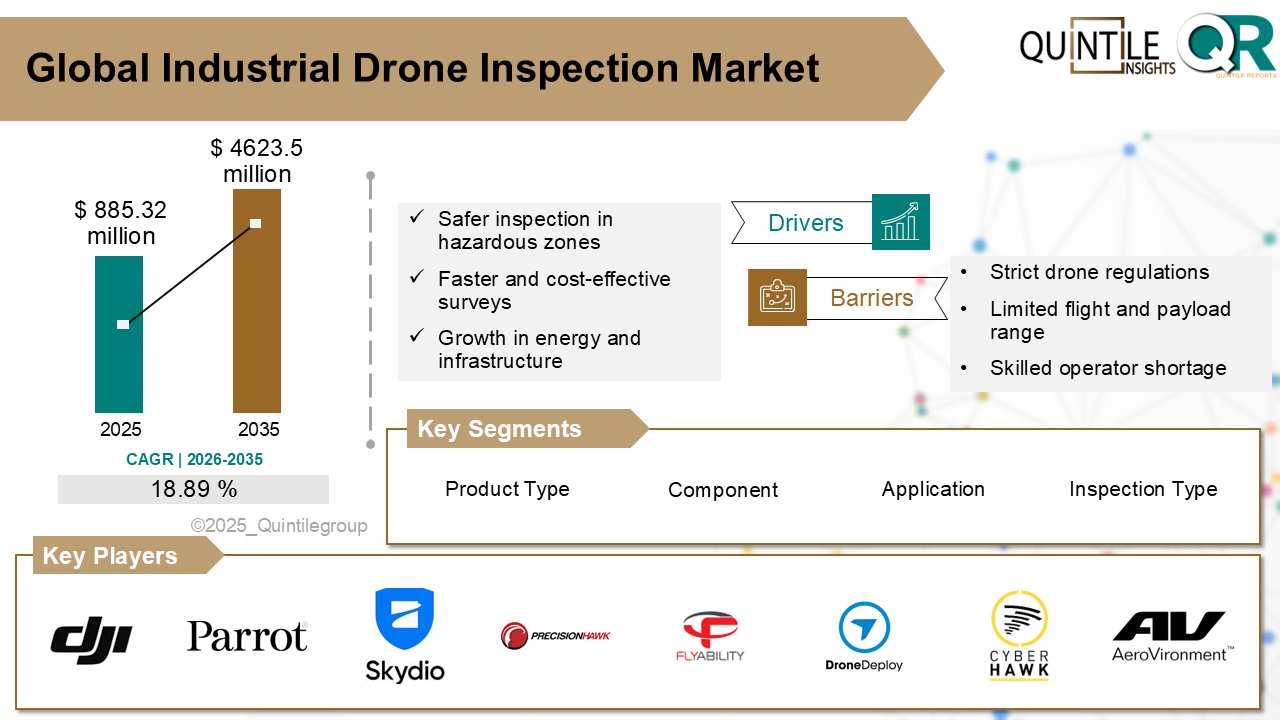
The industrial drone inspection market involves the use of unmanned aerial vehicles (drones) equipped with cameras, sensors, and data collection tools to inspect industrial assets and infrastructure. These drones are deployed to monitor pipelines, power lines, construction sites, wind turbines, solar farms, oil rigs, storage tanks, and manufacturing plants.
They provide real-time imaging, thermal data, and aerial perspectives, reducing the need for manual inspections in hazardous or difficult-to-reach areas. The market supports industries such as energy, utilities, mining, construction, oil and gas, and manufacturing, where safety, efficiency, and cost control are key priorities.
Need for safer inspection methods is the main driver. Drones can access high, remote, or dangerous sites without putting workers at risk. This reduces accidents and insurance costs, especially in sectors like oil and gas or electrical utilities.
Cost efficiency is another strong factor. Drone inspections are faster and less labor-intensive than traditional methods like scaffolding, cranes, or rope access. This lowers downtime for critical infrastructure and helps companies save on manpower and equipment.
The availability of high-resolution cameras, thermal sensors, and LiDAR has improved data accuracy. Drones can now capture detailed images and measurements that enable predictive maintenance and early problem detection, reducing unplanned failures.
Regulatory support in many countries is making it easier for companies to operate drones commercially. Governments are establishing flight corridors, operator certifications, and safety standards that help increase confidence in drone deployment.
Digital transformation in industry is pushing companies to adopt data-driven monitoring tools. Drone inspection aligns with the shift toward automation, real-time data collection, and smart asset management in modern industrial operations.
Regulatory restrictions remain a challenge in some regions. Rules around drone flight paths, altitude, data collection, and operator licensing vary, limiting usage in certain industrial zones or airspace.
Skilled workforce requirements also pose a barrier. Operating industrial drones for inspection requires trained personnel familiar with both drone control and industry-specific safety protocols. The shortage of qualified drone pilots can limit adoption.
Weather and environmental conditions can impact drone performance. Strong wind, rain, or electromagnetic interference can disrupt flights or affect data quality, especially in offshore, mining, or high-voltage environments.
Cybersecurity risks are increasing. As drones collect and transmit sensitive industrial data, companies must invest in secure communication systems to prevent data breaches or system tampering.
High-end drones with advanced sensors and analytics capabilities can be expensive, making the technology less accessible for small and mid-sized companies, especially in developing regions.
North America is a leading region, especially the United States and Canada. The U.S. has well-developed drone regulations and a large base of energy, construction, and utility companies that are actively adopting drone inspections.
Europe shows steady adoption, driven by the regions emphasis on worker safety, predictive maintenance, and infrastructure modernization. Countries like Germany, the U.K., and France are using drones in wind energy, and smart grid projects.
Asia Pacific is experiencing rapid growth due to infrastructure expansion, industrialization, and government investments in digital monitoring. China, Japan, South Korea, and India are among the top adopters across power, mining, and construction sectors.
Latin America is developing steadily. Countries like Brazil, Mexico, and Chile are using drones in oil and gas, mining, and agriculture, although regulatory support and skilled workforce remain limited.
Middle East & Africa are emerging regions. In the UAE and Saudi Arabia, drone inspections are being used for smart city infrastructure, oil and gas facilities, and large-scale construction projects. In Africa, usage is rising in mining and utilities, supported by foreign partnerships.
The U.S. has a well-defined framework for commercial drone operations, making it easier for industrial firms to deploy drones for inspections. Energy companies use them for pipeline and wind farm monitoring, while construction firms employ them for site mapping and structural assessments.
Government agencies, including the Federal Aviation Administration (FAA), continue to support drone pilot programs and safety initiatives. The countrys strong tech base and wide availability of skilled drone service providers also contribute to rapid adoption across industries.
Germany is deploying drones in industrial inspection to improve safety, precision, and environmental monitoring. Wind farms, industrial plants, and rail networks are key users of drone inspection technology.
Government-supported Industry 4.0 initiatives encourage the use of automated systems like drones for facility maintenance and asset tracking. German companies also lead in developing drone hardware and analytics tools for specialized inspection tasks.
Japan uses drones extensively for inspecting utility infrastructure. Due to the country's earthquake risks and aging infrastructure, drones are vital in assessing structural integrity and responding quickly to natural disasters.
Japanese companies focus on compact drone designs and precise data collection tools. The government supports drone use in both public and private infrastructure maintenance through regulatory easing and smart city programs.
The industrial drone inspection market includes drone manufacturers, service providers, software developers, and sensor technology companies. Large players offer full solutions, including high-performance drones, inspection software, data analytics, and maintenance support.
Specialized firms provide industry-specific services such as oil rig inspection, power line thermal scanning, or construction progress tracking. These companies often offer subscription-based or project-based services tailored to client needs.
Technology differentiation is a key competitive factor. Firms that offer long-range drones, advanced payload integration (like LiDAR, IR, or gas detectors), and AI-based data analytics gain a strong edge. Reliability, flight endurance, and compliance with safety standards are also important.
Companies are forming partnerships with construction firms, energy providers, and infrastructure agencies to secure long-term inspection contracts. Providing end-to-end supportfrom data capture to report generation helps retain clients and build trust.
Startups are also gaining traction by offering lightweight, autonomous drones and software that allows real-time defect detection. Their ability to serve smaller clients with cost-effective solutions is expanding the market beyond large corporations.
Key players in the market are DJI, Parrot SA, senseFly (Parrot Group), Skydio, Delair, PrecisionHawk, Kespry, Inspectron Inc., Cyberhawk Innovations, Flyability, Airobotics, AeroVironment, Inc., DroneDeploy, SkySpecs, Microdrones, and other players.
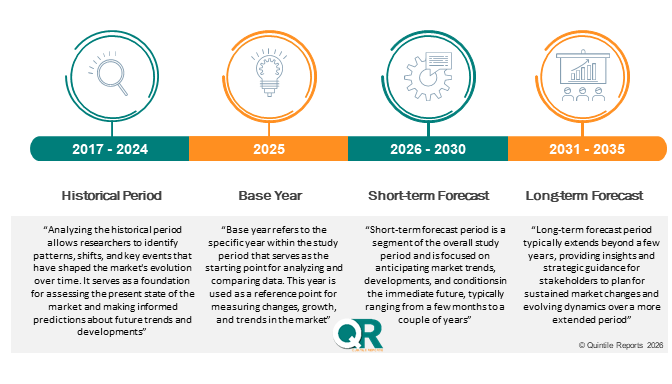
Our team of experienced researchers has meticulously gathered and analyzed data to deliver a thorough examination of market dynamics, competitive landscape, and emerging technologies. With a focus on delivering actionable intelligence, this report aims to empower decision-makers with the information needed to make informed choices and stay ahead of the competition. Whether you are a seasoned industry player or a new entrant, our market research report serves as a strategic tool to navigate the complexities of the market, aiding in successful business planning and growth strategies.
This chapter of our Industrial Drone Inspection market report provides an in-depth examination of the factors shaping the industry landscape. This section typically encompasses several key elements to offer a comprehensive understanding of the industry landscape such as market drivers & restraints analysis, market opportunities & trend analysis, market size & growth analysis, competitive analysis, SWOT analysis, business environment tools such as Porter's five forces & PESTEL analysis, Ansoff Matrix analysis, penetration & growth prospect analysis, regulatory framework & reimbursement scenario analysis, impact of macro & micro economic factors analysis such as Covid-19 impact, GDP growth, market inflation, U.S.- China trade war, Russia-Ukraine war impact, and supply chain analysis.
The segment analysis chapter of Industrial Drone Inspection market report is a critical section that delves into a detailed examination of the market's various segments. Segmentation involves dividing the market into distinct categories based on certain criteria to better understand and address the diverse needs of consumers. This chapter typically follows the introduction and provides a more granular view of the market, offering valuable insights for businesses and stakeholders. The components of the chapter lude segment definitions to understand the inclusions and exclusions of the study, assumptions, market size estimates and growth trend analysis of each segment, qualitative analysis of the segment, technological advancements, market penetration rate, market adoption rate, market share examination by each segment, segment growth drivers and restraint barriers, consumer behaviour and challenge analysis.
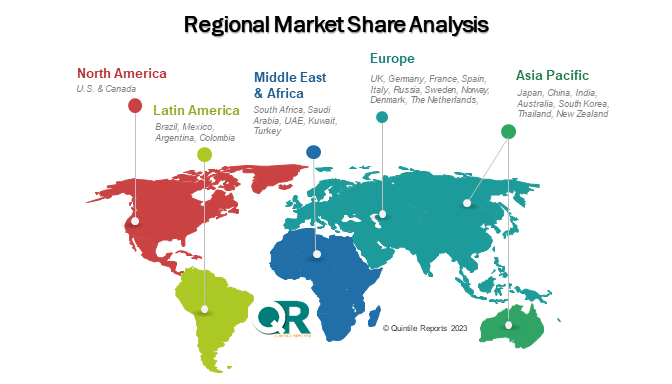
The chapter in Industrial Drone Inspection market research report is a pivotal section that examines and predicts the market dynamics and trends specific to different geographical regions. This chapter is crucial for businesses and stakeholders seeking a comprehensive understanding of how the market behaves across various locations, enabling them to tailor strategies and make informed decisions based on regional variations. The regional analysis chapter of our Industrial Drone Inspection market report is classified into regions & country-level. The chapter consists of North America (U.S., Canada), Europe (UK, Germany, France, Italy, Spain, Russia, Sweden, Denmark, Norway, Rest of Europe), Asia Pacific (Japan, China, India, Australia, South Korea, Thailand, Rest of Asia Pacific), Latin America (Brazil, Mexico, Argentina, Colombia, Rest of Latin America), Middle East & Africa (South Africa, Saudi Arabia, UAE, Kuwait, Rest of Middle East & Africa).
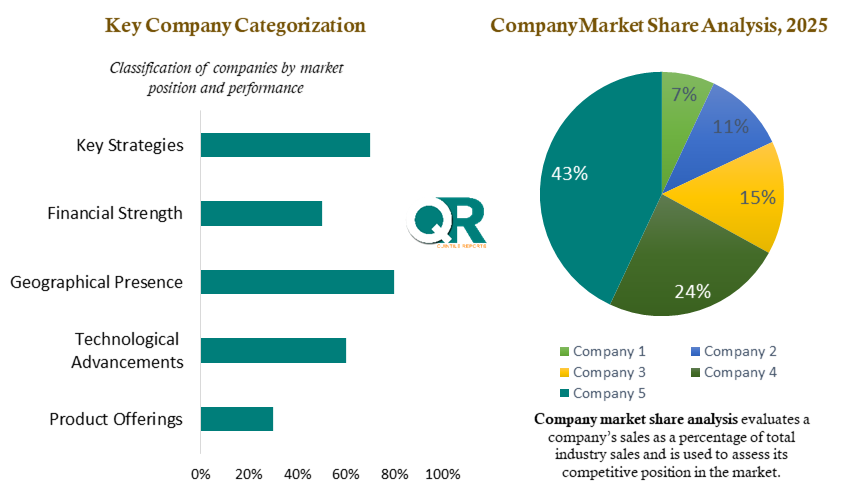
This section of a Industrial Drone Inspection market report is a crucial segment that provides a comprehensive overview of the competitive landscape within the market. This section is vital for businesses, investors, and stakeholders seeking insights into key players, their market positioning, strengths, weaknesses, strategies, and potential impacts on the overall market dynamics. The chapter includes research methodology used to analyse the market competition, list of key players operating in the market, detailed company profile section which includes company overview, business verticals, financial performance, product/services benchmarking, geographical presence, and strategic initiatives.
| Report Scope | Details |
| Report Version | 2026 |
| Growth Rate | CAGR of 18.89 from 2026 to 2035 |
| Base Year | 2025 |
| Actual Estimates / Historical Data | 2017 - 2024 |
| Forecast Period | 2026 - 2035 |
| Quantitative Units | Revenue in USD million/billion & CAGR from 2026 to 2035 |
| Country Scope | North America (U.S., Canada), Europe (UK, Germany, France, Italy, Spain, Russia, Sweden, Denmark, Norway, Rest of Europe), Asia Pacific (Japan, China, India, Australia, South Korea, Thailand, Rest of Asia Pacific), Latin America (Brazil, Mexico, Argentina, Colombia, Rest of Latin America), Middle East & Africa (South Africa, Saudi Arabia, UAE, Kuwait, Rest of Middle East & Africa). |
| The Segment Covered by Drone Type |
|
| The Segment Covered by Component |
|
| Companies Covered |
|
| Report Coverage | Revenue forecast, company share, competitive landscape, growth factors, and trends |
| Free Customization Scope (Equivalent to 5 Analyst Working Days) | If you need specific information, which is not currently within the scope of the report, we will provide it to you as a part of the customization |

Statistics for the 2025 Industrial Drone Inspection market share, size, and revenue growth rate were created by Quintile Report™. Industrial Drone Inspection analysis includes a market forecast outlook for 2035 and a historical overview. Get a free PDF sample of this market analysis, please get in touch with our principal analyst at sales@quintilereports.com
List of Tables
Table 1 List of Abbreviation and acronyms
Table 2 List of Sources
Table 3 North America Global Industrial Drone Inspection Market, by Segment Analysis, (USD Million) 2017-2035
Table 4 North America Global Industrial Drone Inspection Market, by Region, (USD Million) 2017-2035
Table 5 U.S. Global Industrial Drone Inspection Market, by Segment Analysis, (USD Million) 2017-2035
Table 6 Canada Global Industrial Drone Inspection Market, by Segment Analysis, (USD Million) 2017-2035
Table 7 Europe Global Industrial Drone Inspection Market, by Segment Analysis, (USD Million) 2017-2035
Table 8 Europe Global Industrial Drone Inspection Market, by Region, (USD Million) 2017-2035
Table 9 Germany Global Industrial Drone Inspection Market, by Segment Analysis, (USD Million) 2017-2035
Table 10 U.K. Global Industrial Drone Inspection Market, by Segment Analysis, (USD Million) 2017-2035
Table 11 France Global Industrial Drone Inspection Market, by Segment Analysis, (USD Million) 2017-2035
Table 12 Italy Global Industrial Drone Inspection Market, by Segment Analysis, (USD Million) 2017-2035
Table 13 Spain Global Industrial Drone Inspection Market, by Segment Analysis, (USD Million) 2017-2035
Table 14 Sweden Global Industrial Drone Inspection Market, by Segment Analysis, (USD Million) 2017-2035
Table 15 Denmark Global Industrial Drone Inspection Market, by Segment Analysis, (USD Million) 2017-2035
Table 16 Norway Global Industrial Drone Inspection Market, by Segment Analysis, (USD Million) 2017-2035
Table 17 The Netherlands Global Industrial Drone Inspection Market, by Segment Analysis, (USD Million) 2017-2035
Table 18 Russia Global Industrial Drone Inspection Market, by Segment Analysis, (USD Million) 2017-2035
Table 19 Asia Pacific Global Industrial Drone Inspection Market, by Segment Analysis, (USD Million) 2017-2035
Table 20 Asia Pacific Global Industrial Drone Inspection Market, by Region, (USD Million) 2017-2035
Table 21 China Global Industrial Drone Inspection Market, by Segment Analysis, (USD Million) 2017-2035
Table 22 Japan Global Industrial Drone Inspection Market, by Segment Analysis, (USD Million) 2017-2035
Table 23 India Global Industrial Drone Inspection Market, by Segment Analysis, (USD Million) 2017-2035
Table 24 Australia Global Industrial Drone Inspection Market, by Segment Analysis, (USD Million) 2017-2035
Table 25 South Korea Global Industrial Drone Inspection Market, by Segment Analysis, (USD Million) 2017-2035
Table 26 Thailand Global Industrial Drone Inspection Market, by Segment Analysis, (USD Million) 2017-2035
Table 27 Latin America Global Industrial Drone Inspection Market, by Segment Analysis, (USD Million) 2017-2035
Table 28 Latin America Global Industrial Drone Inspection Market, by Region, (USD Million) 2017-2035
Table 29 Brazil Global Industrial Drone Inspection Market, by Segment Analysis, (USD Million) 2017-2035
Table 30 Mexico Global Industrial Drone Inspection Market, by Segment Analysis, (USD Million) 2017-2035
Table 31 Argentina Global Industrial Drone Inspection Market, by Segment Analysis, (USD Million) 2017-2035
Table 32 Middle East and Africa Global Industrial Drone Inspection Market, by Segment Analysis, (USD Million) 2017-2035
Table 33 Middle East and Africa Global Industrial Drone Inspection Market, by Region, (USD Million) 2017-2035
Table 34 South Africa Global Industrial Drone Inspection Market, by Segment Analysis, (USD Million) 2017-2035
Table 35 Saudi Arabia Global Industrial Drone Inspection Market, by Segment Analysis, (USD Million) 2017-2035
Table 36 UAE Global Industrial Drone Inspection Market, by Segment Analysis, (USD Million) 2017-2035
Table 37 Kuwait Global Industrial Drone Inspection Market, by Segment Analysis, (USD Million) 2017-2035
Table 38 Turkey Global Industrial Drone Inspection Market, by Segment Analysis, (USD Million) 2017-2035
Fig.1 Market research process
Fig.2 Market research approaches
Fig.3 Global Industrial Drone Inspection Market: market scenario
Fig.4 Global Industrial Drone Inspection Market competitive outlook
Fig.5 Global Industrial Drone Inspection Market driver analysis
Fig.6 Global Industrial Drone Inspection Market restraint analysis
Fig.7 Global Industrial Drone Inspection Market opportunity analysis
Fig.8 Global Industrial Drone Inspection Market trends analysis
Fig.9 Global Industrial Drone Inspection Market: Segment Analysis (Based on the scope)
Fig.10 Global Industrial Drone Inspection Market: regional analysis
Fig.11 Global market shares and leading market players
Fig.12 North America market share and leading players
Fig.13 Europe market share and leading players
Fig.14 Asia Pacific market share and leading players
Fig.15 Latin America market share and leading players
Fig.16 Middle East & Africa market share and leading players
Fig.17 North America, by country
Fig.18 North America
Fig.19 North America market estimates and forecast, 2017-2035
Fig.20 U.S.
Fig.21 Canada
Fig.22 Europe
Fig.23 Europe market estimates and forecast, 2017-2035
Fig.24 U.K.
Fig.25 Germany
Fig.26 France
Fig.27 Italy
Fig.28 Spain
Fig.29 Sweden
Fig.30 Denmark
Fig.31 Norway
Fig.32 The Netherlands
Fig.33 Russia
Fig.34 Asia Pacific
Fig.35 Asia Pacific market estimates and forecast, 2017-2035
Fig.36 China
Fig.37 Japan
Fig.38 India
Fig.39 Australia
Fig.40 South Korea
Fig.41 Thailand
Fig.42 Latin America
Fig.43 Latin America market estimates and forecast, 2017-2035
Fig.44 Brazil
Fig.45 Mexico
Fig.46 Argentina
Fig.47 Colombia
Fig.48 Middle East and Africa
Fig.49 Middle East and Africa market estimates and forecast, 2017-2035
Fig.50 Saudi Arabia
Fig.51 South Africa
Fig.52 UAE
Fig.53 Kuwait
Fig.54 Turkey
The Global Industrial Drone Inspection Market was valued at USD 885.32 million in 2025 and is anticipated to reach USD 4623.5 million by 2035, growing at a robust CAGR of 18.89% during the forecast period from 2026 to 2035. The Industrial Drone Inspection market report presents a comprehensive overview of the industry by assessing macroeconomic conditions, emerging technologies, regulatory frameworks, and shifting consumer behavior to provide a clear outlook on future market expansion.
With 2025 serving as the base year, the Industrial Drone Inspection market is experiencing stable growth supported by rising demand across key end-use industries and continuous technological innovation. Companies operating in the market are enhancing their go-to-market (GTM) strategies to capture emerging opportunities and navigate evolving competitive dynamics effectively.
By 2035, the market is expected to demonstrate strong growth potential, driven by sustained investments in innovation, increasing strategic partnerships, and growing merger and acquisition activities. Organizations that prioritize customer-centric solutions, innovation, and agile GTM execution are likely to strengthen their market presence and achieve long-term success. The report provides detailed insights into major market drivers, restraints, opportunities, and challenges across segments, regions, and countries, supported by extensive qualitative and quantitative analysis from 2017 to 2035.
The industrial drone inspection market involves the use of unmanned aerial vehicles (drones) equipped with cameras, sensors, and data collection tools to inspect industrial assets and infrastructure. These drones are deployed to monitor pipelines, power lines, construction sites, wind turbines, solar farms, oil rigs, storage tanks, and manufacturing plants.
They provide real-time imaging, thermal data, and aerial perspectives, reducing the need for manual inspections in hazardous or difficult-to-reach areas. The market supports industries such as energy, utilities, mining, construction, oil and gas, and manufacturing, where safety, efficiency, and cost control are key priorities.
Need for safer inspection methods is the main driver. Drones can access high, remote, or dangerous sites without putting workers at risk. This reduces accidents and insurance costs, especially in sectors like oil and gas or electrical utilities.
Cost efficiency is another strong factor. Drone inspections are faster and less labor-intensive than traditional methods like scaffolding, cranes, or rope access. This lowers downtime for critical infrastructure and helps companies save on manpower and equipment.
The availability of high-resolution cameras, thermal sensors, and LiDAR has improved data accuracy. Drones can now capture detailed images and measurements that enable predictive maintenance and early problem detection, reducing unplanned failures.
Regulatory support in many countries is making it easier for companies to operate drones commercially. Governments are establishing flight corridors, operator certifications, and safety standards that help increase confidence in drone deployment.
Digital transformation in industry is pushing companies to adopt data-driven monitoring tools. Drone inspection aligns with the shift toward automation, real-time data collection, and smart asset management in modern industrial operations.
Regulatory restrictions remain a challenge in some regions. Rules around drone flight paths, altitude, data collection, and operator licensing vary, limiting usage in certain industrial zones or airspace.
Skilled workforce requirements also pose a barrier. Operating industrial drones for inspection requires trained personnel familiar with both drone control and industry-specific safety protocols. The shortage of qualified drone pilots can limit adoption.
Weather and environmental conditions can impact drone performance. Strong wind, rain, or electromagnetic interference can disrupt flights or affect data quality, especially in offshore, mining, or high-voltage environments.
Cybersecurity risks are increasing. As drones collect and transmit sensitive industrial data, companies must invest in secure communication systems to prevent data breaches or system tampering.
High-end drones with advanced sensors and analytics capabilities can be expensive, making the technology less accessible for small and mid-sized companies, especially in developing regions.
North America is a leading region, especially the United States and Canada. The U.S. has well-developed drone regulations and a large base of energy, construction, and utility companies that are actively adopting drone inspections.
Europe shows steady adoption, driven by the regions emphasis on worker safety, predictive maintenance, and infrastructure modernization. Countries like Germany, the U.K., and France are using drones in wind energy, and smart grid projects.
Asia Pacific is experiencing rapid growth due to infrastructure expansion, industrialization, and government investments in digital monitoring. China, Japan, South Korea, and India are among the top adopters across power, mining, and construction sectors.
Latin America is developing steadily. Countries like Brazil, Mexico, and Chile are using drones in oil and gas, mining, and agriculture, although regulatory support and skilled workforce remain limited.
Middle East & Africa are emerging regions. In the UAE and Saudi Arabia, drone inspections are being used for smart city infrastructure, oil and gas facilities, and large-scale construction projects. In Africa, usage is rising in mining and utilities, supported by foreign partnerships.
The U.S. has a well-defined framework for commercial drone operations, making it easier for industrial firms to deploy drones for inspections. Energy companies use them for pipeline and wind farm monitoring, while construction firms employ them for site mapping and structural assessments.
Government agencies, including the Federal Aviation Administration (FAA), continue to support drone pilot programs and safety initiatives. The countrys strong tech base and wide availability of skilled drone service providers also contribute to rapid adoption across industries.
Germany is deploying drones in industrial inspection to improve safety, precision, and environmental monitoring. Wind farms, industrial plants, and rail networks are key users of drone inspection technology.
Government-supported Industry 4.0 initiatives encourage the use of automated systems like drones for facility maintenance and asset tracking. German companies also lead in developing drone hardware and analytics tools for specialized inspection tasks.
Japan uses drones extensively for inspecting utility infrastructure. Due to the country's earthquake risks and aging infrastructure, drones are vital in assessing structural integrity and responding quickly to natural disasters.
Japanese companies focus on compact drone designs and precise data collection tools. The government supports drone use in both public and private infrastructure maintenance through regulatory easing and smart city programs.
The industrial drone inspection market includes drone manufacturers, service providers, software developers, and sensor technology companies. Large players offer full solutions, including high-performance drones, inspection software, data analytics, and maintenance support.
Specialized firms provide industry-specific services such as oil rig inspection, power line thermal scanning, or construction progress tracking. These companies often offer subscription-based or project-based services tailored to client needs.
Technology differentiation is a key competitive factor. Firms that offer long-range drones, advanced payload integration (like LiDAR, IR, or gas detectors), and AI-based data analytics gain a strong edge. Reliability, flight endurance, and compliance with safety standards are also important.
Companies are forming partnerships with construction firms, energy providers, and infrastructure agencies to secure long-term inspection contracts. Providing end-to-end supportfrom data capture to report generation helps retain clients and build trust.
Startups are also gaining traction by offering lightweight, autonomous drones and software that allows real-time defect detection. Their ability to serve smaller clients with cost-effective solutions is expanding the market beyond large corporations.
Key players in the market are DJI, Parrot SA, senseFly (Parrot Group), Skydio, Delair, PrecisionHawk, Kespry, Inspectron Inc., Cyberhawk Innovations, Flyability, Airobotics, AeroVironment, Inc., DroneDeploy, SkySpecs, Microdrones, and other players.
Our team of experienced researchers has meticulously gathered and analyzed data to deliver a thorough examination of market dynamics, competitive landscape, and emerging technologies. With a focus on delivering actionable intelligence, this report aims to empower decision-makers with the information needed to make informed choices and stay ahead of the competition. Whether you are a seasoned industry player or a new entrant, our market research report serves as a strategic tool to navigate the complexities of the market, aiding in successful business planning and growth strategies.
This chapter of our Industrial Drone Inspection market report provides an in-depth examination of the factors shaping the industry landscape. This section typically encompasses several key elements to offer a comprehensive understanding of the industry landscape such as market drivers & restraints analysis, market opportunities & trend analysis, market size & growth analysis, competitive analysis, SWOT analysis, business environment tools such as Porter's five forces & PESTEL analysis, Ansoff Matrix analysis, penetration & growth prospect analysis, regulatory framework & reimbursement scenario analysis, impact of macro & micro economic factors analysis such as Covid-19 impact, GDP growth, market inflation, U.S.- China trade war, Russia-Ukraine war impact, and supply chain analysis.
The segment analysis chapter of Industrial Drone Inspection market report is a critical section that delves into a detailed examination of the market's various segments. Segmentation involves dividing the market into distinct categories based on certain criteria to better understand and address the diverse needs of consumers. This chapter typically follows the introduction and provides a more granular view of the market, offering valuable insights for businesses and stakeholders. The components of the chapter lude segment definitions to understand the inclusions and exclusions of the study, assumptions, market size estimates and growth trend analysis of each segment, qualitative analysis of the segment, technological advancements, market penetration rate, market adoption rate, market share examination by each segment, segment growth drivers and restraint barriers, consumer behaviour and challenge analysis.
The chapter in Industrial Drone Inspection market research report is a pivotal section that examines and predicts the market dynamics and trends specific to different geographical regions. This chapter is crucial for businesses and stakeholders seeking a comprehensive understanding of how the market behaves across various locations, enabling them to tailor strategies and make informed decisions based on regional variations. The regional analysis chapter of our Industrial Drone Inspection market report is classified into regions & country-level. The chapter consists of North America (U.S., Canada), Europe (UK, Germany, France, Italy, Spain, Russia, Sweden, Denmark, Norway, Rest of Europe), Asia Pacific (Japan, China, India, Australia, South Korea, Thailand, Rest of Asia Pacific), Latin America (Brazil, Mexico, Argentina, Colombia, Rest of Latin America), Middle East & Africa (South Africa, Saudi Arabia, UAE, Kuwait, Rest of Middle East & Africa).
This section of a Industrial Drone Inspection market report is a crucial segment that provides a comprehensive overview of the competitive landscape within the market. This section is vital for businesses, investors, and stakeholders seeking insights into key players, their market positioning, strengths, weaknesses, strategies, and potential impacts on the overall market dynamics. The chapter includes research methodology used to analyse the market competition, list of key players operating in the market, detailed company profile section which includes company overview, business verticals, financial performance, product/services benchmarking, geographical presence, and strategic initiatives.
| Report Scope | Details |
| Report Version | 2026 |
| Growth Rate | CAGR of 18.89 from 2026 to 2035 |
| Base Year | 2025 |
| Actual Estimates / Historical Data | 2017 - 2024 |
| Forecast Period | 2026 - 2035 |
| Quantitative Units | Revenue in USD million/billion & CAGR from 2026 to 2035 |
| Country Scope | North America (U.S., Canada), Europe (UK, Germany, France, Italy, Spain, Russia, Sweden, Denmark, Norway, Rest of Europe), Asia Pacific (Japan, China, India, Australia, South Korea, Thailand, Rest of Asia Pacific), Latin America (Brazil, Mexico, Argentina, Colombia, Rest of Latin America), Middle East & Africa (South Africa, Saudi Arabia, UAE, Kuwait, Rest of Middle East & Africa). |
| The Segment Covered by Drone Type |
|
| The Segment Covered by Component |
|
| Companies Covered |
|
| Report Coverage | Revenue forecast, company share, competitive landscape, growth factors, and trends |
| Free Customization Scope (Equivalent to 5 Analyst Working Days) | If you need specific information, which is not currently within the scope of the report, we will provide it to you as a part of the customization |
Statistics for the 2025 Industrial Drone Inspection market share, size, and revenue growth rate were created by Quintile Report™. Industrial Drone Inspection analysis includes a market forecast outlook for 2035 and a historical overview. Get a free PDF sample of this market analysis, please get in touch with our principal analyst at sales@quintilereports.com
Table 1 List of Abbreviation and acronyms
Table 2 List of Sources
Table 3 North America Global Industrial Drone Inspection Market, by Segment Analysis, (USD Million) 2017-2035
Table 4 North America Global Industrial Drone Inspection Market, by Region, (USD Million) 2017-2035
Table 5 U.S. Global Industrial Drone Inspection Market, by Segment Analysis, (USD Million) 2017-2035
Table 6 Canada Global Industrial Drone Inspection Market, by Segment Analysis, (USD Million) 2017-2035
Table 7 Europe Global Industrial Drone Inspection Market, by Segment Analysis, (USD Million) 2017-2035
Table 8 Europe Global Industrial Drone Inspection Market, by Region, (USD Million) 2017-2035
Table 9 Germany Global Industrial Drone Inspection Market, by Segment Analysis, (USD Million) 2017-2035
Table 10 U.K. Global Industrial Drone Inspection Market, by Segment Analysis, (USD Million) 2017-2035
Table 11 France Global Industrial Drone Inspection Market, by Segment Analysis, (USD Million) 2017-2035
Table 12 Italy Global Industrial Drone Inspection Market, by Segment Analysis, (USD Million) 2017-2035
Table 13 Spain Global Industrial Drone Inspection Market, by Segment Analysis, (USD Million) 2017-2035
Table 14 Sweden Global Industrial Drone Inspection Market, by Segment Analysis, (USD Million) 2017-2035
Table 15 Denmark Global Industrial Drone Inspection Market, by Segment Analysis, (USD Million) 2017-2035
Table 16 Norway Global Industrial Drone Inspection Market, by Segment Analysis, (USD Million) 2017-2035
Table 17 The Netherlands Global Industrial Drone Inspection Market, by Segment Analysis, (USD Million) 2017-2035
Table 18 Russia Global Industrial Drone Inspection Market, by Segment Analysis, (USD Million) 2017-2035
Table 19 Asia Pacific Global Industrial Drone Inspection Market, by Segment Analysis, (USD Million) 2017-2035
Table 20 Asia Pacific Global Industrial Drone Inspection Market, by Region, (USD Million) 2017-2035
Table 21 China Global Industrial Drone Inspection Market, by Segment Analysis, (USD Million) 2017-2035
Table 22 Japan Global Industrial Drone Inspection Market, by Segment Analysis, (USD Million) 2017-2035
Table 23 India Global Industrial Drone Inspection Market, by Segment Analysis, (USD Million) 2017-2035
Table 24 Australia Global Industrial Drone Inspection Market, by Segment Analysis, (USD Million) 2017-2035
Table 25 South Korea Global Industrial Drone Inspection Market, by Segment Analysis, (USD Million) 2017-2035
Table 26 Thailand Global Industrial Drone Inspection Market, by Segment Analysis, (USD Million) 2017-2035
Table 27 Latin America Global Industrial Drone Inspection Market, by Segment Analysis, (USD Million) 2017-2035
Table 28 Latin America Global Industrial Drone Inspection Market, by Region, (USD Million) 2017-2035
Table 29 Brazil Global Industrial Drone Inspection Market, by Segment Analysis, (USD Million) 2017-2035
Table 30 Mexico Global Industrial Drone Inspection Market, by Segment Analysis, (USD Million) 2017-2035
Table 31 Argentina Global Industrial Drone Inspection Market, by Segment Analysis, (USD Million) 2017-2035
Table 32 Middle East and Africa Global Industrial Drone Inspection Market, by Segment Analysis, (USD Million) 2017-2035
Table 33 Middle East and Africa Global Industrial Drone Inspection Market, by Region, (USD Million) 2017-2035
Table 34 South Africa Global Industrial Drone Inspection Market, by Segment Analysis, (USD Million) 2017-2035
Table 35 Saudi Arabia Global Industrial Drone Inspection Market, by Segment Analysis, (USD Million) 2017-2035
Table 36 UAE Global Industrial Drone Inspection Market, by Segment Analysis, (USD Million) 2017-2035
Table 37 Kuwait Global Industrial Drone Inspection Market, by Segment Analysis, (USD Million) 2017-2035
Table 38 Turkey Global Industrial Drone Inspection Market, by Segment Analysis, (USD Million) 2017-2035
Fig.1 Market research process
Fig.2 Market research approaches
Fig.3 Global Industrial Drone Inspection Market: market scenario
Fig.4 Global Industrial Drone Inspection Market competitive outlook
Fig.5 Global Industrial Drone Inspection Market driver analysis
Fig.6 Global Industrial Drone Inspection Market restraint analysis
Fig.7 Global Industrial Drone Inspection Market opportunity analysis
Fig.8 Global Industrial Drone Inspection Market trends analysis
Fig.9 Global Industrial Drone Inspection Market: Segment Analysis (Based on the scope)
Fig.10 Global Industrial Drone Inspection Market: regional analysis
Fig.11 Global market shares and leading market players
Fig.12 North America market share and leading players
Fig.13 Europe market share and leading players
Fig.14 Asia Pacific market share and leading players
Fig.15 Latin America market share and leading players
Fig.16 Middle East & Africa market share and leading players
Fig.17 North America, by country
Fig.18 North America
Fig.19 North America market estimates and forecast, 2017-2035
Fig.20 U.S.
Fig.21 Canada
Fig.22 Europe
Fig.23 Europe market estimates and forecast, 2017-2035
Fig.24 U.K.
Fig.25 Germany
Fig.26 France
Fig.27 Italy
Fig.28 Spain
Fig.29 Sweden
Fig.30 Denmark
Fig.31 Norway
Fig.32 The Netherlands
Fig.33 Russia
Fig.34 Asia Pacific
Fig.35 Asia Pacific market estimates and forecast, 2017-2035
Fig.36 China
Fig.37 Japan
Fig.38 India
Fig.39 Australia
Fig.40 South Korea
Fig.41 Thailand
Fig.42 Latin America
Fig.43 Latin America market estimates and forecast, 2017-2035
Fig.44 Brazil
Fig.45 Mexico
Fig.46 Argentina
Fig.47 Colombia
Fig.48 Middle East and Africa
Fig.49 Middle East and Africa market estimates and forecast, 2017-2035
Fig.50 Saudi Arabia
Fig.51 South Africa
Fig.52 UAE
Fig.53 Kuwait
Fig.54 Turkey

A license granted to one user. Rules or conditions might be applied for e.g. the use of electric files (PDFs) or printings, depending on product.
A license granted to multiple users.
A license granted to a single business site/establishment.
A license granted to all employees within organisation access to the product.
Immediate / Within 24-48 hours - Working days
Online Payments with PayPal and CCavenue
You can order a report by picking any of the payment methods which is bank wire or online payment through any Debit/Credit card or PayPal.
Hard Copy
Report Overview: The Global Gas and Liquid Flow Management Systems Market was valued at USD 21.82 bi
Read MoreReport Overview: The Global Product Fall Protection Systems Market was valued at USD 8.62 million in
Read MoreReport Overview: The Global Superconductor Motors Market was valued at USD 135.82 million in 2025 an
Read More U.S. : +1-201-772-7734