The Global Drone Services Market was valued at USD 10.18 billion in 2025 and is projected to reach USD 34.18 billion by 2035, expanding at a robust CAGR of 15.28% during the forecast period from 2026 to 2035. The Drone Services market report delivers a comprehensive industry assessment by analyzing macroeconomic conditions, technological advancements, regulatory frameworks, and evolving consumer behavior to provide a clear outlook on future growth potential.
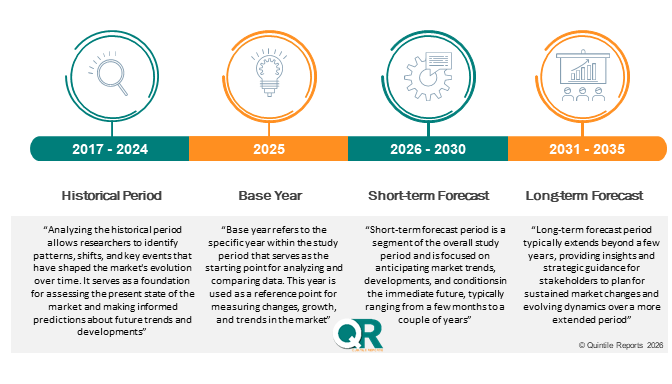
With 2025 as the base year, the Drone Services market is experiencing steady expansion driven by continuous innovation, rising demand across end-use industries, and rapid technological progress. Market participants are increasingly optimizing their go-to-market (GTM) strategies to capitalize on emerging opportunities and adapt to shifting competitive dynamics.
Looking ahead to 2035, the market is expected to maintain strong growth momentum, supported by sustained investments in research and development, strategic partnerships, and mergers and acquisitions. Companies that focus on innovation, agile GTM execution, and alignment with evolving customer needs are well positioned to achieve long-term success. The report provides in-depth insights into key market drivers, restraints, opportunities, and challenges across segments, regions, and countries, supported by robust qualitative and quantitative analysis spanning 2017 to 2035.
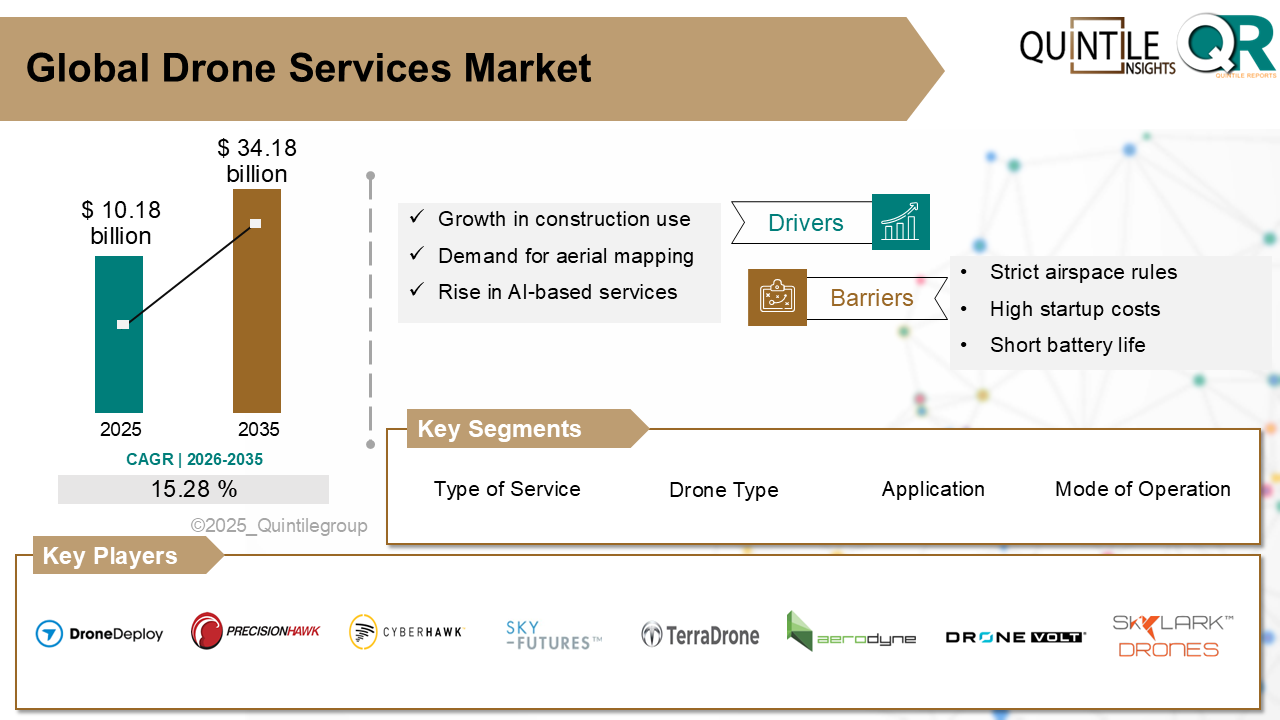
The Drone Services Market refers to the global and regional market for professional services delivered using unmanned aerial vehicles (UAVs), commonly known as drones. These services span across various industries and applications, including aerial photography and videography, mapping and surveying, inspection and monitoring, delivery and logistics, agriculture, construction, real estate, public safety, and environmental monitoring. Drone services are typically provided by specialised operators, technology firms, or integrated service providers, offering end-to-end solutions to both commercial and government clients.
Driven by advances in drone hardware, high-resolution sensors, GPS technologies, and AI-based data analytics, the market is rapidly evolving toward precision-based, data-driven solutions. Regulatory support, falling drone costs, and the rise of cloud-based fleet and data management platforms have further accelerated adoption. The drone services market includes both manual and autonomous operations, and is increasingly defined by its ability to reduce costs, improve safety, and increase operational efficiency in traditionally labour-intensive or hazardous environments.
The primary market driver for drone services is the growing demand for aerial images and data solutions in the agriculture, construction, mining, energy, and real estate industries. It is quick in capturing data, inexpensive in terms of cost, and more accurate relative to conventional ground surveys or manned aerial assets.
A second key propellant is regulatory easing and government support in several countries as well. Regulators of aviation around the world are gradually building formalized frameworks for beyond visual line of sight (BVLOS) flights, drone pilot licensing, and airspace integration.
Advances in drone technology, AI analytics, and cloud data processing are increasingly providing more capabilities to services. Modern drones now have high-definition video cameras, thermal imaging cameras, LiDAR sensors, and the ability to navigate on their own.
Cost reduction and risk mitigation also become efficient. Using drones to inspect dangerous sitese.g., oil rigs, high-tension power lines, or disaster areasreduces the number of people exposed to the dangerous areas. Not only is it cost-efficient, but it also enhances safety levels and project timelines.
Finally, with the rise of e-commerce and on-demand shipping, a new field has been created for drones. Companies are exploring drone deliveries to make deliveries faster, especially to remote or traffic-prone locations.
The strongest of the restraining factors in the market for drone services is the absence of harmonised and uniform regulations between nations. Confusing policies for line-of-sight flight, maximum altitude, no-fly zones, and special permissions discourage mass deployment. Continual adjustments in airspace policy and a lack of standardisation in commercial flights by drones make it difficult to develop services, particularly for cross-border flights or self-flown flights.
Flying drones equipped with high-definition cameras and sensors pose grave concerns regarding surveillance, individual privacy, and illegal data collection. Judicial liability and public outrage as a result of invasion of privacy serve as deterrents, particularly in urban and suburban regions. Second, drone data is normally transmitted via wireless networks, posing risks to hacking, spoofing, or illegal appropriation, positioning delicate industrial or governmental processes at stake.
Most business drones are also plagued by technological limitations such as short flight times (typically 2040 minutes) and restricted payload capacity. These conditions render drone services less efficient at long-distance missions, heavy hauling logistics, or continuous monitoring applications. While hybrid and hydrogen fuel technologies are in the pipeline, widespread adoption is still deterred by high costs, weight issues, and regulatory challenges.
Higher-end drone solutions typically involve more sophisticated sensors (e.g., LiDAR, thermal imaging) and AI-based analytics platforms. These are costly additions to equipment and post-processing, making high-end services inaccessible to small firms. Moreover, early market customers may not want to be locked into such services with untested ROI, extending the adoption curve of the cost-sensitive market.
The increasing sophistication of drone operations, mission planning, data gathering, and analysis calls for professional pilots. The worldwide pool of qualified drone pilots and geospatial analysts is still limited. Ineffective training centres and changing compliance programs worsen the skill shortage, which adds operational inefficiencies and restricts the growth of drone service providers.
North America dominates the world drone services market. The U.S. is underpinned by established regulations (FAA Part 107, BVLOS waivers) and substantive operational inroads across industries such as agriculture, construction, infrastructure inspection, logistics, and public safety. Service firms are scaling up from aerial photography to freight and beyond-visual-line-of-sight operations underpinned by venture capital backing and substantive commercial uptake by firms such as Volatus, DroneUp, and Amazon's Wing.
Europe observes consistent growth of drone use for inspection, mapping, surveying, agricultural, and delivery purposes. Harmonisation of member states, the EU's U-Space air traffic management, and EASA pilot license drive progress towards increased scale-up. The UK, and notably companies such as Tekever, are at the forefront in AI-driven inspection, emergency response, and rural logistics, creating employment and propelling regional aerial-tech development.
Asia-Pacific is the most rapidly growing market for drone services. China, India, Japan, and Southeast Asia each have big government-led drone schemes in agriculture, infrastructure inspection, emergency management, and logistics. China's low-altitude economy drive and India's DGCA reforms, such as the NIDAR Innovation Challenge, are driving precision agriculture, surveying, delivery trials, and disaster tracking.
Latin America is forging forward with precision farming, infrastructure mapping, environmental monitoring, and security use. Brazil is at the forefront of drone adoption in mining, agriculture, and construction. Disjointed regulation and conflicting infrastructure remain challenges. Governments and start-ups, though, continue to pour more money into training, certifying, and scaling aerial solutions for numerous disparate industries.
Development in M&EFAA (Middle East & Africa) relies upon infrastructure, security, and logistics. The Gulf states (UAE, Saudi Arabia) are adopting aerial mapping, oil-and-gas plant inspection, and public safety applications, occasionally with local manufacturing and regulatory regimes. Sub-Saharan Africa, notably South Africa, is increasingly using drones for mining surveys, agriculture, disaster response, training, and even the delivery of medicine.
The United States dominates the drone services market, driven by a leading regulatory ecosystem and a widening list of commercial uses. In the vanguard are the Federal Aviation Administration's (FAA) evolving regulatory approaches that have progressively opened the door to beyond-visual-line-of-sight (BVLOS) operations, nighttime flight waivers, and widened commercial use across sectors.
Industry sectors such as agriculture, energy, construction, and logisticsspecifically in states of Texas, California, and North Dakotaare quickly embracing drone services for uses ranging from aerial surveying, crop health analysis, utility inspection, to site mapping. The simplicity of launching drones versus other methodologies for gathering data is fueling high demand for commercial-grade drone service businesses within these fast-paced, developing sectors.
Parallel to this, American startups and giant service integrators are building AI-powered platforms to augment drone-based data collection, analytics, and automated reporting. These are technologies particularly well-suited for infrastructure inspection, emergency response, and environmental monitoringsectors where drones are becoming increasingly indispensable. The increasing demand for real-time, low-cost, and remote data solutions also augments the U.S. leadership position in commercial drone services adoption.
Germany is soon to become a leading European drone service hub, fueled by its high-tech manufacturing environment, solid infrastructure, and increasing focus on digitalisation across industrial applications. Industry 4.0 has become a priority with the German government, and drone services are building up at high speed for applications in precise inspection, monitoring construction, logistics, and farm surveying, providing low-cost, high-resolution real-time data capture.
Operators in states like North Rhine-Westphalia, Bavaria, and Baden-Wrttemberg are increasingly using drones for duties from inspecting rail and bridges to monitoring energy infrastructure. The services enhance business efficiency, minimise human risk in high-risk environments, and complement Germany's demand for scalable automated solutions in times of shortages in engineering and surveying professions.
The primary impetus for Japan's drone services market is the government promotion of higher applications of precision agriculture solutions to offset rural labour shortages and enhance agricultural efficiency. With a majority of more than 70% of Japan's agriculturalists being above the age of 65, drone-based services in crop monitoring, spraying, and yield analysis provide a scalable method for maintaining agricultural productivity with less labour. Such services are becoming more popular in tea estates, rice paddies, and fruit orchards, particularly in rural or hillside areas where manual labour is labour-intensive and expensive.
Japan's drone service providers are providing end-to-end solutions encompassing aerial imaging, data analysis, and artificial intelligence-based diagnosis for identification of pests, diseases, and nutrient deficiency. There is government support in the form of initiatives such as the "Smart Agriculture Demonstration Project" that subsidizes the running of drones and links local farmers with drone tech start-ups and universities. These partnerships are driving innovation in multispectral imaging, autonomous flight code development, and cloud management of crops.
The market for drone services is very competitive and is most driven by innovation and technological improvements in areas such as automation, data analysis, and smart operation. Businesses are paying more attention to developing platforms that combine end-to-end services, right from aerial data capture through cloud-based analytics to AI-based insights.
Drivers of differentiation include the extent of automation built within drone fleets, for example, autonomous flight, collision avoidance, and real-time processing. Companies that can offer sector-specific customisations for industries such as agriculture, infrastructure, public safety, and logistics are acquiring a competitive advantage by pursuing unique operational requirements.
Service delivery model flexibility is emerging as a leading competitive dimension. DaaS vendors are putting money into elastic fleet management platforms, cloud platforms of high throughput, and easy integration with customer workflows.
The capacity to scale up quickly geographically, learn to operate in alternative regulatory settings, and stay safety compliant offers such players strategic advantage. Such value-added services as AI-based mapping, thermal imaging, or multi-sensor payload integration make end-to-end drone solutions more attractive.
Yet another characteristic of competition is seen in operating effectiveness and partnerships within ecosystems. Operators of drones that have automated assistance, training modules, distant diagnostics, and modular hardware platforms are more likely to complete big contracts at scale without a cost to reliability.
Key players in the market are DroneDeploy, PrecisionHawk, Cyberhawk Innovations, Sky Futures, Terra Drone Corporation, Measure, Aerodyne Group, Parrot SA, DJI, Drone Volt, Phoenix Drone Services, Airpix, Zipline, Flytrex, Wing (Alphabet Inc.), Skyports, Heliguy, AirMap, Airware, Skylark Drones.
Our team of experienced researchers has meticulously gathered and analyzed data to deliver a thorough examination of market dynamics, competitive landscape, and emerging technologies. With a focus on delivering actionable intelligence, this report aims to empower decision-makers with the information needed to make informed choices and stay ahead of the competition. Whether you are a seasoned industry player or a new entrant, our market research report serves as a strategic tool to navigate the complexities of the market, aiding in successful business planning and growth strategies.
This chapter of our Drone Services market report provides an in-depth examination of the factors shaping the industry landscape. This section typically encompasses several key elements to offer a comprehensive understanding of the industry landscape such as market drivers & restraints analysis, market opportunities & trend analysis, market size & growth analysis, competitive analysis, SWOT analysis, business environment tools such as Porter's five forces & PESTEL analysis, Ansoff Matrix analysis, penetration & growth prospect analysis, regulatory framework & reimbursement scenario analysis, impact of macro & micro economic factors analysis such as Covid-19 impact, GDP growth, market inflation, U.S.- China trade war, Russia-Ukraine war impact, and supply chain analysis.
The segment analysis chapter of Drone Services market report is a critical section that delves into a detailed examination of the market's various segments. Segmentation involves dividing the market into distinct categories based on certain criteria to better understand and address the diverse needs of consumers. This chapter typically follows the introduction and provides a more granular view of the market, offering valuable insights for businesses and stakeholders. The components of the chapter lude segment definitions to understand the inclusions and exclusions of the study, assumptions, market size estimates and growth trend analysis of each segment, qualitative analysis of the segment, technological advancements, market penetration rate, market adoption rate, market share examination by each segment, segment growth drivers and restraint barriers, consumer behaviour and challenge analysis.
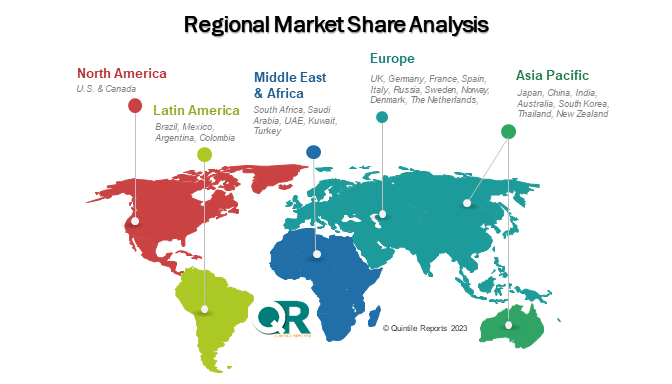
The chapter in Drone Services market research report is a pivotal section that examines and predicts the market dynamics and trends specific to different geographical regions. This chapter is crucial for businesses and stakeholders seeking a comprehensive understanding of how the market behaves across various locations, enabling them to tailor strategies and make informed decisions based on regional variations. The regional analysis chapter of our Drone Services market report is classified into regions & country-level. The chapter consists of North America (U.S., Canada), Europe (UK, Germany, France, Italy, Spain, Russia, Sweden, Denmark, Norway, Rest of Europe), Asia Pacific (Japan, China, India, Australia, South Korea, Thailand, Rest of Asia Pacific), Latin America (Brazil, Mexico, Argentina, Colombia, Rest of Latin America), Middle East & Africa (South Africa, Saudi Arabia, UAE, Kuwait, Rest of Middle East & Africa).
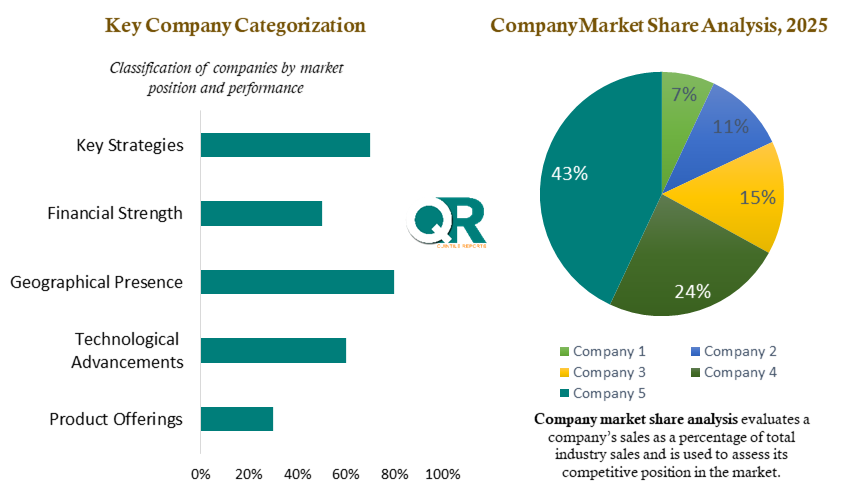
This section of a Drone Services market report is a crucial segment that provides a comprehensive overview of the competitive landscape within the market. This section is vital for businesses, investors, and stakeholders seeking insights into key players, their market positioning, strengths, weaknesses, strategies, and potential impacts on the overall market dynamics. The chapter includes research methodology used to analyse the market competition, list of key players operating in the market, detailed company profile section which includes company overview, business verticals, financial performance, product/services benchmarking, geographical presence, and strategic initiatives.
| Report Scope | Details |
| Report Version | 2026 |
| Growth Rate | CAGR of 15.28 from 2026 to 2035 |
| Base Year | 2025 |
| Actual Estimates / Historical Data | 2017 - 2024 |
| Forecast Period | 2026 - 2035 |
| Quantitative Units | Revenue in USD million/billion & CAGR from 2026 to 2035 |
| Country Scope | North America (U.S., Canada), Europe (UK, Germany, France, Italy, Spain, Russia, Sweden, Denmark, Norway, Rest of Europe), Asia Pacific (Japan, China, India, Australia, South Korea, Thailand, Rest of Asia Pacific), Latin America (Brazil, Mexico, Argentina, Colombia, Rest of Latin America), Middle East & Africa (South Africa, Saudi Arabia, UAE, Kuwait, Rest of Middle East & Africa). |
| The Segment Covered by Type of Service |
|
| The Segment Covered by Drone Type |
|
| Companies Covered |
|
| Report Coverage | Revenue forecast, company share, competitive landscape, growth factors, and trends |
| Free Customization Scope (Equivalent to 5 Analyst Working Days) | If you need specific information, which is not currently within the scope of the report, we will provide it to you as a part of the customization |

Statistics for the 2025 Drone Services market share, size, and revenue growth rate were created by Quintile Report™. Drone Services analysis includes a market forecast outlook for 2035 and a historical overview. Get a free PDF sample of this market analysis, please get in touch with our principal analyst at sales@quintilereports.com
List of Tables
Table 1 List of Abbreviation and acronyms
Table 2 List of Sources
Table 3 North America Global Drone Services Market, by Segment Analysis, (USD Million) 2017-2035
Table 4 North America Global Drone Services Market, by Region, (USD Million) 2017-2035
Table 5 U.S. Global Drone Services Market, by Segment Analysis, (USD Million) 2017-2035
Table 6 Canada Global Drone Services Market, by Segment Analysis, (USD Million) 2017-2035
Table 7 Europe Global Drone Services Market, by Segment Analysis, (USD Million) 2017-2035
Table 8 Europe Global Drone Services Market, by Region, (USD Million) 2017-2035
Table 9 Germany Global Drone Services Market, by Segment Analysis, (USD Million) 2017-2035
Table 10 U.K. Global Drone Services Market, by Segment Analysis, (USD Million) 2017-2035
Table 11 France Global Drone Services Market, by Segment Analysis, (USD Million) 2017-2035
Table 12 Italy Global Drone Services Market, by Segment Analysis, (USD Million) 2017-2035
Table 13 Spain Global Drone Services Market, by Segment Analysis, (USD Million) 2017-2035
Table 14 Sweden Global Drone Services Market, by Segment Analysis, (USD Million) 2017-2035
Table 15 Denmark Global Drone Services Market, by Segment Analysis, (USD Million) 2017-2035
Table 16 Norway Global Drone Services Market, by Segment Analysis, (USD Million) 2017-2035
Table 17 The Netherlands Global Drone Services Market, by Segment Analysis, (USD Million) 2017-2035
Table 18 Russia Global Drone Services Market, by Segment Analysis, (USD Million) 2017-2035
Table 19 Asia Pacific Global Drone Services Market, by Segment Analysis, (USD Million) 2017-2035
Table 20 Asia Pacific Global Drone Services Market, by Region, (USD Million) 2017-2035
Table 21 China Global Drone Services Market, by Segment Analysis, (USD Million) 2017-2035
Table 22 Japan Global Drone Services Market, by Segment Analysis, (USD Million) 2017-2035
Table 23 India Global Drone Services Market, by Segment Analysis, (USD Million) 2017-2035
Table 24 Australia Global Drone Services Market, by Segment Analysis, (USD Million) 2017-2035
Table 25 South Korea Global Drone Services Market, by Segment Analysis, (USD Million) 2017-2035
Table 26 Thailand Global Drone Services Market, by Segment Analysis, (USD Million) 2017-2035
Table 27 Latin America Global Drone Services Market, by Segment Analysis, (USD Million) 2017-2035
Table 28 Latin America Global Drone Services Market, by Region, (USD Million) 2017-2035
Table 29 Brazil Global Drone Services Market, by Segment Analysis, (USD Million) 2017-2035
Table 30 Mexico Global Drone Services Market, by Segment Analysis, (USD Million) 2017-2035
Table 31 Argentina Global Drone Services Market, by Segment Analysis, (USD Million) 2017-2035
Table 32 Middle East and Africa Global Drone Services Market, by Segment Analysis, (USD Million) 2017-2035
Table 33 Middle East and Africa Global Drone Services Market, by Region, (USD Million) 2017-2035
Table 34 South Africa Global Drone Services Market, by Segment Analysis, (USD Million) 2017-2035
Table 35 Saudi Arabia Global Drone Services Market, by Segment Analysis, (USD Million) 2017-2035
Table 36 UAE Global Drone Services Market, by Segment Analysis, (USD Million) 2017-2035
Table 37 Kuwait Global Drone Services Market, by Segment Analysis, (USD Million) 2017-2035
Table 38 Turkey Global Drone Services Market, by Segment Analysis, (USD Million) 2017-2035
Fig.1 Market research process
Fig.2 Market research approaches
Fig.3 Global Drone Services Market: market scenario
Fig.4 Global Drone Services Market competitive outlook
Fig.5 Global Drone Services Market driver analysis
Fig.6 Global Drone Services Market restraint analysis
Fig.7 Global Drone Services Market opportunity analysis
Fig.8 Global Drone Services Market trends analysis
Fig.9 Global Drone Services Market: Segment Analysis (Based on the scope)
Fig.10 Global Drone Services Market: regional analysis
Fig.11 Global market shares and leading market players
Fig.12 North America market share and leading players
Fig.13 Europe market share and leading players
Fig.14 Asia Pacific market share and leading players
Fig.15 Latin America market share and leading players
Fig.16 Middle East & Africa market share and leading players
Fig.17 North America, by country
Fig.18 North America
Fig.19 North America market estimates and forecast, 2017-2035
Fig.20 U.S.
Fig.21 Canada
Fig.22 Europe
Fig.23 Europe market estimates and forecast, 2017-2035
Fig.24 U.K.
Fig.25 Germany
Fig.26 France
Fig.27 Italy
Fig.28 Spain
Fig.29 Sweden
Fig.30 Denmark
Fig.31 Norway
Fig.32 The Netherlands
Fig.33 Russia
Fig.34 Asia Pacific
Fig.35 Asia Pacific market estimates and forecast, 2017-2035
Fig.36 China
Fig.37 Japan
Fig.38 India
Fig.39 Australia
Fig.40 South Korea
Fig.41 Thailand
Fig.42 Latin America
Fig.43 Latin America market estimates and forecast, 2017-2035
Fig.44 Brazil
Fig.45 Mexico
Fig.46 Argentina
Fig.47 Colombia
Fig.48 Middle East and Africa
Fig.49 Middle East and Africa market estimates and forecast, 2017-2035
Fig.50 Saudi Arabia
Fig.51 South Africa
Fig.52 UAE
Fig.53 Kuwait
Fig.54 Turkey
The Global Drone Services Market was valued at USD 10.18 billion in 2025 and is projected to reach USD 34.18 billion by 2035, expanding at a robust CAGR of 15.28% during the forecast period from 2026 to 2035. The Drone Services market report delivers a comprehensive industry assessment by analyzing macroeconomic conditions, technological advancements, regulatory frameworks, and evolving consumer behavior to provide a clear outlook on future growth potential.
With 2025 as the base year, the Drone Services market is experiencing steady expansion driven by continuous innovation, rising demand across end-use industries, and rapid technological progress. Market participants are increasingly optimizing their go-to-market (GTM) strategies to capitalize on emerging opportunities and adapt to shifting competitive dynamics.
Looking ahead to 2035, the market is expected to maintain strong growth momentum, supported by sustained investments in research and development, strategic partnerships, and mergers and acquisitions. Companies that focus on innovation, agile GTM execution, and alignment with evolving customer needs are well positioned to achieve long-term success. The report provides in-depth insights into key market drivers, restraints, opportunities, and challenges across segments, regions, and countries, supported by robust qualitative and quantitative analysis spanning 2017 to 2035.
The Drone Services Market refers to the global and regional market for professional services delivered using unmanned aerial vehicles (UAVs), commonly known as drones. These services span across various industries and applications, including aerial photography and videography, mapping and surveying, inspection and monitoring, delivery and logistics, agriculture, construction, real estate, public safety, and environmental monitoring. Drone services are typically provided by specialised operators, technology firms, or integrated service providers, offering end-to-end solutions to both commercial and government clients.
Driven by advances in drone hardware, high-resolution sensors, GPS technologies, and AI-based data analytics, the market is rapidly evolving toward precision-based, data-driven solutions. Regulatory support, falling drone costs, and the rise of cloud-based fleet and data management platforms have further accelerated adoption. The drone services market includes both manual and autonomous operations, and is increasingly defined by its ability to reduce costs, improve safety, and increase operational efficiency in traditionally labour-intensive or hazardous environments.
The primary market driver for drone services is the growing demand for aerial images and data solutions in the agriculture, construction, mining, energy, and real estate industries. It is quick in capturing data, inexpensive in terms of cost, and more accurate relative to conventional ground surveys or manned aerial assets.
A second key propellant is regulatory easing and government support in several countries as well. Regulators of aviation around the world are gradually building formalized frameworks for beyond visual line of sight (BVLOS) flights, drone pilot licensing, and airspace integration.
Advances in drone technology, AI analytics, and cloud data processing are increasingly providing more capabilities to services. Modern drones now have high-definition video cameras, thermal imaging cameras, LiDAR sensors, and the ability to navigate on their own.
Cost reduction and risk mitigation also become efficient. Using drones to inspect dangerous sitese.g., oil rigs, high-tension power lines, or disaster areasreduces the number of people exposed to the dangerous areas. Not only is it cost-efficient, but it also enhances safety levels and project timelines.
Finally, with the rise of e-commerce and on-demand shipping, a new field has been created for drones. Companies are exploring drone deliveries to make deliveries faster, especially to remote or traffic-prone locations.
The strongest of the restraining factors in the market for drone services is the absence of harmonised and uniform regulations between nations. Confusing policies for line-of-sight flight, maximum altitude, no-fly zones, and special permissions discourage mass deployment. Continual adjustments in airspace policy and a lack of standardisation in commercial flights by drones make it difficult to develop services, particularly for cross-border flights or self-flown flights.
Flying drones equipped with high-definition cameras and sensors pose grave concerns regarding surveillance, individual privacy, and illegal data collection. Judicial liability and public outrage as a result of invasion of privacy serve as deterrents, particularly in urban and suburban regions. Second, drone data is normally transmitted via wireless networks, posing risks to hacking, spoofing, or illegal appropriation, positioning delicate industrial or governmental processes at stake.
Most business drones are also plagued by technological limitations such as short flight times (typically 2040 minutes) and restricted payload capacity. These conditions render drone services less efficient at long-distance missions, heavy hauling logistics, or continuous monitoring applications. While hybrid and hydrogen fuel technologies are in the pipeline, widespread adoption is still deterred by high costs, weight issues, and regulatory challenges.
Higher-end drone solutions typically involve more sophisticated sensors (e.g., LiDAR, thermal imaging) and AI-based analytics platforms. These are costly additions to equipment and post-processing, making high-end services inaccessible to small firms. Moreover, early market customers may not want to be locked into such services with untested ROI, extending the adoption curve of the cost-sensitive market.
The increasing sophistication of drone operations, mission planning, data gathering, and analysis calls for professional pilots. The worldwide pool of qualified drone pilots and geospatial analysts is still limited. Ineffective training centres and changing compliance programs worsen the skill shortage, which adds operational inefficiencies and restricts the growth of drone service providers.
North America dominates the world drone services market. The U.S. is underpinned by established regulations (FAA Part 107, BVLOS waivers) and substantive operational inroads across industries such as agriculture, construction, infrastructure inspection, logistics, and public safety. Service firms are scaling up from aerial photography to freight and beyond-visual-line-of-sight operations underpinned by venture capital backing and substantive commercial uptake by firms such as Volatus, DroneUp, and Amazon's Wing.
Europe observes consistent growth of drone use for inspection, mapping, surveying, agricultural, and delivery purposes. Harmonisation of member states, the EU's U-Space air traffic management, and EASA pilot license drive progress towards increased scale-up. The UK, and notably companies such as Tekever, are at the forefront in AI-driven inspection, emergency response, and rural logistics, creating employment and propelling regional aerial-tech development.
Asia-Pacific is the most rapidly growing market for drone services. China, India, Japan, and Southeast Asia each have big government-led drone schemes in agriculture, infrastructure inspection, emergency management, and logistics. China's low-altitude economy drive and India's DGCA reforms, such as the NIDAR Innovation Challenge, are driving precision agriculture, surveying, delivery trials, and disaster tracking.
Latin America is forging forward with precision farming, infrastructure mapping, environmental monitoring, and security use. Brazil is at the forefront of drone adoption in mining, agriculture, and construction. Disjointed regulation and conflicting infrastructure remain challenges. Governments and start-ups, though, continue to pour more money into training, certifying, and scaling aerial solutions for numerous disparate industries.
Development in M&EFAA (Middle East & Africa) relies upon infrastructure, security, and logistics. The Gulf states (UAE, Saudi Arabia) are adopting aerial mapping, oil-and-gas plant inspection, and public safety applications, occasionally with local manufacturing and regulatory regimes. Sub-Saharan Africa, notably South Africa, is increasingly using drones for mining surveys, agriculture, disaster response, training, and even the delivery of medicine.
The United States dominates the drone services market, driven by a leading regulatory ecosystem and a widening list of commercial uses. In the vanguard are the Federal Aviation Administration's (FAA) evolving regulatory approaches that have progressively opened the door to beyond-visual-line-of-sight (BVLOS) operations, nighttime flight waivers, and widened commercial use across sectors.
Industry sectors such as agriculture, energy, construction, and logisticsspecifically in states of Texas, California, and North Dakotaare quickly embracing drone services for uses ranging from aerial surveying, crop health analysis, utility inspection, to site mapping. The simplicity of launching drones versus other methodologies for gathering data is fueling high demand for commercial-grade drone service businesses within these fast-paced, developing sectors.
Parallel to this, American startups and giant service integrators are building AI-powered platforms to augment drone-based data collection, analytics, and automated reporting. These are technologies particularly well-suited for infrastructure inspection, emergency response, and environmental monitoringsectors where drones are becoming increasingly indispensable. The increasing demand for real-time, low-cost, and remote data solutions also augments the U.S. leadership position in commercial drone services adoption.
Germany is soon to become a leading European drone service hub, fueled by its high-tech manufacturing environment, solid infrastructure, and increasing focus on digitalisation across industrial applications. Industry 4.0 has become a priority with the German government, and drone services are building up at high speed for applications in precise inspection, monitoring construction, logistics, and farm surveying, providing low-cost, high-resolution real-time data capture.
Operators in states like North Rhine-Westphalia, Bavaria, and Baden-Wrttemberg are increasingly using drones for duties from inspecting rail and bridges to monitoring energy infrastructure. The services enhance business efficiency, minimise human risk in high-risk environments, and complement Germany's demand for scalable automated solutions in times of shortages in engineering and surveying professions.
The primary impetus for Japan's drone services market is the government promotion of higher applications of precision agriculture solutions to offset rural labour shortages and enhance agricultural efficiency. With a majority of more than 70% of Japan's agriculturalists being above the age of 65, drone-based services in crop monitoring, spraying, and yield analysis provide a scalable method for maintaining agricultural productivity with less labour. Such services are becoming more popular in tea estates, rice paddies, and fruit orchards, particularly in rural or hillside areas where manual labour is labour-intensive and expensive.
Japan's drone service providers are providing end-to-end solutions encompassing aerial imaging, data analysis, and artificial intelligence-based diagnosis for identification of pests, diseases, and nutrient deficiency. There is government support in the form of initiatives such as the "Smart Agriculture Demonstration Project" that subsidizes the running of drones and links local farmers with drone tech start-ups and universities. These partnerships are driving innovation in multispectral imaging, autonomous flight code development, and cloud management of crops.
The market for drone services is very competitive and is most driven by innovation and technological improvements in areas such as automation, data analysis, and smart operation. Businesses are paying more attention to developing platforms that combine end-to-end services, right from aerial data capture through cloud-based analytics to AI-based insights.
Drivers of differentiation include the extent of automation built within drone fleets, for example, autonomous flight, collision avoidance, and real-time processing. Companies that can offer sector-specific customisations for industries such as agriculture, infrastructure, public safety, and logistics are acquiring a competitive advantage by pursuing unique operational requirements.
Service delivery model flexibility is emerging as a leading competitive dimension. DaaS vendors are putting money into elastic fleet management platforms, cloud platforms of high throughput, and easy integration with customer workflows.
The capacity to scale up quickly geographically, learn to operate in alternative regulatory settings, and stay safety compliant offers such players strategic advantage. Such value-added services as AI-based mapping, thermal imaging, or multi-sensor payload integration make end-to-end drone solutions more attractive.
Yet another characteristic of competition is seen in operating effectiveness and partnerships within ecosystems. Operators of drones that have automated assistance, training modules, distant diagnostics, and modular hardware platforms are more likely to complete big contracts at scale without a cost to reliability.
Key players in the market are DroneDeploy, PrecisionHawk, Cyberhawk Innovations, Sky Futures, Terra Drone Corporation, Measure, Aerodyne Group, Parrot SA, DJI, Drone Volt, Phoenix Drone Services, Airpix, Zipline, Flytrex, Wing (Alphabet Inc.), Skyports, Heliguy, AirMap, Airware, Skylark Drones.
Our team of experienced researchers has meticulously gathered and analyzed data to deliver a thorough examination of market dynamics, competitive landscape, and emerging technologies. With a focus on delivering actionable intelligence, this report aims to empower decision-makers with the information needed to make informed choices and stay ahead of the competition. Whether you are a seasoned industry player or a new entrant, our market research report serves as a strategic tool to navigate the complexities of the market, aiding in successful business planning and growth strategies.
This chapter of our Drone Services market report provides an in-depth examination of the factors shaping the industry landscape. This section typically encompasses several key elements to offer a comprehensive understanding of the industry landscape such as market drivers & restraints analysis, market opportunities & trend analysis, market size & growth analysis, competitive analysis, SWOT analysis, business environment tools such as Porter's five forces & PESTEL analysis, Ansoff Matrix analysis, penetration & growth prospect analysis, regulatory framework & reimbursement scenario analysis, impact of macro & micro economic factors analysis such as Covid-19 impact, GDP growth, market inflation, U.S.- China trade war, Russia-Ukraine war impact, and supply chain analysis.
The segment analysis chapter of Drone Services market report is a critical section that delves into a detailed examination of the market's various segments. Segmentation involves dividing the market into distinct categories based on certain criteria to better understand and address the diverse needs of consumers. This chapter typically follows the introduction and provides a more granular view of the market, offering valuable insights for businesses and stakeholders. The components of the chapter lude segment definitions to understand the inclusions and exclusions of the study, assumptions, market size estimates and growth trend analysis of each segment, qualitative analysis of the segment, technological advancements, market penetration rate, market adoption rate, market share examination by each segment, segment growth drivers and restraint barriers, consumer behaviour and challenge analysis.
The chapter in Drone Services market research report is a pivotal section that examines and predicts the market dynamics and trends specific to different geographical regions. This chapter is crucial for businesses and stakeholders seeking a comprehensive understanding of how the market behaves across various locations, enabling them to tailor strategies and make informed decisions based on regional variations. The regional analysis chapter of our Drone Services market report is classified into regions & country-level. The chapter consists of North America (U.S., Canada), Europe (UK, Germany, France, Italy, Spain, Russia, Sweden, Denmark, Norway, Rest of Europe), Asia Pacific (Japan, China, India, Australia, South Korea, Thailand, Rest of Asia Pacific), Latin America (Brazil, Mexico, Argentina, Colombia, Rest of Latin America), Middle East & Africa (South Africa, Saudi Arabia, UAE, Kuwait, Rest of Middle East & Africa).
This section of a Drone Services market report is a crucial segment that provides a comprehensive overview of the competitive landscape within the market. This section is vital for businesses, investors, and stakeholders seeking insights into key players, their market positioning, strengths, weaknesses, strategies, and potential impacts on the overall market dynamics. The chapter includes research methodology used to analyse the market competition, list of key players operating in the market, detailed company profile section which includes company overview, business verticals, financial performance, product/services benchmarking, geographical presence, and strategic initiatives.
| Report Scope | Details |
| Report Version | 2026 |
| Growth Rate | CAGR of 15.28 from 2026 to 2035 |
| Base Year | 2025 |
| Actual Estimates / Historical Data | 2017 - 2024 |
| Forecast Period | 2026 - 2035 |
| Quantitative Units | Revenue in USD million/billion & CAGR from 2026 to 2035 |
| Country Scope | North America (U.S., Canada), Europe (UK, Germany, France, Italy, Spain, Russia, Sweden, Denmark, Norway, Rest of Europe), Asia Pacific (Japan, China, India, Australia, South Korea, Thailand, Rest of Asia Pacific), Latin America (Brazil, Mexico, Argentina, Colombia, Rest of Latin America), Middle East & Africa (South Africa, Saudi Arabia, UAE, Kuwait, Rest of Middle East & Africa). |
| The Segment Covered by Type of Service |
|
| The Segment Covered by Drone Type |
|
| Companies Covered |
|
| Report Coverage | Revenue forecast, company share, competitive landscape, growth factors, and trends |
| Free Customization Scope (Equivalent to 5 Analyst Working Days) | If you need specific information, which is not currently within the scope of the report, we will provide it to you as a part of the customization |
Statistics for the 2025 Drone Services market share, size, and revenue growth rate were created by Quintile Report™. Drone Services analysis includes a market forecast outlook for 2035 and a historical overview. Get a free PDF sample of this market analysis, please get in touch with our principal analyst at sales@quintilereports.com
Table 1 List of Abbreviation and acronyms
Table 2 List of Sources
Table 3 North America Global Drone Services Market, by Segment Analysis, (USD Million) 2017-2035
Table 4 North America Global Drone Services Market, by Region, (USD Million) 2017-2035
Table 5 U.S. Global Drone Services Market, by Segment Analysis, (USD Million) 2017-2035
Table 6 Canada Global Drone Services Market, by Segment Analysis, (USD Million) 2017-2035
Table 7 Europe Global Drone Services Market, by Segment Analysis, (USD Million) 2017-2035
Table 8 Europe Global Drone Services Market, by Region, (USD Million) 2017-2035
Table 9 Germany Global Drone Services Market, by Segment Analysis, (USD Million) 2017-2035
Table 10 U.K. Global Drone Services Market, by Segment Analysis, (USD Million) 2017-2035
Table 11 France Global Drone Services Market, by Segment Analysis, (USD Million) 2017-2035
Table 12 Italy Global Drone Services Market, by Segment Analysis, (USD Million) 2017-2035
Table 13 Spain Global Drone Services Market, by Segment Analysis, (USD Million) 2017-2035
Table 14 Sweden Global Drone Services Market, by Segment Analysis, (USD Million) 2017-2035
Table 15 Denmark Global Drone Services Market, by Segment Analysis, (USD Million) 2017-2035
Table 16 Norway Global Drone Services Market, by Segment Analysis, (USD Million) 2017-2035
Table 17 The Netherlands Global Drone Services Market, by Segment Analysis, (USD Million) 2017-2035
Table 18 Russia Global Drone Services Market, by Segment Analysis, (USD Million) 2017-2035
Table 19 Asia Pacific Global Drone Services Market, by Segment Analysis, (USD Million) 2017-2035
Table 20 Asia Pacific Global Drone Services Market, by Region, (USD Million) 2017-2035
Table 21 China Global Drone Services Market, by Segment Analysis, (USD Million) 2017-2035
Table 22 Japan Global Drone Services Market, by Segment Analysis, (USD Million) 2017-2035
Table 23 India Global Drone Services Market, by Segment Analysis, (USD Million) 2017-2035
Table 24 Australia Global Drone Services Market, by Segment Analysis, (USD Million) 2017-2035
Table 25 South Korea Global Drone Services Market, by Segment Analysis, (USD Million) 2017-2035
Table 26 Thailand Global Drone Services Market, by Segment Analysis, (USD Million) 2017-2035
Table 27 Latin America Global Drone Services Market, by Segment Analysis, (USD Million) 2017-2035
Table 28 Latin America Global Drone Services Market, by Region, (USD Million) 2017-2035
Table 29 Brazil Global Drone Services Market, by Segment Analysis, (USD Million) 2017-2035
Table 30 Mexico Global Drone Services Market, by Segment Analysis, (USD Million) 2017-2035
Table 31 Argentina Global Drone Services Market, by Segment Analysis, (USD Million) 2017-2035
Table 32 Middle East and Africa Global Drone Services Market, by Segment Analysis, (USD Million) 2017-2035
Table 33 Middle East and Africa Global Drone Services Market, by Region, (USD Million) 2017-2035
Table 34 South Africa Global Drone Services Market, by Segment Analysis, (USD Million) 2017-2035
Table 35 Saudi Arabia Global Drone Services Market, by Segment Analysis, (USD Million) 2017-2035
Table 36 UAE Global Drone Services Market, by Segment Analysis, (USD Million) 2017-2035
Table 37 Kuwait Global Drone Services Market, by Segment Analysis, (USD Million) 2017-2035
Table 38 Turkey Global Drone Services Market, by Segment Analysis, (USD Million) 2017-2035
Fig.1 Market research process
Fig.2 Market research approaches
Fig.3 Global Drone Services Market: market scenario
Fig.4 Global Drone Services Market competitive outlook
Fig.5 Global Drone Services Market driver analysis
Fig.6 Global Drone Services Market restraint analysis
Fig.7 Global Drone Services Market opportunity analysis
Fig.8 Global Drone Services Market trends analysis
Fig.9 Global Drone Services Market: Segment Analysis (Based on the scope)
Fig.10 Global Drone Services Market: regional analysis
Fig.11 Global market shares and leading market players
Fig.12 North America market share and leading players
Fig.13 Europe market share and leading players
Fig.14 Asia Pacific market share and leading players
Fig.15 Latin America market share and leading players
Fig.16 Middle East & Africa market share and leading players
Fig.17 North America, by country
Fig.18 North America
Fig.19 North America market estimates and forecast, 2017-2035
Fig.20 U.S.
Fig.21 Canada
Fig.22 Europe
Fig.23 Europe market estimates and forecast, 2017-2035
Fig.24 U.K.
Fig.25 Germany
Fig.26 France
Fig.27 Italy
Fig.28 Spain
Fig.29 Sweden
Fig.30 Denmark
Fig.31 Norway
Fig.32 The Netherlands
Fig.33 Russia
Fig.34 Asia Pacific
Fig.35 Asia Pacific market estimates and forecast, 2017-2035
Fig.36 China
Fig.37 Japan
Fig.38 India
Fig.39 Australia
Fig.40 South Korea
Fig.41 Thailand
Fig.42 Latin America
Fig.43 Latin America market estimates and forecast, 2017-2035
Fig.44 Brazil
Fig.45 Mexico
Fig.46 Argentina
Fig.47 Colombia
Fig.48 Middle East and Africa
Fig.49 Middle East and Africa market estimates and forecast, 2017-2035
Fig.50 Saudi Arabia
Fig.51 South Africa
Fig.52 UAE
Fig.53 Kuwait
Fig.54 Turkey

A license granted to one user. Rules or conditions might be applied for e.g. the use of electric files (PDFs) or printings, depending on product.
A license granted to multiple users.
A license granted to a single business site/establishment.
A license granted to all employees within organisation access to the product.
Immediate / Within 24-48 hours - Working days
Online Payments with PayPal and CCavenue
You can order a report by picking any of the payment methods which is bank wire or online payment through any Debit/Credit card or PayPal.
Hard Copy
 U.S. : +1-201-772-7734