The Global Self-Loading Concrete Mixer Market was valued at USD 12.46 billion in 2025 and is projected to reach USD 24.18 billion by 2035, expanding at a robust CAGR of 8.48% during the forecast period from 2026 to 2035. The Self-Loading Concrete Mixer market report delivers a comprehensive industry assessment by analyzing macroeconomic conditions, technological advancements, regulatory frameworks, and evolving consumer behavior to provide a clear outlook on future growth potential.
With 2025 as the base year, the Self-Loading Concrete Mixer market is experiencing steady expansion driven by continuous innovation, rising demand across end-use industries, and rapid technological progress. Market participants are increasingly optimizing their go-to-market (GTM) strategies to capitalize on emerging opportunities and adapt to shifting competitive dynamics.
Looking ahead to 2035, the market is expected to maintain strong growth momentum, supported by sustained investments in research and development, strategic partnerships, and mergers and acquisitions. Companies that focus on innovation, agile GTM execution, and alignment with evolving customer needs are well positioned to achieve long-term success. The report provides in-depth insights into key market drivers, restraints, opportunities, and challenges across segments, regions, and countries, supported by robust qualitative and quantitative analysis spanning 2017 to 2035.
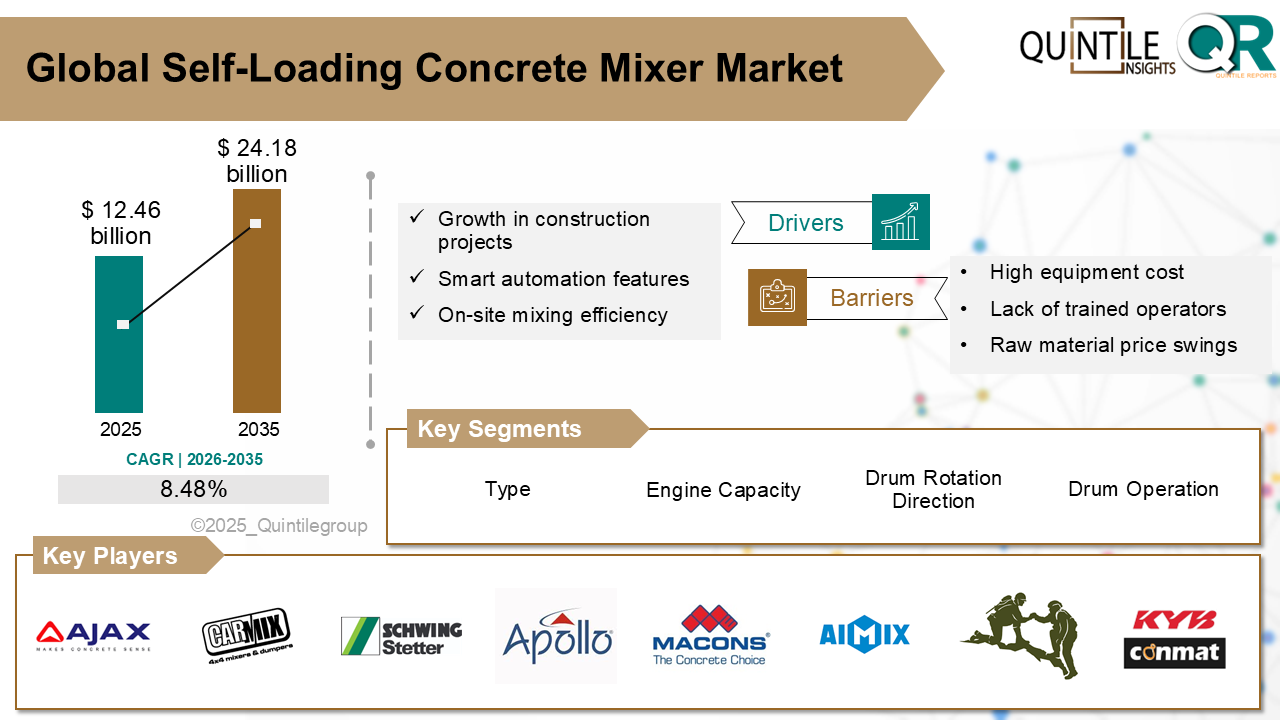
The self-loading concrete mixer market refers to the global and regional market for multifunctional construction equipment that combines the capabilities of a concrete mixer, loader, and transporter into a single, compact machine. Self-loading concrete mixers are designed to automatically load aggregates, mix concrete, and transport it directly to construction sites, eliminating the need for separate batching plants or manual mixing. These machines are widely used in small to medium-scale construction projects, road maintenance, infrastructure development, and remote or hard-to-reach job sites.
Equipped with features such as 360-degree rotating drums, adjustable water systems, onboard weighing, and operator cabins with joystick controls, self-loading mixers enhance jobsite productivity, reduce labour requirements, and offer real-time quality control. The market is driven by increasing demand for cost-efficient, mobile concrete production in emerging economies and infrastructure-focused regions. It serves construction companies, rental service providers, and contractors, with both domestic and export-oriented manufacturers offering a range of capacities and automation levels.
The most powerful driving factor for the market of self-loading concrete mixers is the increasing demand for efficient, mobile concrete mixing equipment in the building sector. These machines have a set of functionsloading, mixing, transporting, and dischargingand integrate them into one machine, significantly minimising the need for labour and independent machinery on-site.
Among the key supporting factors, the emergence of mechanisation gaining a foothold in the developing economies is noteworthy. Developing countries with uncontrolled rural expansion and urbanisation are constructing infrastructure, housing, and roads. All these areas have self-loading mixers as an electric-free, cost-effective option compared to conventional batching plants by providing on-site ready-mix concrete without electricity or complicated logistics.
Another major driver is the shortage of labor and increasing labor costs in all segments of construction. With reduced skilled labor, construction contractors look for equipment lowering labor and work. Self-loading mixers solve this problem by having one person to perform the entire task, while offering cost savings as well as improved productivity.
The economy is also reaping the rewards of increased investment in infrastructure upgradation, like smart cities, road widening, irrigation canals, and industrial estates. These projects demand fast, mobile, and accurate placement of concrete, which makes self-loading mixers the preferred machine for contractors looking for quick turnaround time and flexibility.
Finally, design improvement and technological innovation are driving adoption. New self-loading concrete mixers include GPS locationing, automatic water dosing systems that compensate for changes in mixer alignment, ergonomically designed cabs, and electronic batching screens, all designed to enhance precision, safety, and driver satisfaction.
Self-loading concrete mixers are sophisticated, versatile machines that integrate batching, mixing, and transportation capabilities, which greatly increase their purchase price and cost. Small builders and contractors with limited budgets consider the initial buying price a big barrier.
The combined mechanical and hydraulic components of self-loading mixers necessitate regular maintenance and prompt replacement of parts such as control valves, pumps, and mixing drums. Due to a lack of access to original spare parts and qualified service engineers in underdeveloped or distant places, prolonged downtimes and inefficiencies may ensue.
Use of self-loading concrete mixers demands an understanding of the machine and the composition of concrete. In the majority of the developing economies, insufficiently skilled operators become a constraint for the effective use of machines. Misapplication causes poor mix quality, deterioration of the machine, and exposure to health hazards. Thus, companies are burdened with the cost of training operators, i.e., higher onboarding costs and time, especially on short-duration or high-speed jobs.
Owing to their weight and volume, self-loading mixers fall under road transport legislation, such as axle weight limits and security compliance requirements. Restricted access or special permit requirements in some urban or border settings can slow deployment.
Although self-loading mixers are best suited to small and medium-sized operations, they are less effective with high-output applications like large highways, business districts, or skyscrapers. They have restricted batch size and output capacity in comparison to truck-mounted or stationary batching plants. Large contractors will hence skip self-loading mixers for high-output machines, thereby constraining market expansion to rural or niche-sized construction work.
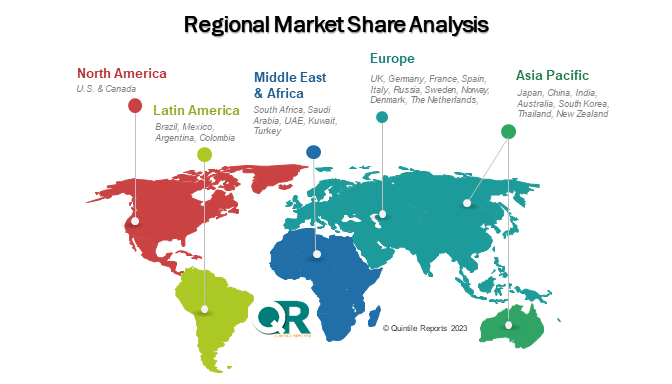
North America demonstrates consistent takeup of self-loading concrete mixers, particularly in Canada and the U.S. The equipment is used by contractors for bridge repair, rural residential construction, and rental fleets because of a need for mobile access and productivity for multi-site operations. IoT-based fleet management and engines with over emission compliance propel takeup further.
The market of Europe is supplemented with strict environmental regulations and upgraded infrastructure. Germany, France, and Italy are employing hybrid-electric mixers to match the speed with green building codes. East European markets also employ compact units for logistics centres and public works construction through regional subsidies on low-emission machinery.
Asia-Pacific is driving global adoption, driven by huge urbanisation and infrastructure spending in China, India, Southeast Asia, and Australia/New Zealand. Rural road schemes and smart cities are being government-funded, driving widespread take-up of self-loading mixers. Factory capacity is being increased by local contractors, finance-leasing schemes are being offered, and digital weigh systems and GPS systems are being implemented to drive accuracy.
Latin America is gradually moving forward with additional infrastructure projects occurring in Brazil, Mexico, and Peru. Contractors favour these mixers due to their flexibility in both urban and rural environments, lower reliance on third-party vendors and off-site batching. Local price competition and manufacturer availability support this market's expansion.
It is spurred by large-scale infrastructure and rural development in GCC countries and sub-Saharan countries in Middle East & Africa. Self-loading mixers that are lightweight and strong are encouraged by remote-site use, humanitarian relief, and community projects. Equipment with low water-level handling and challenging terrain capabilities is highly sought after.
The United States dominates the self-loading concrete mixer market, driven by the recurring shortage of skilled labour and the growing need for jobsite automation...
The United States dominates the self-loading concrete mixer market, driven by the recurring shortage of skilled labour and the growing need for jobsite automation. As construction firms are unable to locate skilled operators for batching and hauling concrete, self-loading mixers are proving to be a cost-effective and labour-saving option. Self-loading mixers consolidate functions by bringing multiple functions under one and, thus, minimising the requirement for individual batching plants, along with several crew members.
On rural public works projects in Texas, Arizona, and the Midwest, where construction activity is spotty, self-loading mixers are used by contractors to maintain consistent concrete quality in hard-to-reach places. Single-source convenience and space-saving efficiency make them well-suited for remote locations, emergency repair, and utility uses where conventional concrete delivery is not feasible.
The American market is also seeing growing interest from rental firms and municipal authorities looking to minimize delays in work and enhance response for public works. With automation at the forefront of construction activities, manufacturers are enhancing these mixers with simplicity controls for use, all-terrain capabilities, and minimal maintenance needs for addressing American productivity as well as simplicity requirements.
Germany is fast becoming an important market for self-loading concrete mixers (SLCMs) within Europe, driven mainly by the increasing requirement for labour-saving, site-friendly building applications. Driven by rising urban redevelopment, infrastructure development, and rural housing projects, contractors are turning towards SLCMs to minimise the use of several machines and manpower. The machine's capability to load, mix, and discharge on-site concrete also complements Germany's transition to mechanised, compact, and efficient on-site activities, particularly in urban areas with limited space, such as Berlin, Munich, and Hamburg.
The German building industry also experiences endemic skill shortages, so that large and mid-sized companies are procuring multipurpose machines to sustain output. SLCMs minimise the requirement for independent batching plants and transit mixers and enable smaller crews to serve off-site or time-constrained projects more effectively. The civil works and municipal-level contracts are particularly affected where logistical limitations are prevalent and deployment speed is a priority.
In addition, Germany's focus on producing high-quality and sustainable standards has encouraged market leaders like Schwing Stetter and Liebherr to introduce SLCMs with improved features such as GPS guidance, auto-batching machines, and low-emission technology. All these technologies, coupled with increasing demand from rental fleets and modular builders, are making the domestic market more consolidated and Germany a leader for compact concrete solutions in the EU.
Increasing construction efficiency requirements in the rural and remote regions, where conventional batching plants and hand-mixing are impossible, are the primary motivator for Japan's self-loading concrete mixer (SLCM) market. Japan's hilly topography and dispersed rural population require multi-functional, one-stop mixers to load, mix, and unload at the site independently of large infrastructure.
Fabricators are responding with durable, mobile SLCMs that save labour requirements and transportation costs. The equipment improves productivity by combining loading, mixing, and dispensing into a single unit, perfect for highway maintenance, bridge work, and utility in rural locations. The machines' mobility and independence make them a necessary component of operations where conventional concrete logistics are costly or out of reach.
Technological innovation is helping. International and Japanese OEMs are fitting SLCMs with telemetry, digital scales, GPS-dose based, and, more and more, hybrid or electric drives. Those features enhance precision, minimize emissions, and ease user operationmaking monitoring SLCMs an attractive option for small contractors and municipalities looking to increase productivity while handling scarce human resources and tricky ground.
Market-leading manufacturers compete aggressively on loading efficiencythe speed and precision at which the mixer can load, mix, and off-load concrete in-place. Computerised models using hydraulic systems, intelligent sensors, and chute designs optimised for loading minimise labour inputs and preparation time. By tackling these steps with top priority on loading efficiency, contractors can finish work quicker, lower labour costs, and quickly react to site requirements, making it a differentiator for adoption decisions.
To take advantage of this, manufacturers are developing mixers with sophisticated controls that dynamically adjust mixing cycles and enhance consistency under differing field conditions. Telematics integration for load monitoring, mixer auto-adjustment, and chassis optimisation even increases productivity levels.
Makers that provide modular design capabilitye.g., changeable drums and user-programmable outriggershave an advantage in that they allow contractors to tailor machines to project requirements without compromising the critical loading efficiency benefit.
Lastly, loading efficiency is the industry's foundation: it has a direct effect on project schedules, resource utilization, and bottom-line profitability to operators. Organizations that can show enhanced load-to-placement performance, along with even, smooth operation, will have a competitive advantage in competitive bidding and long-term vehicle planning.
Key players in the market are FIORI GROUP S.p.A., Ajax Engineering Pvt. Ltd., Carmix (Metalgalante S.r.l.), Schwing Stetter India Pvt. Ltd., Apollo Inffratech Pvt. Ltd., Macons Equipments Pvt. Ltd., Aimix Group Co., Ltd., Dieci S.r.l., AUSA, Henan Huaning Machinery Equipment Co., Ltd., Zhengzhou Unique Industrial Equipment Co., Ltd., KYB-Conmat Pvt. Ltd., Officine Piccini S.p.A., Lino Sella World, XCMG Group.
In May 2025, Atlantic unveiled a new line of compact, 4-wheel-drive diesel self-loading concrete mixers featuring automatic batching, load-cell weighing, and rugged designdesigned to streamline concrete production and delivery in urban and remote sites, with plug-and-play controls and full on-site operation.
In 2025, Apollo Carmix (India/Italy) spotlighted new 2025 self-loading mixer models featuring IoT integration, hybrid/diesel configurations, and eco-friendly designs, including remote diagnostics and efficient mixing trendsrevealed in a series of tech-focus updates.
Our team of experienced researchers has meticulously gathered and analyzed data to deliver a thorough examination of market dynamics, competitive landscape, and emerging technologies. With a focus on delivering actionable intelligence, this report aims to empower decision-makers with the information needed to make informed choices and stay ahead of the competition. Whether you are a seasoned industry player or a new entrant, our market research report serves as a strategic tool to navigate the complexities of the market, aiding in successful business planning and growth strategies.
This chapter of our Self-Loading Concrete Mixer market report provides an in-depth examination of the factors shaping the industry landscape. This section typically encompasses several key elements to offer a comprehensive understanding of the industry landscape such as market drivers & restraints analysis, market opportunities & trend analysis, market size & growth analysis, competitive analysis, SWOT analysis, business environment tools such as Porter's five forces & PESTEL analysis, Ansoff Matrix analysis, penetration & growth prospect analysis, regulatory framework & reimbursement scenario analysis, impact of macro & micro economic factors analysis such as Covid-19 impact, GDP growth, market inflation, U.S.- China trade war, Russia-Ukraine war impact, and supply chain analysis.
The segment analysis chapter of Self-Loading Concrete Mixer market report is a critical section that delves into a detailed examination of the market's various segments. Segmentation involves dividing the market into distinct categories based on certain criteria to better understand and address the diverse needs of consumers. This chapter typically follows the introduction and provides a more granular view of the market, offering valuable insights for businesses and stakeholders. The components of the chapter lude segment definitions to understand the inclusions and exclusions of the study, assumptions, market size estimates and growth trend analysis of each segment, qualitative analysis of the segment, technological advancements, market penetration rate, market adoption rate, market share examination by each segment, segment growth drivers and restraint barriers, consumer behaviour and challenge analysis.
The chapter in Self-Loading Concrete Mixer market research report is a pivotal section that examines and predicts the market dynamics and trends specific to different geographical regions. This chapter is crucial for businesses and stakeholders seeking a comprehensive understanding of how the market behaves across various locations, enabling them to tailor strategies and make informed decisions based on regional variations. The regional analysis chapter of our Self-Loading Concrete Mixer market report is classified into regions & country-level. The chapter consists of North America (U.S., Canada), Europe (UK, Germany, France, Italy, Spain, Russia, Sweden, Denmark, Norway, Rest of Europe), Asia Pacific (Japan, China, India, Australia, South Korea, Thailand, Rest of Asia Pacific), Latin America (Brazil, Mexico, Argentina, Colombia, Rest of Latin America), Middle East & Africa (South Africa, Saudi Arabia, UAE, Kuwait, Rest of Middle East & Africa).
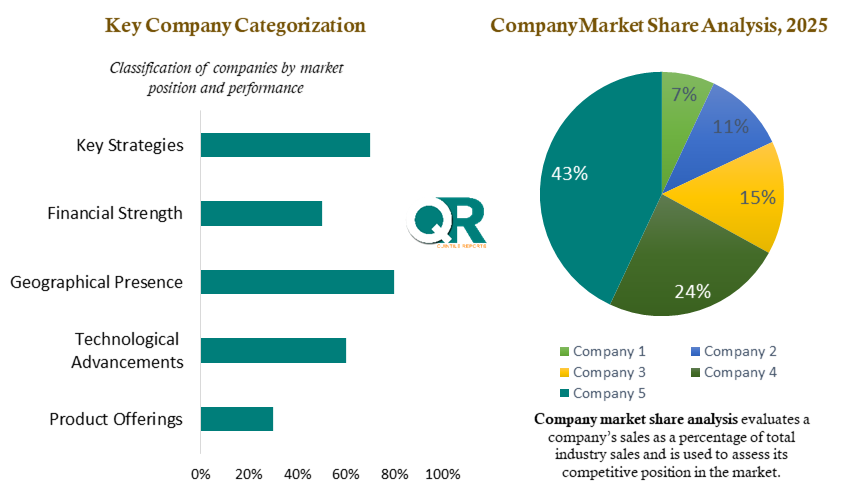
This section of a Self-Loading Concrete Mixer market report is a crucial segment that provides a comprehensive overview of the competitive landscape within the market. This section is vital for businesses, investors, and stakeholders seeking insights into key players, their market positioning, strengths, weaknesses, strategies, and potential impacts on the overall market dynamics. The chapter includes research methodology used to analyse the market competition, list of key players operating in the market, detailed company profile section which includes company overview, business verticals, financial performance, product/services benchmarking, geographical presence, and strategic initiatives.
| Report Scope | Details |
| Report Version | 2026 |
| Growth Rate | CAGR of 8.48 from 2026 to 2035 |
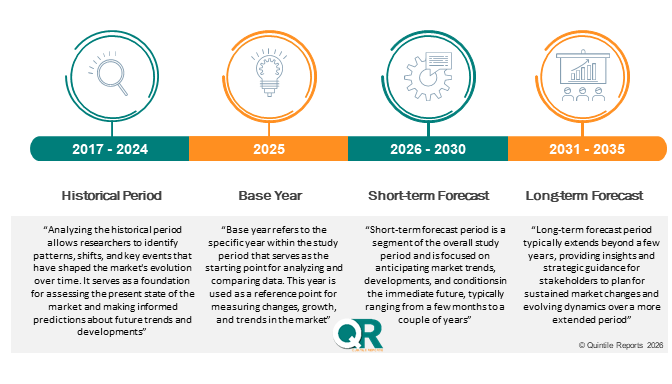
| Base Year | 2025 |
| Actual Estimates / Historical Data | 2017 - 2024 |
| Forecast Period | 2026 - 2035 |
| Quantitative Units | Revenue in USD million/billion & CAGR from 2026 to 2035 |
| Country Scope | North America (U.S., Canada), Europe (UK, Germany, France, Italy, Spain, Russia, Sweden, Denmark, Norway, Rest of Europe), Asia Pacific (Japan, China, India, Australia, South Korea, Thailand, Rest of Asia Pacific), Latin America (Brazil, Mexico, Argentina, Colombia, Rest of Latin America), Middle East & Africa (South Africa, Saudi Arabia, UAE, Kuwait, Rest of Middle East & Africa). |
| The Segment Covered by Type (Capacity) |
|
| The Segment Covered by Engine & Mobility |
|
| Companies Covered |
|
| Report Coverage | Revenue forecast, company share, competitive landscape, growth factors, and trends |
| Free Customization Scope (Equivalent to 5 Analyst Working Days) | If you need specific information, which is not currently within the scope of the report, we will provide it to you as a part of the customization |

Statistics for the 2025 Self-Loading Concrete Mixer market share, size, and revenue growth rate were created by Quintile Report™. Self-Loading Concrete Mixer analysis includes a market forecast outlook for 2035 and a historical overview. Get a free PDF sample of this market analysis, please get in touch with our principal analyst at sales@quintilereports.com
List of Tables
Table 1 List of Abbreviation and acronyms
Table 2 List of Sources
Table 3 North America Global Self-Loading Concrete Mixer Market, by Segment Analysis, (USD Million) 2017-2035
Table 4 North America Global Self-Loading Concrete Mixer Market, by Region, (USD Million) 2017-2035
Table 5 U.S. Global Self-Loading Concrete Mixer Market, by Segment Analysis, (USD Million) 2017-2035
Table 6 Canada Global Self-Loading Concrete Mixer Market, by Segment Analysis, (USD Million) 2017-2035
Table 7 Europe Global Self-Loading Concrete Mixer Market, by Segment Analysis, (USD Million) 2017-2035
Table 8 Europe Global Self-Loading Concrete Mixer Market, by Region, (USD Million) 2017-2035
Table 9 Germany Global Self-Loading Concrete Mixer Market, by Segment Analysis, (USD Million) 2017-2035
Table 10 U.K. Global Self-Loading Concrete Mixer Market, by Segment Analysis, (USD Million) 2017-2035
Table 11 France Global Self-Loading Concrete Mixer Market, by Segment Analysis, (USD Million) 2017-2035
Table 12 Italy Global Self-Loading Concrete Mixer Market, by Segment Analysis, (USD Million) 2017-2035
Table 13 Spain Global Self-Loading Concrete Mixer Market, by Segment Analysis, (USD Million) 2017-2035
Table 14 Sweden Global Self-Loading Concrete Mixer Market, by Segment Analysis, (USD Million) 2017-2035
Table 15 Denmark Global Self-Loading Concrete Mixer Market, by Segment Analysis, (USD Million) 2017-2035
Table 16 Norway Global Self-Loading Concrete Mixer Market, by Segment Analysis, (USD Million) 2017-2035
Table 17 The Netherlands Global Self-Loading Concrete Mixer Market, by Segment Analysis, (USD Million) 2017-2035
Table 18 Russia Global Self-Loading Concrete Mixer Market, by Segment Analysis, (USD Million) 2017-2035
Table 19 Asia Pacific Global Self-Loading Concrete Mixer Market, by Segment Analysis, (USD Million) 2017-2035
Table 20 Asia Pacific Global Self-Loading Concrete Mixer Market, by Region, (USD Million) 2017-2035
Table 21 China Global Self-Loading Concrete Mixer Market, by Segment Analysis, (USD Million) 2017-2035
Table 22 Japan Global Self-Loading Concrete Mixer Market, by Segment Analysis, (USD Million) 2017-2035
Table 23 India Global Self-Loading Concrete Mixer Market, by Segment Analysis, (USD Million) 2017-2035
Table 24 Australia Global Self-Loading Concrete Mixer Market, by Segment Analysis, (USD Million) 2017-2035
Table 25 South Korea Global Self-Loading Concrete Mixer Market, by Segment Analysis, (USD Million) 2017-2035
Table 26 Thailand Global Self-Loading Concrete Mixer Market, by Segment Analysis, (USD Million) 2017-2035
Table 27 Latin America Global Self-Loading Concrete Mixer Market, by Segment Analysis, (USD Million) 2017-2035
Table 28 Latin America Global Self-Loading Concrete Mixer Market, by Region, (USD Million) 2017-2035
Table 29 Brazil Global Self-Loading Concrete Mixer Market, by Segment Analysis, (USD Million) 2017-2035
Table 30 Mexico Global Self-Loading Concrete Mixer Market, by Segment Analysis, (USD Million) 2017-2035
Table 31 Argentina Global Self-Loading Concrete Mixer Market, by Segment Analysis, (USD Million) 2017-2035
Table 32 Middle East and Africa Global Self-Loading Concrete Mixer Market, by Segment Analysis, (USD Million) 2017-2035
Table 33 Middle East and Africa Global Self-Loading Concrete Mixer Market, by Region, (USD Million) 2017-2035
Table 34 South Africa Global Self-Loading Concrete Mixer Market, by Segment Analysis, (USD Million) 2017-2035
Table 35 Saudi Arabia Global Self-Loading Concrete Mixer Market, by Segment Analysis, (USD Million) 2017-2035
Table 36 UAE Global Self-Loading Concrete Mixer Market, by Segment Analysis, (USD Million) 2017-2035
Table 37 Kuwait Global Self-Loading Concrete Mixer Market, by Segment Analysis, (USD Million) 2017-2035
Table 38 Turkey Global Self-Loading Concrete Mixer Market, by Segment Analysis, (USD Million) 2017-2035
Fig.1 Market research process
Fig.2 Market research approaches
Fig.3 Global Self-Loading Concrete Mixer Market: market scenario
Fig.4 Global Self-Loading Concrete Mixer Market competitive outlook
Fig.5 Global Self-Loading Concrete Mixer Market driver analysis
Fig.6 Global Self-Loading Concrete Mixer Market restraint analysis
Fig.7 Global Self-Loading Concrete Mixer Market opportunity analysis
Fig.8 Global Self-Loading Concrete Mixer Market trends analysis
Fig.9 Global Self-Loading Concrete Mixer Market: Segment Analysis (Based on the scope)
Fig.10 Global Self-Loading Concrete Mixer Market: regional analysis
Fig.11 Global market shares and leading market players
Fig.12 North America market share and leading players
Fig.13 Europe market share and leading players
Fig.14 Asia Pacific market share and leading players
Fig.15 Latin America market share and leading players
Fig.16 Middle East & Africa market share and leading players
Fig.17 North America, by country
Fig.18 North America
Fig.19 North America market estimates and forecast, 2017-2035
Fig.20 U.S.
Fig.21 Canada
Fig.22 Europe
Fig.23 Europe market estimates and forecast, 2017-2035
Fig.24 U.K.
Fig.25 Germany
Fig.26 France
Fig.27 Italy
Fig.28 Spain
Fig.29 Sweden
Fig.30 Denmark
Fig.31 Norway
Fig.32 The Netherlands
Fig.33 Russia
Fig.34 Asia Pacific
Fig.35 Asia Pacific market estimates and forecast, 2017-2035
Fig.36 China
Fig.37 Japan
Fig.38 India
Fig.39 Australia
Fig.40 South Korea
Fig.41 Thailand
Fig.42 Latin America
Fig.43 Latin America market estimates and forecast, 2017-2035
Fig.44 Brazil
Fig.45 Mexico
Fig.46 Argentina
Fig.47 Colombia
Fig.48 Middle East and Africa
Fig.49 Middle East and Africa market estimates and forecast, 2017-2035
Fig.50 Saudi Arabia
Fig.51 South Africa
Fig.52 UAE
Fig.53 Kuwait
Fig.54 Turkey
The Global Self-Loading Concrete Mixer Market was valued at USD 12.46 billion in 2025 and is projected to reach USD 24.18 billion by 2035, expanding at a robust CAGR of 8.48% during the forecast period from 2026 to 2035. The Self-Loading Concrete Mixer market report delivers a comprehensive industry assessment by analyzing macroeconomic conditions, technological advancements, regulatory frameworks, and evolving consumer behavior to provide a clear outlook on future growth potential.
With 2025 as the base year, the Self-Loading Concrete Mixer market is experiencing steady expansion driven by continuous innovation, rising demand across end-use industries, and rapid technological progress. Market participants are increasingly optimizing their go-to-market (GTM) strategies to capitalize on emerging opportunities and adapt to shifting competitive dynamics.
Looking ahead to 2035, the market is expected to maintain strong growth momentum, supported by sustained investments in research and development, strategic partnerships, and mergers and acquisitions. Companies that focus on innovation, agile GTM execution, and alignment with evolving customer needs are well positioned to achieve long-term success. The report provides in-depth insights into key market drivers, restraints, opportunities, and challenges across segments, regions, and countries, supported by robust qualitative and quantitative analysis spanning 2017 to 2035.
The self-loading concrete mixer market refers to the global and regional market for multifunctional construction equipment that combines the capabilities of a concrete mixer, loader, and transporter into a single, compact machine. Self-loading concrete mixers are designed to automatically load aggregates, mix concrete, and transport it directly to construction sites, eliminating the need for separate batching plants or manual mixing. These machines are widely used in small to medium-scale construction projects, road maintenance, infrastructure development, and remote or hard-to-reach job sites.
Equipped with features such as 360-degree rotating drums, adjustable water systems, onboard weighing, and operator cabins with joystick controls, self-loading mixers enhance jobsite productivity, reduce labour requirements, and offer real-time quality control. The market is driven by increasing demand for cost-efficient, mobile concrete production in emerging economies and infrastructure-focused regions. It serves construction companies, rental service providers, and contractors, with both domestic and export-oriented manufacturers offering a range of capacities and automation levels.
The most powerful driving factor for the market of self-loading concrete mixers is the increasing demand for efficient, mobile concrete mixing equipment in the building sector. These machines have a set of functionsloading, mixing, transporting, and dischargingand integrate them into one machine, significantly minimising the need for labour and independent machinery on-site.
Among the key supporting factors, the emergence of mechanisation gaining a foothold in the developing economies is noteworthy. Developing countries with uncontrolled rural expansion and urbanisation are constructing infrastructure, housing, and roads. All these areas have self-loading mixers as an electric-free, cost-effective option compared to conventional batching plants by providing on-site ready-mix concrete without electricity or complicated logistics.
Another major driver is the shortage of labor and increasing labor costs in all segments of construction. With reduced skilled labor, construction contractors look for equipment lowering labor and work. Self-loading mixers solve this problem by having one person to perform the entire task, while offering cost savings as well as improved productivity.
The economy is also reaping the rewards of increased investment in infrastructure upgradation, like smart cities, road widening, irrigation canals, and industrial estates. These projects demand fast, mobile, and accurate placement of concrete, which makes self-loading mixers the preferred machine for contractors looking for quick turnaround time and flexibility.
Finally, design improvement and technological innovation are driving adoption. New self-loading concrete mixers include GPS locationing, automatic water dosing systems that compensate for changes in mixer alignment, ergonomically designed cabs, and electronic batching screens, all designed to enhance precision, safety, and driver satisfaction.
Self-loading concrete mixers are sophisticated, versatile machines that integrate batching, mixing, and transportation capabilities, which greatly increase their purchase price and cost. Small builders and contractors with limited budgets consider the initial buying price a big barrier.
The combined mechanical and hydraulic components of self-loading mixers necessitate regular maintenance and prompt replacement of parts such as control valves, pumps, and mixing drums. Due to a lack of access to original spare parts and qualified service engineers in underdeveloped or distant places, prolonged downtimes and inefficiencies may ensue.
Use of self-loading concrete mixers demands an understanding of the machine and the composition of concrete. In the majority of the developing economies, insufficiently skilled operators become a constraint for the effective use of machines. Misapplication causes poor mix quality, deterioration of the machine, and exposure to health hazards. Thus, companies are burdened with the cost of training operators, i.e., higher onboarding costs and time, especially on short-duration or high-speed jobs.
Owing to their weight and volume, self-loading mixers fall under road transport legislation, such as axle weight limits and security compliance requirements. Restricted access or special permit requirements in some urban or border settings can slow deployment.
Although self-loading mixers are best suited to small and medium-sized operations, they are less effective with high-output applications like large highways, business districts, or skyscrapers. They have restricted batch size and output capacity in comparison to truck-mounted or stationary batching plants. Large contractors will hence skip self-loading mixers for high-output machines, thereby constraining market expansion to rural or niche-sized construction work.
North America demonstrates consistent takeup of self-loading concrete mixers, particularly in Canada and the U.S. The equipment is used by contractors for bridge repair, rural residential construction, and rental fleets because of a need for mobile access and productivity for multi-site operations. IoT-based fleet management and engines with over emission compliance propel takeup further.
The market of Europe is supplemented with strict environmental regulations and upgraded infrastructure. Germany, France, and Italy are employing hybrid-electric mixers to match the speed with green building codes. East European markets also employ compact units for logistics centres and public works construction through regional subsidies on low-emission machinery.
Asia-Pacific is driving global adoption, driven by huge urbanisation and infrastructure spending in China, India, Southeast Asia, and Australia/New Zealand. Rural road schemes and smart cities are being government-funded, driving widespread take-up of self-loading mixers. Factory capacity is being increased by local contractors, finance-leasing schemes are being offered, and digital weigh systems and GPS systems are being implemented to drive accuracy.
Latin America is gradually moving forward with additional infrastructure projects occurring in Brazil, Mexico, and Peru. Contractors favour these mixers due to their flexibility in both urban and rural environments, lower reliance on third-party vendors and off-site batching. Local price competition and manufacturer availability support this market's expansion.
It is spurred by large-scale infrastructure and rural development in GCC countries and sub-Saharan countries in Middle East & Africa. Self-loading mixers that are lightweight and strong are encouraged by remote-site use, humanitarian relief, and community projects. Equipment with low water-level handling and challenging terrain capabilities is highly sought after.
The United States dominates the self-loading concrete mixer market, driven by the recurring shortage of skilled labour and the growing need for jobsite automation...
The United States dominates the self-loading concrete mixer market, driven by the recurring shortage of skilled labour and the growing need for jobsite automation. As construction firms are unable to locate skilled operators for batching and hauling concrete, self-loading mixers are proving to be a cost-effective and labour-saving option. Self-loading mixers consolidate functions by bringing multiple functions under one and, thus, minimising the requirement for individual batching plants, along with several crew members.
On rural public works projects in Texas, Arizona, and the Midwest, where construction activity is spotty, self-loading mixers are used by contractors to maintain consistent concrete quality in hard-to-reach places. Single-source convenience and space-saving efficiency make them well-suited for remote locations, emergency repair, and utility uses where conventional concrete delivery is not feasible.
The American market is also seeing growing interest from rental firms and municipal authorities looking to minimize delays in work and enhance response for public works. With automation at the forefront of construction activities, manufacturers are enhancing these mixers with simplicity controls for use, all-terrain capabilities, and minimal maintenance needs for addressing American productivity as well as simplicity requirements.
Germany is fast becoming an important market for self-loading concrete mixers (SLCMs) within Europe, driven mainly by the increasing requirement for labour-saving, site-friendly building applications. Driven by rising urban redevelopment, infrastructure development, and rural housing projects, contractors are turning towards SLCMs to minimise the use of several machines and manpower. The machine's capability to load, mix, and discharge on-site concrete also complements Germany's transition to mechanised, compact, and efficient on-site activities, particularly in urban areas with limited space, such as Berlin, Munich, and Hamburg.
The German building industry also experiences endemic skill shortages, so that large and mid-sized companies are procuring multipurpose machines to sustain output. SLCMs minimise the requirement for independent batching plants and transit mixers and enable smaller crews to serve off-site or time-constrained projects more effectively. The civil works and municipal-level contracts are particularly affected where logistical limitations are prevalent and deployment speed is a priority.
In addition, Germany's focus on producing high-quality and sustainable standards has encouraged market leaders like Schwing Stetter and Liebherr to introduce SLCMs with improved features such as GPS guidance, auto-batching machines, and low-emission technology. All these technologies, coupled with increasing demand from rental fleets and modular builders, are making the domestic market more consolidated and Germany a leader for compact concrete solutions in the EU.
Increasing construction efficiency requirements in the rural and remote regions, where conventional batching plants and hand-mixing are impossible, are the primary motivator for Japan's self-loading concrete mixer (SLCM) market. Japan's hilly topography and dispersed rural population require multi-functional, one-stop mixers to load, mix, and unload at the site independently of large infrastructure.
Fabricators are responding with durable, mobile SLCMs that save labour requirements and transportation costs. The equipment improves productivity by combining loading, mixing, and dispensing into a single unit, perfect for highway maintenance, bridge work, and utility in rural locations. The machines' mobility and independence make them a necessary component of operations where conventional concrete logistics are costly or out of reach.
Technological innovation is helping. International and Japanese OEMs are fitting SLCMs with telemetry, digital scales, GPS-dose based, and, more and more, hybrid or electric drives. Those features enhance precision, minimize emissions, and ease user operationmaking monitoring SLCMs an attractive option for small contractors and municipalities looking to increase productivity while handling scarce human resources and tricky ground.
Market-leading manufacturers compete aggressively on loading efficiencythe speed and precision at which the mixer can load, mix, and off-load concrete in-place. Computerised models using hydraulic systems, intelligent sensors, and chute designs optimised for loading minimise labour inputs and preparation time. By tackling these steps with top priority on loading efficiency, contractors can finish work quicker, lower labour costs, and quickly react to site requirements, making it a differentiator for adoption decisions.
To take advantage of this, manufacturers are developing mixers with sophisticated controls that dynamically adjust mixing cycles and enhance consistency under differing field conditions. Telematics integration for load monitoring, mixer auto-adjustment, and chassis optimisation even increases productivity levels.
Makers that provide modular design capabilitye.g., changeable drums and user-programmable outriggershave an advantage in that they allow contractors to tailor machines to project requirements without compromising the critical loading efficiency benefit.
Lastly, loading efficiency is the industry's foundation: it has a direct effect on project schedules, resource utilization, and bottom-line profitability to operators. Organizations that can show enhanced load-to-placement performance, along with even, smooth operation, will have a competitive advantage in competitive bidding and long-term vehicle planning.
Key players in the market are FIORI GROUP S.p.A., Ajax Engineering Pvt. Ltd., Carmix (Metalgalante S.r.l.), Schwing Stetter India Pvt. Ltd., Apollo Inffratech Pvt. Ltd., Macons Equipments Pvt. Ltd., Aimix Group Co., Ltd., Dieci S.r.l., AUSA, Henan Huaning Machinery Equipment Co., Ltd., Zhengzhou Unique Industrial Equipment Co., Ltd., KYB-Conmat Pvt. Ltd., Officine Piccini S.p.A., Lino Sella World, XCMG Group.
In May 2025, Atlantic unveiled a new line of compact, 4-wheel-drive diesel self-loading concrete mixers featuring automatic batching, load-cell weighing, and rugged designdesigned to streamline concrete production and delivery in urban and remote sites, with plug-and-play controls and full on-site operation.
In 2025, Apollo Carmix (India/Italy) spotlighted new 2025 self-loading mixer models featuring IoT integration, hybrid/diesel configurations, and eco-friendly designs, including remote diagnostics and efficient mixing trendsrevealed in a series of tech-focus updates.
Our team of experienced researchers has meticulously gathered and analyzed data to deliver a thorough examination of market dynamics, competitive landscape, and emerging technologies. With a focus on delivering actionable intelligence, this report aims to empower decision-makers with the information needed to make informed choices and stay ahead of the competition. Whether you are a seasoned industry player or a new entrant, our market research report serves as a strategic tool to navigate the complexities of the market, aiding in successful business planning and growth strategies.
This chapter of our Self-Loading Concrete Mixer market report provides an in-depth examination of the factors shaping the industry landscape. This section typically encompasses several key elements to offer a comprehensive understanding of the industry landscape such as market drivers & restraints analysis, market opportunities & trend analysis, market size & growth analysis, competitive analysis, SWOT analysis, business environment tools such as Porter's five forces & PESTEL analysis, Ansoff Matrix analysis, penetration & growth prospect analysis, regulatory framework & reimbursement scenario analysis, impact of macro & micro economic factors analysis such as Covid-19 impact, GDP growth, market inflation, U.S.- China trade war, Russia-Ukraine war impact, and supply chain analysis.
The segment analysis chapter of Self-Loading Concrete Mixer market report is a critical section that delves into a detailed examination of the market's various segments. Segmentation involves dividing the market into distinct categories based on certain criteria to better understand and address the diverse needs of consumers. This chapter typically follows the introduction and provides a more granular view of the market, offering valuable insights for businesses and stakeholders. The components of the chapter lude segment definitions to understand the inclusions and exclusions of the study, assumptions, market size estimates and growth trend analysis of each segment, qualitative analysis of the segment, technological advancements, market penetration rate, market adoption rate, market share examination by each segment, segment growth drivers and restraint barriers, consumer behaviour and challenge analysis.
The chapter in Self-Loading Concrete Mixer market research report is a pivotal section that examines and predicts the market dynamics and trends specific to different geographical regions. This chapter is crucial for businesses and stakeholders seeking a comprehensive understanding of how the market behaves across various locations, enabling them to tailor strategies and make informed decisions based on regional variations. The regional analysis chapter of our Self-Loading Concrete Mixer market report is classified into regions & country-level. The chapter consists of North America (U.S., Canada), Europe (UK, Germany, France, Italy, Spain, Russia, Sweden, Denmark, Norway, Rest of Europe), Asia Pacific (Japan, China, India, Australia, South Korea, Thailand, Rest of Asia Pacific), Latin America (Brazil, Mexico, Argentina, Colombia, Rest of Latin America), Middle East & Africa (South Africa, Saudi Arabia, UAE, Kuwait, Rest of Middle East & Africa).
This section of a Self-Loading Concrete Mixer market report is a crucial segment that provides a comprehensive overview of the competitive landscape within the market. This section is vital for businesses, investors, and stakeholders seeking insights into key players, their market positioning, strengths, weaknesses, strategies, and potential impacts on the overall market dynamics. The chapter includes research methodology used to analyse the market competition, list of key players operating in the market, detailed company profile section which includes company overview, business verticals, financial performance, product/services benchmarking, geographical presence, and strategic initiatives.
| Report Scope | Details |
| Report Version | 2026 |
| Growth Rate | CAGR of 8.48 from 2026 to 2035 |
| Base Year | 2025 |
| Actual Estimates / Historical Data | 2017 - 2024 |
| Forecast Period | 2026 - 2035 |
| Quantitative Units | Revenue in USD million/billion & CAGR from 2026 to 2035 |
| Country Scope | North America (U.S., Canada), Europe (UK, Germany, France, Italy, Spain, Russia, Sweden, Denmark, Norway, Rest of Europe), Asia Pacific (Japan, China, India, Australia, South Korea, Thailand, Rest of Asia Pacific), Latin America (Brazil, Mexico, Argentina, Colombia, Rest of Latin America), Middle East & Africa (South Africa, Saudi Arabia, UAE, Kuwait, Rest of Middle East & Africa). |
| The Segment Covered by Type (Capacity) |
|
| The Segment Covered by Engine & Mobility |
|
| Companies Covered |
|
| Report Coverage | Revenue forecast, company share, competitive landscape, growth factors, and trends |
| Free Customization Scope (Equivalent to 5 Analyst Working Days) | If you need specific information, which is not currently within the scope of the report, we will provide it to you as a part of the customization |
Statistics for the 2025 Self-Loading Concrete Mixer market share, size, and revenue growth rate were created by Quintile Report™. Self-Loading Concrete Mixer analysis includes a market forecast outlook for 2035 and a historical overview. Get a free PDF sample of this market analysis, please get in touch with our principal analyst at sales@quintilereports.com
Table 1 List of Abbreviation and acronyms
Table 2 List of Sources
Table 3 North America Global Self-Loading Concrete Mixer Market, by Segment Analysis, (USD Million) 2017-2035
Table 4 North America Global Self-Loading Concrete Mixer Market, by Region, (USD Million) 2017-2035
Table 5 U.S. Global Self-Loading Concrete Mixer Market, by Segment Analysis, (USD Million) 2017-2035
Table 6 Canada Global Self-Loading Concrete Mixer Market, by Segment Analysis, (USD Million) 2017-2035
Table 7 Europe Global Self-Loading Concrete Mixer Market, by Segment Analysis, (USD Million) 2017-2035
Table 8 Europe Global Self-Loading Concrete Mixer Market, by Region, (USD Million) 2017-2035
Table 9 Germany Global Self-Loading Concrete Mixer Market, by Segment Analysis, (USD Million) 2017-2035
Table 10 U.K. Global Self-Loading Concrete Mixer Market, by Segment Analysis, (USD Million) 2017-2035
Table 11 France Global Self-Loading Concrete Mixer Market, by Segment Analysis, (USD Million) 2017-2035
Table 12 Italy Global Self-Loading Concrete Mixer Market, by Segment Analysis, (USD Million) 2017-2035
Table 13 Spain Global Self-Loading Concrete Mixer Market, by Segment Analysis, (USD Million) 2017-2035
Table 14 Sweden Global Self-Loading Concrete Mixer Market, by Segment Analysis, (USD Million) 2017-2035
Table 15 Denmark Global Self-Loading Concrete Mixer Market, by Segment Analysis, (USD Million) 2017-2035
Table 16 Norway Global Self-Loading Concrete Mixer Market, by Segment Analysis, (USD Million) 2017-2035
Table 17 The Netherlands Global Self-Loading Concrete Mixer Market, by Segment Analysis, (USD Million) 2017-2035
Table 18 Russia Global Self-Loading Concrete Mixer Market, by Segment Analysis, (USD Million) 2017-2035
Table 19 Asia Pacific Global Self-Loading Concrete Mixer Market, by Segment Analysis, (USD Million) 2017-2035
Table 20 Asia Pacific Global Self-Loading Concrete Mixer Market, by Region, (USD Million) 2017-2035
Table 21 China Global Self-Loading Concrete Mixer Market, by Segment Analysis, (USD Million) 2017-2035
Table 22 Japan Global Self-Loading Concrete Mixer Market, by Segment Analysis, (USD Million) 2017-2035
Table 23 India Global Self-Loading Concrete Mixer Market, by Segment Analysis, (USD Million) 2017-2035
Table 24 Australia Global Self-Loading Concrete Mixer Market, by Segment Analysis, (USD Million) 2017-2035
Table 25 South Korea Global Self-Loading Concrete Mixer Market, by Segment Analysis, (USD Million) 2017-2035
Table 26 Thailand Global Self-Loading Concrete Mixer Market, by Segment Analysis, (USD Million) 2017-2035
Table 27 Latin America Global Self-Loading Concrete Mixer Market, by Segment Analysis, (USD Million) 2017-2035
Table 28 Latin America Global Self-Loading Concrete Mixer Market, by Region, (USD Million) 2017-2035
Table 29 Brazil Global Self-Loading Concrete Mixer Market, by Segment Analysis, (USD Million) 2017-2035
Table 30 Mexico Global Self-Loading Concrete Mixer Market, by Segment Analysis, (USD Million) 2017-2035
Table 31 Argentina Global Self-Loading Concrete Mixer Market, by Segment Analysis, (USD Million) 2017-2035
Table 32 Middle East and Africa Global Self-Loading Concrete Mixer Market, by Segment Analysis, (USD Million) 2017-2035
Table 33 Middle East and Africa Global Self-Loading Concrete Mixer Market, by Region, (USD Million) 2017-2035
Table 34 South Africa Global Self-Loading Concrete Mixer Market, by Segment Analysis, (USD Million) 2017-2035
Table 35 Saudi Arabia Global Self-Loading Concrete Mixer Market, by Segment Analysis, (USD Million) 2017-2035
Table 36 UAE Global Self-Loading Concrete Mixer Market, by Segment Analysis, (USD Million) 2017-2035
Table 37 Kuwait Global Self-Loading Concrete Mixer Market, by Segment Analysis, (USD Million) 2017-2035
Table 38 Turkey Global Self-Loading Concrete Mixer Market, by Segment Analysis, (USD Million) 2017-2035
Fig.1 Market research process
Fig.2 Market research approaches
Fig.3 Global Self-Loading Concrete Mixer Market: market scenario
Fig.4 Global Self-Loading Concrete Mixer Market competitive outlook
Fig.5 Global Self-Loading Concrete Mixer Market driver analysis
Fig.6 Global Self-Loading Concrete Mixer Market restraint analysis
Fig.7 Global Self-Loading Concrete Mixer Market opportunity analysis
Fig.8 Global Self-Loading Concrete Mixer Market trends analysis
Fig.9 Global Self-Loading Concrete Mixer Market: Segment Analysis (Based on the scope)
Fig.10 Global Self-Loading Concrete Mixer Market: regional analysis
Fig.11 Global market shares and leading market players
Fig.12 North America market share and leading players
Fig.13 Europe market share and leading players
Fig.14 Asia Pacific market share and leading players
Fig.15 Latin America market share and leading players
Fig.16 Middle East & Africa market share and leading players
Fig.17 North America, by country
Fig.18 North America
Fig.19 North America market estimates and forecast, 2017-2035
Fig.20 U.S.
Fig.21 Canada
Fig.22 Europe
Fig.23 Europe market estimates and forecast, 2017-2035
Fig.24 U.K.
Fig.25 Germany
Fig.26 France
Fig.27 Italy
Fig.28 Spain
Fig.29 Sweden
Fig.30 Denmark
Fig.31 Norway
Fig.32 The Netherlands
Fig.33 Russia
Fig.34 Asia Pacific
Fig.35 Asia Pacific market estimates and forecast, 2017-2035
Fig.36 China
Fig.37 Japan
Fig.38 India
Fig.39 Australia
Fig.40 South Korea
Fig.41 Thailand
Fig.42 Latin America
Fig.43 Latin America market estimates and forecast, 2017-2035
Fig.44 Brazil
Fig.45 Mexico
Fig.46 Argentina
Fig.47 Colombia
Fig.48 Middle East and Africa
Fig.49 Middle East and Africa market estimates and forecast, 2017-2035
Fig.50 Saudi Arabia
Fig.51 South Africa
Fig.52 UAE
Fig.53 Kuwait
Fig.54 Turkey

A license granted to one user. Rules or conditions might be applied for e.g. the use of electric files (PDFs) or printings, depending on product.
A license granted to multiple users.
A license granted to a single business site/establishment.
A license granted to all employees within organisation access to the product.
Immediate / Within 24-48 hours - Working days
Online Payments with PayPal and CCavenue
You can order a report by picking any of the payment methods which is bank wire or online payment through any Debit/Credit card or PayPal.
Hard Copy
 U.S. : +1-201-772-7734