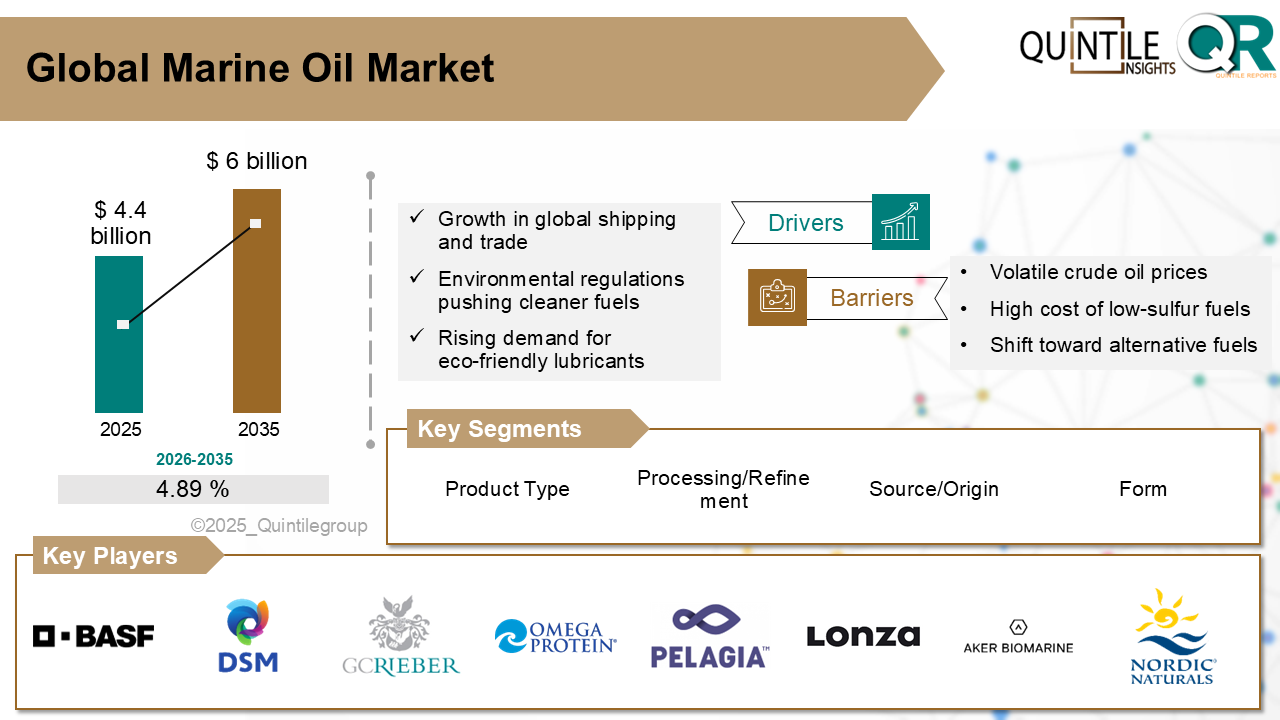
The Global Marine Oil Market was estimated at USD 4.4 billion in 2025 and is projected to reach USD 6 billion by 2035, growing at a robust CAGR of 4.89% during the forecast period from 2026 to 2035. The Marine Oil market report provides a comprehensive industry assessment, analyzing economic conditions, technological advancements, regulatory frameworks, and evolving consumer behavior to deliver a clear view of future growth potential.
With 2025 as the base year, the Marine Oil market is witnessing steady expansion driven by innovation, rising consumer demand, and rapid technological progress. Companies are increasingly refining their go-to-market (GTM) strategies to capture emerging opportunities and respond to shifting market dynamics.
Looking ahead to 2035, the market is expected to sustain its growth momentum, supported by continuous R&D investments, strategic partnerships, and mergers and acquisitions. Businesses that prioritize innovation, agile GTM strategies, and alignment with consumer needs are likely to achieve long-term success. The report delivers detailed insights into key drivers, restraints, opportunities, and challenges across segments, regions, and countries, supported by qualitative and quantitative analysis covering the period from 2017 to 2035.
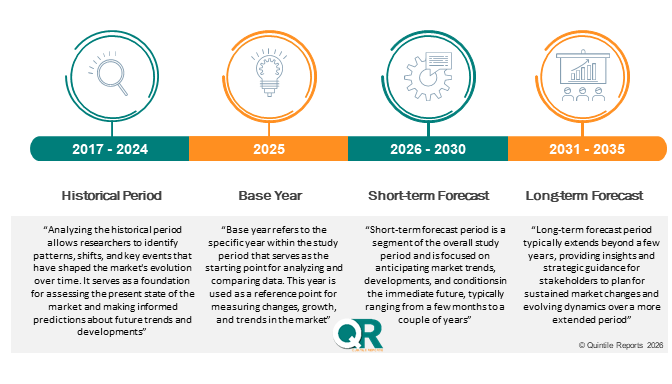
Historical Analysis (2017-2024): Reviews past market trends, performance metrics, and growth patterns to identify factors shaping current and future market behavior.
Forecast and Projections (2026-2035): Provides forward-looking market estimates, highlighting growth opportunities, emerging trends, and regional developments.
Compound Annual Growth Rate (CAGR): Presents a clear CAGR calculation for 2026-2035, enabling stakeholders to evaluate market growth potential over the forecast period.
The marine oil market refers to the global and regional market for oils derived from marine sources such as fish (e.g., anchovies, sardines, mackerel), krill, algae, and other sea organisms. These oils are rich in omega-3 fatty acids, particularly EPA (eicosapentaenoic acid) and DHA (docosahexaenoic acid), which are known for their cardiovascular, cognitive, and anti-inflammatory health benefits. Marine oil is extracted through rendering, cold pressing, or solvent-based methods and is processed to maintain purity, stability, and bioavailability.
Marine oils are used in a wide range of applications, including dietary supplements, functional foods, pharmaceuticals, animal feed, and cosmetics. The market is influenced by rising health awareness, demand for sustainable nutrition, and advancements in refining technologies. Additionally, algae-based marine oils are gaining traction as a plant-based and environmentally responsible alternative to traditional fish oils, supporting diverse consumer needs and sustainability goals in the broader omega-3 product landscape.
The increasing awareness of the health benefits of omega-3 fatty acids, particularly EPA and DHA found in marine oils, is a major driver of the Marine Oil Market, with growing applications in dietary supplements, functional foods, and pharmaceuticals.
Environmental concerns and overfishing regulations significantly restrain the marine oil market. The extraction of fish oil from species like anchovies, mackerel, and sardines raises sustainability issues, prompting stricter fishing quotas and limiting raw material availability.
North America holds a strong position in the marine oil market due to increasing consumption of omega-3 supplements and a growing awareness of heart and brain health. The U.S. leads the region with rising demand for marine oil in pharmaceuticals, dietary supplements, and functional food products. Regulatory support and innovations in purification and encapsulation technologies further contribute to market growth.
Europe exhibits significant growth in marine oil consumption, especially in countries like Norway, Germany, and the UK, where awareness about nutritional benefits and preventive healthcare is high. The presence of key marine oil manufacturers and emphasis on sustainable sourcing from fisheries also strengthen the regions market. Marine oil is widely used in infant formulas, cosmetics, and pharmaceutical applications.
Asia-Pacific is the fastest-growing region driven by high demand in China, Japan, South Korea, and India. Rising health consciousness, urbanization, and increased spending on nutraceuticals fuel growth. Fish oil and krill oil supplements are widely adopted for improving cardiovascular health, and the region benefits from local fishery resources and increasing domestic production.
Latin America is gradually expanding in the marine oil market with Brazil and Chile at the forefront. The region benefits from rich marine biodiversity, particularly in the Southern Pacific waters. Growing middle-class health awareness and demand for dietary supplements support moderate market development.
Middle East & Africa are emerging regions where marine oil demand is growing steadily due to rising interest in nutritional supplements and fortified foods. South Africa and GCC countries are observing gradual uptake, driven by increasing consumer awareness and access to premium health products. However, limited local production and import dependence are still challenges.
Increasing Demand for Omega-3 Supplements for Heart and Cognitive Health in the U.S.:
In the United States, the rising awareness of the health benefits associated with omega-3 fatty acids is a major driver for the marine oil market. Consumers are becoming more proactive about managing their cardiovascular, joint, and cognitive health, especially as aging-related health concerns grow. This has led to a surge in the consumption of fish oil-based dietary supplements rich in EPA and DHA.
Additionally, medical recommendations and endorsements from healthcare professionals have strengthened consumer trust in marine oil products. The U.S. dietary supplement industry is highly developed, with robust distribution through pharmacies, health stores, and e-commerce platforms. Theres also growing interest in krill oil and algae-based marine oils as alternative sources for vegetarians and those seeking sustainably sourced options. This health-driven demand is further bolstered by clean-label trends and innovation in delivery forms such as soft gels, gummies, and fortified foods.
Rising Popularity of Functional Foods and Nutraceuticals Among Aging Population in Germany:
In Germany, the marine oil market is significantly driven by the growing consumption of functional foods and nutraceuticals, particularly among the aging population concerned with heart, brain, and joint health. As one of the countries with the highest median ages in Europe, Germany is witnessing increased interest in preventive healthcare, where omega-3-rich marine oils such as fish oil, krill oil, and cod liver oil are valued for their anti-inflammatory and cardiovascular benefits.
Consumer preference is shifting toward natural and science-backed health solutions, and marine oils fit well within this framework. Additionally, Germanys strong regulations and consumer trust in certified, high-quality products have encouraged brands to innovate with sustainable marine sources and plant-based omega-3 alternatives. The integration of marine oil into everyday food products, like fortified dairy and beverages, is also expanding its market reach. The popularity of holistic wellness and clean-label supplements continues to support sustained demand for marine oils across all age groups.
High Consumption of Omega-3 Supplements for Cardiovascular and Cognitive Health in Japan:
In Japan, the marine oil market is primarily driven by the population's long-standing emphasis on health, longevity, and dietary balance, with omega-3 supplements playing a central role in supporting cardiovascular and cognitive function. Japanese consumers, especially the elderly and middle-aged demographics, are increasingly incorporating marine oil products like EPA and DHA supplements into their daily routines to maintain heart health, improve brain function, and support anti-aging efforts.
This trend is further supported by the countrys proactive healthcare policies and consumer education regarding the benefits of omega-3 fatty acids. The traditional Japanese diet already includes fish as a staple, but the shift toward concentrated marine oil supplements reflects a growing interest in more convenient, potent forms of health support. Additionally, Japanese nutraceutical companies are innovating in product formats including softgels, powders, and emulsions and using sustainable marine sources to meet consumer demand for high-quality, eco-conscious health products.
The Marine Oil Market is highly competitive, driven by increasing demand for high-purity omega-3 ingredients, sustainability, and traceability. Companies are competing by enhancing oil concentration levels, refining processes, and ensuring purity from heavy metals and contaminants. Innovation is focused on delivering EPA/DHA-rich formulations, particularly in the nutraceutical, pharmaceutical, and functional food sectors.
Key players in the market are BASF SE, DSM Nutritional Products, Omega Protein Corporation, GC Rieber Oils, Lonza Group AG, Pelagia AS, Nordic Naturals, Aker BioMarine, Croda International Plc, Arista Industries Inc., Barleans Organic Oils, Copeinca ASA, Marine Ingredients, Nutrifynn Caps Inc., Olvea Fish Oils.
In May 2024, Aker BioMarine entered the algae-derived omega-3 category by launching its FloraMarine oil and commissioning a 100-metric-ton processing line at its Houston facility, with plans to scale production fivefold within the next year to meet rising demand for plant-based marine oils.
In March 2025, BASF SE introduced Lucarion EPD, a high-potency, sustainably sourced omega-3 concentrate for premium nutraceuticals, produced at its expanded Charleston, South Carolina plantmarking BASFs first commercial marine-oil ingredient manufactured entirely in the United States.
Our team of experienced researchers has meticulously gathered and analyzed data to deliver a thorough examination of market dynamics, competitive landscape, and emerging technologies. With a focus on delivering actionable intelligence, this report aims to empower decision-makers with the information needed to make informed choices and stay ahead of the competition. Whether you are a seasoned industry player or a new entrant, our market research report serves as a strategic tool to navigate the complexities of the market, aiding in successful business planning and growth strategies.
This chapter of our Marine Oil market report provides an in-depth examination of the factors shaping the industry landscape. This section typically encompasses several key elements to offer a comprehensive understanding of the industry landscape such as market drivers & restraints analysis, market opportunities & trend analysis, market size & growth analysis, competitive analysis, SWOT analysis, business environment tools such as Porter's five forces & PESTEL analysis, Ansoff Matrix analysis, penetration & growth prospect analysis, regulatory framework & reimbursement scenario analysis, impact of macro & micro economic factors analysis such as Covid-19 impact, GDP growth, market inflation, U.S.- China trade war, Russia-Ukraine war impact, and supply chain analysis.
The segment analysis chapter of Marine Oil market report is a critical section that delves into a detailed examination of the market's various segments. Segmentation involves dividing the market into distinct categories based on certain criteria to better understand and address the diverse needs of consumers. This chapter typically follows the introduction and provides a more granular view of the market, offering valuable insights for businesses and stakeholders. The components of the chapter lude segment definitions to understand the inclusions and exclusions of the study, assumptions, market size estimates and growth trend analysis of each segment, qualitative analysis of the segment, technological advancements, market penetration rate, market adoption rate, market share examination by each segment, segment growth drivers and restraint barriers, consumer behaviour and challenge analysis.
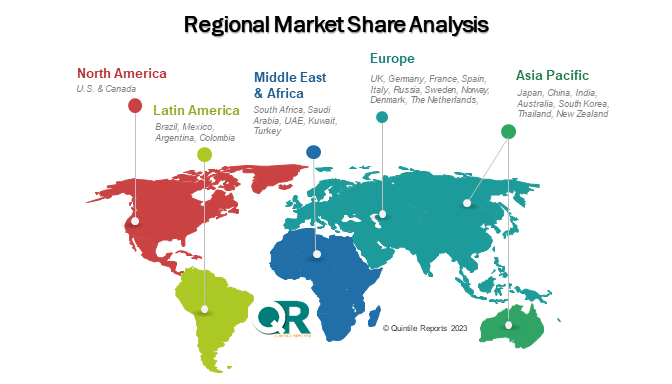
The chapter in Marine Oil market research report is a pivotal section that examines and predicts the market dynamics and trends specific to different geographical regions. This chapter is crucial for businesses and stakeholders seeking a comprehensive understanding of how the market behaves across various locations, enabling them to tailor strategies and make informed decisions based on regional variations. The regional analysis chapter of our Marine Oil market report is classified into regions & country-level. The chapter consists of North America (U.S., Canada), Europe (UK, Germany, France, Italy, Spain, Russia, Sweden, Denmark, Norway, Rest of Europe), Asia Pacific (Japan, China, India, Australia, South Korea, Thailand, Rest of Asia Pacific), Latin America (Brazil, Mexico, Argentina, Colombia, Rest of Latin America), Middle East & Africa (South Africa, Saudi Arabia, UAE, Kuwait, Rest of Middle East & Africa).
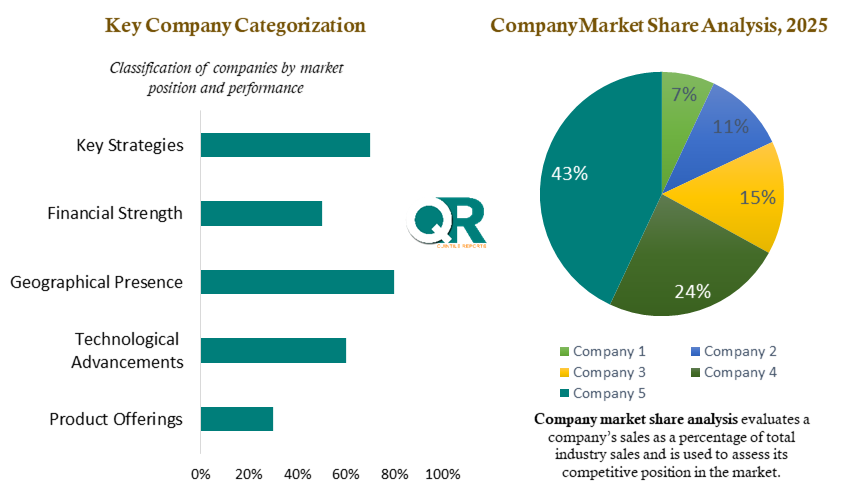
This section of a Marine Oil market report is a crucial segment that provides a comprehensive overview of the competitive landscape within the market. This section is vital for businesses, investors, and stakeholders seeking insights into key players, their market positioning, strengths, weaknesses, strategies, and potential impacts on the overall market dynamics. The chapter includes research methodology used to analyse the market competition, list of key players operating in the market, detailed company profile section which includes company overview, business verticals, financial performance, product/services benchmarking, geographical presence, and strategic initiatives.
| Report Scope | Details |
| Report Version | 2026 |
| Growth Rate | CAGR of 4.89 from 2026 to 2035 |
| Base year | 2025 |
| Actual estimates/Historical data | 2017 - 2024 |
| Forecast period | 2026 - 2035 |
| Quantitative units | Revenue in USD million/billion & CAGR from 2026 to 2035 |
| Country scope | North America (U.S., Canada), Europe (UK, Germany, France, Italy, Spain, Russia, Sweden, Denmark, Norway, Rest of Europe), Asia Pacific (Japan, China, India, Australia, South Korea, Thailand, Rest of Asia Pacific), Latin America (Brazil, Mexico, Argentina, Colombia, Rest of Latin America), Middle East & Africa (South Africa, Saudi Arabia, UAE, Kuwait, Rest of Middle East & Africa). |
| The Segment covered by Product Type |
|
| The Segment covered by Form |
|
| Companies covered |
|
| Report coverage | Revenue forecast, company share, competitive landscape, growth factors, and trends |
| Free customization scope (equivalent to 5 analyst working days) | If you need specific information, which is not currently within the scope of the report, we will provide it to you as a part of the customization |

Statistics for the 2025 Marine Oil market share, size, and revenue growth rate were created by Quintile Report™. Marine Oil analysis includes a market forecast outlook for 2035 and a historical overview. Get a free PDF sample of this market analysis, please get in touch with our principal analyst at sales@quintilereports.com
List of Tables
Table 1 List of Abbreviation and acronyms
Table 2 List of Sources
Table 3 North America Global Marine Oil Market, by Segment Analysis, (USD Million) 2017-2035
Table 4 North America Global Marine Oil Market, by Region, (USD Million) 2017-2035
Table 5 U.S. Global Marine Oil Market, by Segment Analysis, (USD Million) 2017-2035
Table 6 Canada Global Marine Oil Market, by Segment Analysis, (USD Million) 2017-2035
Table 7 Europe Global Marine Oil Market, by Segment Analysis, (USD Million) 2017-2035
Table 8 Europe Global Marine Oil Market, by Region, (USD Million) 2017-2035
Table 9 Germany Global Marine Oil Market, by Segment Analysis, (USD Million) 2017-2035
Table 10 U.K. Global Marine Oil Market, by Segment Analysis, (USD Million) 2017-2035
Table 11 France Global Marine Oil Market, by Segment Analysis, (USD Million) 2017-2035
Table 12 Italy Global Marine Oil Market, by Segment Analysis, (USD Million) 2017-2035
Table 13 Spain Global Marine Oil Market, by Segment Analysis, (USD Million) 2017-2035
Table 14 Sweden Global Marine Oil Market, by Segment Analysis, (USD Million) 2017-2035
Table 15 Denmark Global Marine Oil Market, by Segment Analysis, (USD Million) 2017-2035
Table 16 Norway Global Marine Oil Market, by Segment Analysis, (USD Million) 2017-2035
Table 17 The Netherlands Global Marine Oil Market, by Segment Analysis, (USD Million) 2017-2035
Table 18 Russia Global Marine Oil Market, by Segment Analysis, (USD Million) 2017-2035
Table 19 Asia Pacific Global Marine Oil Market, by Segment Analysis, (USD Million) 2017-2035
Table 20 Asia Pacific Global Marine Oil Market, by Region, (USD Million) 2017-2035
Table 21 China Global Marine Oil Market, by Segment Analysis, (USD Million) 2017-2035
Table 22 Japan Global Marine Oil Market, by Segment Analysis, (USD Million) 2017-2035
Table 23 India Global Marine Oil Market, by Segment Analysis, (USD Million) 2017-2035
Table 24 Australia Global Marine Oil Market, by Segment Analysis, (USD Million) 2017-2035
Table 25 South Korea Global Marine Oil Market, by Segment Analysis, (USD Million) 2017-2035
Table 26 Thailand Global Marine Oil Market, by Segment Analysis, (USD Million) 2017-2035
Table 27 Latin America Global Marine Oil Market, by Segment Analysis, (USD Million) 2017-2035
Table 28 Latin America Global Marine Oil Market, by Region, (USD Million) 2017-2035
Table 29 Brazil Global Marine Oil Market, by Segment Analysis, (USD Million) 2017-2035
Table 30 Mexico Global Marine Oil Market, by Segment Analysis, (USD Million) 2017-2035
Table 31 Argentina Global Marine Oil Market, by Segment Analysis, (USD Million) 2017-2035
Table 32 Middle East and Africa Global Marine Oil Market, by Segment Analysis, (USD Million) 2017-2035
Table 33 Middle East and Africa Global Marine Oil Market, by Region, (USD Million) 2017-2035
Table 34 South Africa Global Marine Oil Market, by Segment Analysis, (USD Million) 2017-2035
Table 35 Saudi Arabia Global Marine Oil Market, by Segment Analysis, (USD Million) 2017-2035
Table 36 UAE Global Marine Oil Market, by Segment Analysis, (USD Million) 2017-2035
Table 37 Kuwait Global Marine Oil Market, by Segment Analysis, (USD Million) 2017-2035
Table 38 Turkey Global Marine Oil Market, by Segment Analysis, (USD Million) 2017-2035
Fig.1 Market research process
Fig.2 Market research approaches
Fig.3 Global Marine Oil Market: market scenario
Fig.4 Global Marine Oil Market competitive outlook
Fig.5 Global Marine Oil Market driver analysis
Fig.6 Global Marine Oil Market restraint analysis
Fig.7 Global Marine Oil Market opportunity analysis
Fig.8 Global Marine Oil Market trends analysis
Fig.9 Global Marine Oil Market: Segment Analysis (Based on the scope)
Fig.10 Global Marine Oil Market: regional analysis
Fig.11 Global market shares and leading market players
Fig.12 North America market share and leading players
Fig.13 Europe market share and leading players
Fig.14 Asia Pacific market share and leading players
Fig.15 Latin America market share and leading players
Fig.16 Middle East & Africa market share and leading players
Fig.17 North America, by country
Fig.18 North America
Fig.19 North America market estimates and forecast, 2017-2035
Fig.20 U.S.
Fig.21 Canada
Fig.22 Europe
Fig.23 Europe market estimates and forecast, 2017-2035
Fig.24 U.K.
Fig.25 Germany
Fig.26 France
Fig.27 Italy
Fig.28 Spain
Fig.29 Sweden
Fig.30 Denmark
Fig.31 Norway
Fig.32 The Netherlands
Fig.33 Russia
Fig.34 Asia Pacific
Fig.35 Asia Pacific market estimates and forecast, 2017-2035
Fig.36 China
Fig.37 Japan
Fig.38 India
Fig.39 Australia
Fig.40 South Korea
Fig.41 Thailand
Fig.42 Latin America
Fig.43 Latin America market estimates and forecast, 2017-2035
Fig.44 Brazil
Fig.45 Mexico
Fig.46 Argentina
Fig.47 Colombia
Fig.48 Middle East and Africa
Fig.49 Middle East and Africa market estimates and forecast, 2017-2035
Fig.50 Saudi Arabia
Fig.51 South Africa
Fig.52 UAE
Fig.53 Kuwait
Fig.54 Turkey
The Global Marine Oil Market was estimated at USD 4.4 billion in 2025 and is projected to reach USD 6 billion by 2035, growing at a robust CAGR of 4.89% during the forecast period from 2026 to 2035. The Marine Oil market report provides a comprehensive industry assessment, analyzing economic conditions, technological advancements, regulatory frameworks, and evolving consumer behavior to deliver a clear view of future growth potential.
With 2025 as the base year, the Marine Oil market is witnessing steady expansion driven by innovation, rising consumer demand, and rapid technological progress. Companies are increasingly refining their go-to-market (GTM) strategies to capture emerging opportunities and respond to shifting market dynamics.
Looking ahead to 2035, the market is expected to sustain its growth momentum, supported by continuous R&D investments, strategic partnerships, and mergers and acquisitions. Businesses that prioritize innovation, agile GTM strategies, and alignment with consumer needs are likely to achieve long-term success. The report delivers detailed insights into key drivers, restraints, opportunities, and challenges across segments, regions, and countries, supported by qualitative and quantitative analysis covering the period from 2017 to 2035.
Historical Analysis (2017-2024): Reviews past market trends, performance metrics, and growth patterns to identify factors shaping current and future market behavior.
Forecast and Projections (2026-2035): Provides forward-looking market estimates, highlighting growth opportunities, emerging trends, and regional developments.
Compound Annual Growth Rate (CAGR): Presents a clear CAGR calculation for 2026-2035, enabling stakeholders to evaluate market growth potential over the forecast period.
The marine oil market refers to the global and regional market for oils derived from marine sources such as fish (e.g., anchovies, sardines, mackerel), krill, algae, and other sea organisms. These oils are rich in omega-3 fatty acids, particularly EPA (eicosapentaenoic acid) and DHA (docosahexaenoic acid), which are known for their cardiovascular, cognitive, and anti-inflammatory health benefits. Marine oil is extracted through rendering, cold pressing, or solvent-based methods and is processed to maintain purity, stability, and bioavailability.
Marine oils are used in a wide range of applications, including dietary supplements, functional foods, pharmaceuticals, animal feed, and cosmetics. The market is influenced by rising health awareness, demand for sustainable nutrition, and advancements in refining technologies. Additionally, algae-based marine oils are gaining traction as a plant-based and environmentally responsible alternative to traditional fish oils, supporting diverse consumer needs and sustainability goals in the broader omega-3 product landscape.
The increasing awareness of the health benefits of omega-3 fatty acids, particularly EPA and DHA found in marine oils, is a major driver of the Marine Oil Market, with growing applications in dietary supplements, functional foods, and pharmaceuticals.
Environmental concerns and overfishing regulations significantly restrain the marine oil market. The extraction of fish oil from species like anchovies, mackerel, and sardines raises sustainability issues, prompting stricter fishing quotas and limiting raw material availability.
North America holds a strong position in the marine oil market due to increasing consumption of omega-3 supplements and a growing awareness of heart and brain health. The U.S. leads the region with rising demand for marine oil in pharmaceuticals, dietary supplements, and functional food products. Regulatory support and innovations in purification and encapsulation technologies further contribute to market growth.
Europe exhibits significant growth in marine oil consumption, especially in countries like Norway, Germany, and the UK, where awareness about nutritional benefits and preventive healthcare is high. The presence of key marine oil manufacturers and emphasis on sustainable sourcing from fisheries also strengthen the regions market. Marine oil is widely used in infant formulas, cosmetics, and pharmaceutical applications.
Asia-Pacific is the fastest-growing region driven by high demand in China, Japan, South Korea, and India. Rising health consciousness, urbanization, and increased spending on nutraceuticals fuel growth. Fish oil and krill oil supplements are widely adopted for improving cardiovascular health, and the region benefits from local fishery resources and increasing domestic production.
Latin America is gradually expanding in the marine oil market with Brazil and Chile at the forefront. The region benefits from rich marine biodiversity, particularly in the Southern Pacific waters. Growing middle-class health awareness and demand for dietary supplements support moderate market development.
Middle East & Africa are emerging regions where marine oil demand is growing steadily due to rising interest in nutritional supplements and fortified foods. South Africa and GCC countries are observing gradual uptake, driven by increasing consumer awareness and access to premium health products. However, limited local production and import dependence are still challenges.
Increasing Demand for Omega-3 Supplements for Heart and Cognitive Health in the U.S.:
In the United States, the rising awareness of the health benefits associated with omega-3 fatty acids is a major driver for the marine oil market. Consumers are becoming more proactive about managing their cardiovascular, joint, and cognitive health, especially as aging-related health concerns grow. This has led to a surge in the consumption of fish oil-based dietary supplements rich in EPA and DHA.
Additionally, medical recommendations and endorsements from healthcare professionals have strengthened consumer trust in marine oil products. The U.S. dietary supplement industry is highly developed, with robust distribution through pharmacies, health stores, and e-commerce platforms. Theres also growing interest in krill oil and algae-based marine oils as alternative sources for vegetarians and those seeking sustainably sourced options. This health-driven demand is further bolstered by clean-label trends and innovation in delivery forms such as soft gels, gummies, and fortified foods.
Rising Popularity of Functional Foods and Nutraceuticals Among Aging Population in Germany:
In Germany, the marine oil market is significantly driven by the growing consumption of functional foods and nutraceuticals, particularly among the aging population concerned with heart, brain, and joint health. As one of the countries with the highest median ages in Europe, Germany is witnessing increased interest in preventive healthcare, where omega-3-rich marine oils such as fish oil, krill oil, and cod liver oil are valued for their anti-inflammatory and cardiovascular benefits.
Consumer preference is shifting toward natural and science-backed health solutions, and marine oils fit well within this framework. Additionally, Germanys strong regulations and consumer trust in certified, high-quality products have encouraged brands to innovate with sustainable marine sources and plant-based omega-3 alternatives. The integration of marine oil into everyday food products, like fortified dairy and beverages, is also expanding its market reach. The popularity of holistic wellness and clean-label supplements continues to support sustained demand for marine oils across all age groups.
High Consumption of Omega-3 Supplements for Cardiovascular and Cognitive Health in Japan:
In Japan, the marine oil market is primarily driven by the population's long-standing emphasis on health, longevity, and dietary balance, with omega-3 supplements playing a central role in supporting cardiovascular and cognitive function. Japanese consumers, especially the elderly and middle-aged demographics, are increasingly incorporating marine oil products like EPA and DHA supplements into their daily routines to maintain heart health, improve brain function, and support anti-aging efforts.
This trend is further supported by the countrys proactive healthcare policies and consumer education regarding the benefits of omega-3 fatty acids. The traditional Japanese diet already includes fish as a staple, but the shift toward concentrated marine oil supplements reflects a growing interest in more convenient, potent forms of health support. Additionally, Japanese nutraceutical companies are innovating in product formats including softgels, powders, and emulsions and using sustainable marine sources to meet consumer demand for high-quality, eco-conscious health products.
The Marine Oil Market is highly competitive, driven by increasing demand for high-purity omega-3 ingredients, sustainability, and traceability. Companies are competing by enhancing oil concentration levels, refining processes, and ensuring purity from heavy metals and contaminants. Innovation is focused on delivering EPA/DHA-rich formulations, particularly in the nutraceutical, pharmaceutical, and functional food sectors.
Key players in the market are BASF SE, DSM Nutritional Products, Omega Protein Corporation, GC Rieber Oils, Lonza Group AG, Pelagia AS, Nordic Naturals, Aker BioMarine, Croda International Plc, Arista Industries Inc., Barleans Organic Oils, Copeinca ASA, Marine Ingredients, Nutrifynn Caps Inc., Olvea Fish Oils.
In May 2024, Aker BioMarine entered the algae-derived omega-3 category by launching its FloraMarine oil and commissioning a 100-metric-ton processing line at its Houston facility, with plans to scale production fivefold within the next year to meet rising demand for plant-based marine oils.
In March 2025, BASF SE introduced Lucarion EPD, a high-potency, sustainably sourced omega-3 concentrate for premium nutraceuticals, produced at its expanded Charleston, South Carolina plantmarking BASFs first commercial marine-oil ingredient manufactured entirely in the United States.
Our team of experienced researchers has meticulously gathered and analyzed data to deliver a thorough examination of market dynamics, competitive landscape, and emerging technologies. With a focus on delivering actionable intelligence, this report aims to empower decision-makers with the information needed to make informed choices and stay ahead of the competition. Whether you are a seasoned industry player or a new entrant, our market research report serves as a strategic tool to navigate the complexities of the market, aiding in successful business planning and growth strategies.
This chapter of our Marine Oil market report provides an in-depth examination of the factors shaping the industry landscape. This section typically encompasses several key elements to offer a comprehensive understanding of the industry landscape such as market drivers & restraints analysis, market opportunities & trend analysis, market size & growth analysis, competitive analysis, SWOT analysis, business environment tools such as Porter's five forces & PESTEL analysis, Ansoff Matrix analysis, penetration & growth prospect analysis, regulatory framework & reimbursement scenario analysis, impact of macro & micro economic factors analysis such as Covid-19 impact, GDP growth, market inflation, U.S.- China trade war, Russia-Ukraine war impact, and supply chain analysis.
The segment analysis chapter of Marine Oil market report is a critical section that delves into a detailed examination of the market's various segments. Segmentation involves dividing the market into distinct categories based on certain criteria to better understand and address the diverse needs of consumers. This chapter typically follows the introduction and provides a more granular view of the market, offering valuable insights for businesses and stakeholders. The components of the chapter lude segment definitions to understand the inclusions and exclusions of the study, assumptions, market size estimates and growth trend analysis of each segment, qualitative analysis of the segment, technological advancements, market penetration rate, market adoption rate, market share examination by each segment, segment growth drivers and restraint barriers, consumer behaviour and challenge analysis.
The chapter in Marine Oil market research report is a pivotal section that examines and predicts the market dynamics and trends specific to different geographical regions. This chapter is crucial for businesses and stakeholders seeking a comprehensive understanding of how the market behaves across various locations, enabling them to tailor strategies and make informed decisions based on regional variations. The regional analysis chapter of our Marine Oil market report is classified into regions & country-level. The chapter consists of North America (U.S., Canada), Europe (UK, Germany, France, Italy, Spain, Russia, Sweden, Denmark, Norway, Rest of Europe), Asia Pacific (Japan, China, India, Australia, South Korea, Thailand, Rest of Asia Pacific), Latin America (Brazil, Mexico, Argentina, Colombia, Rest of Latin America), Middle East & Africa (South Africa, Saudi Arabia, UAE, Kuwait, Rest of Middle East & Africa).
This section of a Marine Oil market report is a crucial segment that provides a comprehensive overview of the competitive landscape within the market. This section is vital for businesses, investors, and stakeholders seeking insights into key players, their market positioning, strengths, weaknesses, strategies, and potential impacts on the overall market dynamics. The chapter includes research methodology used to analyse the market competition, list of key players operating in the market, detailed company profile section which includes company overview, business verticals, financial performance, product/services benchmarking, geographical presence, and strategic initiatives.
| Report Scope | Details |
| Report Version | 2026 |
| Growth Rate | CAGR of 4.89 from 2026 to 2035 |
| Base year | 2025 |
| Actual estimates/Historical data | 2017 - 2024 |
| Forecast period | 2026 - 2035 |
| Quantitative units | Revenue in USD million/billion & CAGR from 2026 to 2035 |
| Country scope | North America (U.S., Canada), Europe (UK, Germany, France, Italy, Spain, Russia, Sweden, Denmark, Norway, Rest of Europe), Asia Pacific (Japan, China, India, Australia, South Korea, Thailand, Rest of Asia Pacific), Latin America (Brazil, Mexico, Argentina, Colombia, Rest of Latin America), Middle East & Africa (South Africa, Saudi Arabia, UAE, Kuwait, Rest of Middle East & Africa). |
| The Segment covered by Product Type |
|
| The Segment covered by Form |
|
| Companies covered |
|
| Report coverage | Revenue forecast, company share, competitive landscape, growth factors, and trends |
| Free customization scope (equivalent to 5 analyst working days) | If you need specific information, which is not currently within the scope of the report, we will provide it to you as a part of the customization |
Statistics for the 2025 Marine Oil market share, size, and revenue growth rate were created by Quintile Report™. Marine Oil analysis includes a market forecast outlook for 2035 and a historical overview. Get a free PDF sample of this market analysis, please get in touch with our principal analyst at sales@quintilereports.com
Table 1 List of Abbreviation and acronyms
Table 2 List of Sources
Table 3 North America Global Marine Oil Market, by Segment Analysis, (USD Million) 2017-2035
Table 4 North America Global Marine Oil Market, by Region, (USD Million) 2017-2035
Table 5 U.S. Global Marine Oil Market, by Segment Analysis, (USD Million) 2017-2035
Table 6 Canada Global Marine Oil Market, by Segment Analysis, (USD Million) 2017-2035
Table 7 Europe Global Marine Oil Market, by Segment Analysis, (USD Million) 2017-2035
Table 8 Europe Global Marine Oil Market, by Region, (USD Million) 2017-2035
Table 9 Germany Global Marine Oil Market, by Segment Analysis, (USD Million) 2017-2035
Table 10 U.K. Global Marine Oil Market, by Segment Analysis, (USD Million) 2017-2035
Table 11 France Global Marine Oil Market, by Segment Analysis, (USD Million) 2017-2035
Table 12 Italy Global Marine Oil Market, by Segment Analysis, (USD Million) 2017-2035
Table 13 Spain Global Marine Oil Market, by Segment Analysis, (USD Million) 2017-2035
Table 14 Sweden Global Marine Oil Market, by Segment Analysis, (USD Million) 2017-2035
Table 15 Denmark Global Marine Oil Market, by Segment Analysis, (USD Million) 2017-2035
Table 16 Norway Global Marine Oil Market, by Segment Analysis, (USD Million) 2017-2035
Table 17 The Netherlands Global Marine Oil Market, by Segment Analysis, (USD Million) 2017-2035
Table 18 Russia Global Marine Oil Market, by Segment Analysis, (USD Million) 2017-2035
Table 19 Asia Pacific Global Marine Oil Market, by Segment Analysis, (USD Million) 2017-2035
Table 20 Asia Pacific Global Marine Oil Market, by Region, (USD Million) 2017-2035
Table 21 China Global Marine Oil Market, by Segment Analysis, (USD Million) 2017-2035
Table 22 Japan Global Marine Oil Market, by Segment Analysis, (USD Million) 2017-2035
Table 23 India Global Marine Oil Market, by Segment Analysis, (USD Million) 2017-2035
Table 24 Australia Global Marine Oil Market, by Segment Analysis, (USD Million) 2017-2035
Table 25 South Korea Global Marine Oil Market, by Segment Analysis, (USD Million) 2017-2035
Table 26 Thailand Global Marine Oil Market, by Segment Analysis, (USD Million) 2017-2035
Table 27 Latin America Global Marine Oil Market, by Segment Analysis, (USD Million) 2017-2035
Table 28 Latin America Global Marine Oil Market, by Region, (USD Million) 2017-2035
Table 29 Brazil Global Marine Oil Market, by Segment Analysis, (USD Million) 2017-2035
Table 30 Mexico Global Marine Oil Market, by Segment Analysis, (USD Million) 2017-2035
Table 31 Argentina Global Marine Oil Market, by Segment Analysis, (USD Million) 2017-2035
Table 32 Middle East and Africa Global Marine Oil Market, by Segment Analysis, (USD Million) 2017-2035
Table 33 Middle East and Africa Global Marine Oil Market, by Region, (USD Million) 2017-2035
Table 34 South Africa Global Marine Oil Market, by Segment Analysis, (USD Million) 2017-2035
Table 35 Saudi Arabia Global Marine Oil Market, by Segment Analysis, (USD Million) 2017-2035
Table 36 UAE Global Marine Oil Market, by Segment Analysis, (USD Million) 2017-2035
Table 37 Kuwait Global Marine Oil Market, by Segment Analysis, (USD Million) 2017-2035
Table 38 Turkey Global Marine Oil Market, by Segment Analysis, (USD Million) 2017-2035
Fig.1 Market research process
Fig.2 Market research approaches
Fig.3 Global Marine Oil Market: market scenario
Fig.4 Global Marine Oil Market competitive outlook
Fig.5 Global Marine Oil Market driver analysis
Fig.6 Global Marine Oil Market restraint analysis
Fig.7 Global Marine Oil Market opportunity analysis
Fig.8 Global Marine Oil Market trends analysis
Fig.9 Global Marine Oil Market: Segment Analysis (Based on the scope)
Fig.10 Global Marine Oil Market: regional analysis
Fig.11 Global market shares and leading market players
Fig.12 North America market share and leading players
Fig.13 Europe market share and leading players
Fig.14 Asia Pacific market share and leading players
Fig.15 Latin America market share and leading players
Fig.16 Middle East & Africa market share and leading players
Fig.17 North America, by country
Fig.18 North America
Fig.19 North America market estimates and forecast, 2017-2035
Fig.20 U.S.
Fig.21 Canada
Fig.22 Europe
Fig.23 Europe market estimates and forecast, 2017-2035
Fig.24 U.K.
Fig.25 Germany
Fig.26 France
Fig.27 Italy
Fig.28 Spain
Fig.29 Sweden
Fig.30 Denmark
Fig.31 Norway
Fig.32 The Netherlands
Fig.33 Russia
Fig.34 Asia Pacific
Fig.35 Asia Pacific market estimates and forecast, 2017-2035
Fig.36 China
Fig.37 Japan
Fig.38 India
Fig.39 Australia
Fig.40 South Korea
Fig.41 Thailand
Fig.42 Latin America
Fig.43 Latin America market estimates and forecast, 2017-2035
Fig.44 Brazil
Fig.45 Mexico
Fig.46 Argentina
Fig.47 Colombia
Fig.48 Middle East and Africa
Fig.49 Middle East and Africa market estimates and forecast, 2017-2035
Fig.50 Saudi Arabia
Fig.51 South Africa
Fig.52 UAE
Fig.53 Kuwait
Fig.54 Turkey

A license granted to one user. Rules or conditions might be applied for e.g. the use of electric files (PDFs) or printings, depending on product.
A license granted to multiple users.
A license granted to a single business site/establishment.
A license granted to all employees within organisation access to the product.
Immediate / Within 24-48 hours - Working days
Online Payments with PayPal and CCavenue
You can order a report by picking any of the payment methods which is bank wire or online payment through any Debit/Credit card or PayPal.
Hard Copy
Report Descriptions: The Global Non-GMO Flour Market was estimated at USD 72.87 billion in 2025 and
Read MoreReport Descriptions: The Global Mineral Ingredients Market was estimated at USD 8.12 billion in 2025
Read MoreReport Descriptions: The Global Feeding Distiller Dried Grains with Solubles (DGDS) Market was estim
Read More U.S. : +1-201-772-7734