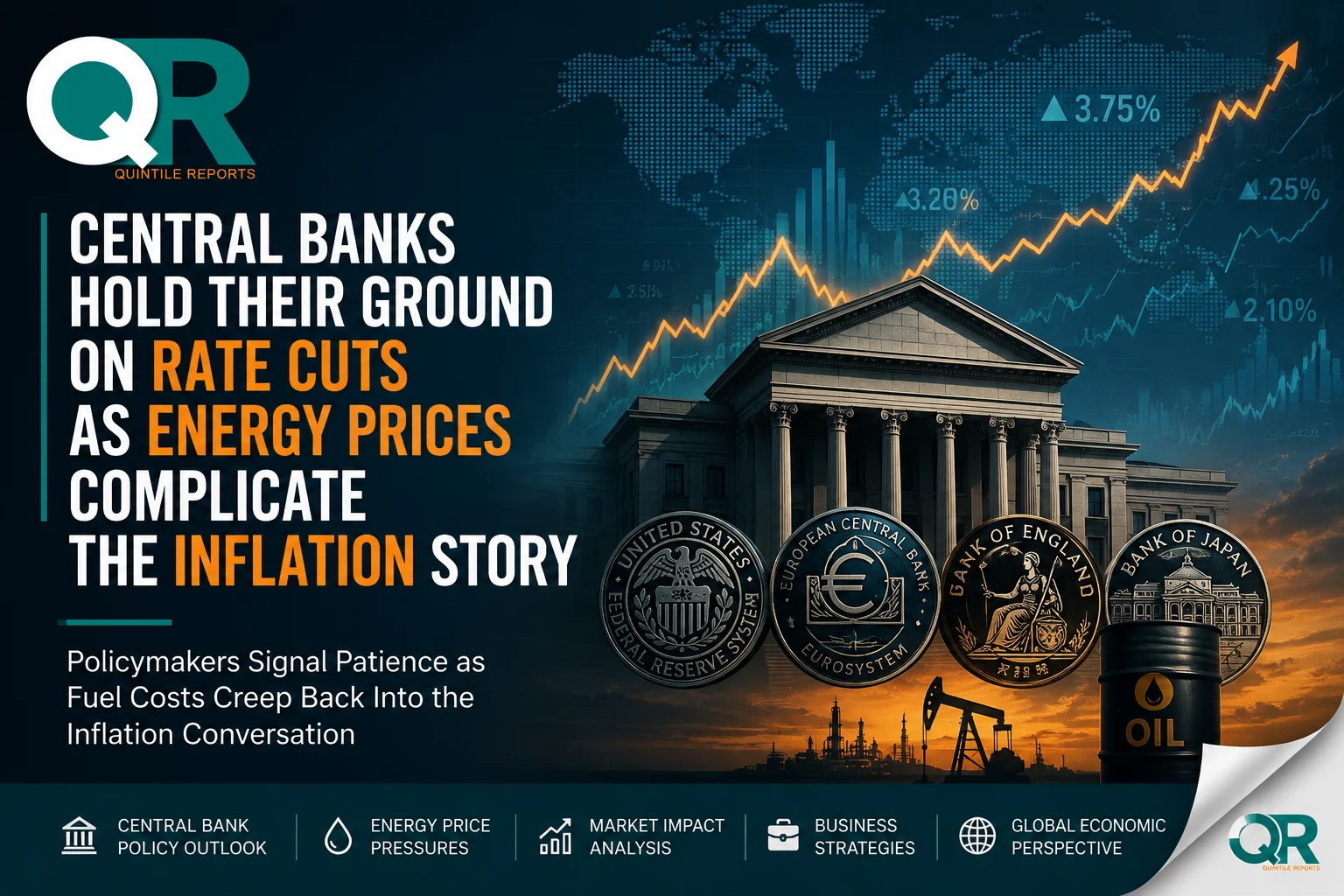
Major central banks are maintaining a cautious approach to interest-rate policy as renewed energy-price pressures complicate the path toward lower inflation. The Federal Reserve, European Central Bank (ECB), and Bank of England (BoE) have all kept policy rates unchanged in their latest decisions, while emphasizing that future moves will depend on incoming inflation, labor-market, and economic data.
The policy environment is particularly complex because underlying inflation has shown signs of moderation in several economies while energy costs remain vulnerable to geopolitical disruption. In the United States, the Federal Reserve kept the federal funds target range at 3.50%–3.75% at its July 29 meeting, with three policymakers favoring a 25-basis-point increase. The Fed said inflation remained elevated relative to its 2% objective and cited supply shocks, including those affecting energy, as a contributing factor.
In Europe, the ECB kept its three key interest rates unchanged on July 23 and said the inflationary effects of the energy shock were still unfolding. The central bank emphasized a data-dependent, meeting-by-meeting approach, with particular attention to the intensity and duration of energy-price pressures and their potential indirect and second-round effects.
The Bank of England also maintained Bank Rate at 3.75% in July, although the decision was less unanimous, with six members voting to hold rates and three preferring a 25-basis-point increase. The BoE warned that higher energy prices could push inflation higher later in 2026 and highlighted the risk that persistent energy costs could feed into wage and price-setting behavior.
For businesses, the message is increasingly clear: expectations of rapid monetary easing should be balanced against a potentially more volatile inflation environment.
Recent monetary policy decisions point toward continued caution rather than a predetermined path for interest-rate cuts. Central banks are balancing progress on underlying inflation against the possibility that energy-price shocks could slow or reverse that progress.
Key developments include:
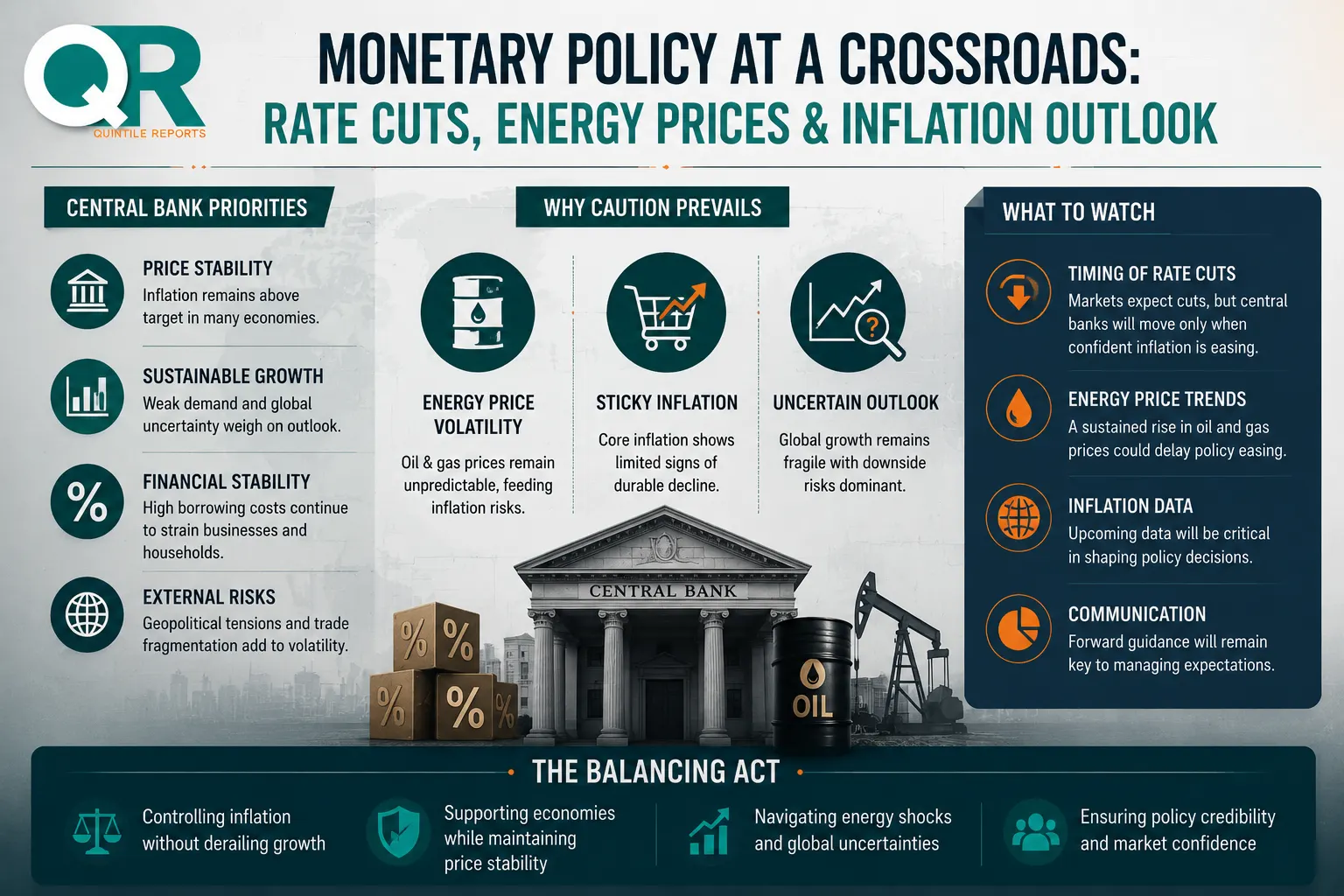
The renewed focus on energy prices is particularly important because the transmission of an energy shock extends beyond household fuel bills.
Higher fuel and energy costs can increase transportation expenses, raise manufacturing inputs, increase logistics costs, and place pressure on businesses to adjust prices. If these pressures persist long enough to influence wage negotiations and broader pricing behavior, central banks may face greater difficulty bringing inflation sustainably back to target.
The Bank of England's July assessment specifically noted that higher energy prices could generate direct and indirect inflationary effects, while the ECB similarly emphasized the need to monitor second-round effects from the energy shock.
This creates a difficult policy balance. Cutting rates too quickly could risk reinforcing inflationary pressure if energy costs remain elevated, while maintaining restrictive policy for too long could place additional pressure on investment, consumer demand, and business financing.
A cautious interest-rate environment is encouraging businesses to place greater emphasis on cash-flow visibility, balance-sheet strength, and the expected return on investment. Companies considering expansion, acquisitions, infrastructure projects, or major technology investments may face greater scrutiny over financing costs and project economics.
For growth-stage companies, the environment can be particularly challenging because higher financing costs can reduce the attractiveness of debt-funded expansion and increase the importance of internally generated cash flow.
Uncertainty surrounding the timing and scale of future rate movements can increase the value investors place on earnings visibility, pricing power, financial resilience, and sustainable cash generation.
Companies capable of absorbing higher energy and financing costs without significant margin deterioration may be better positioned than businesses whose growth depends heavily on lower borrowing costs.
The impact is likely to be most visible across sectors with substantial exposure to fuel, electricity, transportation, and industrial inputs.
Logistics, aviation, agriculture, chemicals, construction, transportation, and heavy manufacturing may face increased pressure if elevated energy costs persist. Businesses in these industries may respond through fuel hedging, supplier renegotiation, energy-efficiency investments, route optimization, and adjustments to pricing strategies.
Interest-rate differentials between major economies can influence currency valuations and therefore affect companies engaged in international trade.
A stronger or weaker domestic currency can change the cost of imported energy, raw materials, machinery, and intermediate goods. Businesses with international supply chains therefore need to consider monetary policy alongside commodity-price and foreign-exchange risks.
The current environment places greater emphasis on financial resilience and operational flexibility rather than simply anticipating the timing of the next rate cut.
Businesses can strengthen their position by:
These measures can help companies remain resilient even if monetary policy remains restrictive for longer than previously expected.
Manufacturers can prioritize automation, energy efficiency, predictive maintenance, and supply-chain optimization to reduce exposure to rising operating costs.
Higher fuel and freight costs are increasing the importance of route optimization, inventory planning, supplier diversification, and transportation-efficiency initiatives.
Banks, lenders, insurers, and financial-technology companies may benefit from continued demand for interest-rate management, treasury services, hedging, risk analytics, and working-capital solutions.
Retailers can strengthen margins through inventory optimization, supplier negotiations, demand forecasting, and targeted pricing strategies as consumers and businesses remain sensitive to inflation.
Energy-intensive businesses have an opportunity to accelerate investments in efficiency, alternative energy sources, process optimization, and technology that reduces exposure to volatile input costs.
The global economic environment continues to face several interconnected risks:
The interaction between these factors will be important for businesses and investors as central banks assess whether inflation is moving sustainably toward target or whether temporary energy pressures are becoming more persistent.
According to Quintile Reports' analysis, the latest policy decisions highlight a fundamental shift in how businesses should approach the current interest-rate environment. Rather than building strategic plans around an assumed timetable for rate cuts, companies may benefit from preparing for a range of monetary-policy outcomes.
The combination of moderating underlying inflation and renewed energy-price risks creates a more complicated policy environment than a simple "rates higher for longer" narrative suggests. Central banks are attempting to distinguish temporary energy-driven price movements from inflation that becomes embedded in wages, services, and broader corporate pricing decisions.
For business leaders, the implication is clear: financial discipline, operational efficiency, pricing flexibility, and supply-chain resilience are becoming strategic priorities rather than temporary defensive measures.
Companies that build plans around multiple interest-rate, energy-price, and inflation scenarios can reduce their exposure to policy uncertainty while remaining positioned to capitalize when financing conditions eventually become more favorable.
Major central banks are maintaining a cautious approach to interest-rate policy as renewed energy-price pressures complicate the path toward lower inflation. The Federal Reserve, European Central Bank (ECB), and Bank of England (BoE) have all kept policy rates unchanged in their latest decisions, while emphasizing that future moves will depend on incoming inflation, labor-market, and economic data.
The policy environment is particularly complex because underlying inflation has shown signs of moderation in several economies while energy costs remain vulnerable to geopolitical disruption. In the United States, the Federal Reserve kept the federal funds target range at 3.50%–3.75% at its July 29 meeting, with three policymakers favoring a 25-basis-point increase. The Fed said inflation remained elevated relative to its 2% objective and cited supply shocks, including those affecting energy, as a contributing factor.
In Europe, the ECB kept its three key interest rates unchanged on July 23 and said the inflationary effects of the energy shock were still unfolding. The central bank emphasized a data-dependent, meeting-by-meeting approach, with particular attention to the intensity and duration of energy-price pressures and their potential indirect and second-round effects.
The Bank of England also maintained Bank Rate at 3.75% in July, although the decision was less unanimous, with six members voting to hold rates and three preferring a 25-basis-point increase. The BoE warned that higher energy prices could push inflation higher later in 2026 and highlighted the risk that persistent energy costs could feed into wage and price-setting behavior.
For businesses, the message is increasingly clear: expectations of rapid monetary easing should be balanced against a potentially more volatile inflation environment.
Recent monetary policy decisions point toward continued caution rather than a predetermined path for interest-rate cuts. Central banks are balancing progress on underlying inflation against the possibility that energy-price shocks could slow or reverse that progress.
Key developments include:
The renewed focus on energy prices is particularly important because the transmission of an energy shock extends beyond household fuel bills.
Higher fuel and energy costs can increase transportation expenses, raise manufacturing inputs, increase logistics costs, and place pressure on businesses to adjust prices. If these pressures persist long enough to influence wage negotiations and broader pricing behavior, central banks may face greater difficulty bringing inflation sustainably back to target.
The Bank of England's July assessment specifically noted that higher energy prices could generate direct and indirect inflationary effects, while the ECB similarly emphasized the need to monitor second-round effects from the energy shock.
This creates a difficult policy balance. Cutting rates too quickly could risk reinforcing inflationary pressure if energy costs remain elevated, while maintaining restrictive policy for too long could place additional pressure on investment, consumer demand, and business financing.
A cautious interest-rate environment is encouraging businesses to place greater emphasis on cash-flow visibility, balance-sheet strength, and the expected return on investment. Companies considering expansion, acquisitions, infrastructure projects, or major technology investments may face greater scrutiny over financing costs and project economics.
For growth-stage companies, the environment can be particularly challenging because higher financing costs can reduce the attractiveness of debt-funded expansion and increase the importance of internally generated cash flow.
Uncertainty surrounding the timing and scale of future rate movements can increase the value investors place on earnings visibility, pricing power, financial resilience, and sustainable cash generation.
Companies capable of absorbing higher energy and financing costs without significant margin deterioration may be better positioned than businesses whose growth depends heavily on lower borrowing costs.
The impact is likely to be most visible across sectors with substantial exposure to fuel, electricity, transportation, and industrial inputs.
Logistics, aviation, agriculture, chemicals, construction, transportation, and heavy manufacturing may face increased pressure if elevated energy costs persist. Businesses in these industries may respond through fuel hedging, supplier renegotiation, energy-efficiency investments, route optimization, and adjustments to pricing strategies.
Interest-rate differentials between major economies can influence currency valuations and therefore affect companies engaged in international trade.
A stronger or weaker domestic currency can change the cost of imported energy, raw materials, machinery, and intermediate goods. Businesses with international supply chains therefore need to consider monetary policy alongside commodity-price and foreign-exchange risks.
The current environment places greater emphasis on financial resilience and operational flexibility rather than simply anticipating the timing of the next rate cut.
Businesses can strengthen their position by:
These measures can help companies remain resilient even if monetary policy remains restrictive for longer than previously expected.
Manufacturers can prioritize automation, energy efficiency, predictive maintenance, and supply-chain optimization to reduce exposure to rising operating costs.
Higher fuel and freight costs are increasing the importance of route optimization, inventory planning, supplier diversification, and transportation-efficiency initiatives.
Banks, lenders, insurers, and financial-technology companies may benefit from continued demand for interest-rate management, treasury services, hedging, risk analytics, and working-capital solutions.
Retailers can strengthen margins through inventory optimization, supplier negotiations, demand forecasting, and targeted pricing strategies as consumers and businesses remain sensitive to inflation.
Energy-intensive businesses have an opportunity to accelerate investments in efficiency, alternative energy sources, process optimization, and technology that reduces exposure to volatile input costs.
The global economic environment continues to face several interconnected risks:
The interaction between these factors will be important for businesses and investors as central banks assess whether inflation is moving sustainably toward target or whether temporary energy pressures are becoming more persistent.
According to Quintile Reports' analysis, the latest policy decisions highlight a fundamental shift in how businesses should approach the current interest-rate environment. Rather than building strategic plans around an assumed timetable for rate cuts, companies may benefit from preparing for a range of monetary-policy outcomes.
The combination of moderating underlying inflation and renewed energy-price risks creates a more complicated policy environment than a simple "rates higher for longer" narrative suggests. Central banks are attempting to distinguish temporary energy-driven price movements from inflation that becomes embedded in wages, services, and broader corporate pricing decisions.
For business leaders, the implication is clear: financial discipline, operational efficiency, pricing flexibility, and supply-chain resilience are becoming strategic priorities rather than temporary defensive measures.
Companies that build plans around multiple interest-rate, energy-price, and inflation scenarios can reduce their exposure to policy uncertainty while remaining positioned to capitalize when financing conditions eventually become more favorable.

A license granted to one user. Rules or conditions might be applied for e.g. the use of electric files (PDFs) or printings, depending on product.
A license granted to multiple users.
A license granted to a single business site/establishment.
A license granted to all employees within organisation access to the product.
Immediate / Within 24-48 hours - Working days
Online Payments with PayPal and CCavenue
You can order a report by picking any of the payment methods which is bank wire or online payment through any Debit/Credit card or PayPal.
Hard Copy